Studio Monitors - Directory w/ AI Reviews
Near-field and mid-field studio monitor speakers
Studio monitors are loudspeakers designed to reproduce audio with minimal coloration, giving producers and engineers an accurate representation of their mixes. Unlike consumer speakers that often enhance bass or treble for enjoyment, monitors aim for a flat, transparent frequency response. They are an essential tool in any recording studio, home studio, or mastering facility.
History
Early studio monitoring in the 1960s and 1970s relied on large, passive speakers like the JBL 4311 and Altec 604. Yamaha's NS-10, introduced in 1978, became the most ubiquitous studio monitor in history despite—or because of—its unforgiving midrange. The shift to powered (active) monitors in the 1990s, led by Genelec and KRK, simplified setup and improved consistency.
Characteristics
Studio monitors are typically active (self-powered) with built-in amplifiers matched to each driver for optimal performance. Near-field monitors, designed for listening at 3-5 feet, are most common in small to medium studios. Key specifications include frequency response, driver size (5-8 inch woofers are standard), and room correction features.
Notable Players
The Yamaha NS-10 was used to mix more hit records than any other studio monitor and became the global reference standard. Genelec monitors from Finland are found in top mastering studios worldwide and are prized for their accuracy and build quality. KRK's yellow-coned Rokit series became the most popular entry-level studio monitors for home producers.
Fun Facts
The Yamaha NS-10 was so universally present in studios that a tissue paper placed over the tweeter became a common trick to tame its harsh highs. Most professional mix engineers use multiple pairs of monitors to check their mixes on different speaker types before finalizing.
 1
4.8
1
4.8
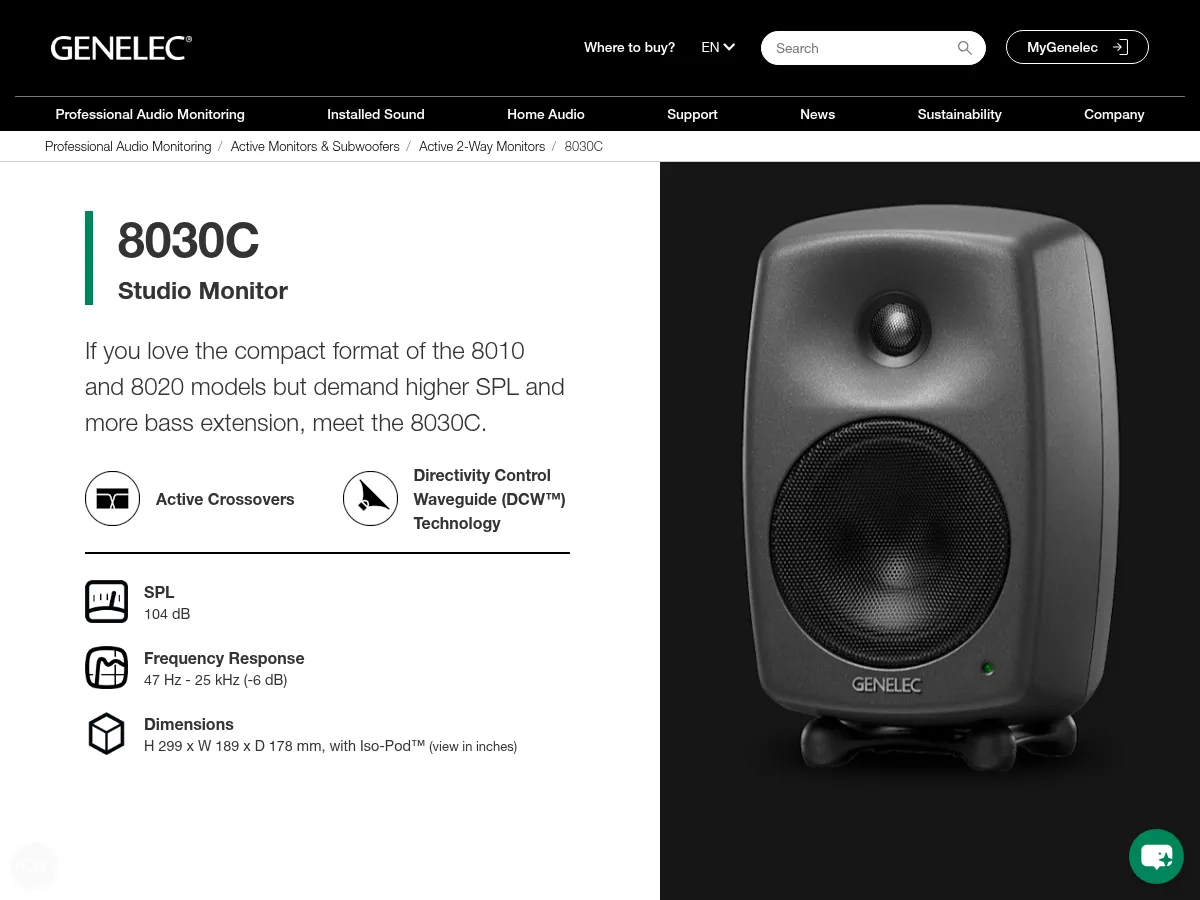
 Genelec 8030C
Genelec
$899
Professional
Finland
A reference-quality Genelec monitor with 5-inch woofer and aluminum enclosure, delivering the neutral, uncolored accuracy trusted by professional studios worldwide with room compensation controls.
Genelec 8030C
Genelec
$899
Professional
Finland
A reference-quality Genelec monitor with 5-inch woofer and aluminum enclosure, delivering the neutral, uncolored accuracy trusted by professional studios worldwide with room compensation controls.
 2
4.8
2
4.8
 Kali Audio IN-8 V2
Kali Audio
$499
Professional
China
A three-way coaxial studio monitor with true point-source design eliminating time-alignment issues, delivering precise stereo imaging and a wide sweet spot for serious mixing work.
Kali Audio IN-8 V2
Kali Audio
$499
Professional
China
A three-way coaxial studio monitor with true point-source design eliminating time-alignment issues, delivering precise stereo imaging and a wide sweet spot for serious mixing work.
 3
4.8
3
4.8
 Kali Audio LP-6 V2
Kali Audio
$169
All Levels
China
A bi-amplified near-field monitor with 3D Imaging waveguide and bass extending to 39 Hz, offering reference-quality accuracy at an aggressively competitive price for home studios.
Kali Audio LP-6 V2
Kali Audio
$169
All Levels
China
A bi-amplified near-field monitor with 3D Imaging waveguide and bass extending to 39 Hz, offering reference-quality accuracy at an aggressively competitive price for home studios.
 4
4.7
4
4.7
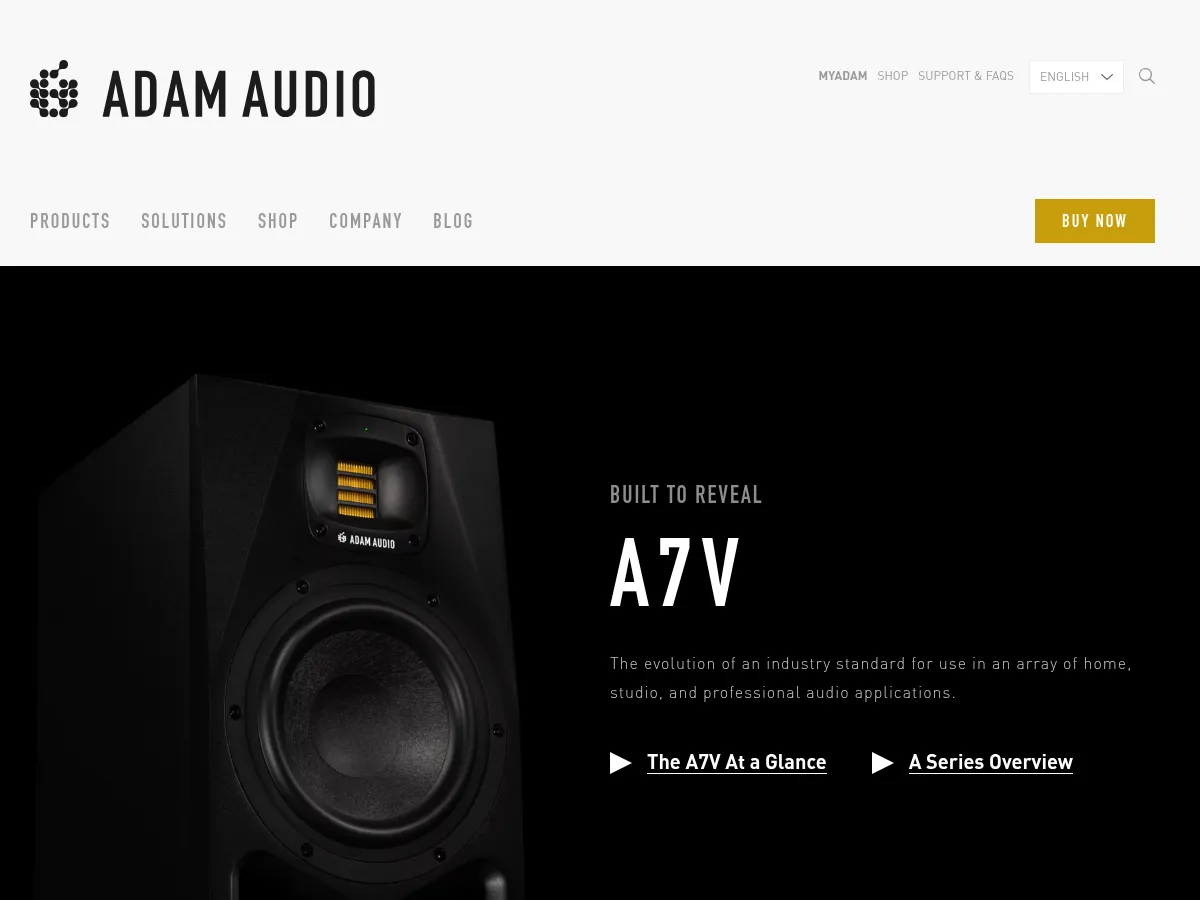
 Adam Audio A7V
Adam Audio
$1,099
Professional
Germany
The Adam Audio A7V delivers reference-grade monitoring through its hand-built X-ART folded ribbon tweeter and 200 watts of DSP-controlled amplification, with built-in room correction making it a top choice for professional mixing and mastering environments.
Adam Audio A7V
Adam Audio
$1,099
Professional
Germany
The Adam Audio A7V delivers reference-grade monitoring through its hand-built X-ART folded ribbon tweeter and 200 watts of DSP-controlled amplification, with built-in room correction making it a top choice for professional mixing and mastering environments.
 5
4.7
5
4.7
 Focal Alpha 65 Evo
Focal
$349
Intermediate
France
A near-field monitor featuring Focal's recycled Slatefiber woofer and aluminum inverted-dome tweeter, delivering warm yet detailed sound with 105 watts of power and front-ported design for wall placement flexibility.
Focal Alpha 65 Evo
Focal
$349
Intermediate
France
A near-field monitor featuring Focal's recycled Slatefiber woofer and aluminum inverted-dome tweeter, delivering warm yet detailed sound with 105 watts of power and front-ported design for wall placement flexibility.
 6
4.7
6
4.7
 Focal Shape 65
Focal
$599
Professional
France
A premium monitor with Focal's flax cone woofer and inverted dome tweeter, using passive radiators for clean bass extension near walls, delivering natural, uncolored sound for professional mixing and mastering.
Focal Shape 65
Focal
$599
Professional
France
A premium monitor with Focal's flax cone woofer and inverted dome tweeter, using passive radiators for clean bass extension near walls, delivering natural, uncolored sound for professional mixing and mastering.
 7
4.7
7
4.7
 IK Multimedia iLoud Micro Monitor
IK Multimedia
$299
Beginner
China
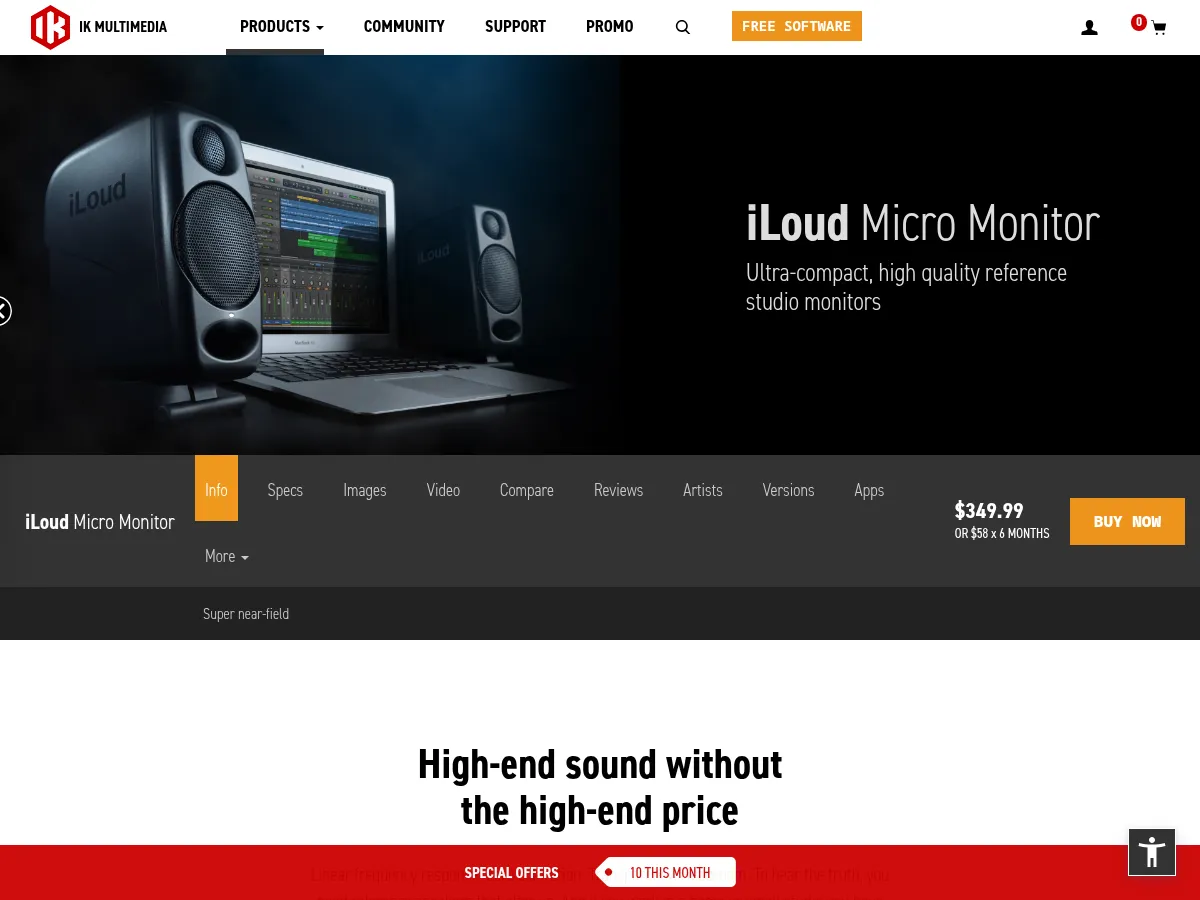
Ultra-compact powered monitors with 3-inch woofers and DSP-calibrated response delivering surprisingly accurate sound at desktop distances, with Bluetooth connectivity and adjustable angle stands.
IK Multimedia iLoud Micro Monitor
IK Multimedia
$299
Beginner
China
Ultra-compact powered monitors with 3-inch woofers and DSP-calibrated response delivering surprisingly accurate sound at desktop distances, with Bluetooth connectivity and adjustable angle stands.
 8
4.7
8
4.7
 Yamaha HS8
Yamaha
$399
Professional
China
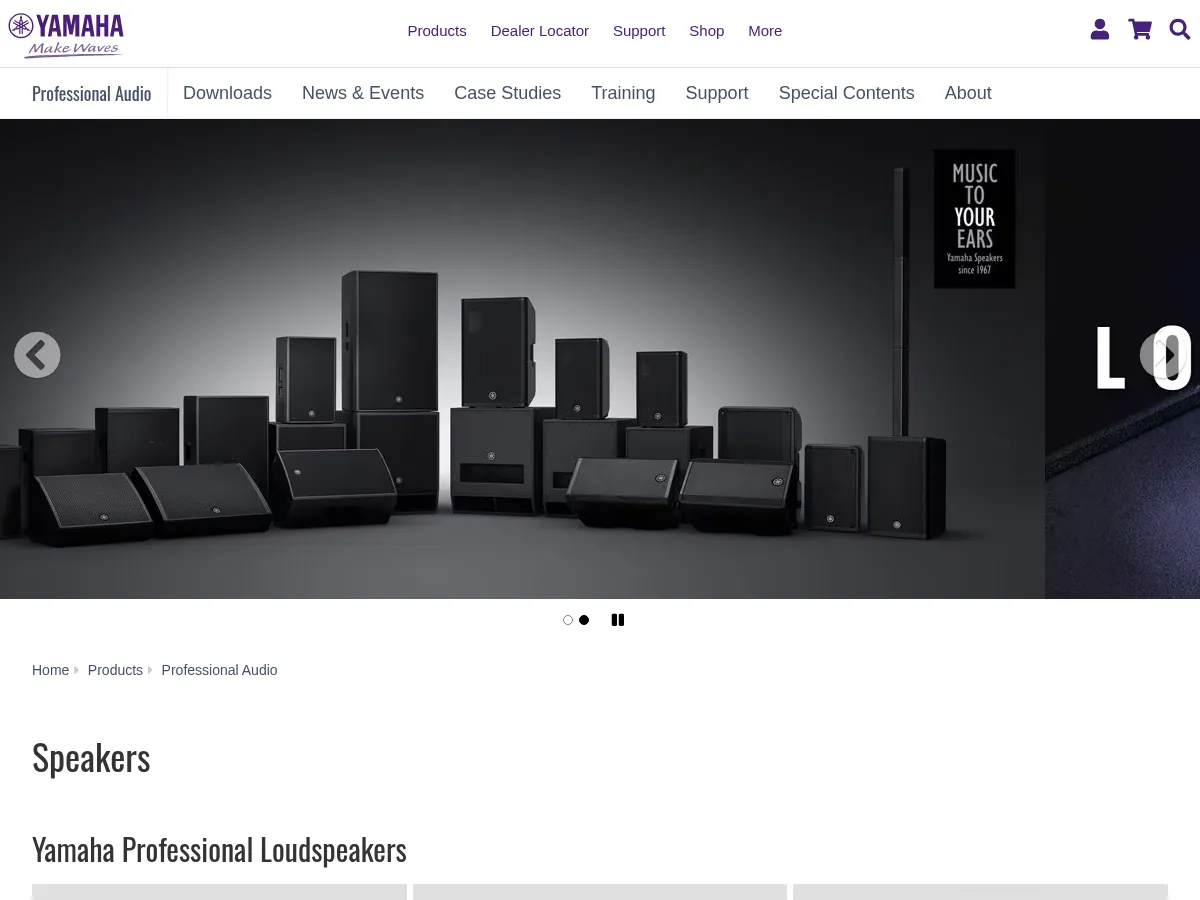
Full-sized 8-inch near-field monitor delivering authoritative bass down to 38Hz without a subwoofer, suited for medium rooms needing extended low-frequency accuracy.
Yamaha HS8
Yamaha
$399
Professional
China
Full-sized 8-inch near-field monitor delivering authoritative bass down to 38Hz without a subwoofer, suited for medium rooms needing extended low-frequency accuracy.
 9
4.6
9
4.6
 Eve Audio SC205
Eve Audio
$549
Professional
Germany
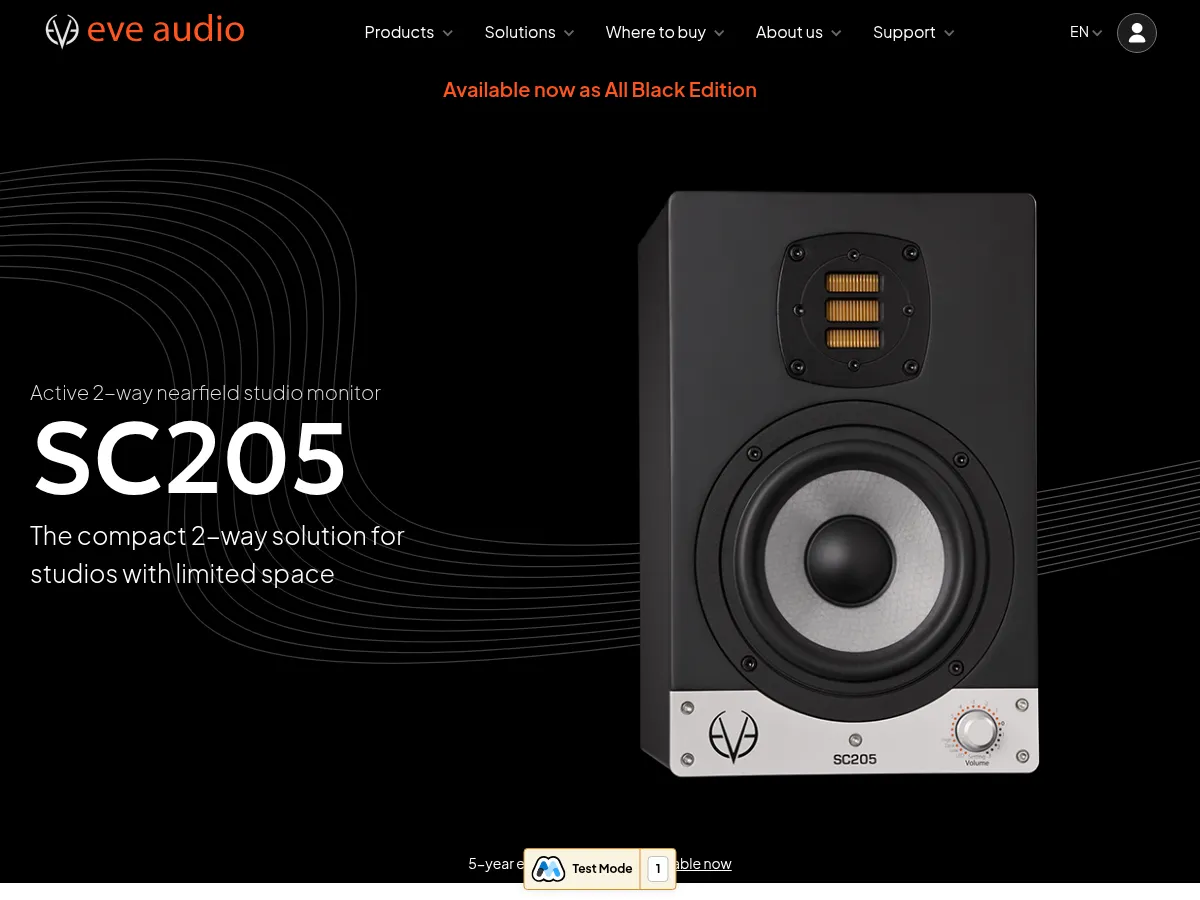
A compact near-field monitor featuring Eve Audio's proprietary AMT ribbon tweeter for exceptionally detailed, fast high frequencies, with a 5-inch SilverCone woofer and DSP-controlled room correction.
Eve Audio SC205
Eve Audio
$549
Professional
Germany
A compact near-field monitor featuring Eve Audio's proprietary AMT ribbon tweeter for exceptionally detailed, fast high frequencies, with a 5-inch SilverCone woofer and DSP-controlled room correction.
 10
4.6
10
4.6
 Genelec 8010A
Genelec
$399
Professional
Finland
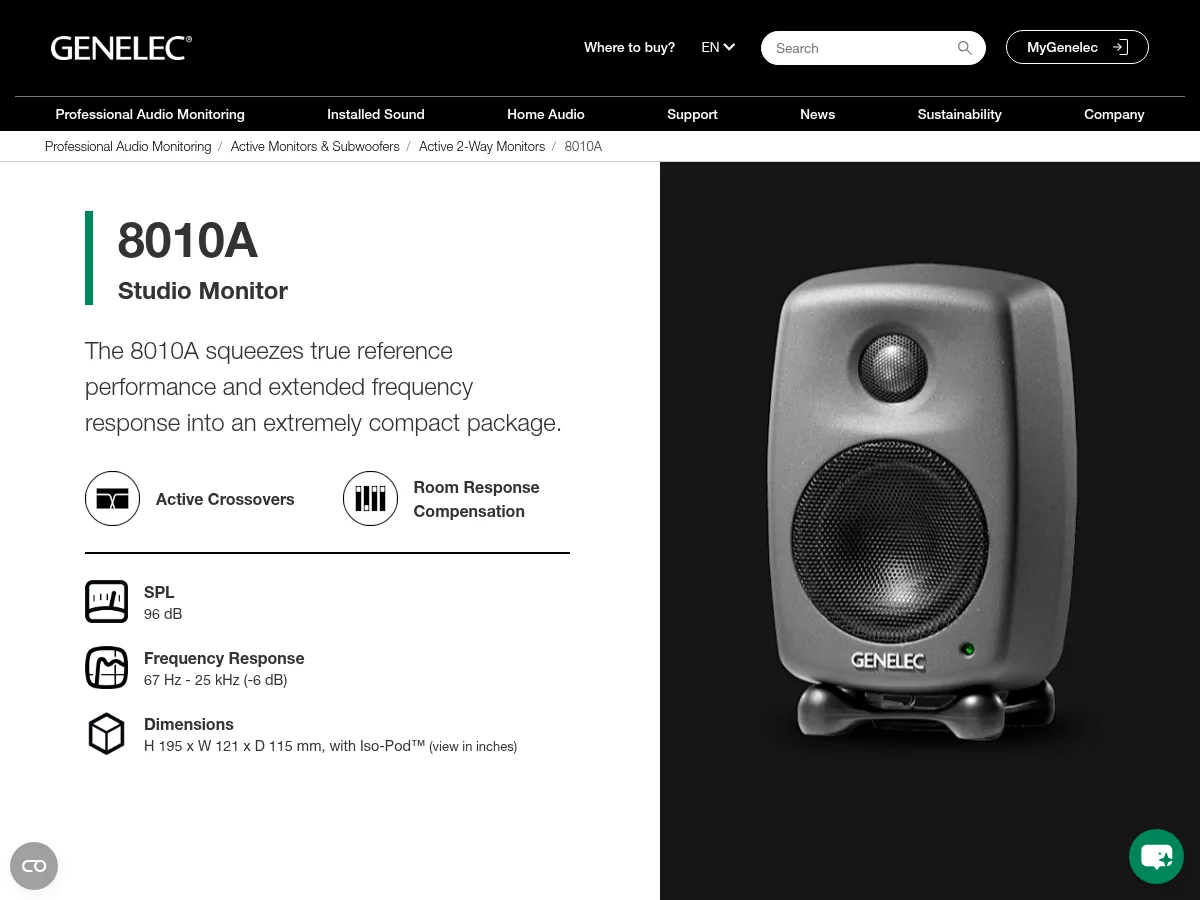
An ultra-compact Genelec monitor with a 3-inch woofer in the signature aluminum enclosure, delivering surprisingly accurate sound with Iso-Pod isolation for mobile recording, broadcast, and secondary monitoring.
Genelec 8010A
Genelec
$399
Professional
Finland
An ultra-compact Genelec monitor with a 3-inch woofer in the signature aluminum enclosure, delivering surprisingly accurate sound with Iso-Pod isolation for mobile recording, broadcast, and secondary monitoring.
 11
4.6
11
4.6
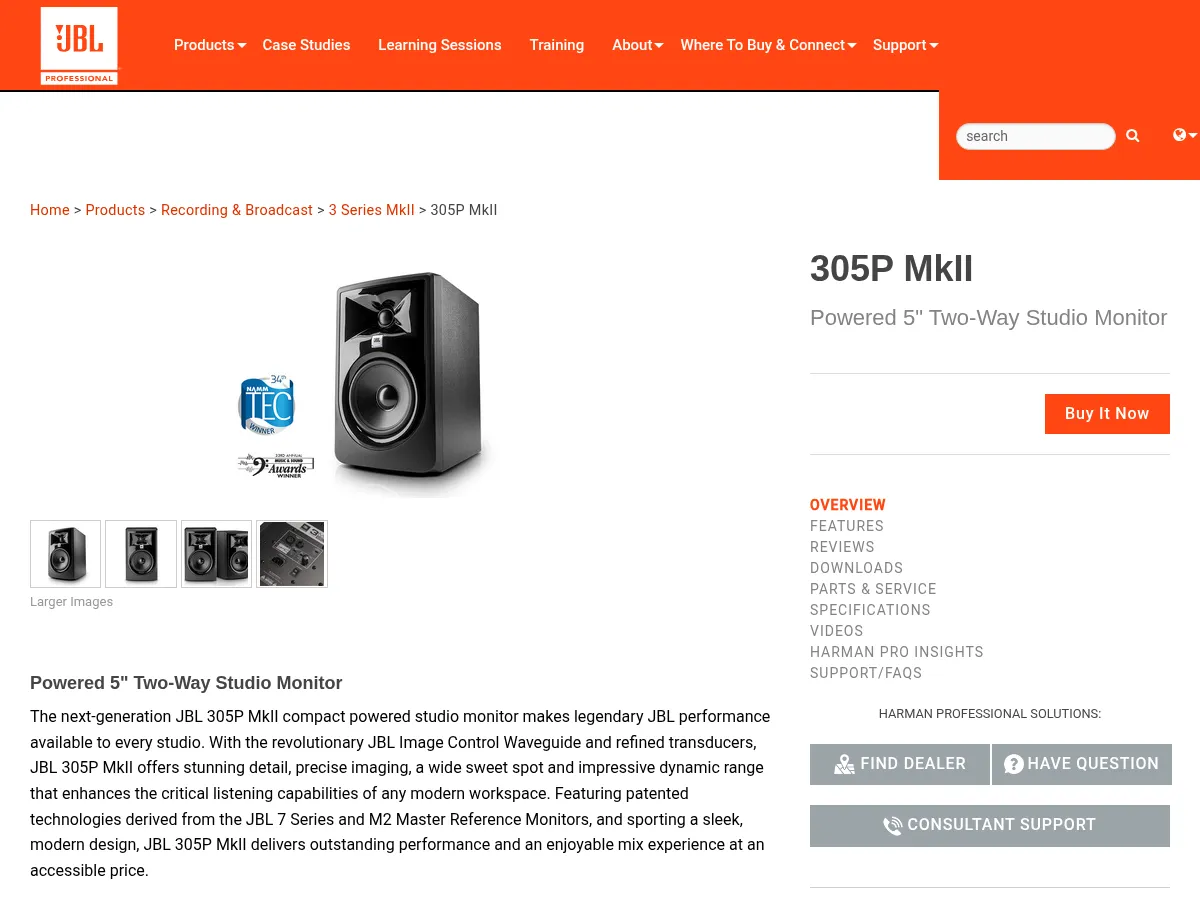
 JBL 305P MkII
JBL
$149
Beginner
China
A bi-amplified 5-inch monitor with JBL's Image Control Waveguide for wide, precise stereo imaging, delivering neutral, transparent monitoring at an exceptional value with boundary EQ compensation.
JBL 305P MkII
JBL
$149
Beginner
China
A bi-amplified 5-inch monitor with JBL's Image Control Waveguide for wide, precise stereo imaging, delivering neutral, transparent monitoring at an exceptional value with boundary EQ compensation.
 12
4.6
12
4.6
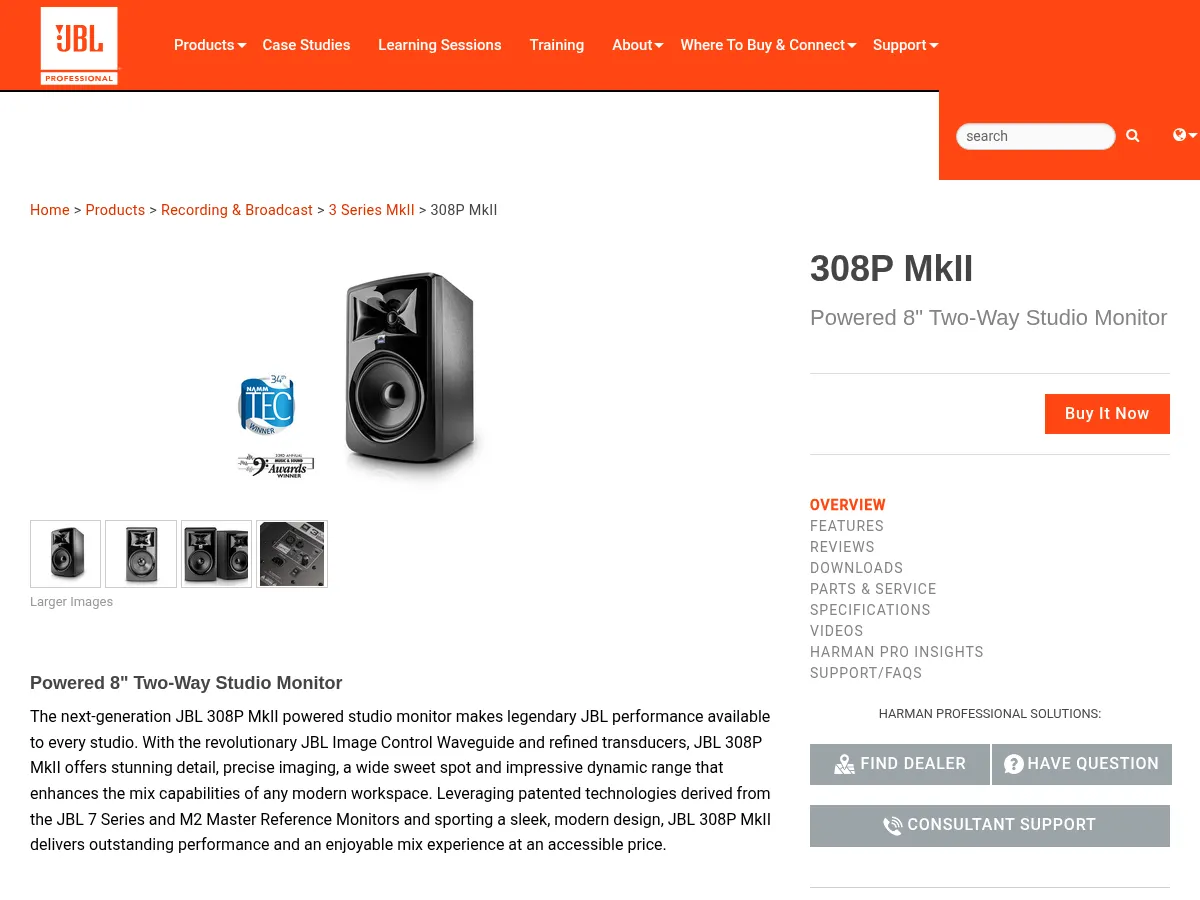
 JBL 308P MkII
JBL
$249
Intermediate
China
An 8-inch monitor with Image Control Waveguide extending bass response to 37Hz, providing full-range monitoring with the same wide sweet spot and neutral accuracy in a larger format.
JBL 308P MkII
JBL
$249
Intermediate
China
An 8-inch monitor with Image Control Waveguide extending bass response to 37Hz, providing full-range monitoring with the same wide sweet spot and neutral accuracy in a larger format.
 13
4.6
13
4.6
 KRK Rokit 7 G4
KRK
$249
Intermediate
China
A 7-inch Kevlar-woofer monitor extending bass to 42 Hz with 145 watts of power and DSP room correction, delivering substantial low-frequency monitoring without a subwoofer.
KRK Rokit 7 G4
KRK
$249
Intermediate
China
A 7-inch Kevlar-woofer monitor extending bass to 42 Hz with 145 watts of power and DSP room correction, delivering substantial low-frequency monitoring without a subwoofer.
 14
4.6
14
4.6
 Yamaha HS7
Yamaha
$299
Intermediate
China
Balanced 6.5-inch near-field monitor offering accurate reproduction with bass extension down to 43Hz, providing the sweet spot between compact size and full-range monitoring.
Yamaha HS7
Yamaha
$299
Intermediate
China
Balanced 6.5-inch near-field monitor offering accurate reproduction with bass extension down to 43Hz, providing the sweet spot between compact size and full-range monitoring.
 15
4.5
15
4.5
 Adam Audio T5V
Adam Audio
$199
Intermediate
China
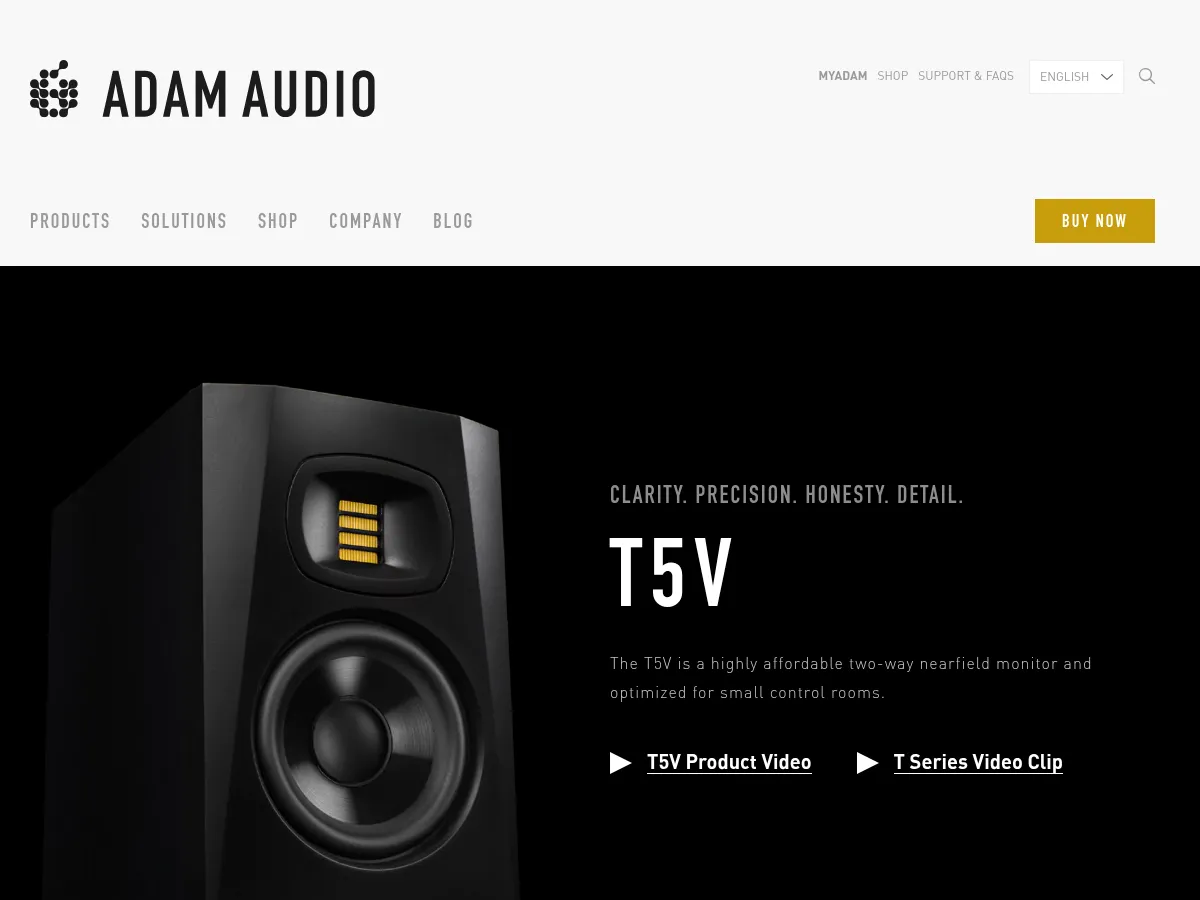
The Adam Audio T5V stands out among affordable studio monitors with its proprietary U-ART ribbon tweeter, delivering exceptionally detailed high-frequency reproduction and transient accuracy that reveals subtle mix details other monitors miss.
Adam Audio T5V
Adam Audio
$199
Intermediate
China
The Adam Audio T5V stands out among affordable studio monitors with its proprietary U-ART ribbon tweeter, delivering exceptionally detailed high-frequency reproduction and transient accuracy that reveals subtle mix details other monitors miss.
 16
4.4
16
4.4
 KRK Rokit 5 G4
KRK
$179
Beginner
China
A bi-amplified monitor with 5-inch Kevlar woofer, built-in DSP room correction via the KRK App, and front-firing bass port for flexible placement near walls.
KRK Rokit 5 G4
KRK
$179
Beginner
China
A bi-amplified monitor with 5-inch Kevlar woofer, built-in DSP room correction via the KRK App, and front-firing bass port for flexible placement near walls.
 17
4.4
17
4.4
 KRK Rokit 8 G4
KRK
$399
Intermediate
China
An 8-inch powered monitor with bass extending to 36 Hz and 203 watts of amplification, providing full-range near-field monitoring with DSP room correction for medium to large rooms.
KRK Rokit 8 G4
KRK
$399
Intermediate
China
An 8-inch powered monitor with bass extending to 36 Hz and 203 watts of amplification, providing full-range near-field monitoring with DSP room correction for medium to large rooms.
 18
4.4
18
4.4
 PreSonus Eris E5 XT
PreSonus
$129
Beginner
China
A budget monitor with EBM waveguide providing wider sweet spot than conventional designs, 80 watts of power, and three-band rear-panel acoustic tuning at an accessible price.
PreSonus Eris E5 XT
PreSonus
$129
Beginner
China
A budget monitor with EBM waveguide providing wider sweet spot than conventional designs, 80 watts of power, and three-band rear-panel acoustic tuning at an accessible price.
 19
4.3
19
4.3
 Yamaha HS5
Yamaha
$199
All Levels
China
Compact 5-inch bi-amplified near-field monitor delivering flat, honest sound reproduction in the tradition of the iconic NS-10, ideal for mixing in home studios.
Yamaha HS5
Yamaha
$199
All Levels
China
Compact 5-inch bi-amplified near-field monitor delivering flat, honest sound reproduction in the tradition of the iconic NS-10, ideal for mixing in home studios.
 20
4.2
20
4.2
 Mackie MR524
Mackie
$149
Beginner
China
A budget-friendly monitor with 5.25-inch composite woofer and silk dome tweeter, delivering smooth, non-fatiguing sound with rear-panel acoustic tuning controls for room optimization.
Mackie MR524
Mackie
$149
Beginner
China
A budget-friendly monitor with 5.25-inch composite woofer and silk dome tweeter, delivering smooth, non-fatiguing sound with rear-panel acoustic tuning controls for room optimization.