Electric Guitars - Directory w/ AI Reviews
Solid-body, semi-hollow, and hollow-body electric guitars
Electric guitars use magnetic pickups to convert string vibrations into electrical signals, which are then amplified through a speaker. They are the backbone of rock, blues, jazz, metal, and countless other genres. Their versatility and expressive range have made them one of the most popular instruments in modern music.
History
The electric guitar emerged in the 1930s when musicians needed more volume to compete with horn sections in big bands. Rickenbacker produced the first commercially successful electric guitar, the "Frying Pan," in 1932. Leo Fender and Gibson's collaboration with Les Paul in the early 1950s produced the iconic solid-body designs that remain industry standards today.
Characteristics
Electric guitars feature solid, semi-hollow, or hollow bodies with magnetic pickups that detect string vibration. Single-coil pickups produce bright, crisp tones while humbuckers deliver warmer, thicker sounds. Players shape their tone further through amplifiers, effects pedals, and playing techniques like bending, tapping, and slide.
Notable Players
Jimi Hendrix revolutionized electric guitar with his innovative use of feedback and effects. B.B. King's expressive vibrato on his Gibson ES-355 "Lucille" defined modern blues guitar. Eddie Van Halen pioneered two-handed tapping and transformed rock guitar technique in the late 1970s.
Fun Facts
The most expensive guitar ever sold at auction was Kurt Cobain's 1959 Martin D-18E, which fetched $6 million in 2020. Leo Fender, who designed the Telecaster and Stratocaster, never learned to play guitar himself.
 1
4.9
1
4.9
 Gretsch G6120T-59 Vintage Select Edition '59 Chet Atkins
Gretsch
$3,299
Professional
Japan
A premium Japanese-made hollow-body recreating the revered 1959 Chet Atkins with TV Jones Classic Filter'Trons and Bigsby vibrato, delivering extraordinary tonal versatility across rockabilly, jazz, and blues.
Gretsch G6120T-59 Vintage Select Edition '59 Chet Atkins
Gretsch
$3,299
Professional
Japan
A premium Japanese-made hollow-body recreating the revered 1959 Chet Atkins with TV Jones Classic Filter'Trons and Bigsby vibrato, delivering extraordinary tonal versatility across rockabilly, jazz, and blues.
 2
4.9
2
4.9
 Music Man Majesty
Music Man
$3,499
Professional
United States
Petrucci's flagship signature guitar with DiMarzio Dreamcatcher and Rainmaker pickups, piezo bridge, 20dB boost circuit, and Music Man's exacting California craftsmanship.
Music Man Majesty
Music Man
$3,499
Professional
United States
Petrucci's flagship signature guitar with DiMarzio Dreamcatcher and Rainmaker pickups, piezo bridge, 20dB boost circuit, and Music Man's exacting California craftsmanship.
 3
4.9
3
4.9
 PRS Custom 24-08
PRS
$3,999
Professional
United States
Premium American-made electric guitar with coil-splitting system delivering eight distinct pickup voices from two 85/15 humbuckers, ideal for versatile professionals.
PRS Custom 24-08
PRS
$3,999
Professional
United States
Premium American-made electric guitar with coil-splitting system delivering eight distinct pickup voices from two 85/15 humbuckers, ideal for versatile professionals.
 4
4.9
4
4.9
 Tom Anderson Drop Top Classic
Tom Anderson
$4,590
Professional
United States
Ultra-premium boutique guitar handcrafted in California with proprietary pickups, asymmetrical neck profile, and buzz-feiten tuning for the most discerning players.
Tom Anderson Drop Top Classic
Tom Anderson
$4,590
Professional
United States
Ultra-premium boutique guitar handcrafted in California with proprietary pickups, asymmetrical neck profile, and buzz-feiten tuning for the most discerning players.
 5
4.8
5
4.8
 Epiphone Les Paul Standard '50s
Epiphone
$449
Intermediate
China
A budget-friendly Les Paul with ProBucker humbuckers and CTS electronics that delivers warm, thick tones across clean to high-gain settings, offering genuine Les Paul styling and feel at an accessible price.
Epiphone Les Paul Standard '50s
Epiphone
$449
Intermediate
China
A budget-friendly Les Paul with ProBucker humbuckers and CTS electronics that delivers warm, thick tones across clean to high-gain settings, offering genuine Les Paul styling and feel at an accessible price.
 6
4.8
6
4.8
 ESP LTD MH-1000 EverTune
ESP
$1,399
Advanced
South Korea
A modern metal workhorse combining the EverTune bridge system for perfect tuning stability with EMG 81/60 active humbuckers and stainless steel frets, purpose-built for recording and live precision.
ESP LTD MH-1000 EverTune
ESP
$1,399
Advanced
South Korea
A modern metal workhorse combining the EverTune bridge system for perfect tuning stability with EMG 81/60 active humbuckers and stainless steel frets, purpose-built for recording and live precision.
 7
4.8
7
4.8
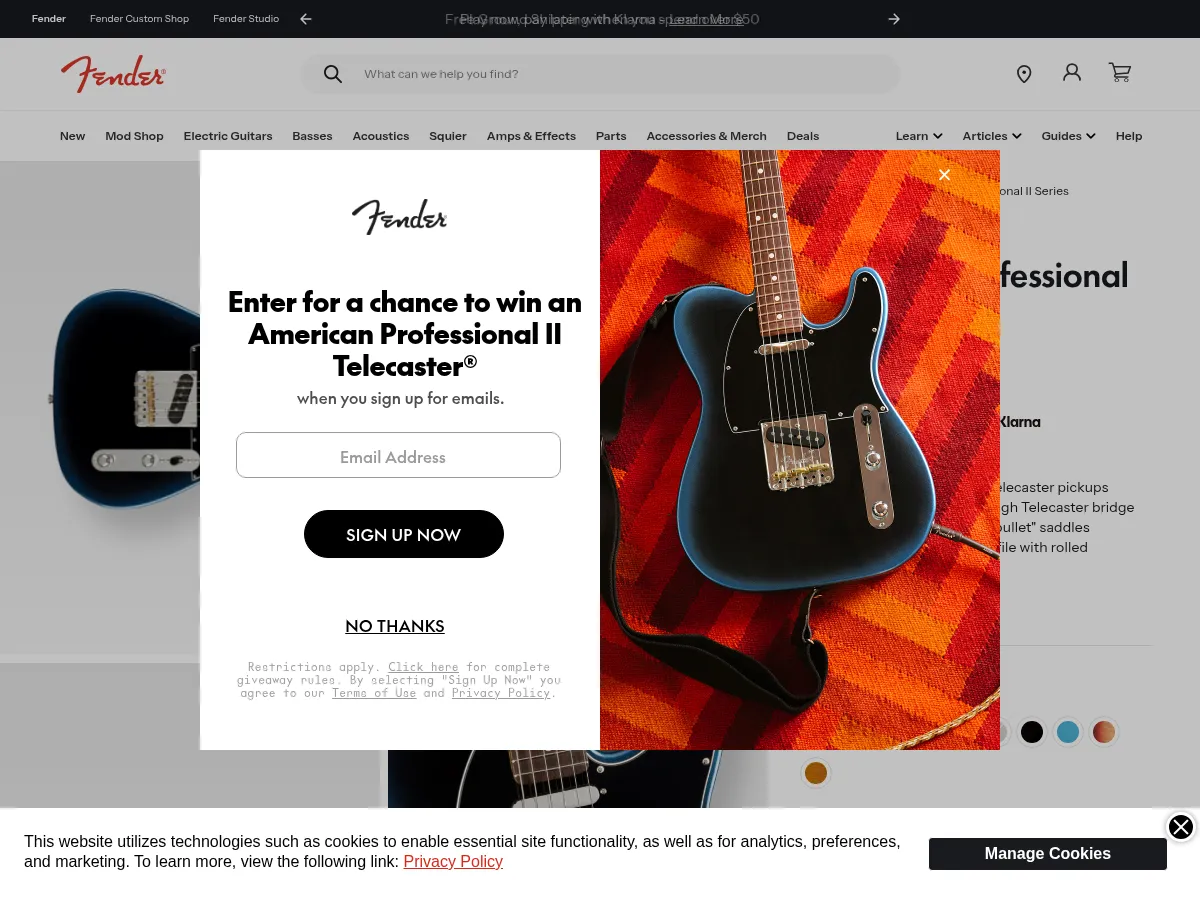
 Fender American Professional II Stratocaster
Fender
$1,699
Advanced
USA
A premium American-made Stratocaster with V-Mod II pickups and a push-push neck pickup activation switch, featuring rolled fingerboard edges and cold-rolled steel tremolo block for enhanced sustain.
Fender American Professional II Stratocaster
Fender
$1,699
Advanced
USA
A premium American-made Stratocaster with V-Mod II pickups and a push-push neck pickup activation switch, featuring rolled fingerboard edges and cold-rolled steel tremolo block for enhanced sustain.
 8
4.8
8
4.8
 Fender American Professional II Telecaster
Fender
$1,699
Advanced
USA
An American-built Telecaster with V-Mod II single-coils and a sculpted neck heel, delivering refined Tele bite and warmth with modern playability through rolled edges and locking tuners.
Fender American Professional II Telecaster
Fender
$1,699
Advanced
USA
An American-built Telecaster with V-Mod II single-coils and a sculpted neck heel, delivering refined Tele bite and warmth with modern playability through rolled edges and locking tuners.
 9
4.8
9
4.8
 Gibson ES-335
Gibson
$3,499
Advanced
USA
The legendary semi-hollow guitar with MHS humbuckers and a solid maple center block, delivering lush, woody clean tones with three-dimensional resonance that bridges hollow warmth and solid-body feedback resistance.
Gibson ES-335
Gibson
$3,499
Advanced
USA
The legendary semi-hollow guitar with MHS humbuckers and a solid maple center block, delivering lush, woody clean tones with three-dimensional resonance that bridges hollow warmth and solid-body feedback resistance.
 10
4.8
10
4.8
 Ibanez AZ2204N
Ibanez
$1,999
Professional
Japan
A premium Prestige-series guitar with roasted maple neck, Seymour Duncan Hyperion humbuckers, and Alter Switch coil-tap system, delivering organic tone with stainless steel frets and compound radius.
Ibanez AZ2204N
Ibanez
$1,999
Professional
Japan
A premium Prestige-series guitar with roasted maple neck, Seymour Duncan Hyperion humbuckers, and Alter Switch coil-tap system, delivering organic tone with stainless steel frets and compound radius.
 11
4.8
11
4.8
 Ibanez Prestige RG5320C
Ibanez
$1,999
Professional
Japan
A Japanese-made Prestige RG with through-body panga panga neck, DiMarzio Fusion Edge pickups in HSH configuration, and the legendary Edge tremolo for the ultimate in precision and shred performance.
Ibanez Prestige RG5320C
Ibanez
$1,999
Professional
Japan
A Japanese-made Prestige RG with through-body panga panga neck, DiMarzio Fusion Edge pickups in HSH configuration, and the legendary Edge tremolo for the ultimate in precision and shred performance.
 12
4.8
12
4.8
 Ibanez RG550
Ibanez
$999
Advanced
Japan
A high-performance shred guitar with the super-thin Super Wizard neck and Edge double-locking tremolo, featuring V7/S1/V8 pickup configuration for versatile metal, fusion, and technically demanding playing.
Ibanez RG550
Ibanez
$999
Advanced
Japan
A high-performance shred guitar with the super-thin Super Wizard neck and Edge double-locking tremolo, featuring V7/S1/V8 pickup configuration for versatile metal, fusion, and technically demanding playing.
 13
4.8
13
4.8
 Jackson Soloist SL2
Jackson
$1,299
Advanced
USA
A neck-through-body guitar with Seymour Duncan JB/59 humbuckers and Floyd Rose tremolo, engineered for speed and aggression with exceptional sustain and smooth heel transition.
Jackson Soloist SL2
Jackson
$1,299
Advanced
USA
A neck-through-body guitar with Seymour Duncan JB/59 humbuckers and Floyd Rose tremolo, engineered for speed and aggression with exceptional sustain and smooth heel transition.
 14
4.8
14
4.8
 Music Man Cutlass
Music Man
$2,299
Professional
USA
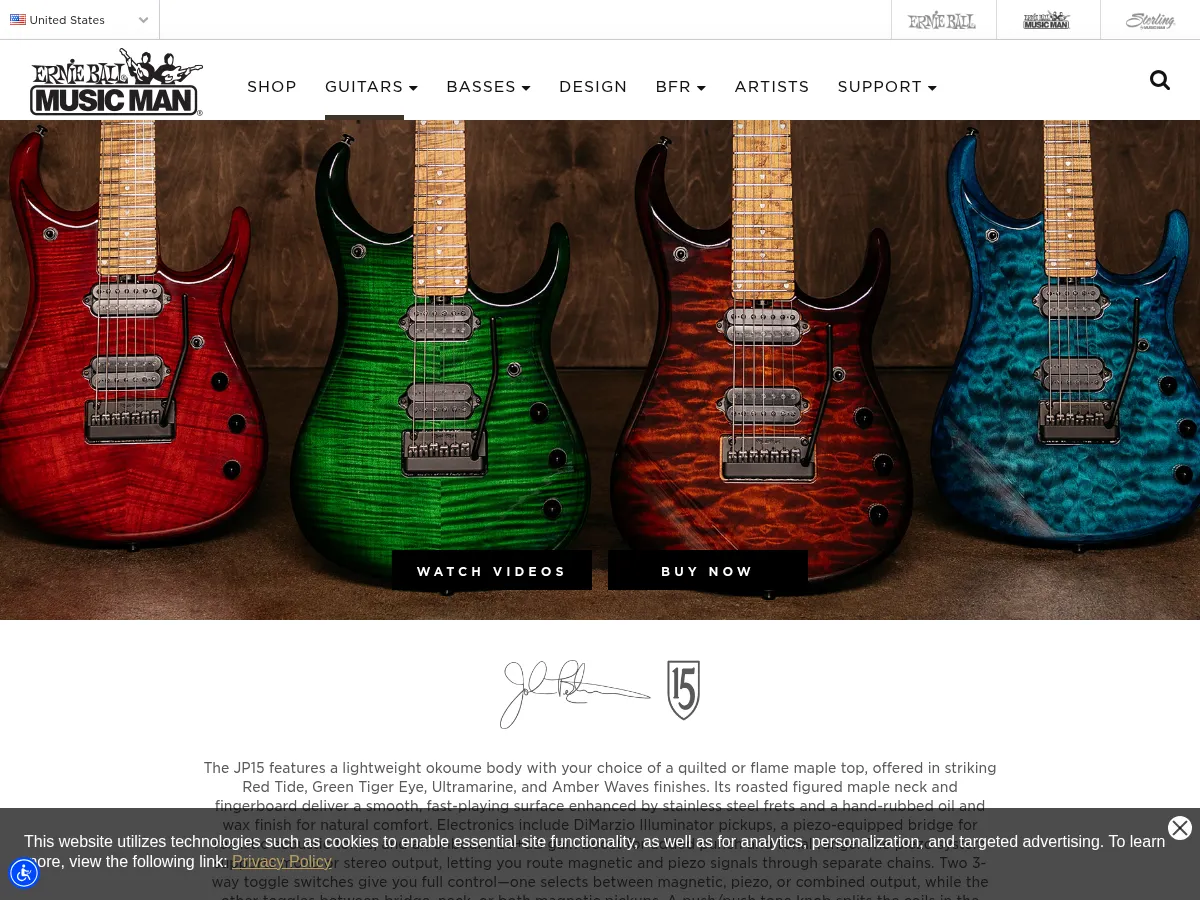
A premium American-made single-coil guitar with roasted maple neck, stainless steel frets, Music Man pickups, and silent circuit design reflecting boutique-level craftsmanship.
Music Man Cutlass
Music Man
$2,299
Professional
USA
A premium American-made single-coil guitar with roasted maple neck, stainless steel frets, Music Man pickups, and silent circuit design reflecting boutique-level craftsmanship.
 15
4.8
15
4.8
 Music Man JP15
Music Man
$3,299
Professional
United States
John Petrucci's premium signature guitar with DiMarzio Illuminator pickups and piezo bridge system, delivering both magnetic and acoustic-style tones for progressive rock performance.
Music Man JP15
Music Man
$3,299
Professional
United States
John Petrucci's premium signature guitar with DiMarzio Illuminator pickups and piezo bridge system, delivering both magnetic and acoustic-style tones for progressive rock performance.
 16
4.8
16
4.8
 PRS SE Silver Sky
PRS
$599
Intermediate
Indonesia
Affordable version of John Mayer's signature PRS model with three 635JM S single-coil pickups delivering warm, expressive vintage tones.
PRS SE Silver Sky
PRS
$599
Intermediate
Indonesia
Affordable version of John Mayer's signature PRS model with three 635JM S single-coil pickups delivering warm, expressive vintage tones.
 17
4.8
17
4.8
 Suhr Modern Satin
Suhr
$2,895
Professional
United States
Boutique-grade guitar with satin finish, roasted maple neck, HSH Suhr pickups, compound radius fingerboard, and Gotoh 510 tremolo for impeccable playability.
Suhr Modern Satin
Suhr
$2,895
Professional
United States
Boutique-grade guitar with satin finish, roasted maple neck, HSH Suhr pickups, compound radius fingerboard, and Gotoh 510 tremolo for impeccable playability.
 18
4.7
18
4.7
 ESP LTD M-1000
ESP
$1,299
Advanced
South Korea
A high-end superstrat with neck-through maple construction and dual-voiced Fishman Fluence Modern humbuckers, offering both passive warmth and active punch with meticulous Macassar ebony fretwork.
ESP LTD M-1000
ESP
$1,299
Advanced
South Korea
A high-end superstrat with neck-through maple construction and dual-voiced Fishman Fluence Modern humbuckers, offering both passive warmth and active punch with meticulous Macassar ebony fretwork.
 19
4.7
19
4.7
 Fender American Ultra Stratocaster
Fender
$2,099
Professional
USA
The pinnacle of Fender's production Stratocaster line with Ultra Noiseless Hot pickups, stainless steel frets, compound radius fingerboard, and S-1 switching for the ultimate factory Strat experience.
Fender American Ultra Stratocaster
Fender
$2,099
Professional
USA
The pinnacle of Fender's production Stratocaster line with Ultra Noiseless Hot pickups, stainless steel frets, compound radius fingerboard, and S-1 switching for the ultimate factory Strat experience.
 20
4.7
20
4.7
 Fender American Vintage II 1957 Stratocaster
Fender
$2,099
Professional
United States
A meticulous recreation of the 1957 Stratocaster with nitrocellulose lacquer, Pure Vintage pickups, soft V neck profile, and period-correct appointments for vintage enthusiasts seeking authentic 1950s specifications.
Fender American Vintage II 1957 Stratocaster
Fender
$2,099
Professional
United States
A meticulous recreation of the 1957 Stratocaster with nitrocellulose lacquer, Pure Vintage pickups, soft V neck profile, and period-correct appointments for vintage enthusiasts seeking authentic 1950s specifications.
 21
4.7
21
4.7
 Gibson Les Paul Standard '50s
Gibson
$2,499
Advanced
USA
An iconic electric guitar capturing the thick, warm sound of late-1950s Les Pauls with Burstbucker pickups, rounded neck profile, and ABR-1 bridge for the authentic vintage humbucker experience.
Gibson Les Paul Standard '50s
Gibson
$2,499
Advanced
USA
An iconic electric guitar capturing the thick, warm sound of late-1950s Les Pauls with Burstbucker pickups, rounded neck profile, and ABR-1 bridge for the authentic vintage humbucker experience.
 22
4.7
22
4.7
 Gibson Les Paul Standard '60s
Gibson
$2,499
Advanced
USA
A Les Paul with slimmer SlimTaper neck and Burstbucker 61 pickups delivering a slightly brighter, more articulate voice suited for lead playing and faster passages while retaining full-bodied humbucker warmth.
Gibson Les Paul Standard '60s
Gibson
$2,499
Advanced
USA
A Les Paul with slimmer SlimTaper neck and Burstbucker 61 pickups delivering a slightly brighter, more articulate voice suited for lead playing and faster passages while retaining full-bodied humbucker warmth.
 23
4.7
23
4.7
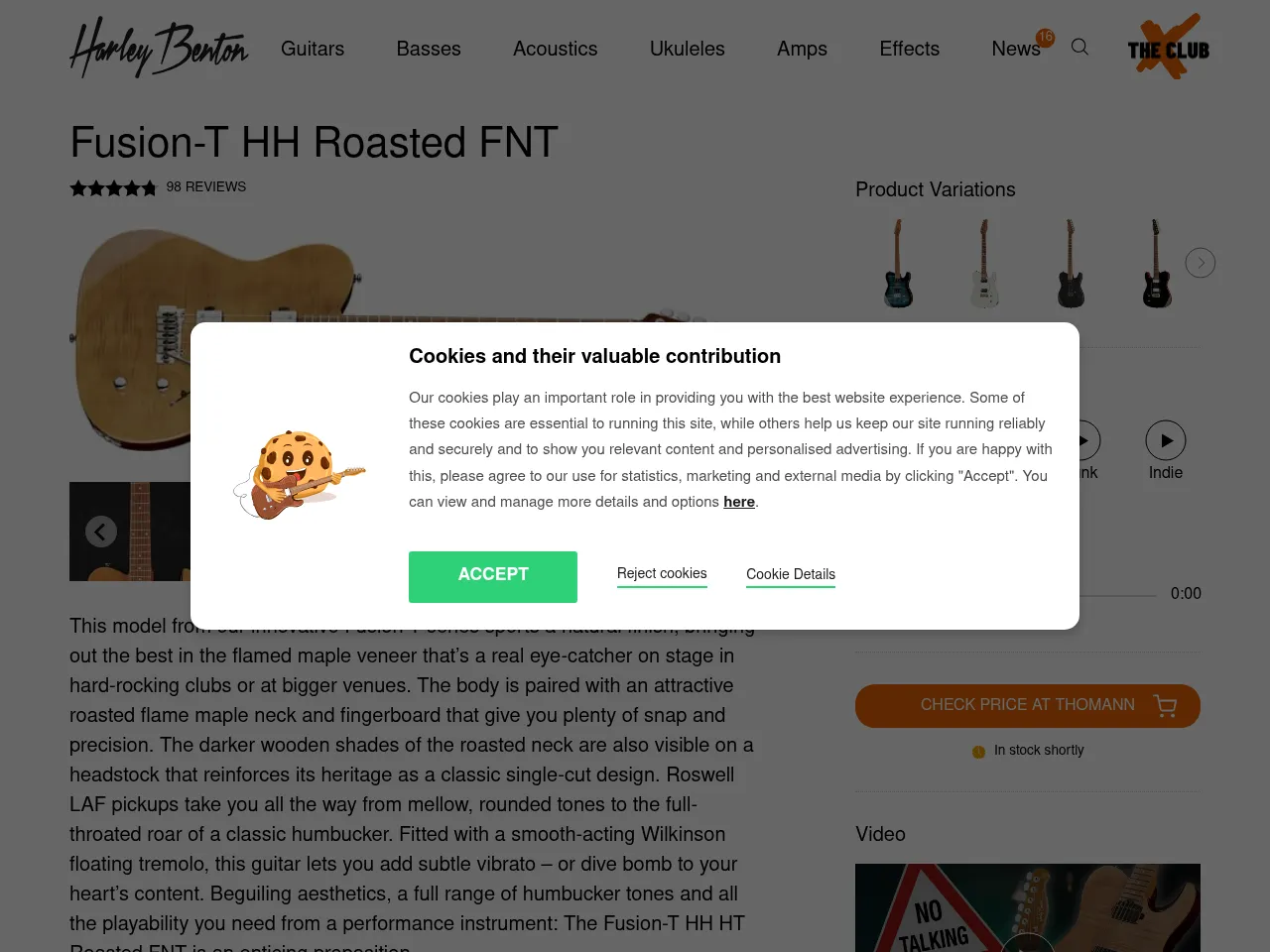
 Harley Benton Fusion-II
Harley Benton
$199
Beginner
China
A remarkably feature-rich guitar with roasted maple neck, stainless steel frets, compound radius, and coil-split humbuckers at an entry-level price, delivering professional specifications at exceptional value.
Harley Benton Fusion-II
Harley Benton
$199
Beginner
China
A remarkably feature-rich guitar with roasted maple neck, stainless steel frets, compound radius, and coil-split humbuckers at an entry-level price, delivering professional specifications at exceptional value.
 24
4.7
24
4.7
 Harley Benton SC-550 II
Harley Benton
$179
Beginner
China
An astonishingly affordable single-cut with set mahogany neck and Alnico V humbuckers delivering surprisingly rich, balanced tones with clean fret ends and attractive finishes that belie the price.
Harley Benton SC-550 II
Harley Benton
$179
Beginner
China
An astonishingly affordable single-cut with set mahogany neck and Alnico V humbuckers delivering surprisingly rich, balanced tones with clean fret ends and attractive finishes that belie the price.
 25
4.7
25
4.7
 PRS S2 McCarty 594
PRS
$1,999
Advanced
United States
American-made single-cut with vintage-inspired 24.594-inch scale length and 58/15 S pickups delivering warm, PAF-style tones at a mid-tier PRS price.
PRS S2 McCarty 594
PRS
$1,999
Advanced
United States
American-made single-cut with vintage-inspired 24.594-inch scale length and 58/15 S pickups delivering warm, PAF-style tones at a mid-tier PRS price.
 26
4.7
26
4.7
 PRS S2 Vela
PRS
$1,699
Advanced
United States
Distinctive offset-inspired PRS with a unique Type D single-coil and Starla humbucker combination, offering a sonic personality unlike anything else in the lineup.
PRS S2 Vela
PRS
$1,699
Advanced
United States
Distinctive offset-inspired PRS with a unique Type D single-coil and Starla humbucker combination, offering a sonic personality unlike anything else in the lineup.
 27
4.7
27
4.7
 PRS SE Custom 24
PRS
$599
Intermediate
Indonesia
Cornerstone of the PRS SE lineup with 85/15 S humbuckers and push-pull coil-split, delivering genre-spanning versatility at an accessible price.
PRS SE Custom 24
PRS
$599
Intermediate
Indonesia
Cornerstone of the PRS SE lineup with 85/15 S humbuckers and push-pull coil-split, delivering genre-spanning versatility at an accessible price.
 28
4.7
28
4.7
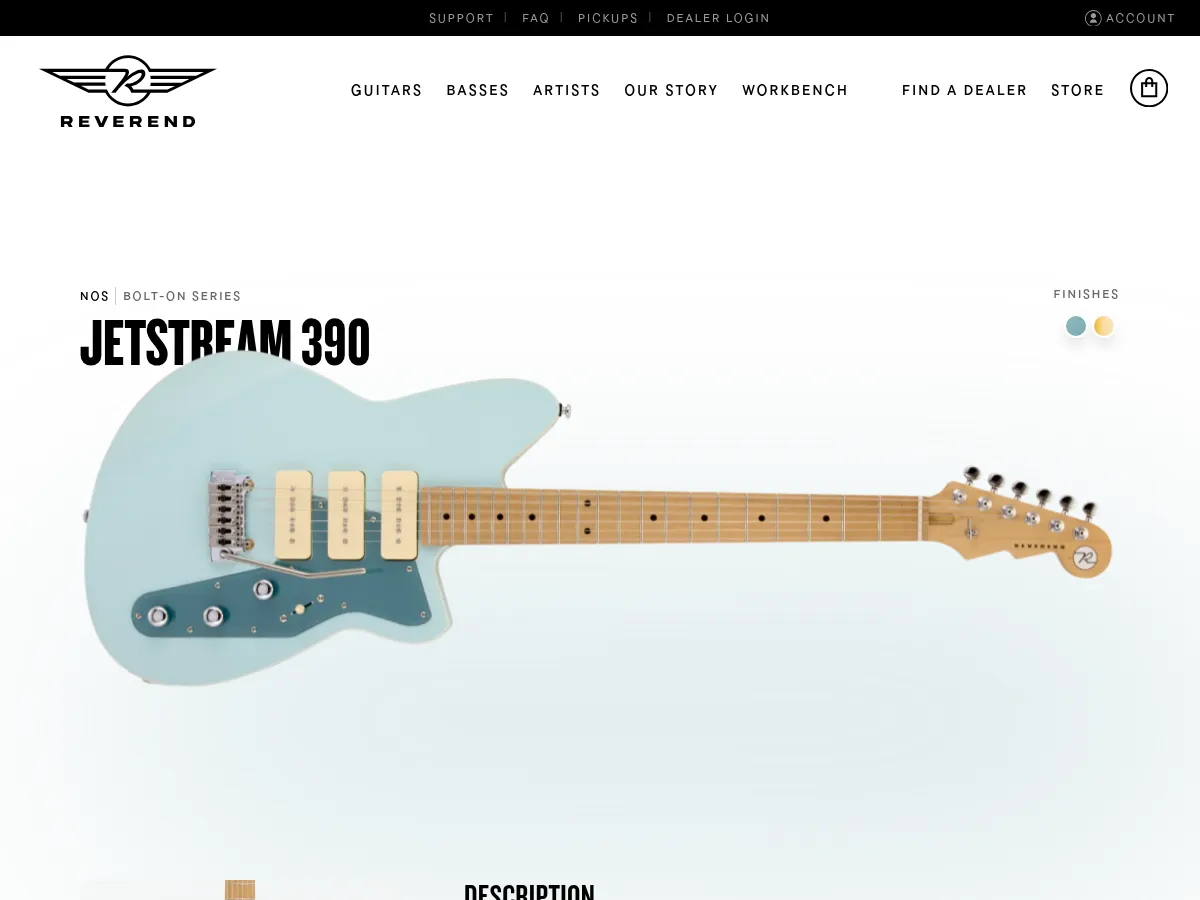
 Reverend Jetstream 390
Reverend
$1,199
Advanced
South Korea
Distinctive American-designed guitar with korina body, three HA5 single-coil pickups, and signature bass contour knob for real-time low-end adjustment.
Reverend Jetstream 390
Reverend
$1,199
Advanced
South Korea
Distinctive American-designed guitar with korina body, three HA5 single-coil pickups, and signature bass contour knob for real-time low-end adjustment.
 29
4.7
29
4.7
 Schecter Reaper-6 Elite
Schecter
$1,199
Advanced
South Korea
Visually dramatic guitar with swamp ash body, burl maple veneer, Sustainiac active neck pickup for infinite sustain, and stainless steel frets for modern metal.
Schecter Reaper-6 Elite
Schecter
$1,199
Advanced
South Korea
Visually dramatic guitar with swamp ash body, burl maple veneer, Sustainiac active neck pickup for infinite sustain, and stainless steel frets for modern metal.
 30
4.7
30
4.7
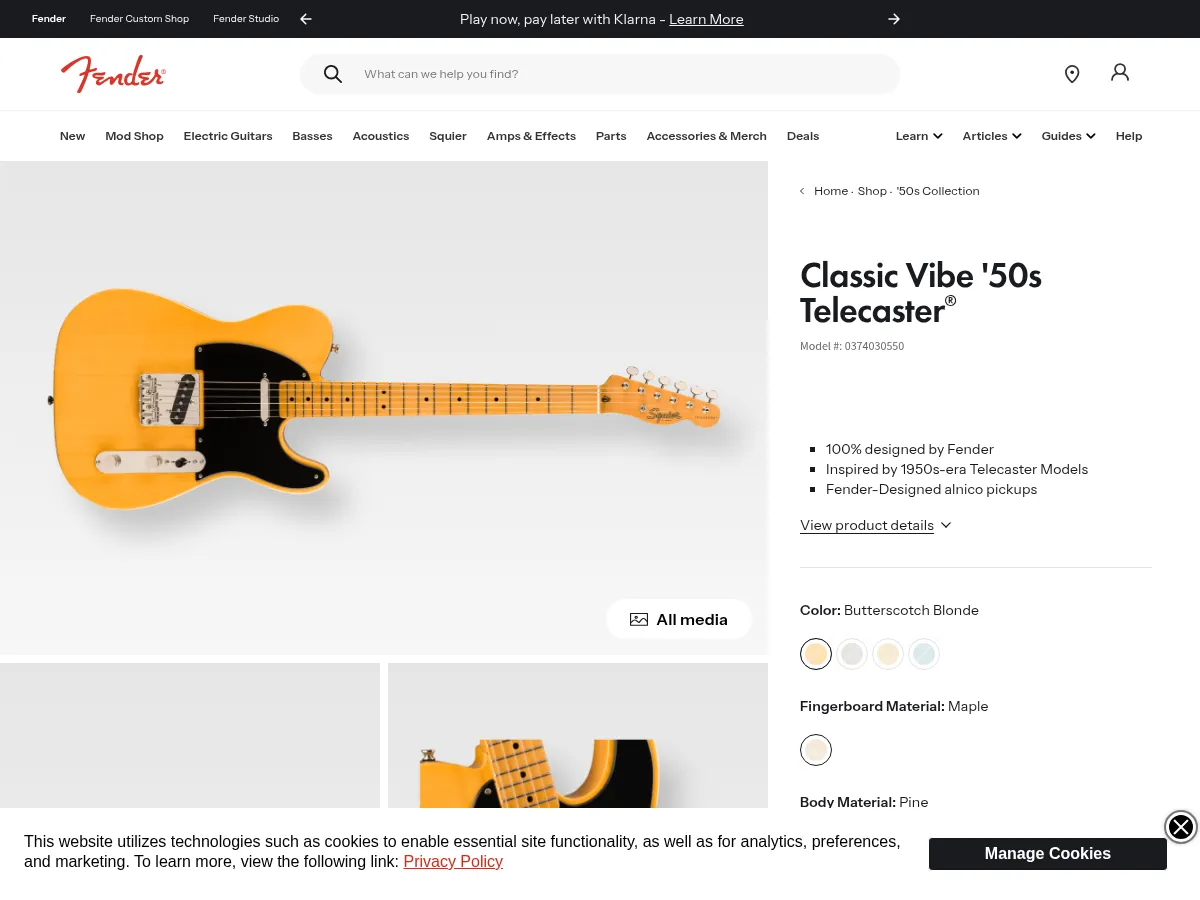
 Squier Classic Vibe '50s Telecaster
Squier
$439
Intermediate
China
Budget-friendly vintage Telecaster with pine body and custom Alnico 5 pickups, delivering impressive vintage tone and build quality that belies its price.
Squier Classic Vibe '50s Telecaster
Squier
$439
Intermediate
China
Budget-friendly vintage Telecaster with pine body and custom Alnico 5 pickups, delivering impressive vintage tone and build quality that belies its price.
 31
4.7
31
4.7
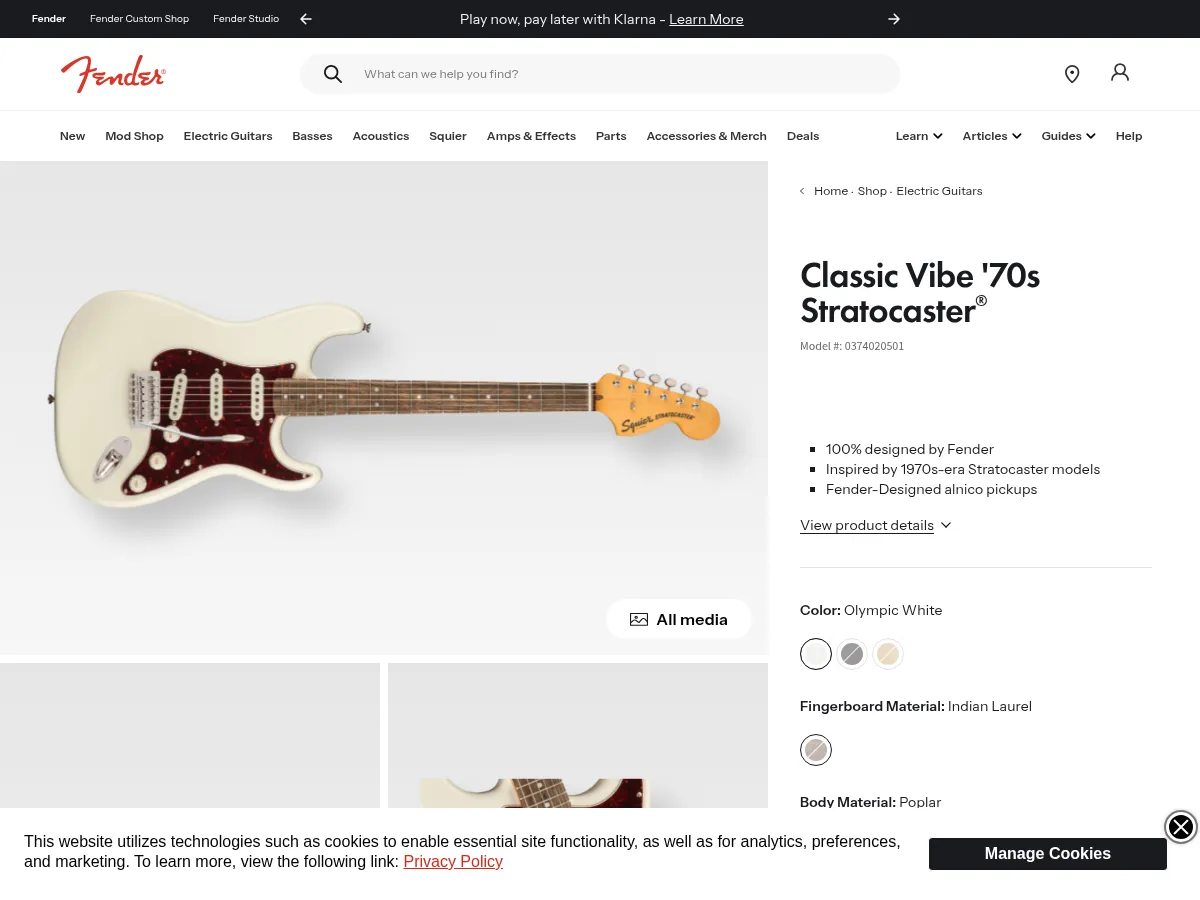
 Squier Classic Vibe '70s Stratocaster
Squier
$439
Beginner
Indonesia
Budget-friendly 1970s Stratocaster recreation with large headstock, Alnico single-coils, and Classic Vibe build quality that punches above its price point.
Squier Classic Vibe '70s Stratocaster
Squier
$439
Beginner
Indonesia
Budget-friendly 1970s Stratocaster recreation with large headstock, Alnico single-coils, and Classic Vibe build quality that punches above its price point.
 32
4.7
32
4.7
 Duesenberg Starplayer TV
Duesenberg
$2,249
Professional
Germany
A stunningly crafted German semi-hollow guitar combining a Grand Vintage humbucker and Domino P-90 with the signature Deluxe Tremola vibrato, delivering versatile tones across rockabilly, blues, jazz, and indie.
Duesenberg Starplayer TV
Duesenberg
$2,249
Professional
Germany
A stunningly crafted German semi-hollow guitar combining a Grand Vintage humbucker and Domino P-90 with the signature Deluxe Tremola vibrato, delivering versatile tones across rockabilly, blues, jazz, and indie.
 33
4.6
33
4.6
 Epiphone ES-335
Epiphone
$499
Intermediate
China
An affordable semi-hollow with Alnico Classic PRO humbuckers that delivers warm, woody tones with three-dimensional clean sounds and smooth overdrive, offering the legendary ES-335 experience on a budget.
Epiphone ES-335
Epiphone
$499
Intermediate
China
An affordable semi-hollow with Alnico Classic PRO humbuckers that delivers warm, woody tones with three-dimensional clean sounds and smooth overdrive, offering the legendary ES-335 experience on a budget.
 34
4.6
34
4.6
 Epiphone SG Standard
Epiphone
$449
Intermediate
China
An affordable SG with ProBucker humbuckers delivering punchy, midrange-rich tones for rock and blues, featuring lightweight construction and excellent upper-fret access in the classic double-cutaway shape.
Epiphone SG Standard
Epiphone
$449
Intermediate
China
An affordable SG with ProBucker humbuckers delivering punchy, midrange-rich tones for rock and blues, featuring lightweight construction and excellent upper-fret access in the classic double-cutaway shape.
 35
4.6
35
4.6
 ESP LTD EC-256
ESP
$399
Intermediate
Indonesia
A budget single-cutaway guitar with LH-150 humbuckers and carved maple top that delivers thick rock and metal tones with clean binding and a slim neck profile comfortable for smaller hands.
ESP LTD EC-256
ESP
$399
Intermediate
Indonesia
A budget single-cutaway guitar with LH-150 humbuckers and carved maple top that delivers thick rock and metal tones with clean binding and a slim neck profile comfortable for smaller hands.
 36
4.6
36
4.6
 EVH Striped Series
EVH
$1,499
Advanced
Mexico
A high-performance guitar channeling Eddie Van Halen's legacy with a single Wolfgang humbucker, EVH Floyd Rose tremolo, and compound radius fingerboard designed for explosive rock and metal playing.
EVH Striped Series
EVH
$1,499
Advanced
Mexico
A high-performance guitar channeling Eddie Van Halen's legacy with a single Wolfgang humbucker, EVH Floyd Rose tremolo, and compound radius fingerboard designed for explosive rock and metal playing.
 37
4.6
37
4.6
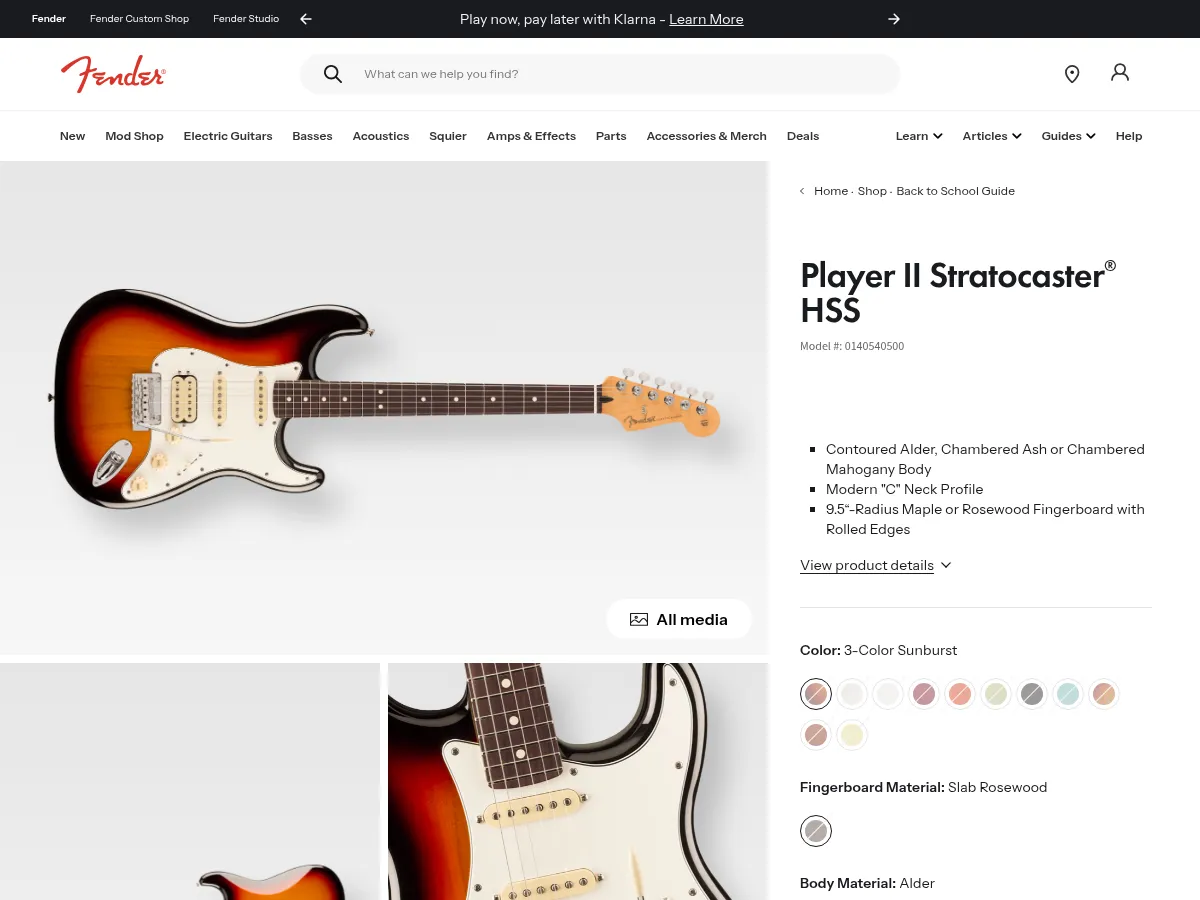
 Fender Player Stratocaster
Fender
$849
Intermediate
Mexico
A versatile Mexican-made Stratocaster with Alnico 5 single-coils and two-point tremolo that delivers authentic Strat sparkle and expressiveness across blues, rock, funk, and country at a reasonable price.
Fender Player Stratocaster
Fender
$849
Intermediate
Mexico
A versatile Mexican-made Stratocaster with Alnico 5 single-coils and two-point tremolo that delivers authentic Strat sparkle and expressiveness across blues, rock, funk, and country at a reasonable price.
 38
4.6
38
4.6
 Fender Player Stratocaster HSS
Fender
$879
Intermediate
Mexico
An HSS Stratocaster with a bridge humbucker for added tonal range alongside classic single-coil positions, handling everything from clean jazz voicings to driven rock crunch without breaking a sweat.
Fender Player Stratocaster HSS
Fender
$879
Intermediate
Mexico
An HSS Stratocaster with a bridge humbucker for added tonal range alongside classic single-coil positions, handling everything from clean jazz voicings to driven rock crunch without breaking a sweat.
 39
4.6
39
4.6
 Fender Player Telecaster
Fender
$849
Intermediate
Mexico
A straightforward Telecaster with Player Series single-coils delivering iconic snap, bite, and twang through a simple three-way selector, built in Mexico with clean fretwork and reliable hardware.
Fender Player Telecaster
Fender
$849
Intermediate
Mexico
A straightforward Telecaster with Player Series single-coils delivering iconic snap, bite, and twang through a simple three-way selector, built in Mexico with clean fretwork and reliable hardware.
 40
4.6
40
4.6
 Fender Vintera II '60s Stratocaster
Fender
$1,149
Intermediate
Mexico
A vintage-inspired 1960s Stratocaster with 7.25-inch radius rosewood board and Vintage-Style pickups, delivering glassy, bell-like tones with authentic period-correct specifications and lacquer neck finish.
Fender Vintera II '60s Stratocaster
Fender
$1,149
Intermediate
Mexico
A vintage-inspired 1960s Stratocaster with 7.25-inch radius rosewood board and Vintage-Style pickups, delivering glassy, bell-like tones with authentic period-correct specifications and lacquer neck finish.
 41
4.6
41
4.6
 Gibson Flying V
Gibson
$1,999
Intermediate
United States
An iconic V-shaped guitar with 490R/490T humbuckers delivering bright, biting tone, offering a lightweight, comfortable playing experience in the classical seated position with unforgettable stage presence.
Gibson Flying V
Gibson
$1,999
Intermediate
United States
An iconic V-shaped guitar with 490R/490T humbuckers delivering bright, biting tone, offering a lightweight, comfortable playing experience in the classical seated position with unforgettable stage presence.
 42
4.6
42
4.6
 Gibson Les Paul Junior
Gibson
$1,499
Intermediate
United States
A stripped-down rock machine with a single P-90 pickup delivering raw, gritty tone, forcing players to rely on dynamics and amp interaction with a simplicity that many find liberating and musically inspiring.
Gibson Les Paul Junior
Gibson
$1,499
Intermediate
United States
A stripped-down rock machine with a single P-90 pickup delivering raw, gritty tone, forcing players to rely on dynamics and amp interaction with a simplicity that many find liberating and musically inspiring.
 43
4.6
43
4.6
 Gibson Les Paul Modern
Gibson
$2,699
Professional
United States
A forward-thinking Les Paul with Burstbucker Pro pickups featuring coil-splitting, a compound radius ebony fingerboard, and weight-relieved body that adds modern ergonomics to the classic mahogany-maple platform.
Gibson Les Paul Modern
Gibson
$2,699
Professional
United States
A forward-thinking Les Paul with Burstbucker Pro pickups featuring coil-splitting, a compound radius ebony fingerboard, and weight-relieved body that adds modern ergonomics to the classic mahogany-maple platform.
 44
4.6
44
4.6
 Gibson SG Standard
Gibson
$1,799
Advanced
USA
A lightweight double-cutaway guitar with 490R/490T humbuckers delivering aggressive, midrange-focused tone, offering unimpeded fret access and comfortable playing under seven pounds for extended sessions.
Gibson SG Standard
Gibson
$1,799
Advanced
USA
A lightweight double-cutaway guitar with 490R/490T humbuckers delivering aggressive, midrange-focused tone, offering unimpeded fret access and comfortable playing under seven pounds for extended sessions.
 45
4.6
45
4.6
 Gretsch G5420T Electromatic
Gretsch
$899
Intermediate
South Korea
A full hollow-body with Black Top Filter'Tron humbuckers and Bigsby vibrato delivering bright, twangy Gretsch chime and jangle, ideal for rockabilly, country, and indie with striking visual presence.
Gretsch G5420T Electromatic
Gretsch
$899
Intermediate
South Korea
A full hollow-body with Black Top Filter'Tron humbuckers and Bigsby vibrato delivering bright, twangy Gretsch chime and jangle, ideal for rockabilly, country, and indie with striking visual presence.
 46
4.6
46
4.6
 Ibanez JEM77P Steve Vai
Ibanez
$1,499
Advanced
Indonesia
The iconic Steve Vai signature with Tree of Life inlay, three DiMarzio Evolution pickups, and the legendary Edge tremolo, featuring a Super Wizard neck designed for virtuoso-level speed and expression.
Ibanez JEM77P Steve Vai
Ibanez
$1,499
Advanced
Indonesia
The iconic Steve Vai signature with Tree of Life inlay, three DiMarzio Evolution pickups, and the legendary Edge tremolo, featuring a Super Wizard neck designed for virtuoso-level speed and expression.
 47
4.6
47
4.6
 Ibanez TOD10N Tim Henson Signature
Ibanez
$499
Intermediate
Indonesia
A groundbreaking nylon-string electric designed with Tim Henson featuring electric-standard scale length, flat radius, 24 frets, and Fishman piezo pickup, bridging classical expressiveness and modern technique.
Ibanez TOD10N Tim Henson Signature
Ibanez
$499
Intermediate
Indonesia
A groundbreaking nylon-string electric designed with Tim Henson featuring electric-standard scale length, flat radius, 24 frets, and Fishman piezo pickup, bridging classical expressiveness and modern technique.
 48
4.6
48
4.6
 Jackson Pro Series Soloist SL3
Jackson
$1,299
Advanced
Indonesia
A through-body neck Soloist with HSS Seymour Duncan configuration and Floyd Rose tremolo, offering both crushing high-gain and sparkling single-coil tones with uninhibited upper-fret access.
Jackson Pro Series Soloist SL3
Jackson
$1,299
Advanced
Indonesia
A through-body neck Soloist with HSS Seymour Duncan configuration and Floyd Rose tremolo, offering both crushing high-gain and sparkling single-coil tones with uninhibited upper-fret access.
 49
4.6
49
4.6
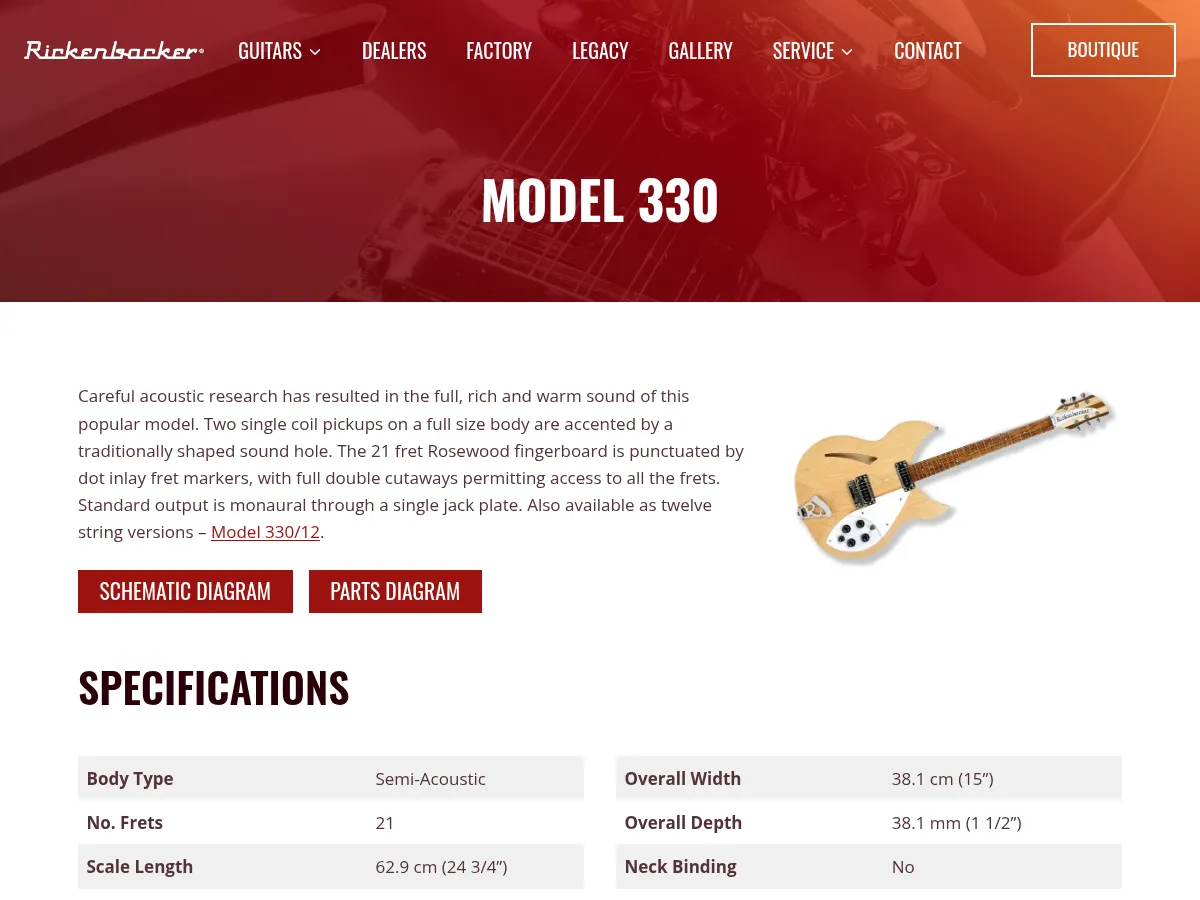
 Rickenbacker 330
Rickenbacker
$2,499
Professional
United States
Iconic semi-hollow electric with trademark chime from two high-gain single-coil pickups, defining the sound of jangle pop and British Invasion music for six decades.
Rickenbacker 330
Rickenbacker
$2,499
Professional
United States
Iconic semi-hollow electric with trademark chime from two high-gain single-coil pickups, defining the sound of jangle pop and British Invasion music for six decades.
 50
4.6
50
4.6
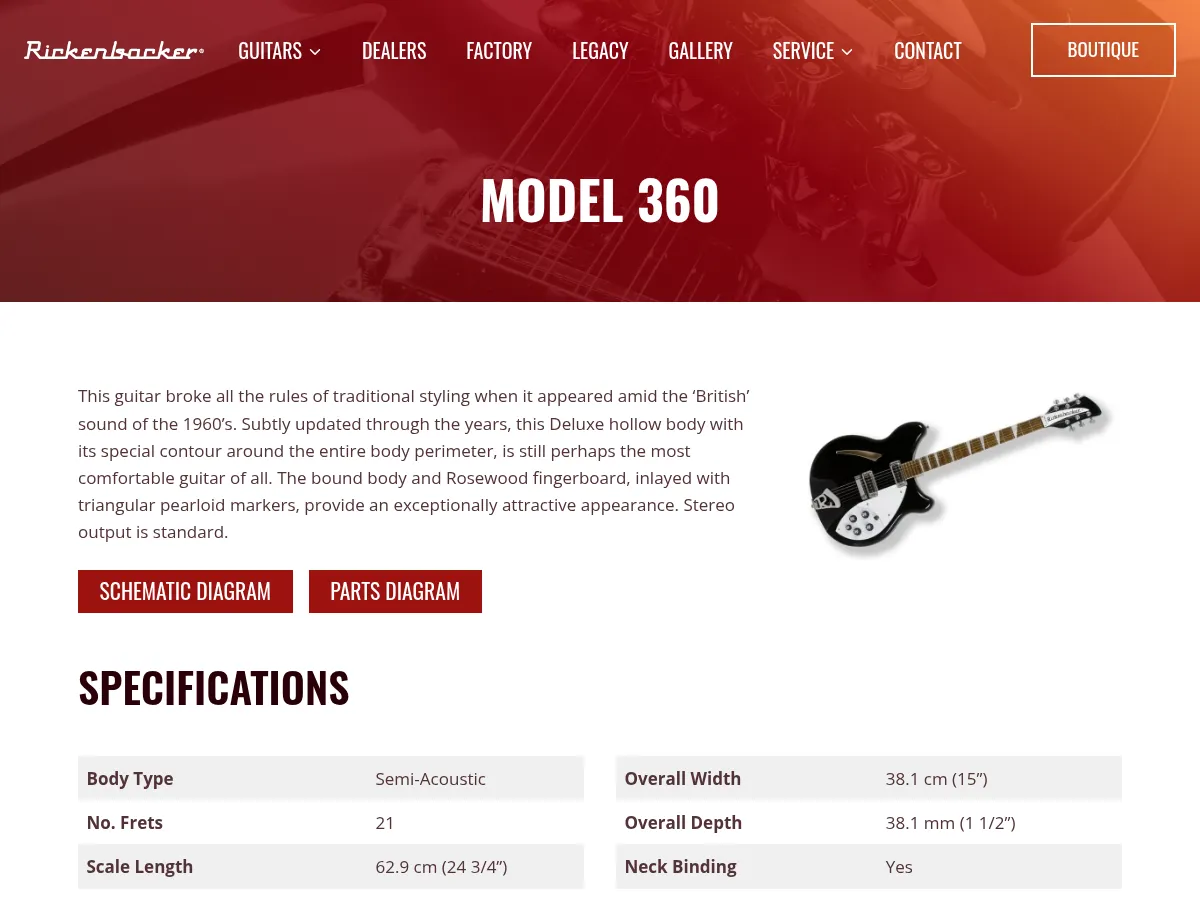
 Rickenbacker 360
Rickenbacker
$2,799
Professional
United States
Deluxe semi-hollow Rickenbacker with refined appointments, stereo Rick-O-Sound output, and the shimmering chime that defines alternative and post-punk guitar.
Rickenbacker 360
Rickenbacker
$2,799
Professional
United States
Deluxe semi-hollow Rickenbacker with refined appointments, stereo Rick-O-Sound output, and the shimmering chime that defines alternative and post-punk guitar.
 51
4.6
51
4.6
 Schecter C-1 Platinum
Schecter
$799
Intermediate
South Korea
Feature-rich electric guitar with mahogany body, quilted maple top, and high-output Diamond SuperRock II humbuckers, designed for modern rock and metal players.
Schecter C-1 Platinum
Schecter
$799
Intermediate
South Korea
Feature-rich electric guitar with mahogany body, quilted maple top, and high-output Diamond SuperRock II humbuckers, designed for modern rock and metal players.
 52
4.6
52
4.6
 Strandberg Boden Standard NX 6
Strandberg
$1,599
Advanced
Indonesia
Modern ergonomic guitar with headless design, trapezoidal EndurNeck profile, and Suhr-designed pickups, challenging every convention of traditional guitar design.
Strandberg Boden Standard NX 6
Strandberg
$1,599
Advanced
Indonesia
Modern ergonomic guitar with headless design, trapezoidal EndurNeck profile, and Suhr-designed pickups, challenging every convention of traditional guitar design.
 53
4.5
53
4.5
 Charvel Pro-Mod DK24
Charvel
$999
Advanced
Mexico
The Charvel Pro-Mod DK24 is a modern performance guitar with a compound-radius caramelized maple neck, stainless steel frets, Seymour Duncan pickups, and a Gotoh tremolo, built for speed across fusion, progressive, and modern rock.
Charvel Pro-Mod DK24
Charvel
$999
Advanced
Mexico
The Charvel Pro-Mod DK24 is a modern performance guitar with a compound-radius caramelized maple neck, stainless steel frets, Seymour Duncan pickups, and a Gotoh tremolo, built for speed across fusion, progressive, and modern rock.
 54
4.5
54
4.5
 Gibson Explorer
Gibson
$1,999
Intermediate
United States
An angular, aggressive guitar with a bold Explorer shape and 490R/490T humbuckers delivering thick, powerful tone with muscular midrange, offering excellent upper-fret access for hard rock and metal players.
Gibson Explorer
Gibson
$1,999
Intermediate
United States
An angular, aggressive guitar with a bold Explorer shape and 490R/490T humbuckers delivering thick, powerful tone with muscular midrange, offering excellent upper-fret access for hard rock and metal players.
 55
4.4
55
4.4
 Epiphone Casino
Epiphone
$599
Intermediate
China
A fully hollow electric guitar with legendary Beatles heritage, featuring P-90 PRO pickups that deliver raw, gritty tones with harmonic complexity, ideal for blues, classic rock, and British Invasion styles.
Epiphone Casino
Epiphone
$599
Intermediate
China
A fully hollow electric guitar with legendary Beatles heritage, featuring P-90 PRO pickups that deliver raw, gritty tones with harmonic complexity, ideal for blues, classic rock, and British Invasion styles.
 56
4.4
56
4.4
 Fender Player Jazzmaster
Fender
$879
Intermediate
Mexico
A modern Jazzmaster with Player Series Alnico 2 pickups delivering warm, full-bodied tones with pronounced midrange, featuring a simplified control layout that makes the offset platform more intuitive.
Fender Player Jazzmaster
Fender
$879
Intermediate
Mexico
A modern Jazzmaster with Player Series Alnico 2 pickups delivering warm, full-bodied tones with pronounced midrange, featuring a simplified control layout that makes the offset platform more intuitive.
 57
4.4
57
4.4
 Fender Player Plus Meteora HH
Fender
$1,149
Intermediate
Mexico
A modern offset guitar with the distinctive Meteora silhouette, featuring Player Plus Noiseless humbuckers with coil-split via push-pull tone knob for versatile tones from Fender sparkle to thick drive.
Fender Player Plus Meteora HH
Fender
$1,149
Intermediate
Mexico
A modern offset guitar with the distinctive Meteora silhouette, featuring Player Plus Noiseless humbuckers with coil-split via push-pull tone knob for versatile tones from Fender sparkle to thick drive.
 58
4.4
58
4.4
 Gretsch G2622 Streamliner
Gretsch
$449
Intermediate
China
An affordable semi-hollow with Broad'Tron humbuckers and center block delivering warm, full-bodied tones with characteristic Gretsch shimmer, bringing the brand's aesthetic and sound to budget-friendly territory.
Gretsch G2622 Streamliner
Gretsch
$449
Intermediate
China
An affordable semi-hollow with Broad'Tron humbuckers and center block delivering warm, full-bodied tones with characteristic Gretsch shimmer, bringing the brand's aesthetic and sound to budget-friendly territory.
 59
4.4
59
4.4
 Ibanez RG421
Ibanez
$299
Beginner
Indonesia
A budget RG with 24-fret jatoba board and Quantum humbuckers in a hardtail configuration, providing a fast Wizard III neck and modern metal tones without the complexity of a floating tremolo.
Ibanez RG421
Ibanez
$299
Beginner
Indonesia
A budget RG with 24-fret jatoba board and Quantum humbuckers in a hardtail configuration, providing a fast Wizard III neck and modern metal tones without the complexity of a floating tremolo.
 60
4.4
60
4.4
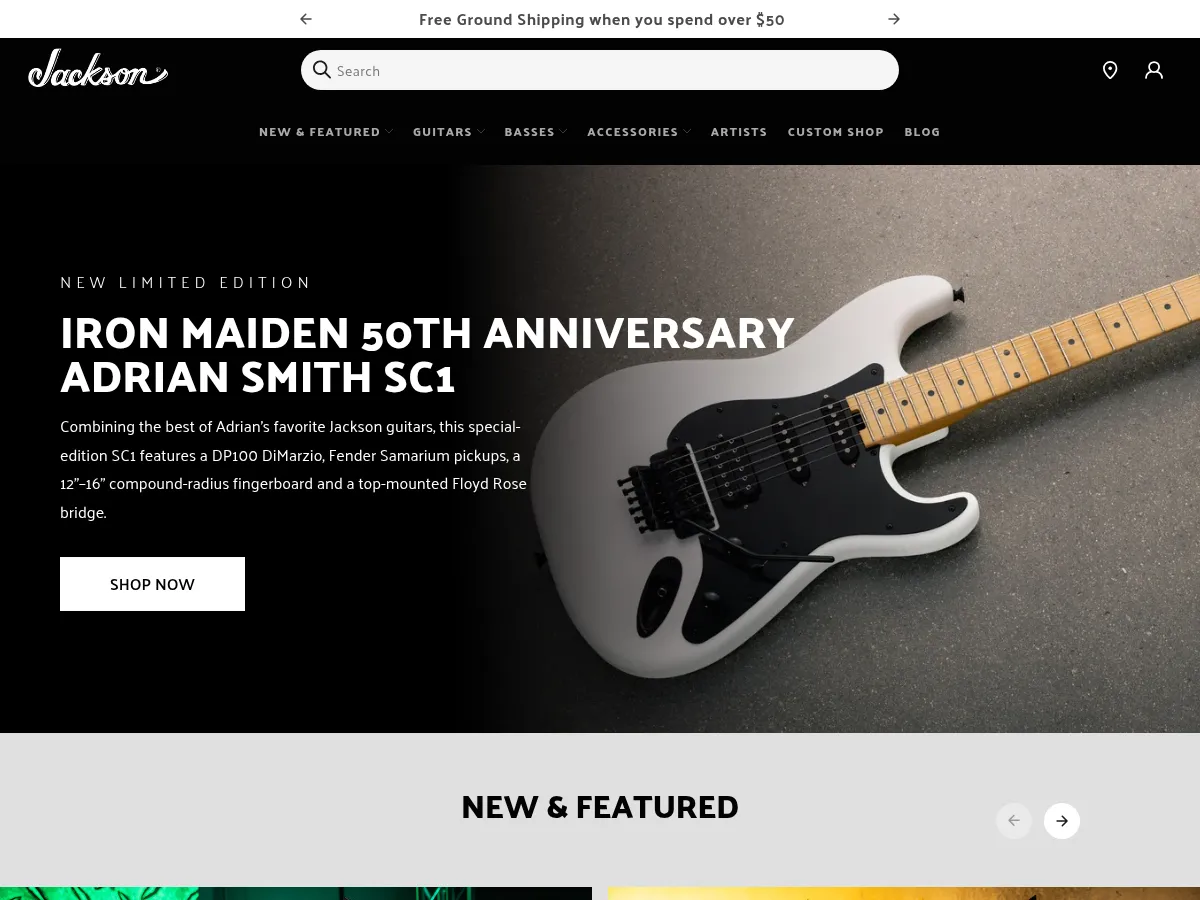
 Jackson Dinky DK2
Jackson
$999
Intermediate
Indonesia
A high-performance metal guitar with Seymour Duncan JB/59 humbuckers and Floyd Rose tremolo in the signature compact Dinky shape, featuring a compound-radius fingerboard for comfortable shredding.
Jackson Dinky DK2
Jackson
$999
Intermediate
Indonesia
A high-performance metal guitar with Seymour Duncan JB/59 humbuckers and Floyd Rose tremolo in the signature compact Dinky shape, featuring a compound-radius fingerboard for comfortable shredding.
 61
4.4
61
4.4
 Squier Paranormal Cabronita Telecaster Thinline
Squier
$349
Beginner
Indonesia
Imaginative mash-up combining Telecaster Thinline semi-hollow construction with Jazzmaster pickups, creating a distinctive sonic personality at an accessible price.
Squier Paranormal Cabronita Telecaster Thinline
Squier
$349
Beginner
Indonesia
Imaginative mash-up combining Telecaster Thinline semi-hollow construction with Jazzmaster pickups, creating a distinctive sonic personality at an accessible price.
 62
4.4
62
4.4
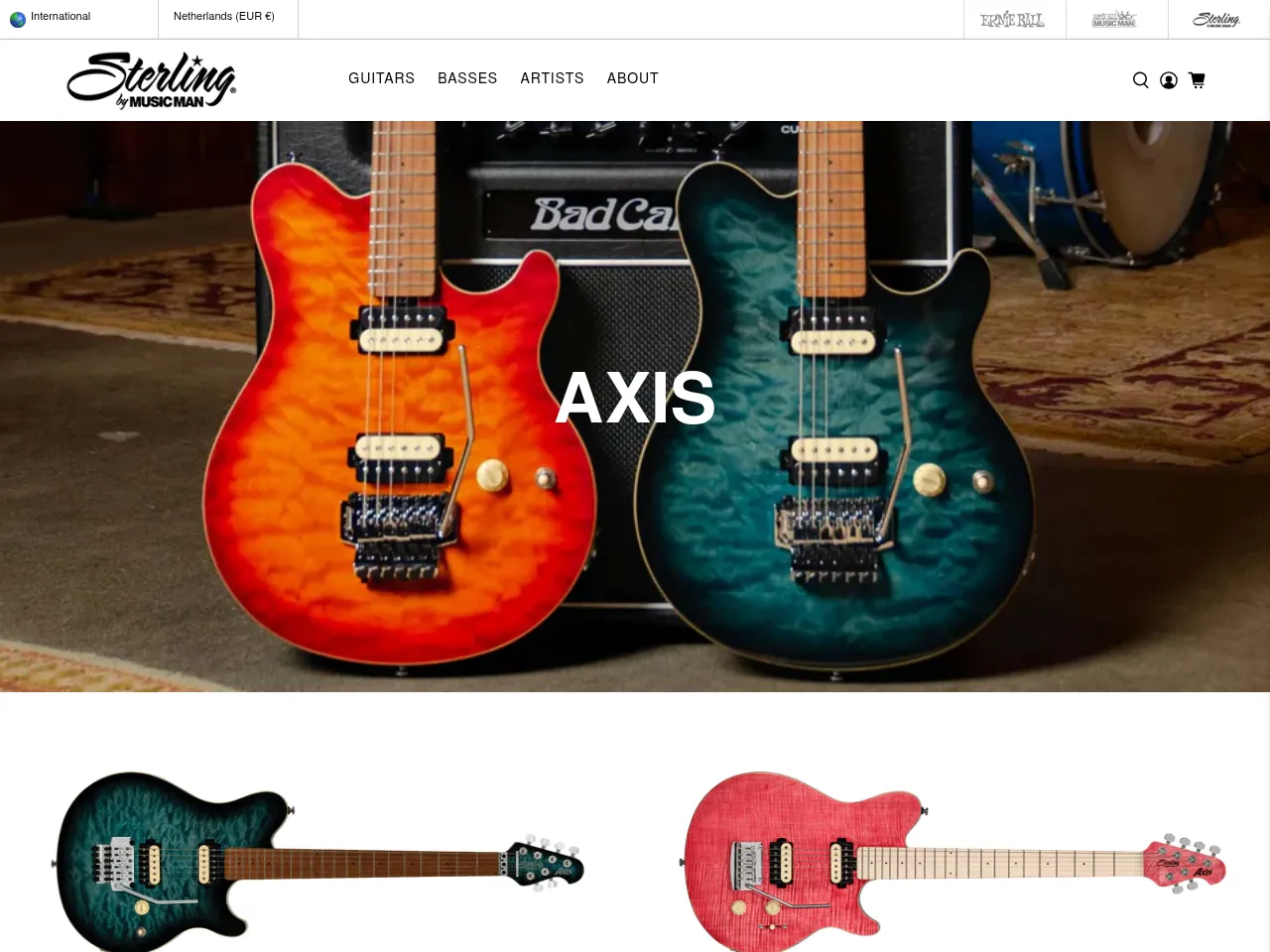
 Sterling by Music Man Axis
Sterling by Music Man
$499
Intermediate
Indonesia
Affordable version of the Music Man Axis with compact ergonomic body, roasted maple neck, and Sterling-designed humbuckers for comfortable rock playing.
Sterling by Music Man Axis
Sterling by Music Man
$499
Intermediate
Indonesia
Affordable version of the Music Man Axis with compact ergonomic body, roasted maple neck, and Sterling-designed humbuckers for comfortable rock playing.
 63
4.3
63
4.3
 Kramer Baretta
Kramer
$549
Intermediate
Indonesia
A no-frills shred guitar reviving 1980s metal spirit with a single Seymour Duncan JB humbucker, Floyd Rose tremolo, slim fast neck, and the iconic banana headstock design.
Kramer Baretta
Kramer
$549
Intermediate
Indonesia
A no-frills shred guitar reviving 1980s metal spirit with a single Seymour Duncan JB humbucker, Floyd Rose tremolo, slim fast neck, and the iconic banana headstock design.
 64
4.3
64
4.3
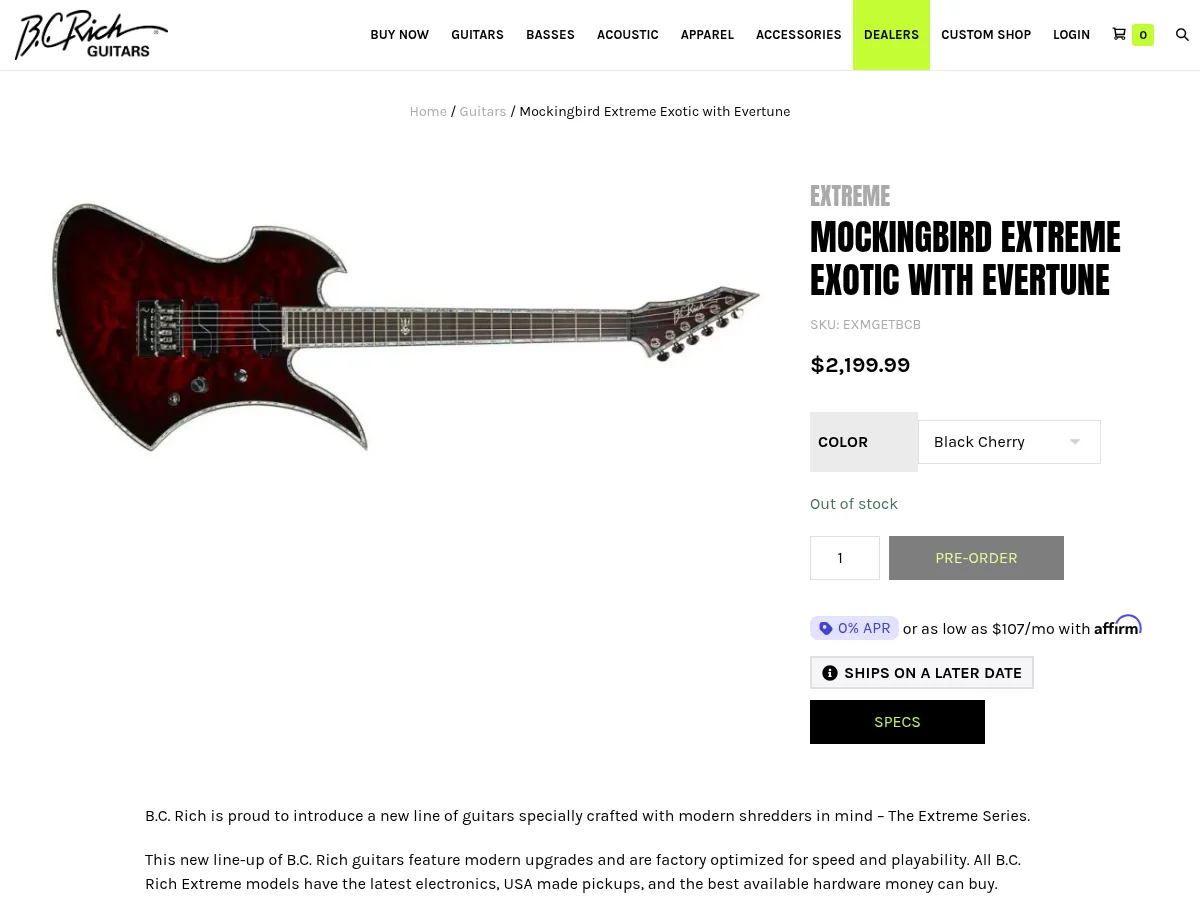
 B.C. Rich Mockingbird Extreme
B.C. Rich
$849
Advanced
Indonesia
The B.C. Rich Mockingbird Extreme combines the iconic aggressive silhouette with through-body maple neck construction, an ebony fingerboard, and high-output humbuckers, delivering crushing metal tones with exceptional sustain for heavy music players.
B.C. Rich Mockingbird Extreme
B.C. Rich
$849
Advanced
Indonesia
The B.C. Rich Mockingbird Extreme combines the iconic aggressive silhouette with through-body maple neck construction, an ebony fingerboard, and high-output humbuckers, delivering crushing metal tones with exceptional sustain for heavy music players.
 65
4.2
65
4.2
 Squier Affinity Stratocaster
Squier
$249
Beginner
Indonesia
Entry-level Stratocaster with lightweight poplar body and three ceramic single-coils, making the classic Strat experience accessible for beginners on a budget.
Squier Affinity Stratocaster
Squier
$249
Beginner
Indonesia
Entry-level Stratocaster with lightweight poplar body and three ceramic single-coils, making the classic Strat experience accessible for beginners on a budget.