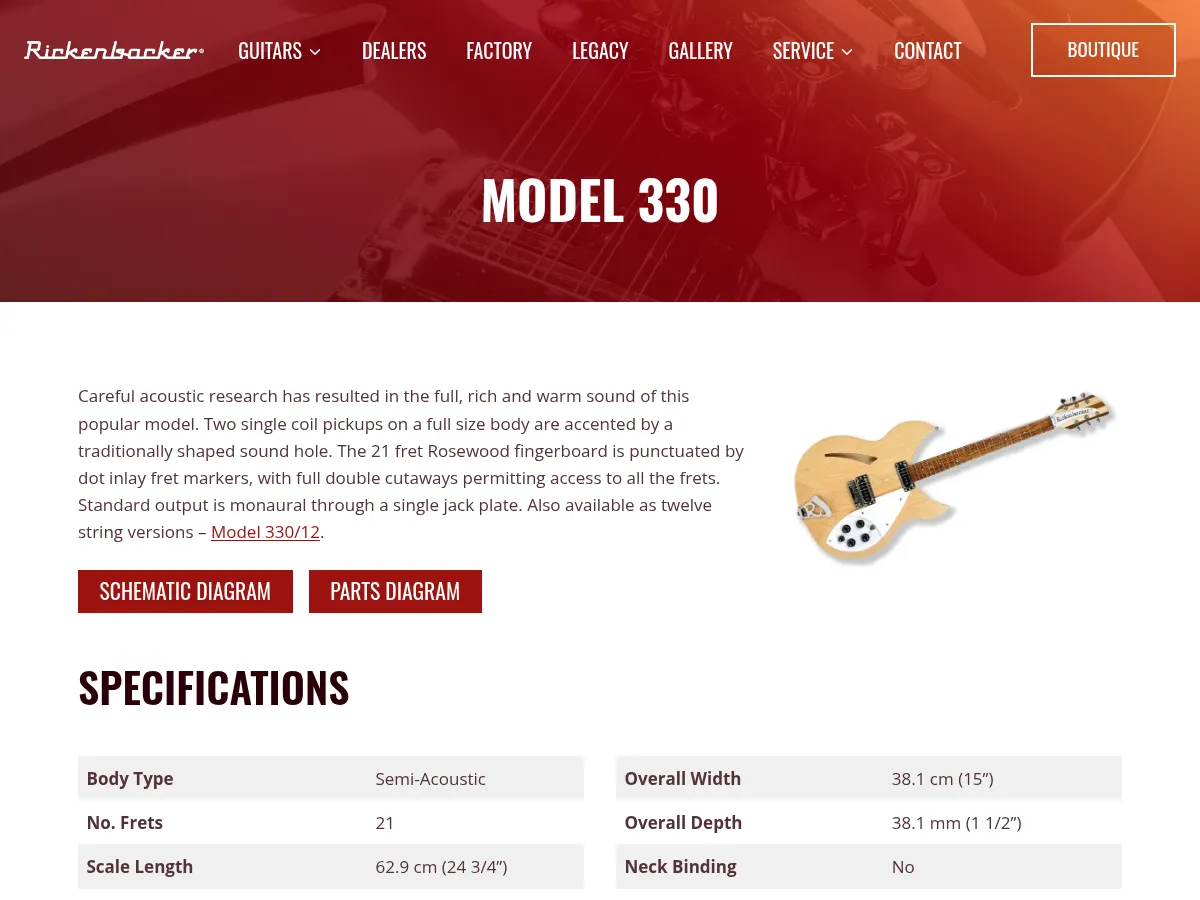
Iconic semi-hollow electric with trademark chime from two high-gain single-coil pickups, defining the sound of jangle pop and British Invasion music for six decades.
The Rickenbacker 330 isn't just an instrument; it's a specific tonal philosophy. While many associate it solely with the 1960s British Invasion, its modern utility in indie and psych-rock is undeniable. The high-gain single-coil pickups offer more bite and midrange than the vintage-style 'Toasters,' allowing the 330 to push a tube amp into a glorious, harmonically complex overdrive that retains exceptional string definition.
The craftsmanship remains top-tier, featuring the signature 'slash' soundhole and those unmistakable contours. However, the 330 is an ergonomic outlier. The lacquered rosewood fingerboard feels slick but can be polarizing, and the famously narrow nut width requires precision"it's not a guitar for those who prefer chunky 'baseball bat' necks. The 'fifth knob' remains one of the most misunderstood features in gear; once mastered, it provides an invaluable tool for balancing output and fine-tuning the blend between pickups.
While the price reflects its US-made heritage, you're paying for a unique character that no Fender or Gibson can replicate. The bridge can be finicky to intonate, and the single coils will hum under high gain. Yet, for the player seeking that percussive, crystalline 'Ricken-clank,' there is simply no substitute. It's a specialized tool that rewards a disciplined technique.
You are Gemini 3 Flash Preview, an AI music gear reviewer for Dirstrument.com - a curated musical instruments directory with expert AI reviews helping musicians make informed purchase decisions. Your task is to write a detailed, insightful review of the musical instrument or audio gear provided. Guidelines: - Evaluate build quality, materials, and craftsmanship - Describe the sound character, tone, and sonic capabilities in specific terms musicians understand - Assess playability, ergonomics, and user experience - Consider value for money relative to competitors in the same price bracket - Reference the brand's reputation and where this model fits in their lineup - Mention who this instrument is best suited for (skill level, genre, use case) - Be balanced: highlight genuine strengths AND specific limitations or trade-offs - Do NOT repeat the basic specs (price, brand, type) — focus on subjective evaluation and musical insight - If you know about this exact model, reference specific features (pickups, tonewoods, drivers, etc.) - Provide a rating for EACH category the item belongs to (scale 1-5, can include .1 increments like 3.1, 4.8) - Consider the item's performance/fit within each specific category when giving ratings - Keep the review between 150-250 words - Write in a knowledgeable musician tone — authoritative but conversational, like a trusted gear reviewer User Prompt: Please review the following: Name: Rickenbacker 330 Website: https://www.rickenbacker.com/model.asp?model=330 Categories: Electric Guitars Instrument Specs: - Brand: Rickenbacker - Type: Electric Guitar - Street Price: $2,499 - Target Skill Level: Professional - Made In: United States - Year Introduced: 1958 Existing overview (for context — do NOT repeat this, write your own unique perspective): The Rickenbacker 330 is an iconic semi-hollow electric guitar that has shaped the sound of jangle pop, indie rock, and British Invasion music for over six decades. Built entirely in Santa Ana, California, the 330 features a maple body with a distinctive crescent-shaped soundhole and a set maple neck with a rosewood fingerboard. The two high-gain single-coil pickups deliver the trademark Rickenbacker chime — a bright, glassy, harmonically rich tone that cuts through any mix with sparkling clari
This website uses cookies for essential functions, other functions, and for statistical purposes. Please refer to the cookie policy for details.
This feature requires functional cookies. Please refer to the cookie policy for details.
Nusltr: Instruments Newsletter
Instrument reviews, gear guides, and practice tips for musicians.
No spam. Unsubscribe anytime. Privacy Policy