Bass Guitars - Directory w/ AI Reviews
Electric bass guitars " 4, 5, and 6-string
The bass guitar provides the low-end foundation that connects rhythm and harmony in virtually every genre of modern music. Typically featuring four strings tuned an octave below the lowest four strings of a guitar, it anchors bands with deep, resonant tones. Bass guitars come in both electric and acoustic varieties, though electric models dominate popular music.
History
Leo Fender introduced the Precision Bass in 1951 as a portable, fretted alternative to the upright double bass. The Jazz Bass followed in 1960, offering a slimmer neck and two pickups for greater tonal variety. These two designs remain the most influential bass guitar templates, inspiring virtually every bass manufacturer since.
Characteristics
Bass guitars have a longer scale length than standard guitars, typically 34 inches, to produce deep low-frequency tones. They commonly feature four strings, though five- and six-string models extend the range. Playing techniques include fingerstyle, slap-and-pop, and pick playing, each producing distinctly different tonal textures.
Notable Players
James Jamerson's Motown bass lines on his Fender Precision Bass are among the most influential recordings in popular music. Jaco Pastorius redefined the instrument with his fretless Jazz Bass, blending jazz harmony with extraordinary technique. Flea of Red Hot Chili Peppers popularized aggressive slap bass in rock music.
Fun Facts
Paul McCartney played his iconic Hofner 500/1 "violin bass" left-handed and upside-down because left-handed models were not readily available. The lowest note on a standard four-string bass (open E) vibrates at approximately 41 Hz.
 1
4.8
1
4.8
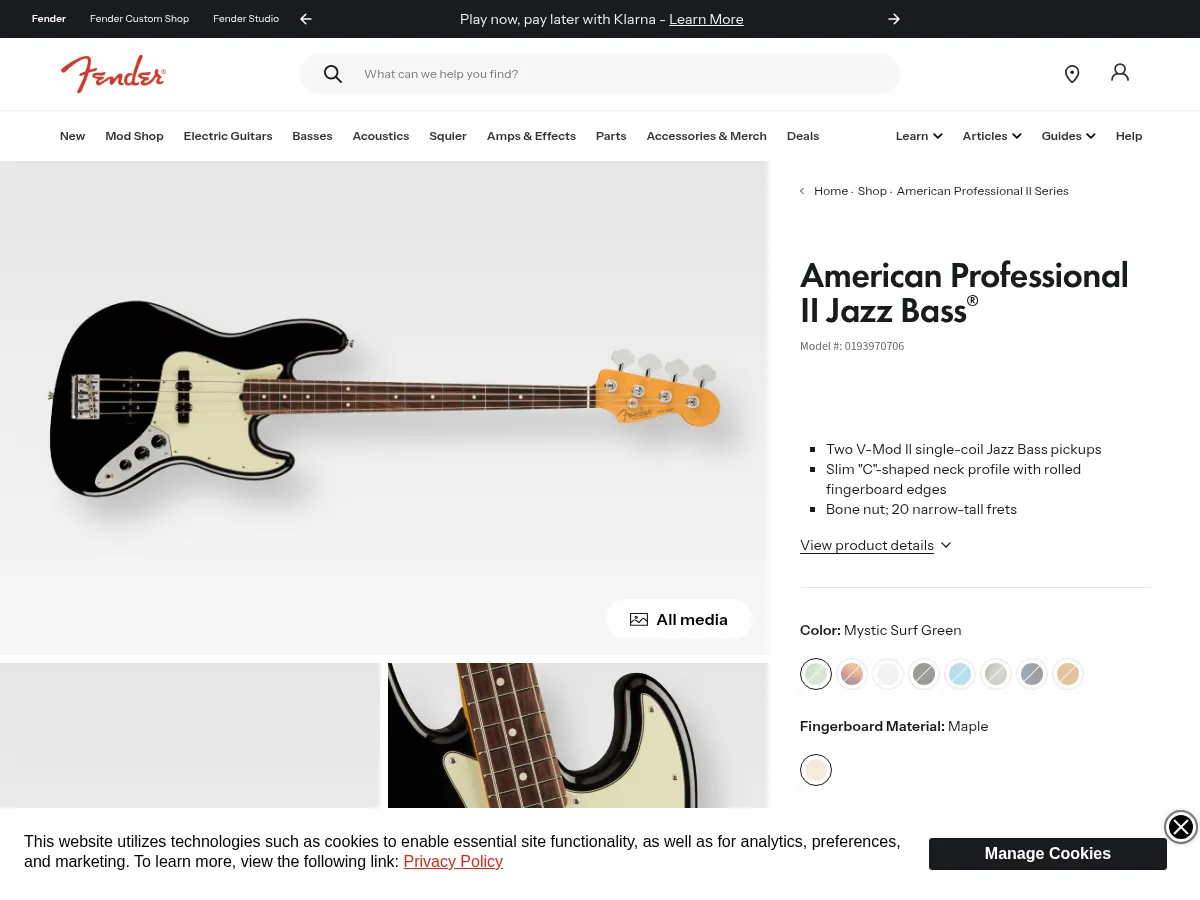
 Fender American Professional II Jazz Bass
Fender
$1,799
Advanced
USA
A premium American-made Jazz Bass with V-Mod II pickups and an active-passive push-pull tone knob, featuring rolled fingerboard edges and a sculpted neck heel for the definitive professional Jazz Bass experience.
Fender American Professional II Jazz Bass
Fender
$1,799
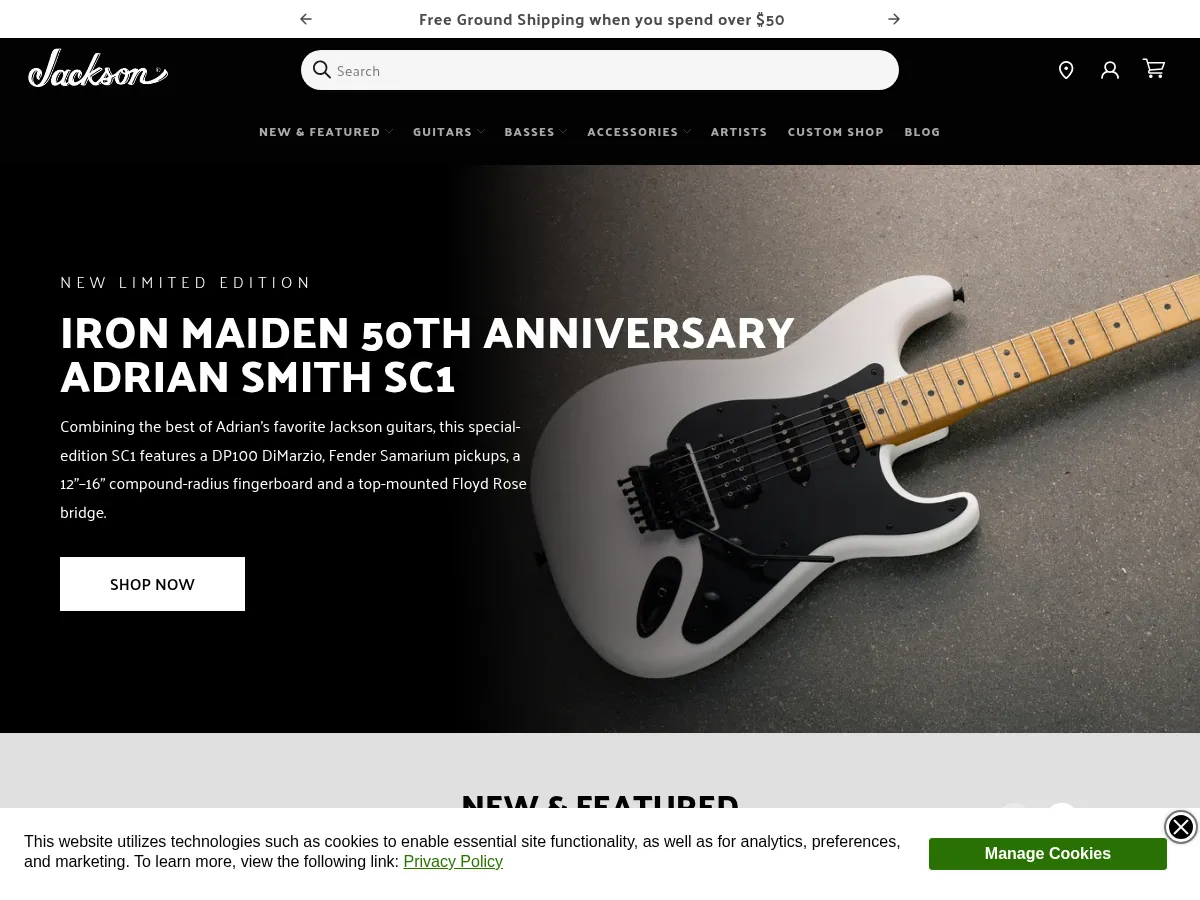
Advanced
USA
A premium American-made Jazz Bass with V-Mod II pickups and an active-passive push-pull tone knob, featuring rolled fingerboard edges and a sculpted neck heel for the definitive professional Jazz Bass experience.
 2
4.8
2
4.8
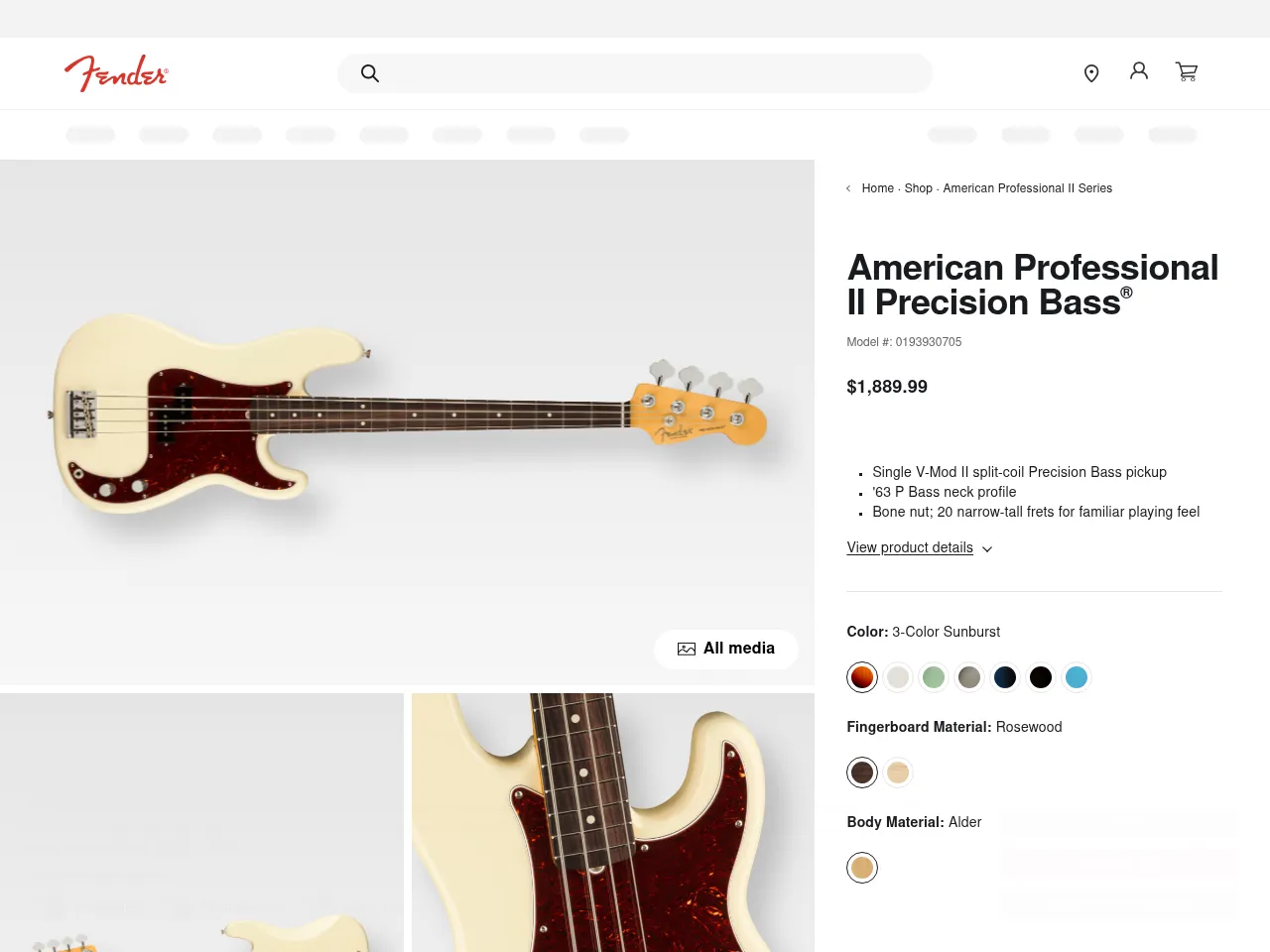
 Fender American Professional II Precision Bass
Fender
$1,799
Professional
United States
The definitive American-made P-Bass with a refined V-Mod II split-coil pickup and push-pull treble boost, delivering seven decades of iconic thump and midrange punch with modern playability refinements.
Fender American Professional II Precision Bass
Fender
$1,799
Professional
United States
The definitive American-made P-Bass with a refined V-Mod II split-coil pickup and push-pull treble boost, delivering seven decades of iconic thump and midrange punch with modern playability refinements.
 3
4.8
3
4.8
 Lakland Skyline 44-60
Lakland
$1,199
Advanced
South Korea
A premium Jazz Bass-style four-string with compound-radius fingerboard, Lakland J-style pickups, and Hipshot Ultralight tuners, delivering refined tone with superior playability.
Lakland Skyline 44-60
Lakland
$1,199
Advanced
South Korea
A premium Jazz Bass-style four-string with compound-radius fingerboard, Lakland J-style pickups, and Hipshot Ultralight tuners, delivering refined tone with superior playability.
 4
4.8
4
4.8
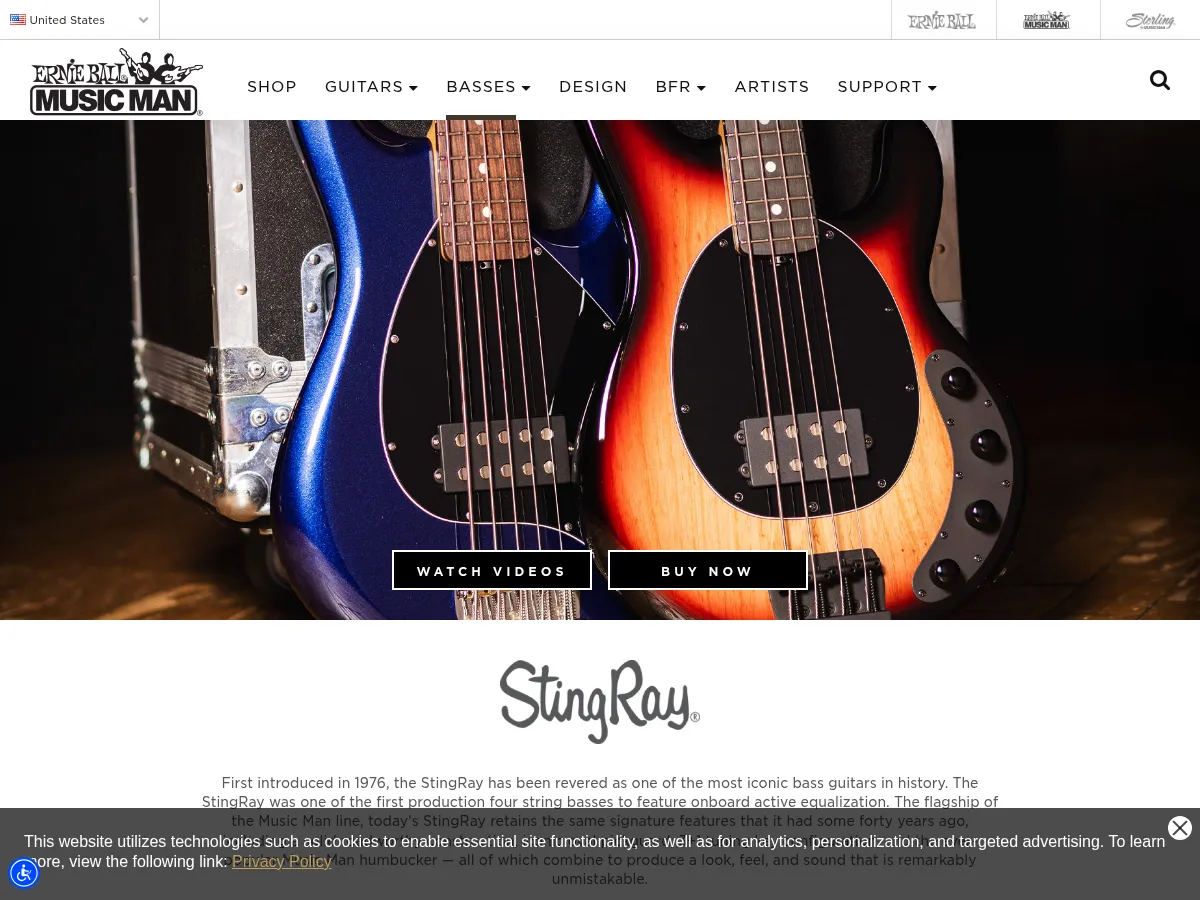
 Music Man StingRay Special
Music Man
$2,499
Professional
USA
A high-end American-made bass with neodymium humbucker and 18-volt active EQ, delivering the instantly recognizable punchy, powerful StingRay tone with modern refinements.
Music Man StingRay Special
Music Man
$2,499
Professional
USA
A high-end American-made bass with neodymium humbucker and 18-volt active EQ, delivering the instantly recognizable punchy, powerful StingRay tone with modern refinements.
 5
4.7
5
4.7
 G&L Tribute L-2000
G&L
$649
Intermediate
Indonesia
A remarkably versatile bass with Leo Fender-designed Magnetic Field Design humbuckers and extensive switching options that can convincingly approximate Precision and Jazz tones while delivering voices entirely its own.
G&L Tribute L-2000
G&L
$649
Intermediate
Indonesia
A remarkably versatile bass with Leo Fender-designed Magnetic Field Design humbuckers and extensive switching options that can convincingly approximate Precision and Jazz tones while delivering voices entirely its own.
 6
4.7
6
4.7
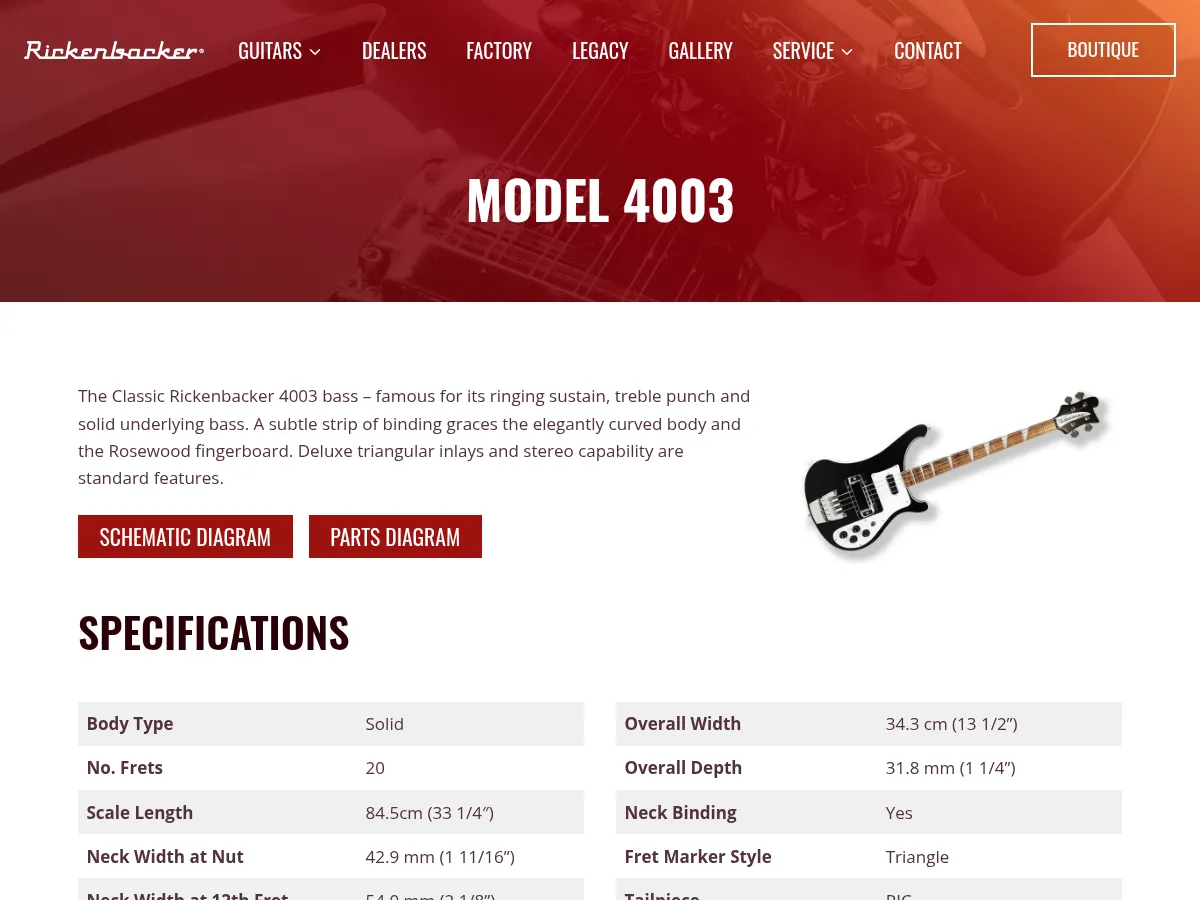
 Rickenbacker 4003
Rickenbacker
$2,499
Advanced
USA
Legendary American-made bass with distinctive piano-like, harmonically rich tone from two single-coil pickups and a through-body maple neck.
Rickenbacker 4003
Rickenbacker
$2,499
Advanced
USA
Legendary American-made bass with distinctive piano-like, harmonically rich tone from two single-coil pickups and a through-body maple neck.
 7
4.7
7
4.7
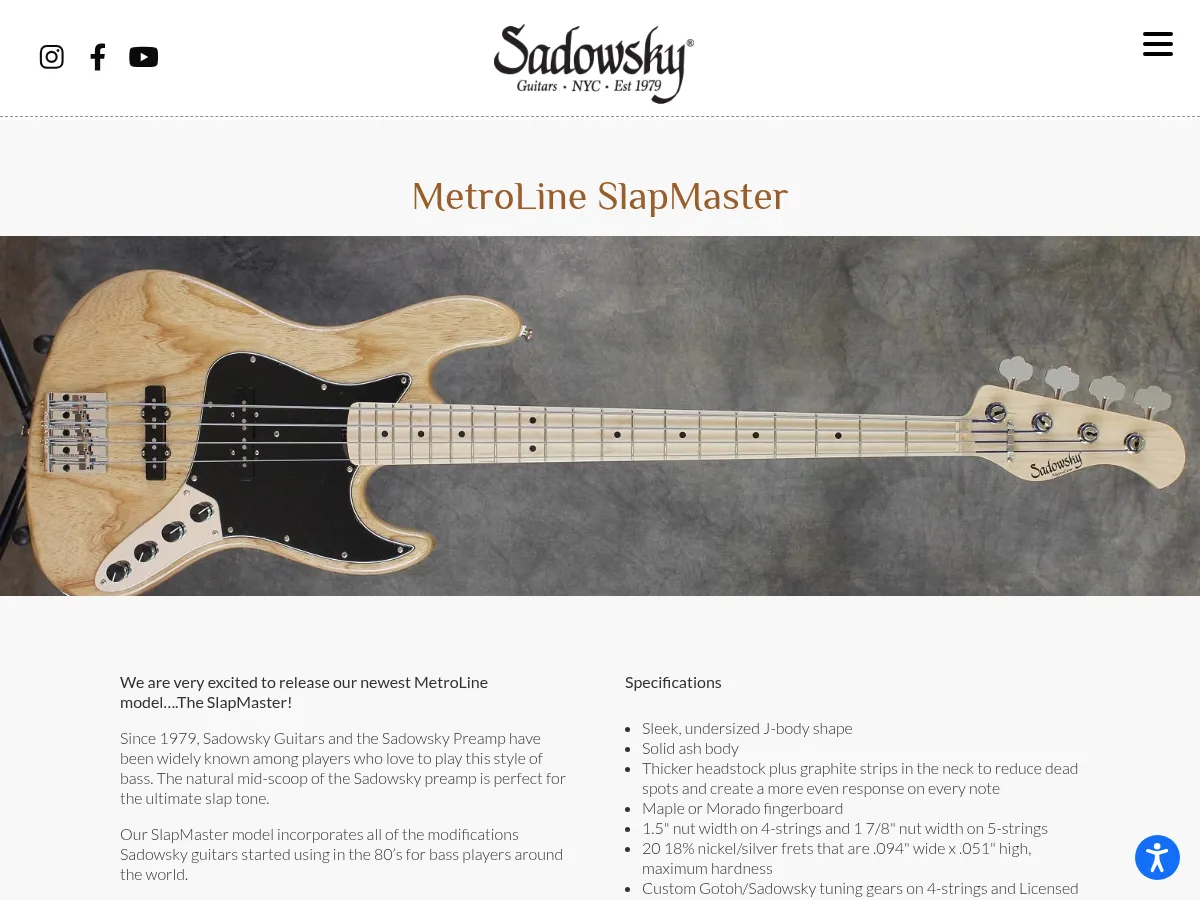
 Sadowsky MetroLine
Sadowsky
$2,799
Professional
Germany
High-end production bass bringing Roger Sadowsky's celebrated preamp and build standards to an accessible price, the industry standard among session players.
Sadowsky MetroLine
Sadowsky
$2,799
Professional
Germany
High-end production bass bringing Roger Sadowsky's celebrated preamp and build standards to an accessible price, the industry standard among session players.
 8
4.7
8
4.7
 Schecter Stiletto Studio-4
Schecter
$699
Intermediate
South Korea
Sleek four-string bass with mahogany body, neck-through maple construction, and ultra-thin C profile delivering one of the fastest-feeling bass necks at any price.
Schecter Stiletto Studio-4
Schecter
$699
Intermediate
South Korea
Sleek four-string bass with mahogany body, neck-through maple construction, and ultra-thin C profile delivering one of the fastest-feeling bass necks at any price.
 9
4.7
9
4.7
 Squier Classic Vibe '60s Precision Bass
Squier
$449
Beginner
Indonesia
Budget-friendly vintage P-Bass with Fender-designed Alnico 5 split-coil pickup delivering warm, thumpy tone and period-correct 1960s aesthetics.
Squier Classic Vibe '60s Precision Bass
Squier
$449
Beginner
Indonesia
Budget-friendly vintage P-Bass with Fender-designed Alnico 5 split-coil pickup delivering warm, thumpy tone and period-correct 1960s aesthetics.
 10
4.7
10
4.7
 Squier Classic Vibe '70s Jazz Bass
Squier
$449
Intermediate
Indonesia
Budget-friendly 1970s Jazz Bass recreation with maple fingerboard, black block inlays, and two Fender-designed alnico pickups delivering warm, vintage character.
Squier Classic Vibe '70s Jazz Bass
Squier
$449
Intermediate
Indonesia
Budget-friendly 1970s Jazz Bass recreation with maple fingerboard, black block inlays, and two Fender-designed alnico pickups delivering warm, vintage character.
 11
4.6
11
4.6
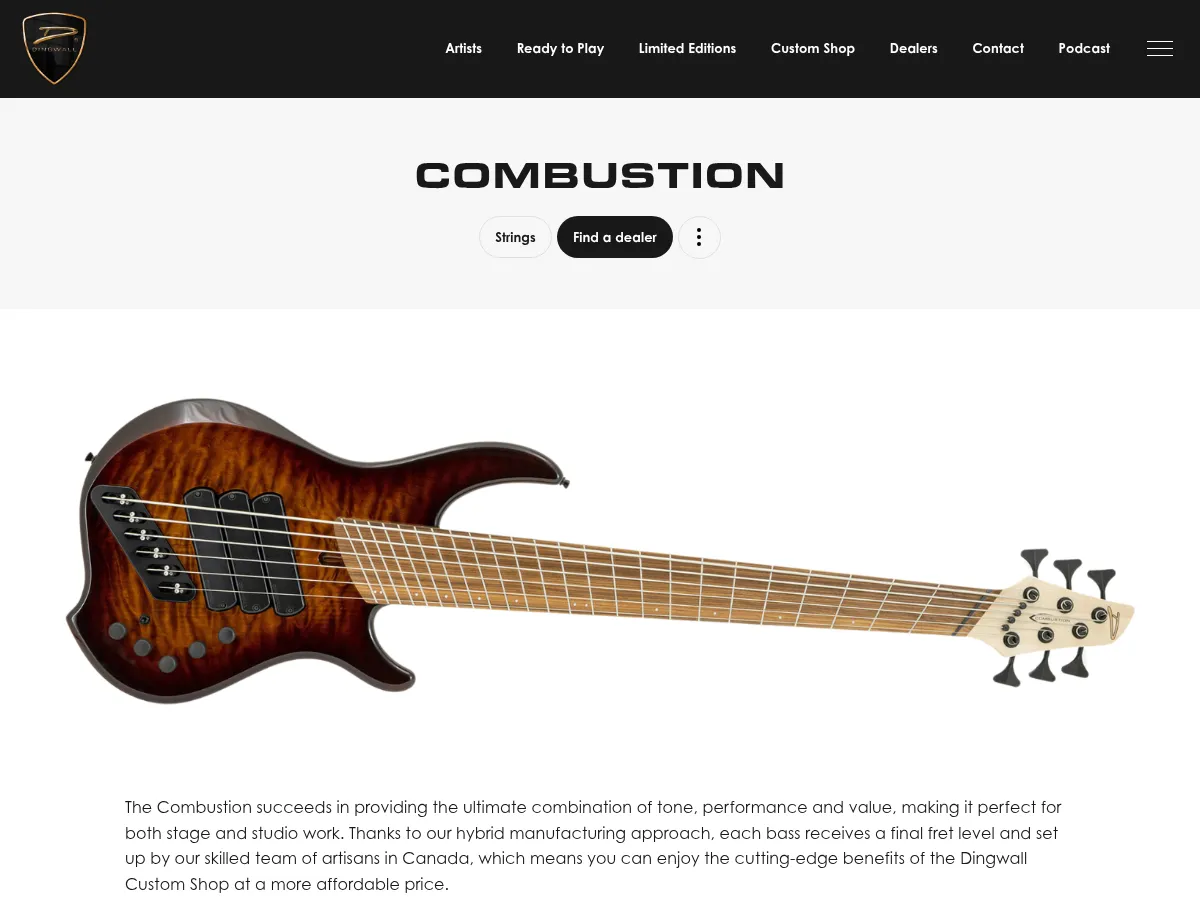
 Dingwall NG3 Combustion
Dingwall
$1,599
Advanced
China
A multiscale bass designed with Nolly Getgood spanning 34-37 inches for optimized string tension, paired with Dingwall pickups and a Darkglass preamp for tight, defined low-end essential to modern metal and djent.
Dingwall NG3 Combustion
Dingwall
$1,599
Advanced
China
A multiscale bass designed with Nolly Getgood spanning 34-37 inches for optimized string tension, paired with Dingwall pickups and a Darkglass preamp for tight, defined low-end essential to modern metal and djent.
 12
4.6
12
4.6
 ESP LTD B-206SM
ESP
$549
Intermediate
Indonesia
A six-string bass with spalted maple top and active three-band EQ that maintains articulation across the extended range from low B to high C, with a 35-inch scale for optimal low-string tension.
ESP LTD B-206SM
ESP
$549
Intermediate
Indonesia
A six-string bass with spalted maple top and active three-band EQ that maintains articulation across the extended range from low B to high C, with a 35-inch scale for optimal low-string tension.
 13
4.6
13
4.6
 Fender Player Jazz Bass
Fender
$849
Intermediate
Mexico
The classic Jazz Bass for working musicians with two Player Series single-coil pickups delivering signature growl and thump, offering dependable Fender tone with a Modern C neck at a mid-range price.
Fender Player Jazz Bass
Fender
$849
Intermediate
Mexico
The classic Jazz Bass for working musicians with two Player Series single-coil pickups delivering signature growl and thump, offering dependable Fender tone with a Modern C neck at a mid-range price.
 14
4.6
14
4.6
 Fender Player Precision Bass
Fender
$849
Intermediate
Mexico
The go-to P-Bass for players who prioritize thick, authoritative tone with a single split-coil pickup delivering unmistakable midrange punch, built in Mexico with modern Player Series refinements.
Fender Player Precision Bass
Fender
$849
Intermediate
Mexico
The go-to P-Bass for players who prioritize thick, authoritative tone with a single split-coil pickup delivering unmistakable midrange punch, built in Mexico with modern Player Series refinements.
 15
4.6
15
4.6
 Ibanez TMB100
Ibanez
$199
Beginner
Indonesia
A budget bass with distinctive Talman offset shape and PJ pickup configuration with active-passive switching, providing genuine tonal range from thick P-bass warmth to tighter bridge articulation.
Ibanez TMB100
Ibanez
$199
Beginner
Indonesia
A budget bass with distinctive Talman offset shape and PJ pickup configuration with active-passive switching, providing genuine tonal range from thick P-bass warmth to tighter bridge articulation.
 16
4.6
16
4.6
 Spector NS Pulse II
Spector
$1,499
Advanced
Indonesia
Professional-grade bass with walnut body, figured maple top, and Darkglass Tone Capsule preamp featuring built-in overdrive for extraordinary tonal range.
Spector NS Pulse II
Spector
$1,499
Advanced
Indonesia
Professional-grade bass with walnut body, figured maple top, and Darkglass Tone Capsule preamp featuring built-in overdrive for extraordinary tonal range.
 17
4.6
17
4.6
 Sterling by Music Man SUB Ray4
Sterling by Music Man
$299
Beginner
Indonesia
Budget-friendly StingRay bass with active two-band EQ and humbucker pickup delivering the bold, punchy StingRay voice at an accessible price.
Sterling by Music Man SUB Ray4
Sterling by Music Man
$299
Beginner
Indonesia
Budget-friendly StingRay bass with active two-band EQ and humbucker pickup delivering the bold, punchy StingRay voice at an accessible price.
 18
4.6
18
4.6
 Warwick Corvette Standard
Warwick
$1,699
Advanced
Germany
German-designed bass with a distinctive growling midrange and dense ovangkol/wenge construction, delivering the aggressive yet musical Warwick tone favored in rock, metal, and funk.
Warwick Corvette Standard
Warwick
$1,699
Advanced
Germany
German-designed bass with a distinctive growling midrange and dense ovangkol/wenge construction, delivering the aggressive yet musical Warwick tone favored in rock, metal, and funk.
 19
4.6
19
4.6
 Warwick Thumb BO
Warwick
$2,199
Advanced
Germany
Compact bolt-on variant of Warwick's iconic Thumb bass, delivering the model's signature growling midrange and fast playability with a snappier attack than the neck-through version.
Warwick Thumb BO
Warwick
$2,199
Advanced
Germany
Compact bolt-on variant of Warwick's iconic Thumb bass, delivering the model's signature growling midrange and fast playability with a snappier attack than the neck-through version.
 20
4.6
20
4.6
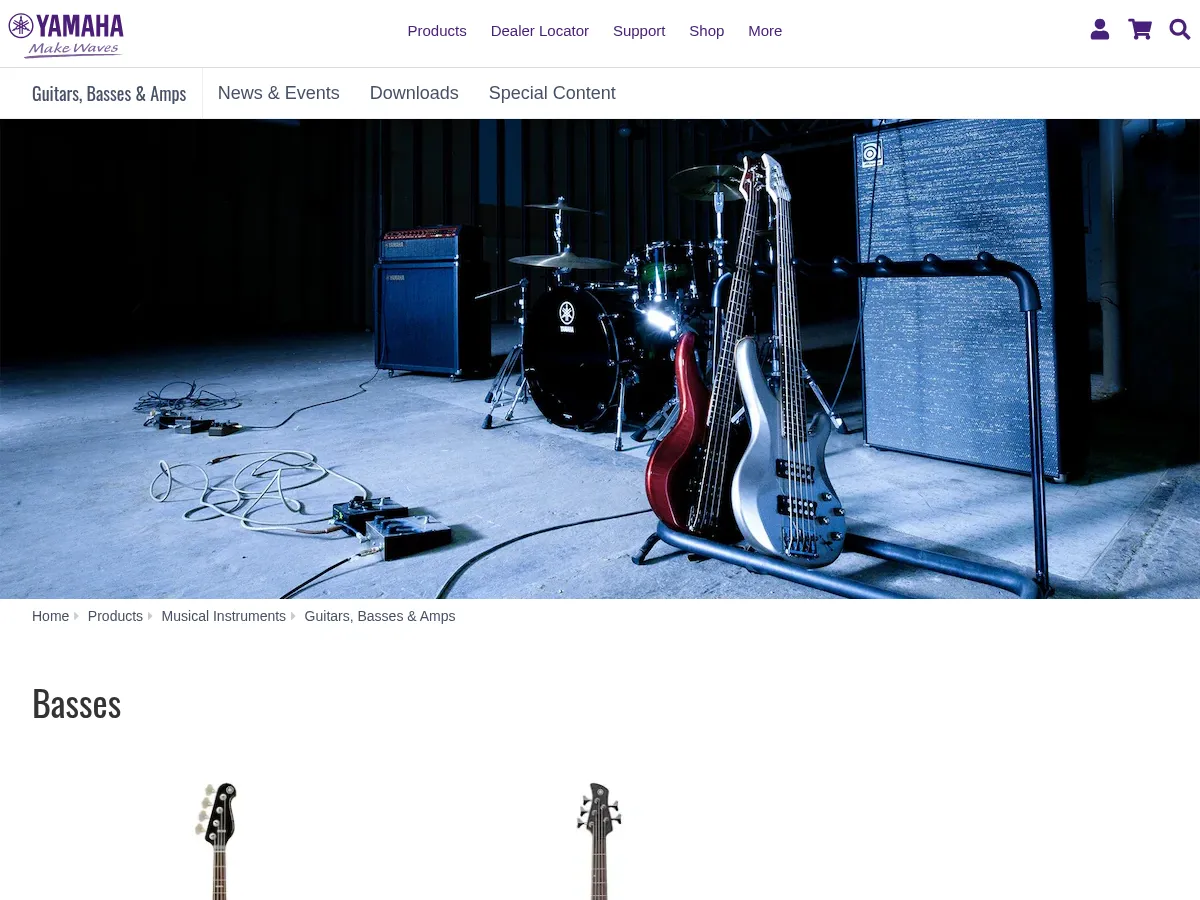
 Yamaha BB234
Yamaha
$349
Intermediate
Indonesia
No-frills passive bass reviving the classic BB series design, with a versatile PJ pickup configuration and honest, warm tone that covers vintage Precision and Jazz-style sounds.
Yamaha BB234
Yamaha
$349
Intermediate
Indonesia
No-frills passive bass reviving the classic BB series design, with a versatile PJ pickup configuration and honest, warm tone that covers vintage Precision and Jazz-style sounds.
 21
4.6
21
4.6
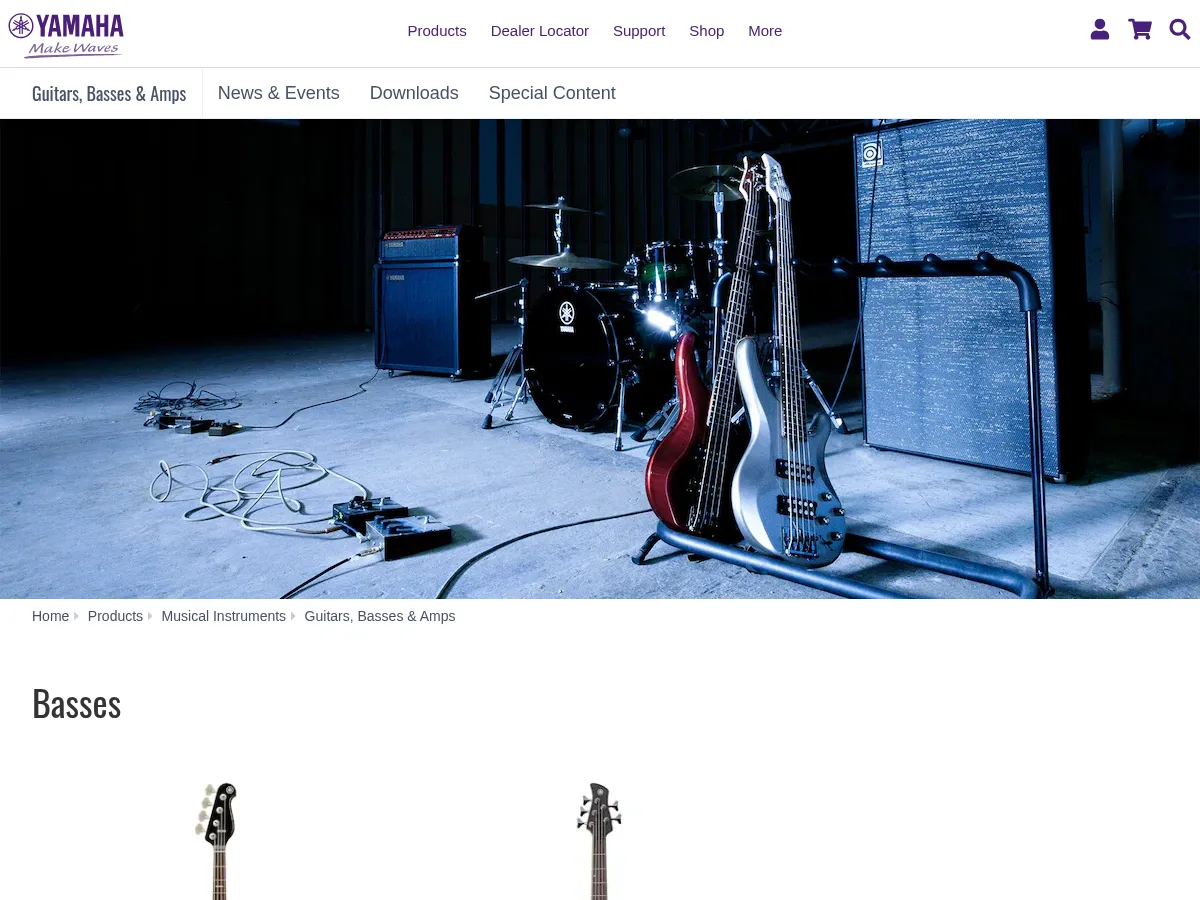
 Yamaha TRBX174
Yamaha
$199
Beginner
Indonesia
Budget-friendly entry-level bass with dual humbuckers and a three-band EQ, providing versatile passive tone and reliable Yamaha build quality for beginning players.
Yamaha TRBX174
Yamaha
$199
Beginner
Indonesia
Budget-friendly entry-level bass with dual humbuckers and a three-band EQ, providing versatile passive tone and reliable Yamaha build quality for beginning players.
 22
4.6
22
4.6
 Yamaha TRBX304
Yamaha
$349
Intermediate
Indonesia
Mid-range active bass with a five-way Performance EQ switch for instant on-the-fly tone changes, offering modern playability and focused sound across multiple genres.
Yamaha TRBX304
Yamaha
$349
Intermediate
Indonesia
Mid-range active bass with a five-way Performance EQ switch for instant on-the-fly tone changes, offering modern playability and focused sound across multiple genres.
 23
4.6
23
4.6
 Ibanez SR505E
Ibanez
$599
Intermediate
Indonesia
A five-string bass with Bartolini BH2 pickups and custom three-band EQ delivering studio-grade articulation across all five strings, featuring a remarkably thin SR neck that keeps the wide board comfortable.
Ibanez SR505E
Ibanez
$599
Intermediate
Indonesia
A five-string bass with Bartolini BH2 pickups and custom three-band EQ delivering studio-grade articulation across all five strings, featuring a remarkably thin SR neck that keeps the wide board comfortable.
 24
4.4
24
4.4
 Jackson X Series Spectra
Jackson
$499
Intermediate
Indonesia
A modern bass with quilted maple top, graphite-reinforced speed neck, and active three-band EQ delivering a wide tonal range from deep lows to aggressive highs with Jackson's sleek styling.
Jackson X Series Spectra
Jackson
$499
Intermediate
Indonesia
A modern bass with quilted maple top, graphite-reinforced speed neck, and active three-band EQ delivering a wide tonal range from deep lows to aggressive highs with Jackson's sleek styling.
 25
4.4
25
4.4
 Ibanez SR300E
Ibanez
$349
Intermediate
Indonesia
A lightweight, fast-playing bass with PowerSpan Dual Coil pickups and three-band EQ with coil tap, offering an exceptionally wide range of tones in one of the slimmest neck profiles in the bass world.
Ibanez SR300E
Ibanez
$349
Intermediate
Indonesia
A lightweight, fast-playing bass with PowerSpan Dual Coil pickups and three-band EQ with coil tap, offering an exceptionally wide range of tones in one of the slimmest neck profiles in the bass world.
 26
4.3
26
4.3
 Spector Legend 4
Spector
$799
Intermediate
China
Mid-range bass with iconic NS curved body, EMG 35HZ pickups, and active TonePump Jr. preamp delivering punchy, modern Spector tone at an accessible price.
Spector Legend 4
Spector
$799
Intermediate
China
Mid-range bass with iconic NS curved body, EMG 35HZ pickups, and active TonePump Jr. preamp delivering punchy, modern Spector tone at an accessible price.
 27
4.2
27
4.2
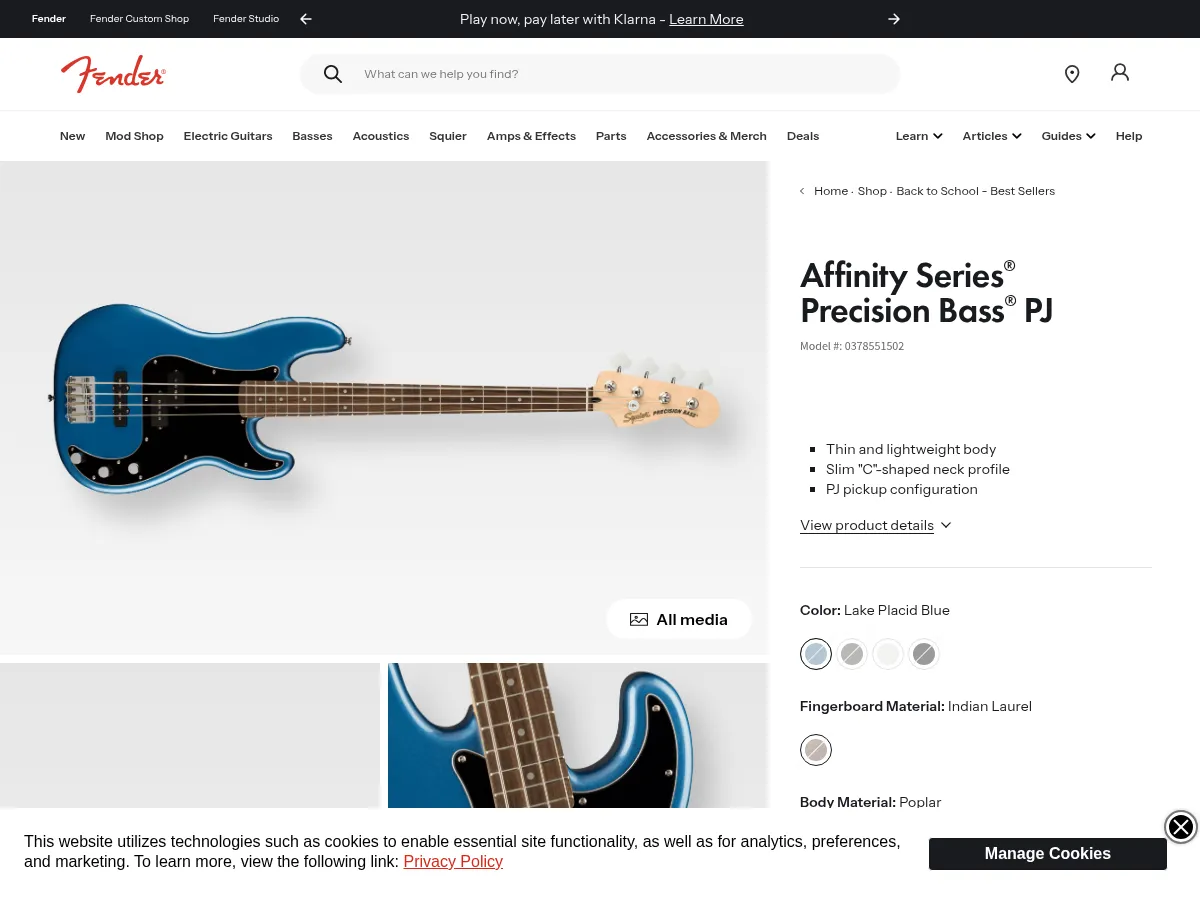
 Squier Affinity Precision Bass PJ
Squier
$249
Beginner
Indonesia
Affordable entry-level bass combining Precision and Jazz pickup styles in a PJ configuration, offering genuine tonal flexibility for beginners.
Squier Affinity Precision Bass PJ
Squier
$249
Beginner
Indonesia
Affordable entry-level bass combining Precision and Jazz pickup styles in a PJ configuration, offering genuine tonal flexibility for beginners.
 28
3.9
28
3.9
 Cort Action Bass Plus
Cort
$249
Beginner
Indonesia
The Cort Action Bass Plus is a budget-friendly four-string bass with a PJ pickup configuration and active Markbass EQ, offering surprisingly refined playability and versatile tone from warm P-Bass thump to defined J-Bass articulation.
Cort Action Bass Plus
Cort
$249
Beginner
Indonesia
The Cort Action Bass Plus is a budget-friendly four-string bass with a PJ pickup configuration and active Markbass EQ, offering surprisingly refined playability and versatile tone from warm P-Bass thump to defined J-Bass articulation.