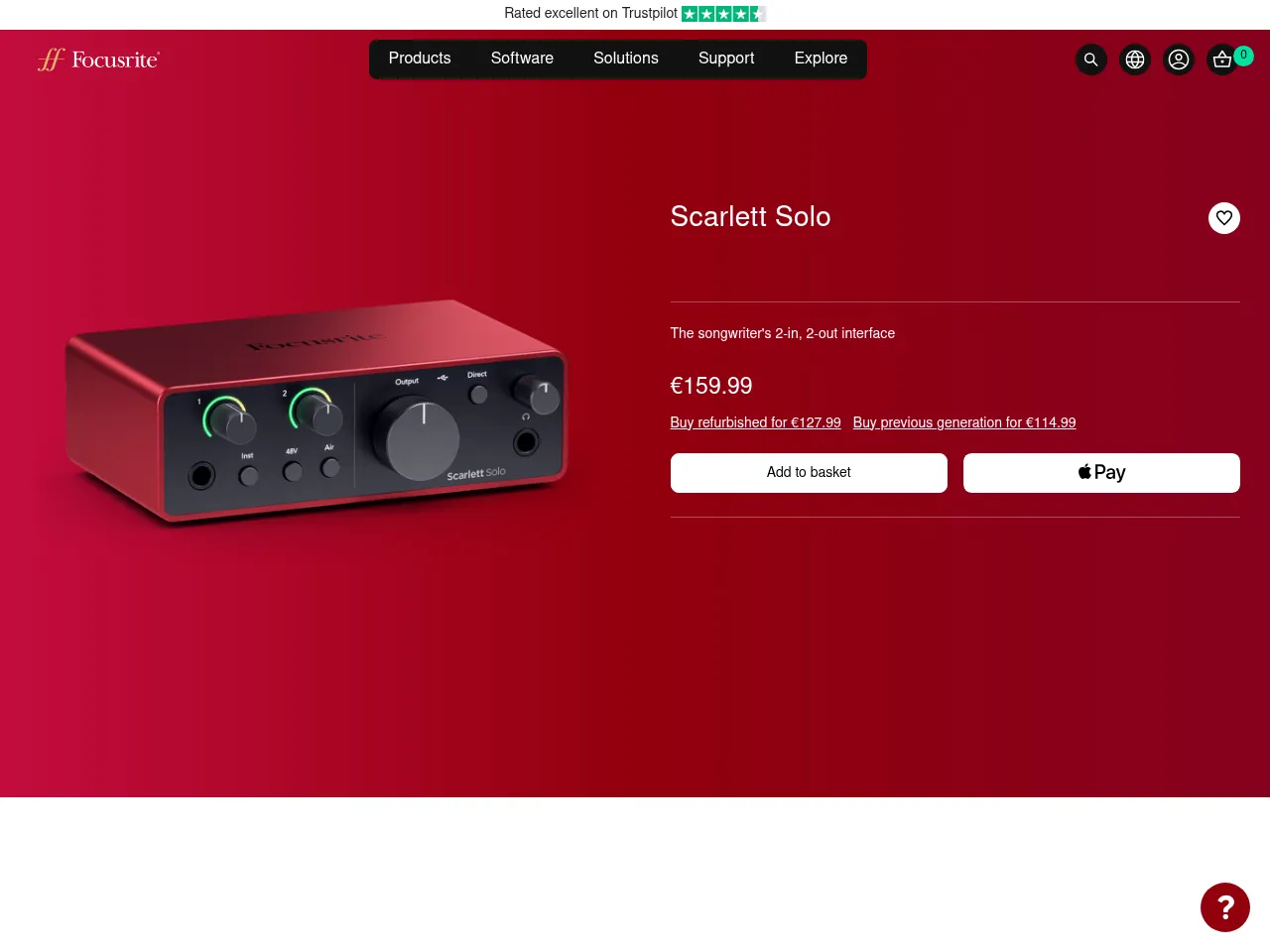
Focusrite Scarlett Solo 4th Gen
概览
音频接口
一款紧凑型单通道接口,采用与完整Scarlett系列相同的升级话放拓扑结构,具有Air模式、自动增益和总线供电的简洁设计,适合单人录音和播客制作。
乐器详情
The Focusrite Scarlett Solo 4th Gen represents a significant internal reconstruction rather than a simple cosmetic facelift. The standout feature is the overhauled preamp, boasting a massive 69dB of gain. This is a game-changer for home studios, as it finally allows users to drive gain-hungry dynamic microphones like the SM7B without the need for an external booster. Focusrite has also borrowed converters from their flagship RedNet range, resulting in a 120dB dynamic range that provides a level of clarity and headroom previously unheard of in the sub-$150 bracket.
Sonically, the redesigned 'Air' mode offers two distinct flavors: a traditional high-end lift and a new harmonic drive that adds genuine analog-style weight to vocals. Ergonomically, the interface is a joy to use, with the iconic gain halos providing intuitive visual feedback. However, there is a notable trade-off: the Solo lacks the 'Auto Gain' and 'Clip Safe' features found on its larger 4th Gen siblings. While the build quality remains robust with its signature red aluminum chassis, the absence of these smart features makes it slightly less 'bulletproof' for absolute beginners. For solo singer-songwriters and mobile producers who prioritize raw audio quality and portability over automated leveling, the Solo remains the gold standard for entry-level interfaces.
 Powered by Rexiew