Samplers - Directory w/ AI Reviews
Hardware samplers and sampling workstations
Samplers are electronic instruments that record, manipulate, and play back audio samples, enabling musicians to use any recorded sound as a musical instrument. They are foundational to hip-hop, electronic music, and modern pop production. Hardware samplers and their software equivalents allow producers to chop, layer, and transform sounds in creative ways.
History
The Fairlight CMI (1979) and E-mu Emulator (1981) were the first commercially available digital samplers, costing tens of thousands of dollars. The Akai S900 (1986) and MPC60 (1988) brought sampling to a wider audience and became essential tools for hip-hop producers. Software samplers like Native Instruments Kontakt, introduced in 2002, made professional sampling accessible on any computer.
Characteristics
Samplers capture audio and allow it to be mapped across a keyboard or pads, with pitch shifting, time stretching, and filtering applied to the original recording. Hardware samplers offer tactile, immediate control and are often used in live performance. Sample manipulation techniques include chopping, layering, reversing, granular processing, and real-time modulation of playback parameters.
Notable Players
J Dilla's sample-based productions on the Akai MPC3000 are widely considered among the most innovative in hip-hop history. DJ Premier used the Akai MPC to craft the gritty, sample-heavy beats that defined East Coast hip-hop. Kanye West's early production career was built on creative sampling using an Akai MPC2000 and ASR-10.
Fun Facts
The Amen break, a six-second drum solo from The Winstons' 1969 track "Amen, Brother," is the most sampled recording in music history, appearing in thousands of songs. Early samplers had so little memory that producers had to creatively work with just a few seconds of audio, which led to the choppy, creative sampling aesthetic of early hip-hop.
 1
4.8
1
4.8
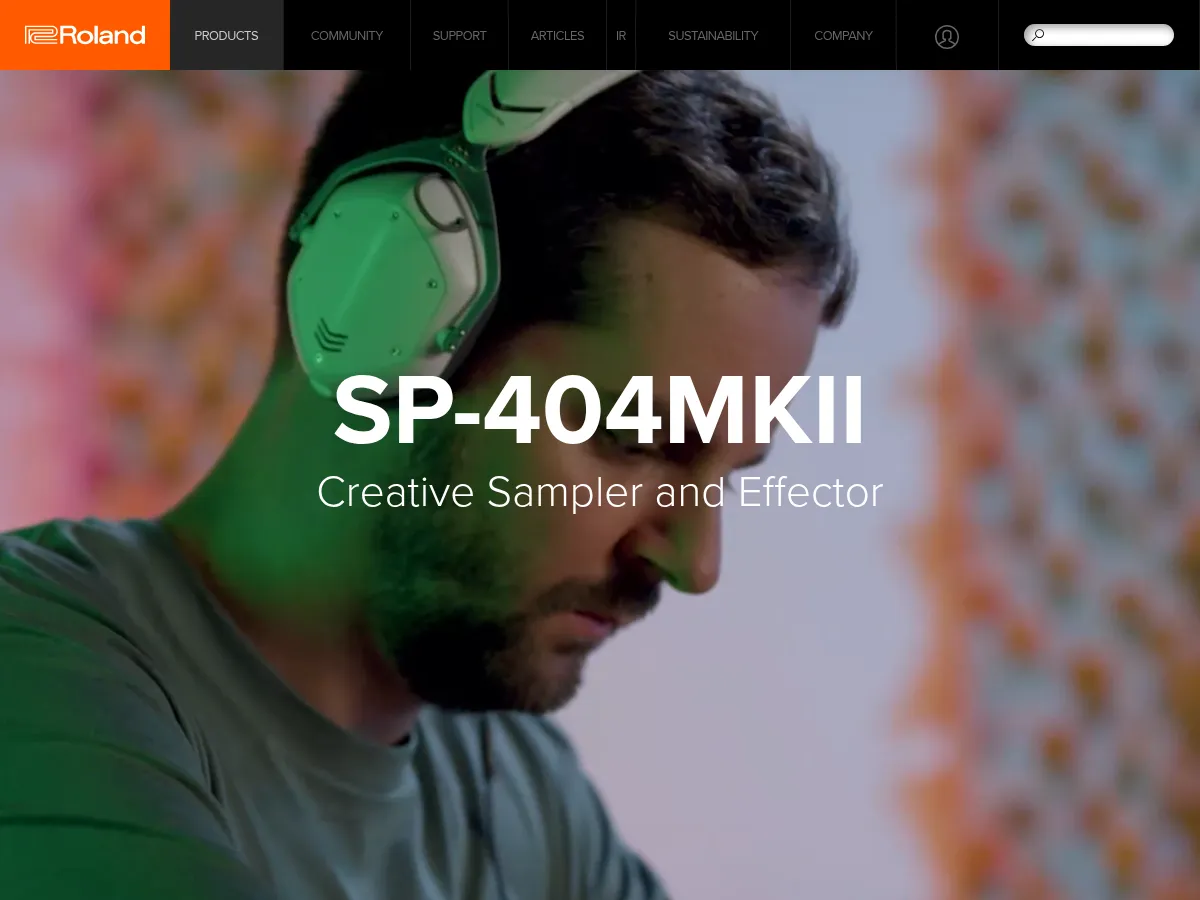
 Roland SP-404MKII
Roland
$449
Intermediate
China
Iconic creative sampler with OLED display, 30+ real-time effects, and pad-based workflow that has become essential for lo-fi beat makers and live performers.
Roland SP-404MKII
Roland
$449
Intermediate
China
Iconic creative sampler with OLED display, 30+ real-time effects, and pad-based workflow that has become essential for lo-fi beat makers and live performers.
 2
4.7
2
4.7
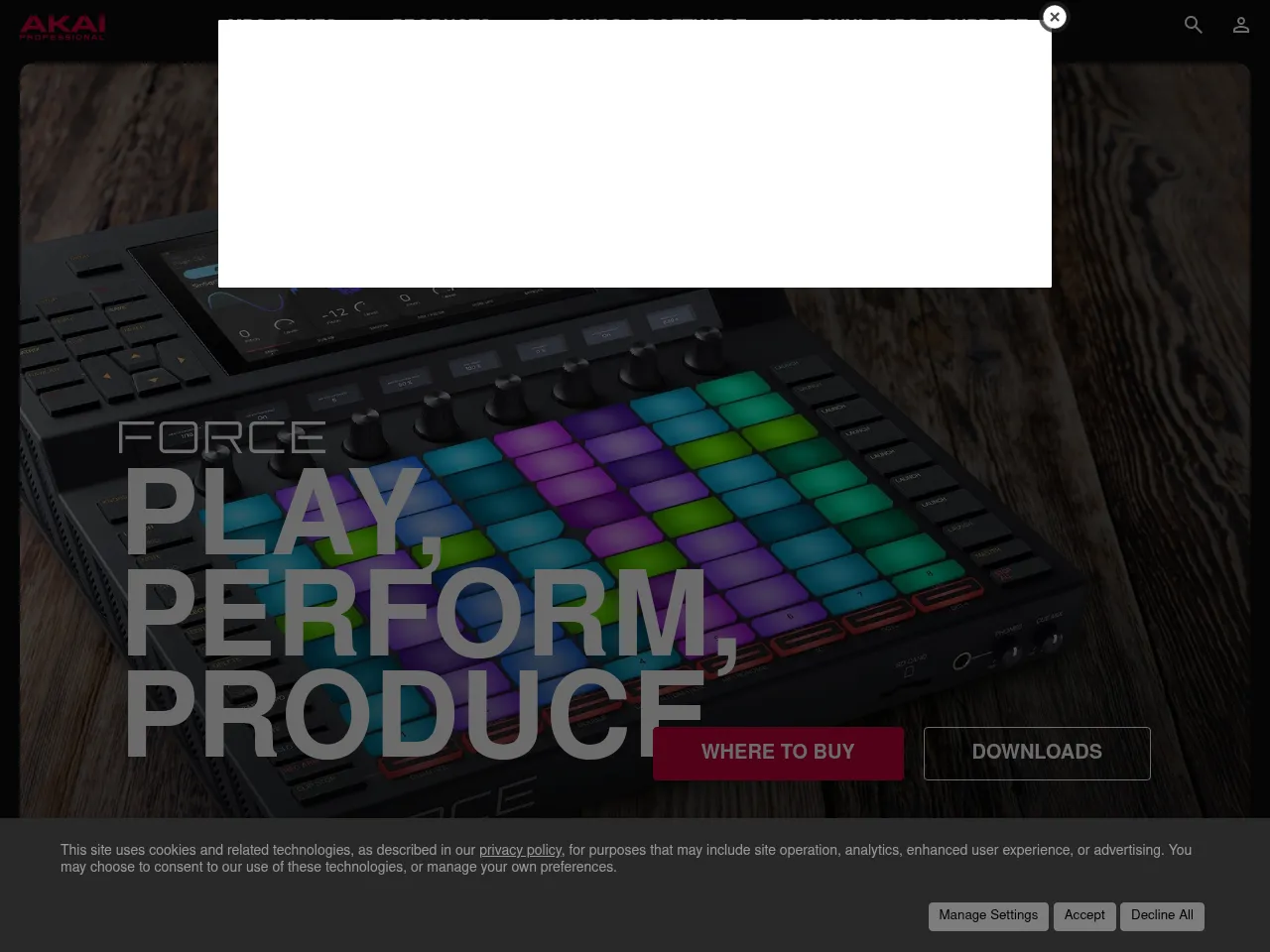
 Akai Professional Force Standalone Production System
Akai
$1,499
Professional
China
The Akai Professional Force is a standalone production system with a 64-pad matrix and clip-launching workflow inspired by Ableton Live, combining sampling, synthesis, and arrangement tools for electronic musicians who want to perform without a laptop.
Akai Professional Force Standalone Production System
Akai
$1,499
Professional
China
The Akai Professional Force is a standalone production system with a 64-pad matrix and clip-launching workflow inspired by Ableton Live, combining sampling, synthesis, and arrangement tools for electronic musicians who want to perform without a laptop.
 3
4.7
3
4.7
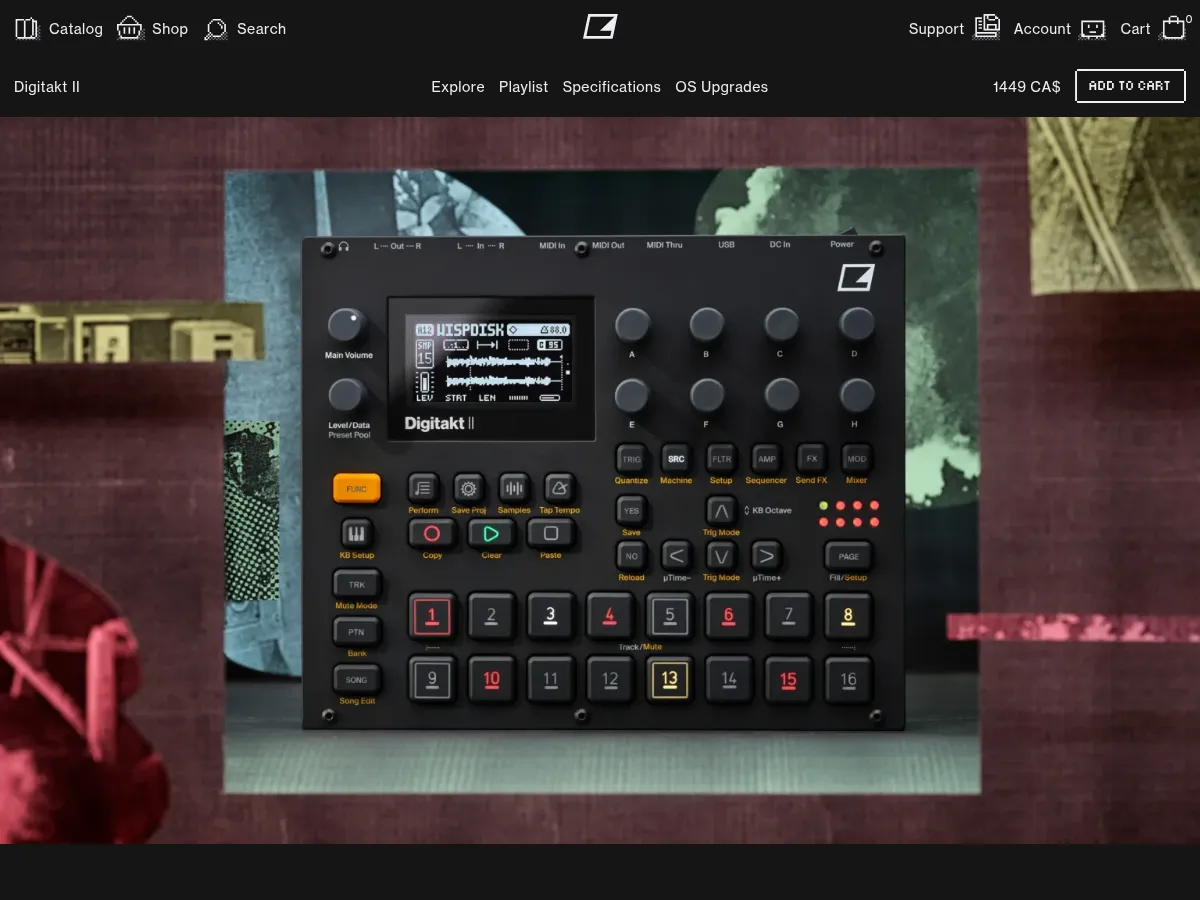
 Elektron Digitakt II
Elektron
$999
Advanced
Sweden
The Elektron Digitakt II is an eight-track digital sampler with the legendary parameter-locking sequencer, conditional triggers, and expanded MIDI tracks, delivering deeply creative pattern-based production for electronic musicians.
Elektron Digitakt II
Elektron
$999
Advanced
Sweden
The Elektron Digitakt II is an eight-track digital sampler with the legendary parameter-locking sequencer, conditional triggers, and expanded MIDI tracks, delivering deeply creative pattern-based production for electronic musicians.
 4
4.7
4
4.7
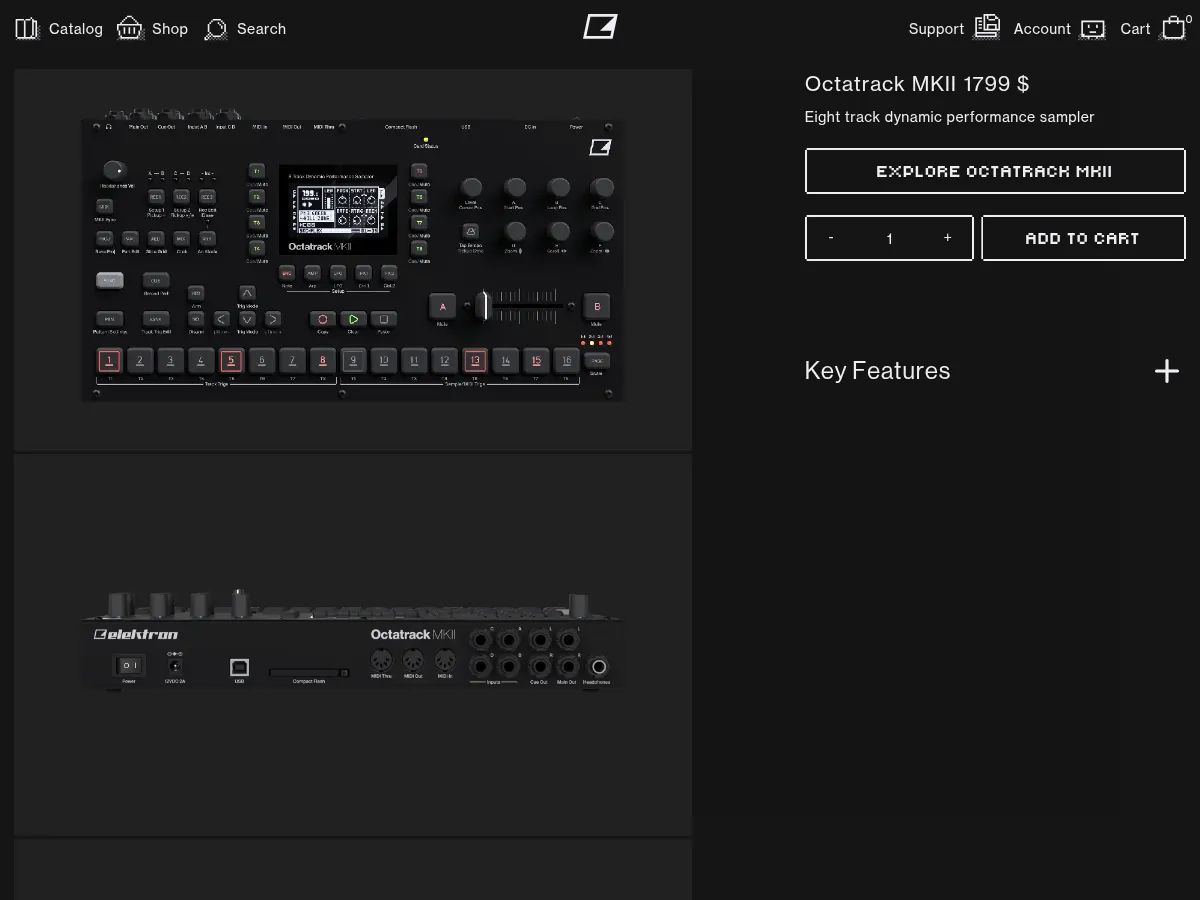
 Elektron Octatrack MKII
Elektron
$1,399
Professional
Sweden
The Elektron Octatrack MKII is the most powerful hardware sampler for live electronic performance, with eight stereo tracks of real-time audio manipulation, a crossfader for scene morphing, and pickup machines for live resampling.
Elektron Octatrack MKII
Elektron
$1,399
Professional
Sweden
The Elektron Octatrack MKII is the most powerful hardware sampler for live electronic performance, with eight stereo tracks of real-time audio manipulation, a crossfader for scene morphing, and pickup machines for live resampling.
 5
4.6
5
4.6
 Akai Professional MPC Live II
Akai Professional
$1,199
Intermediate
China
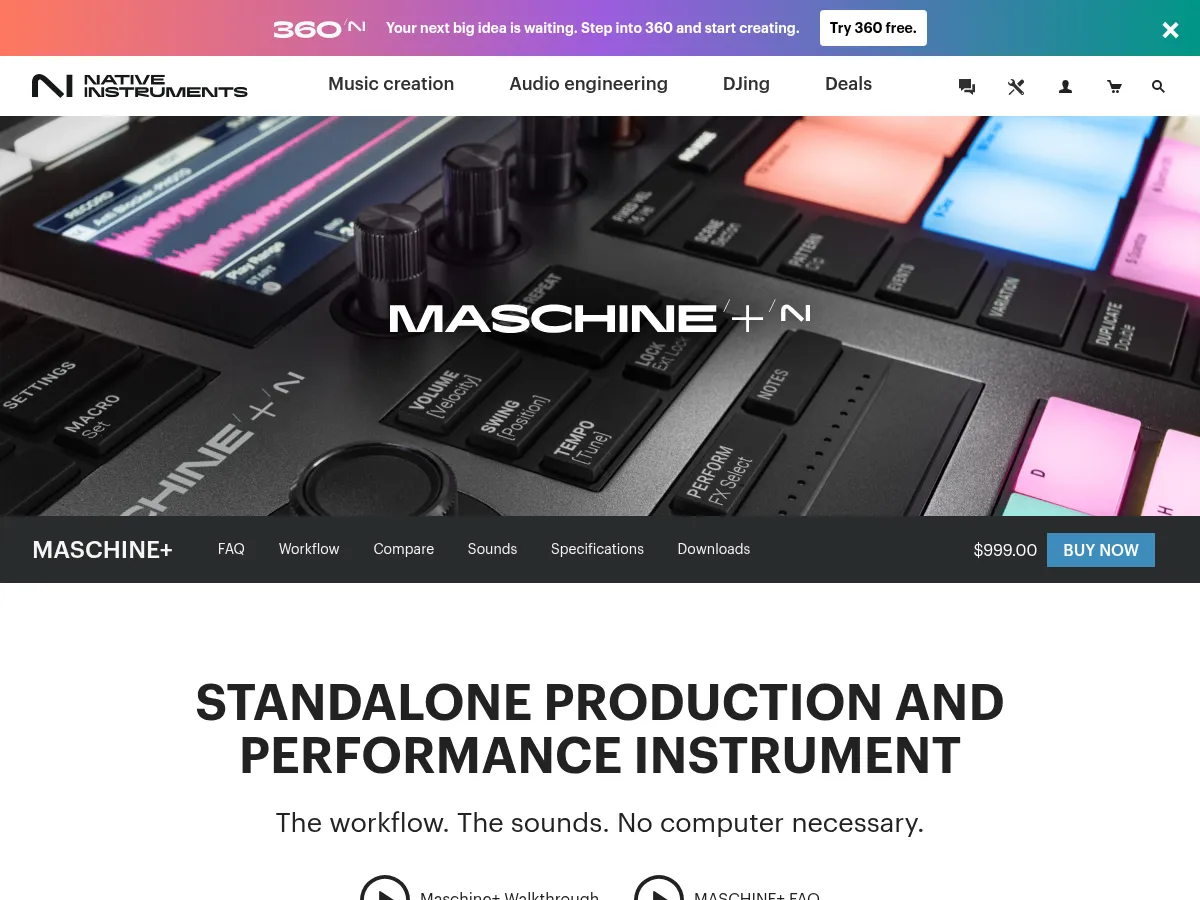
The Akai MPC Live II is a battery-powered standalone sampler with built-in speakers, a 7-inch touchscreen, and the iconic MPC pad workflow, delivering a complete portable studio that can produce music anywhere without a computer.
Akai Professional MPC Live II
Akai Professional
$1,199
Intermediate
China
The Akai MPC Live II is a battery-powered standalone sampler with built-in speakers, a 7-inch touchscreen, and the iconic MPC pad workflow, delivering a complete portable studio that can produce music anywhere without a computer.
 6
4.5
6
4.5
 Native Instruments Maschine+
Native Instruments
$1,399
Advanced
China
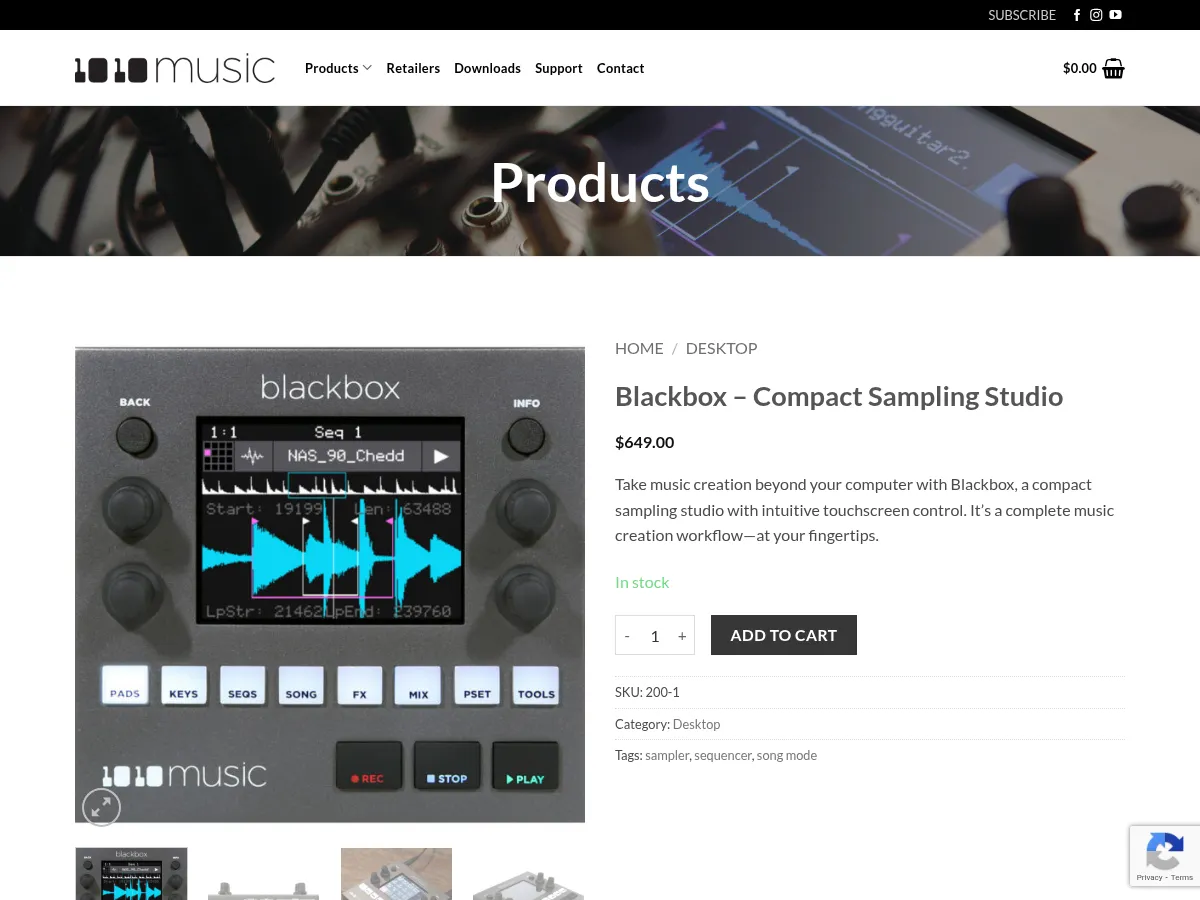
A standalone production system running NI's Maschine engine independently from a computer, with 8GB+ factory content and per-pad color displays for screen-free creative workflow.
Native Instruments Maschine+
Native Instruments
$1,399
Advanced
China
A standalone production system running NI's Maschine engine independently from a computer, with 8GB+ factory content and per-pad color displays for screen-free creative workflow.
 7
4.5
7
4.5
 1010music Blackbox
1010music
$549
Advanced
United States
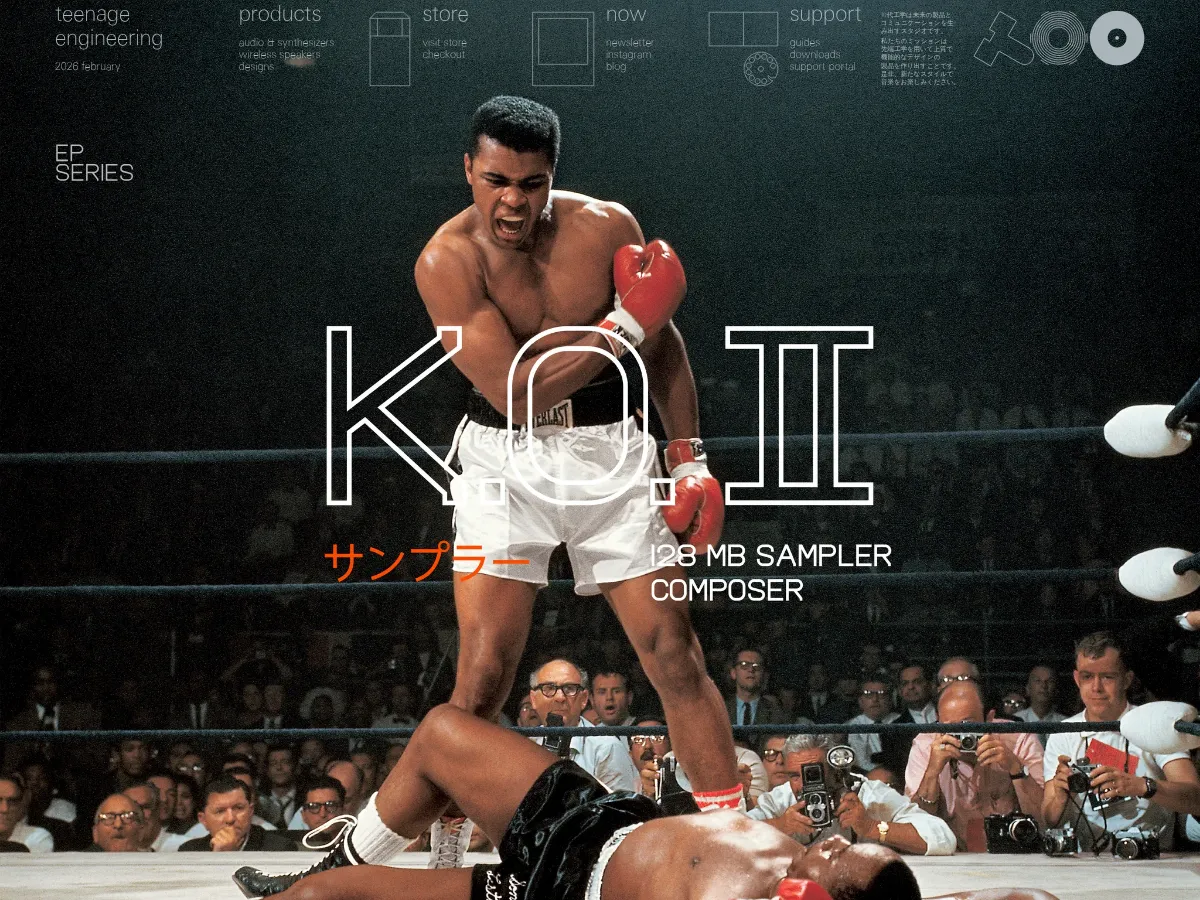
The 1010music Blackbox is a pocket-sized sampling powerhouse with a touchscreen interface, granular synthesis capabilities, and 16 sample pads that make it an indispensable tool for modular synth users and electronic producers who need a portable sampling brain.
1010music Blackbox
1010music
$549
Advanced
United States
The 1010music Blackbox is a pocket-sized sampling powerhouse with a touchscreen interface, granular synthesis capabilities, and 16 sample pads that make it an indispensable tool for modular synth users and electronic producers who need a portable sampling brain.
 8
4.4
8
4.4
 Teenage Engineering EP-133 K.O. II
Teenage Engineering
$299
Beginner
China
Compact sampler and drum machine with built-in microphone, analog-modeled effects, and step sequencer in a portable, battery-powered pocket format.
Teenage Engineering EP-133 K.O. II
Teenage Engineering
$299
Beginner
China
Compact sampler and drum machine with built-in microphone, analog-modeled effects, and step sequencer in a portable, battery-powered pocket format.
 9
4.3
9
4.3
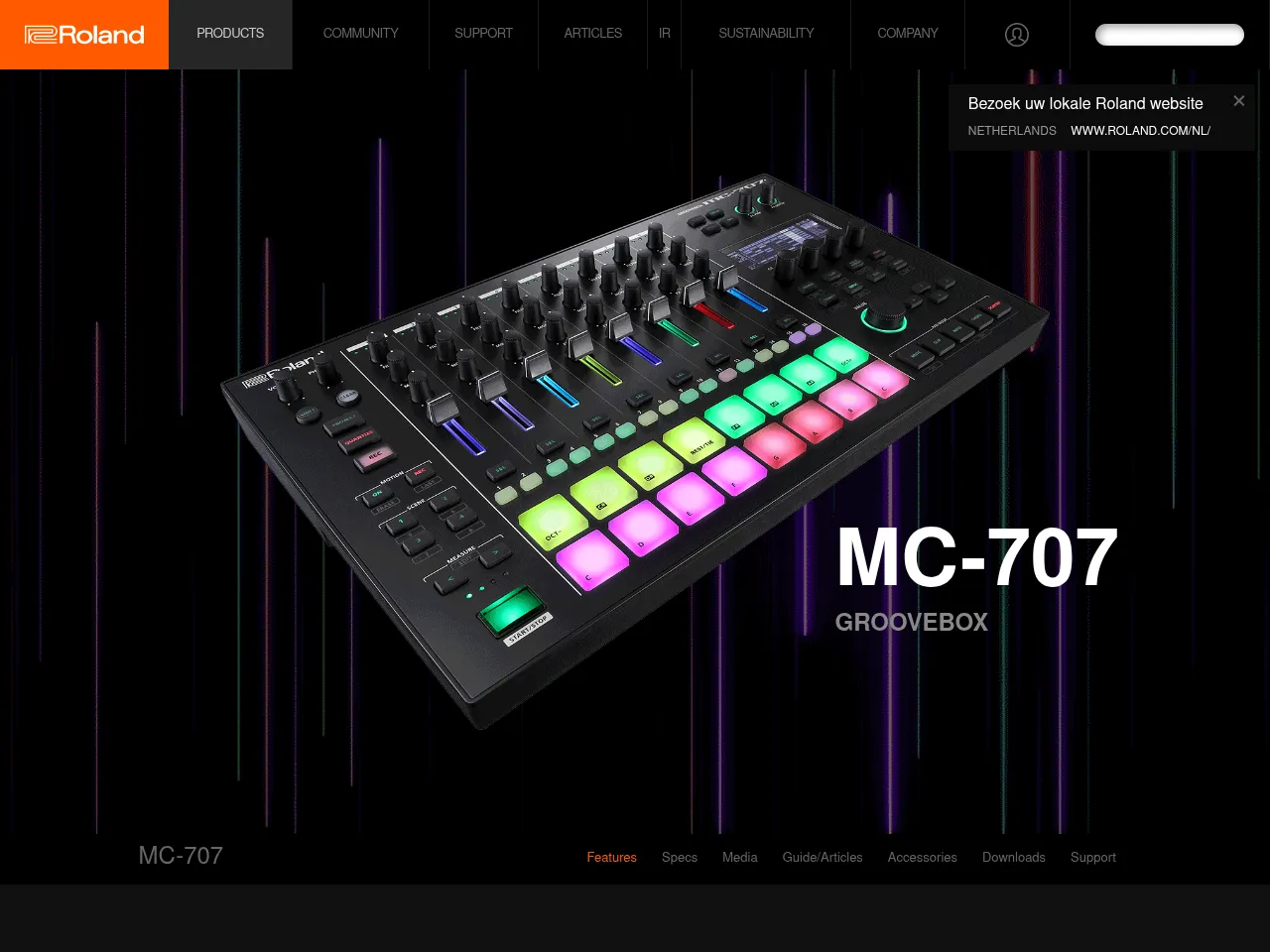
 Roland MC-707 Groovebox
Roland
$899
Intermediate
Japan
Standalone production workstation with eight ZEN-Core tracks, clip-based workflow, velocity-sensitive pads, and comprehensive effects for computer-free music creation.
Roland MC-707 Groovebox
Roland
$899
Intermediate
Japan
Standalone production workstation with eight ZEN-Core tracks, clip-based workflow, velocity-sensitive pads, and comprehensive effects for computer-free music creation.