Hand Drums - Directory w/ AI Reviews
Congas, bongos, djembes, and other hand-played drums
Hand drums encompass a broad family of percussion instruments played directly with the hands and fingers, including djembes, congas, bongos, and frame drums. They produce a wide range of tones through varied striking techniques and are central to musical traditions across Africa, Latin America, the Middle East, and beyond. Hand drums are among the oldest known musical instruments in human history.
History
Hand drums date back thousands of years, with frame drums depicted in Mesopotamian art from 3000 BCE and djembes originating with the Mandinka people of West Africa around the 12th century. Congas and bongos became fixtures of Cuban music in the early 20th century and spread worldwide through Latin jazz and salsa. The late 20th century saw a global hand drumming revival driven by drum circles and world music interest.
Characteristics
Hand drums produce sound through direct contact between hands and a stretched membrane (natural skin or synthetic). Different striking zones and techniques produce bass (center), tone (edge), and slap (rim) sounds. Goblet-shaped drums like djembes have a wide pitch range, while cylindrical drums like congas offer more focused tones.
Notable Players
Babatunde Olatunji brought West African djembe music to American audiences with his 1960 album "Drums of Passion." Mongo Santamaria's conga playing was foundational to the Latin jazz movement and influenced Herbie Hancock's "Watermelon Man." Giovanni Hidalgo is considered one of the greatest living conga players, renowned for his speed and inventiveness.
Fun Facts
Drum circles have been shown in scientific studies to reduce stress, lower blood pressure, and boost the immune system. The djembe's name comes from the Bambara saying "anke dje, anke be," meaning "everyone gather together in peace."
 1
4.8
1
4.8
 LP Galaxy Fiberglass 11" Quinto
Latin Percussion
$599
Professional
United States
A professional fiberglass quinto producing bright, projecting tone immune to climate changes, with Comfort Curve II rim for reduced hand fatigue during extended performances.
LP Galaxy Fiberglass 11" Quinto
Latin Percussion
$599
Professional
United States
A professional fiberglass quinto producing bright, projecting tone immune to climate changes, with Comfort Curve II rim for reduced hand fatigue during extended performances.
 2
4.8
2
4.8
 Meinl Artisan Edition 11 3/4" Conga
Meinl
$749
Professional
Thailand
A premium conga crafted from a single piece of American White Ash with Steely II rim and natural buffalo skin head, delivering professional-grade tone with exceptional projection.
Meinl Artisan Edition 11 3/4" Conga
Meinl
$749
Professional
Thailand
A premium conga crafted from a single piece of American White Ash with Steely II rim and natural buffalo skin head, delivering professional-grade tone with exceptional projection.
 3
4.7
3
4.7
 Meinl Professional African Djembe 12-inch
Meinl
$349
Advanced
Ghana
A traditionally crafted 12-inch djembe hand-carved from a single piece of African tweneboa wood, with goatskin head and Mali-weave rope tuning for authentic West African sound.
Meinl Professional African Djembe 12-inch
Meinl
$349
Advanced
Ghana
A traditionally crafted 12-inch djembe hand-carved from a single piece of African tweneboa wood, with goatskin head and Mali-weave rope tuning for authentic West African sound.
 4
4.6
4
4.6
 LP Giovanni Compact Conga 11-inch
Latin Percussion
$349
Intermediate
Thailand
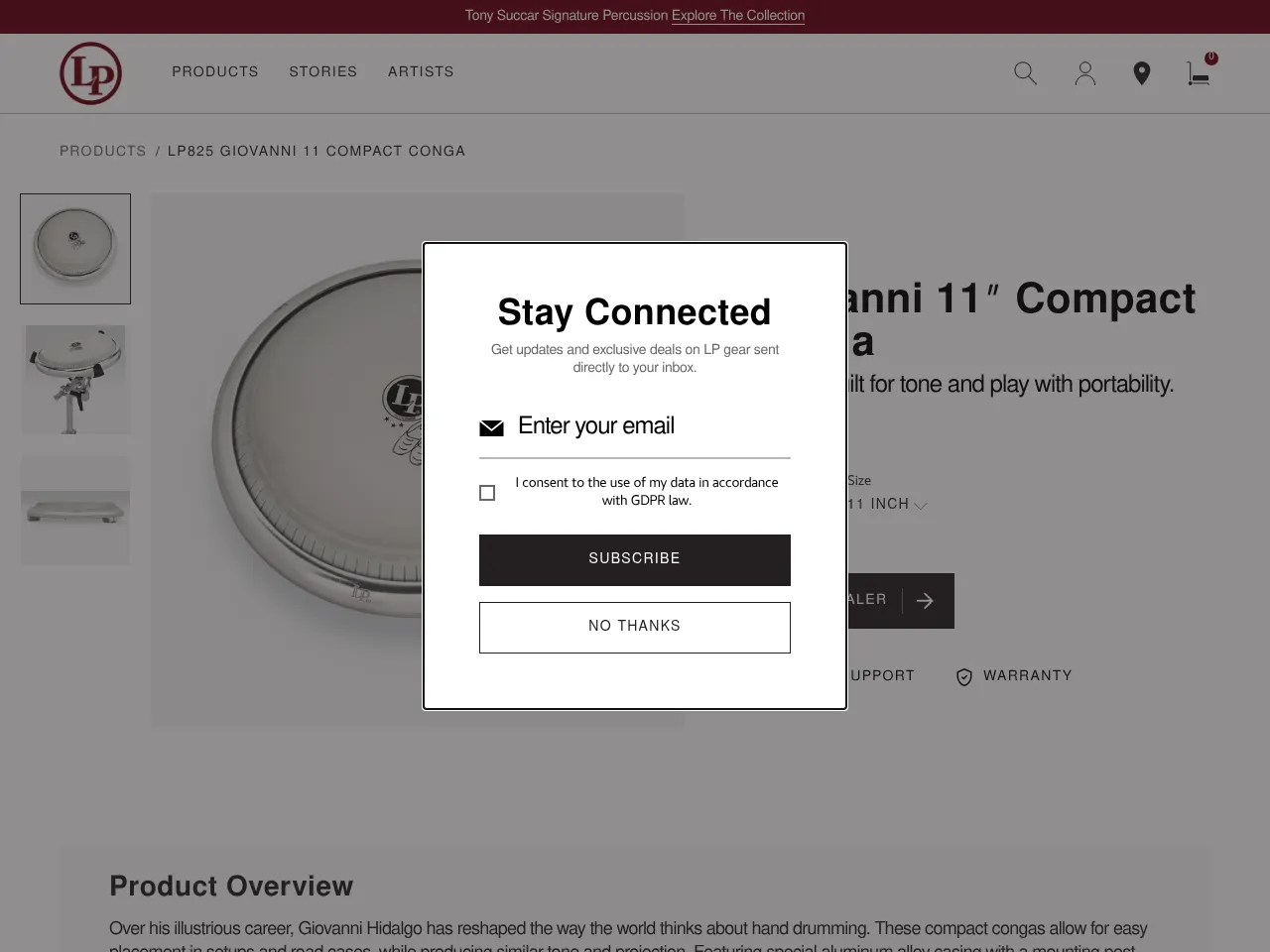
A downsized 11-inch conga designed with Giovanni Hidalgo, offering authentic tone in a portable package with surprisingly deep bass response and EasyPlay rim for comfort.
LP Giovanni Compact Conga 11-inch
Latin Percussion
$349
Intermediate
Thailand
A downsized 11-inch conga designed with Giovanni Hidalgo, offering authentic tone in a portable package with surprisingly deep bass response and EasyPlay rim for comfort.
 5
4.6
5
4.6
 LP Matador Bongos M201-ABW
Latin Percussion
$159
Intermediate
Thailand
Mid-range wood bongos bridging the gap between student and professional models, with Siam oak shells and chrome hardware delivering warm, authentic tones with improved depth.
LP Matador Bongos M201-ABW
Latin Percussion
$159
Intermediate
Thailand
Mid-range wood bongos bridging the gap between student and professional models, with Siam oak shells and chrome hardware delivering warm, authentic tones with improved depth.
 6
4.6
6
4.6
 Meinl Artisan Edition Djembe 12-inch Viva Rhythm
Meinl
$329
Intermediate
Thailand
A professionally crafted 12-inch djembe with CNC-carved Siam oak shell and premium goatskin head, delivering authentic deep bass, cutting slaps, and clear singing tone.
Meinl Artisan Edition Djembe 12-inch Viva Rhythm
Meinl
$329
Intermediate
Thailand
A professionally crafted 12-inch djembe with CNC-carved Siam oak shell and premium goatskin head, delivering authentic deep bass, cutting slaps, and clear singing tone.
 7
4.6
7
4.6
 Remo Mondo Djembe 12-inch
Remo
$199
Beginner
United States
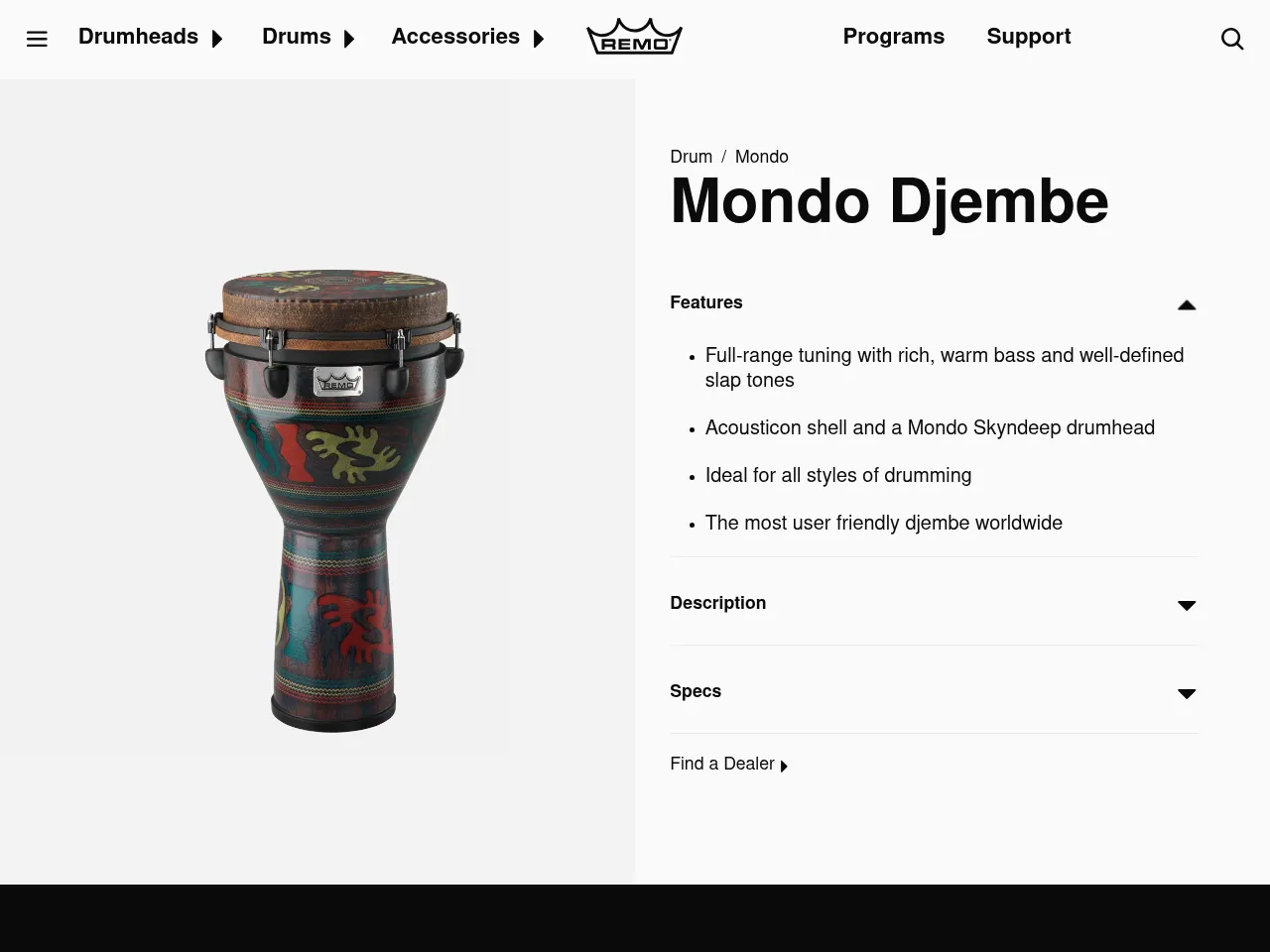
Synthetic-shell 12-inch djembe with FiberSkyn 3 head combining authentic tones with weather-proof durability, ideal for education and outdoor performance.
Remo Mondo Djembe 12-inch
Remo
$199
Beginner
United States
Synthetic-shell 12-inch djembe with FiberSkyn 3 head combining authentic tones with weather-proof durability, ideal for education and outdoor performance.
 8
4.5
8
4.5
 Meinl Percussion Darbuka HE-3000
Meinl
$179
Intermediate
Turkey
A hand-engraved cast aluminum darbuka delivering bright, articulate doum and tek sounds essential to Middle Eastern music, with intricate traditional patterns and a synthetic head for stable tuning.
Meinl Percussion Darbuka HE-3000
Meinl
$179
Intermediate
Turkey
A hand-engraved cast aluminum darbuka delivering bright, articulate doum and tek sounds essential to Middle Eastern music, with intricate traditional patterns and a synthetic head for stable tuning.
 9
4.4
9
4.4
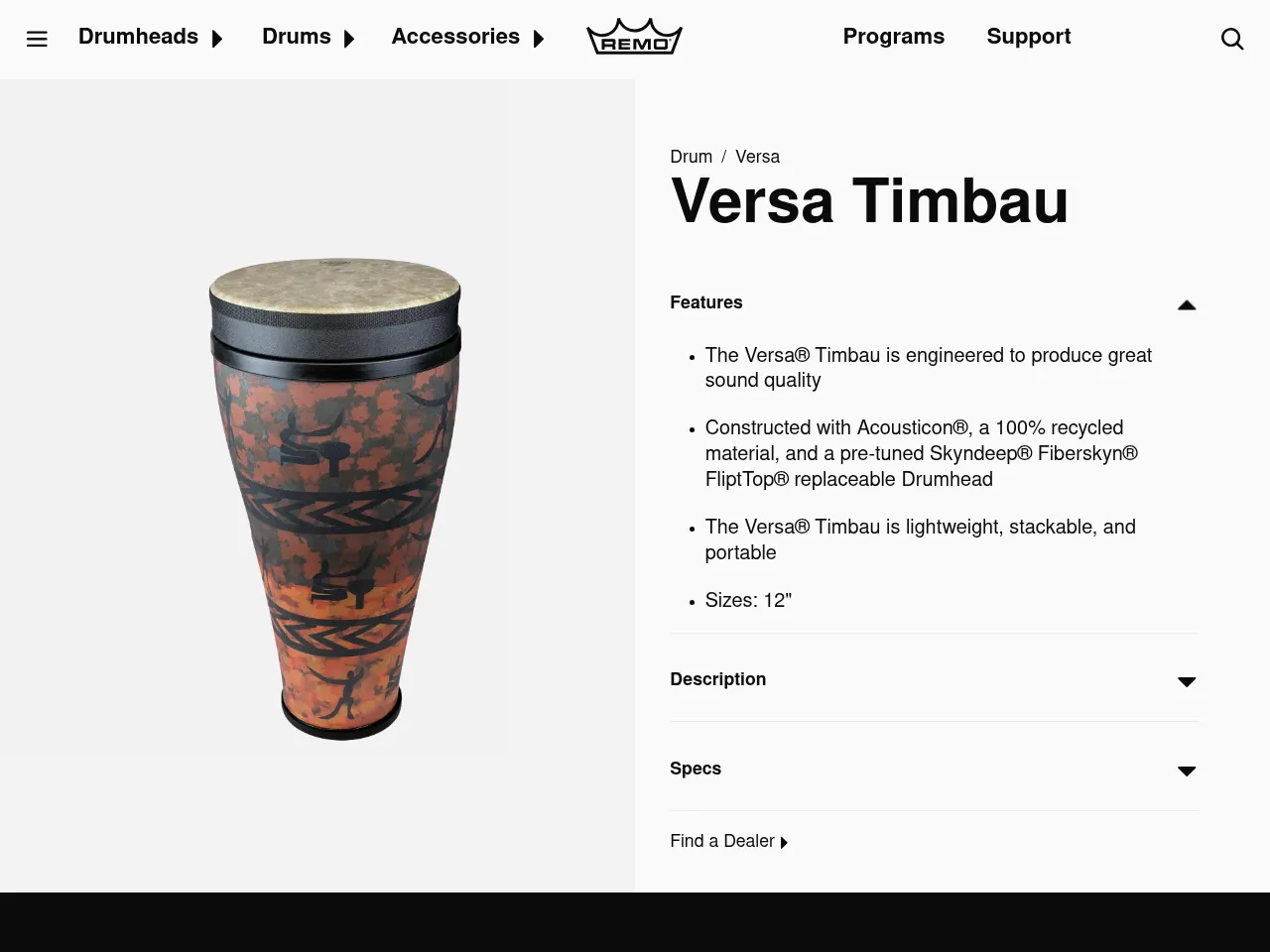
 Remo Versa Timbau 14-inch
Remo
$149
Beginner
United States
Brazilian-inspired hand drum with Nuskyn synthetic head and lightweight Acousticon shell, designed for drum circles and walking percussion ensembles.
Remo Versa Timbau 14-inch
Remo
$149
Beginner
United States
Brazilian-inspired hand drum with Nuskyn synthetic head and lightweight Acousticon shell, designed for drum circles and walking percussion ensembles.
 10
4.4
10
4.4
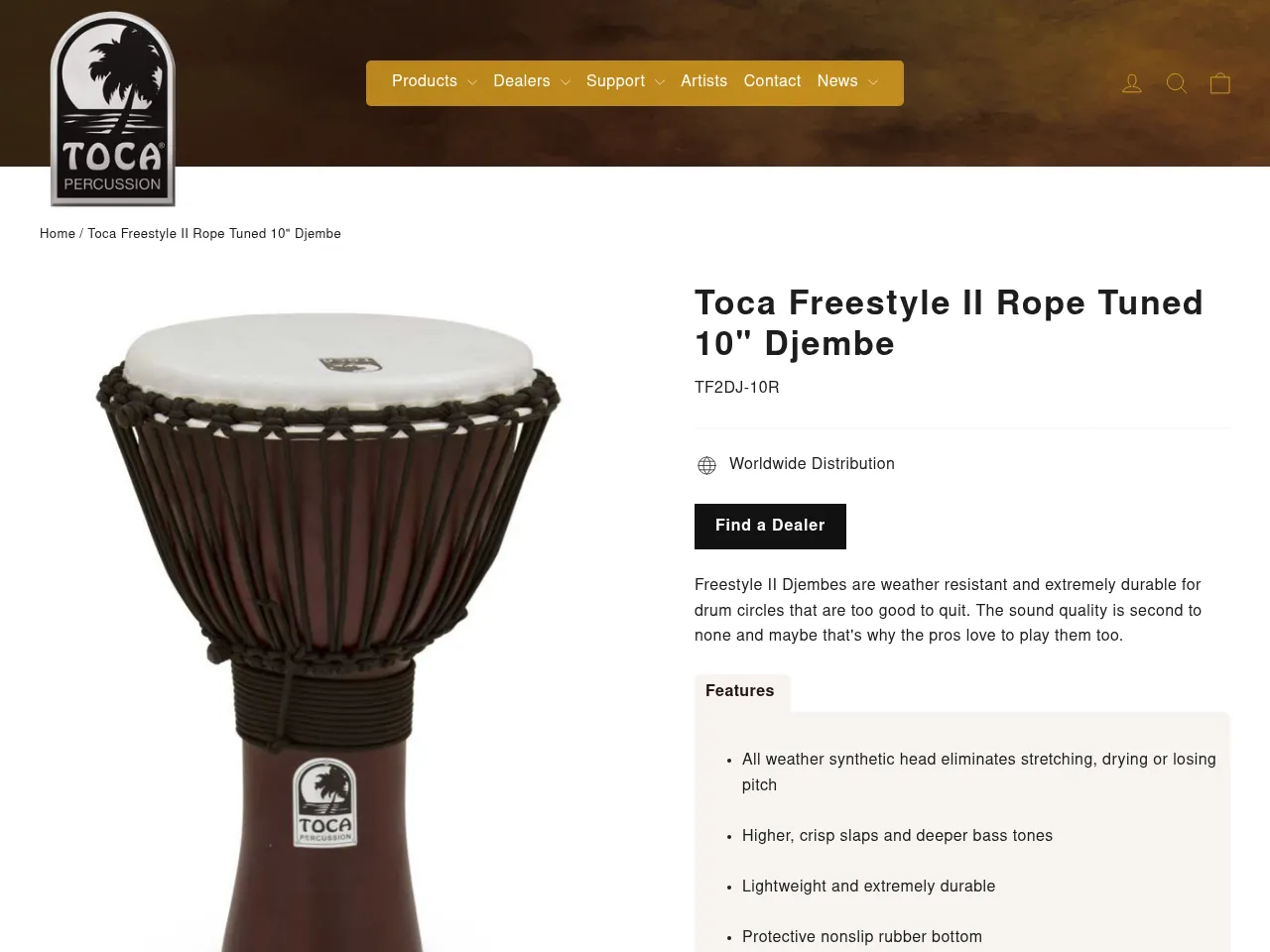
 Toca Freestyle Rope-Tuned Djembe 10-inch
Toca
$79
Beginner
China
10-inch rope-tuned djembe with synthetic shell and goatskin head offering genuine tones in a portable, beginner-friendly size for drumming and music therapy.
Toca Freestyle Rope-Tuned Djembe 10-inch
Toca
$79
Beginner
China
10-inch rope-tuned djembe with synthetic shell and goatskin head offering genuine tones in a portable, beginner-friendly size for drumming and music therapy.
 11
4.2
11
4.2
 LP Aspire Bongos
Latin Percussion
$99
Beginner
Thailand
The standard recommendation for beginning hand percussionists, with Siam oak shells, rawhide heads, and traditional chrome hardware delivering authentic bongo tones at an accessible price.
LP Aspire Bongos
Latin Percussion
$99
Beginner
Thailand
The standard recommendation for beginning hand percussionists, with Siam oak shells, rawhide heads, and traditional chrome hardware delivering authentic bongo tones at an accessible price.