Accordions - Directory w/ AI Reviews
Piano accordions, button accordions, and concertinas
The accordion is a bellows-driven free-reed instrument played by compressing and expanding the bellows while pressing keys or buttons on both sides. It is a uniquely self-contained instrument, capable of producing melody, harmony, and bass simultaneously. The accordion is central to a remarkably diverse range of musical traditions, from French musette to tango, zydeco, polka, and folk music worldwide.
History
The accordion was patented in 1829 by Cyrill Demian in Vienna, though similar free-reed instruments existed earlier in various forms. It spread rapidly across Europe and the Americas in the 19th century, becoming a folk music staple in virtually every country it reached. The piano accordion (with a piano-style keyboard) became dominant in the Americas, while button accordions remained popular across Europe.
Characteristics
The accordion produces sound when air from the bellows flows over metal reeds, with different reeds sounding on the push and pull of the bellows. The right hand plays melody on a piano keyboard or button board, while the left hand operates bass buttons that play single notes and preset chords. Registers (switches) change the combination of reed sets used, altering the timbre from bright to mellow.
Notable Players
Astor Piazzolla revolutionized tango music with his bandoneon (a type of concertina related to the accordion), blending it with jazz and classical elements. Clifton Chenier was the "King of Zydeco," whose piano accordion playing defined the genre in Louisiana. "Weird Al" Yankovic, a trained accordionist, has kept the instrument visible in popular culture through his comedic performances.
Fun Facts
The accordion was once so popular in America that more accordions were sold in the U.S. in the 1950s than guitars. The world's largest accordion, built in Italy, weighs over 500 pounds and stands over 6 feet tall.
 1
4.8
1
4.8
 Hohner Morino IV 120 Bass Piano Accordion
Hohner
$5,200
Professional
Germany
The pinnacle of German accordion engineering with 120-button stradella bass, four-voice reed configuration with cassotto chambers, and premium spruce bellows frame delivering exceptional tonal balance.
Hohner Morino IV 120 Bass Piano Accordion
Hohner
$5,200
Professional
Germany
The pinnacle of German accordion engineering with 120-button stradella bass, four-voice reed configuration with cassotto chambers, and premium spruce bellows frame delivering exceptional tonal balance.
 2
4.8
2
4.8
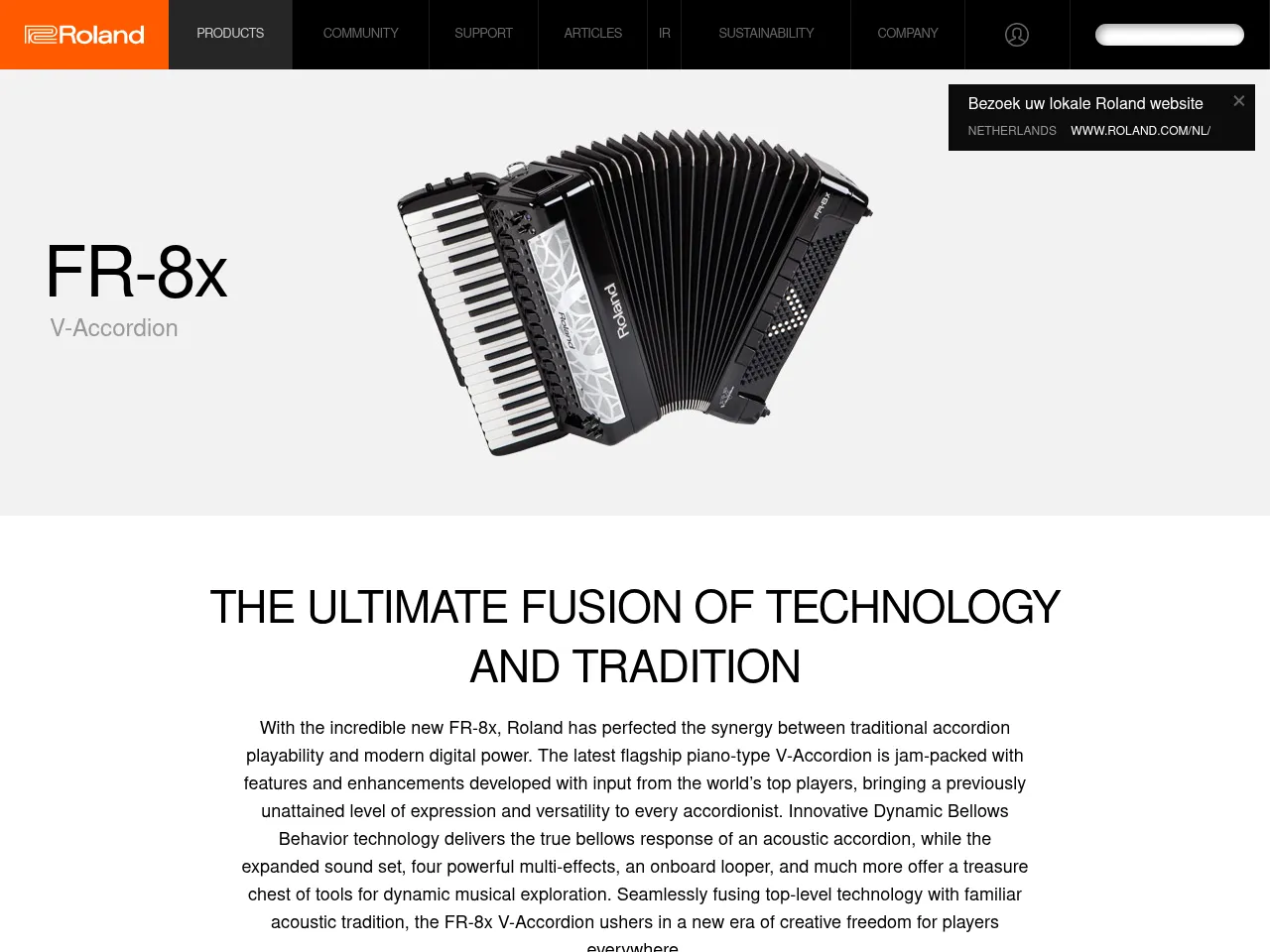
 Roland FR-8X V-Accordion
Roland
$6,999
Professional
Italy
Flagship digital accordion with Physical Behavior Modeling recreating Italian musette, French bal-musette, Bandoneon, and Bayan voices in a single instrument.
Roland FR-8X V-Accordion
Roland
$6,999
Professional
Italy
Flagship digital accordion with Physical Behavior Modeling recreating Italian musette, French bal-musette, Bandoneon, and Bayan voices in a single instrument.
 3
4.8
3
4.8
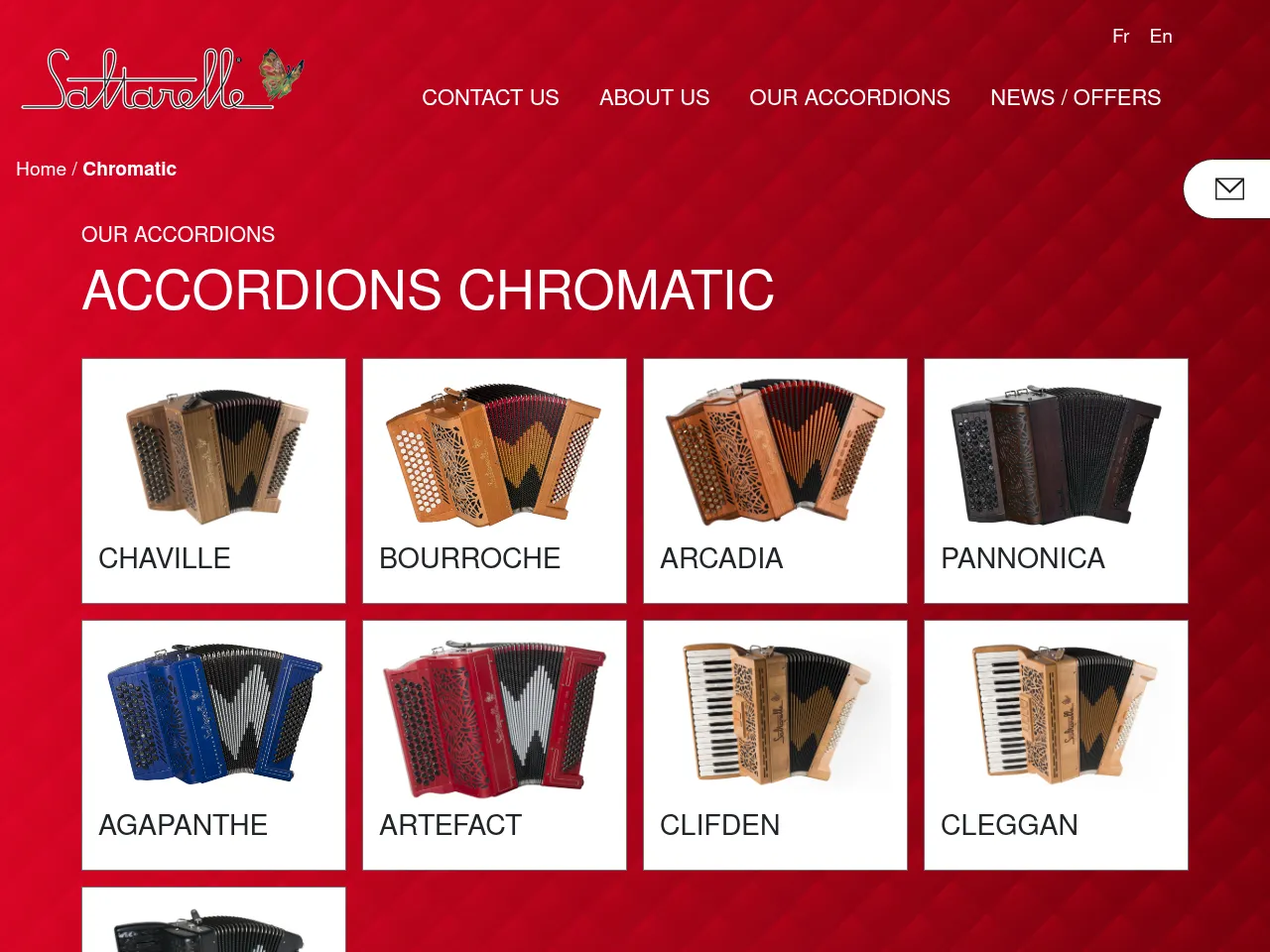
 Saltarelle Chromatic Button Accordion Concert
Saltarelle
$6,500
Professional
Italy
Cutting-edge chromatic button accordion with crystalline tone production, handcrafted Italian reeds, and extraordinarily sensitive bellows for professional classical performance.
Saltarelle Chromatic Button Accordion Concert
Saltarelle
$6,500
Professional
Italy
Cutting-edge chromatic button accordion with crystalline tone production, handcrafted Italian reeds, and extraordinarily sensitive bellows for professional classical performance.
 4
4.7
Pigini Princess 37 Piano Accordion
Pigini
$1,850
Beginner
Italy
A compact 37-key Italian piano accordion with four registers and individually tuned reeds, offering sophisticated voicing and portable size for solo and ensemble performance.
4
4.7
Pigini Princess 37 Piano Accordion
Pigini
$1,850
Beginner
Italy
A compact 37-key Italian piano accordion with four registers and individually tuned reeds, offering sophisticated voicing and portable size for solo and ensemble performance.
 5
4.7
5
4.7
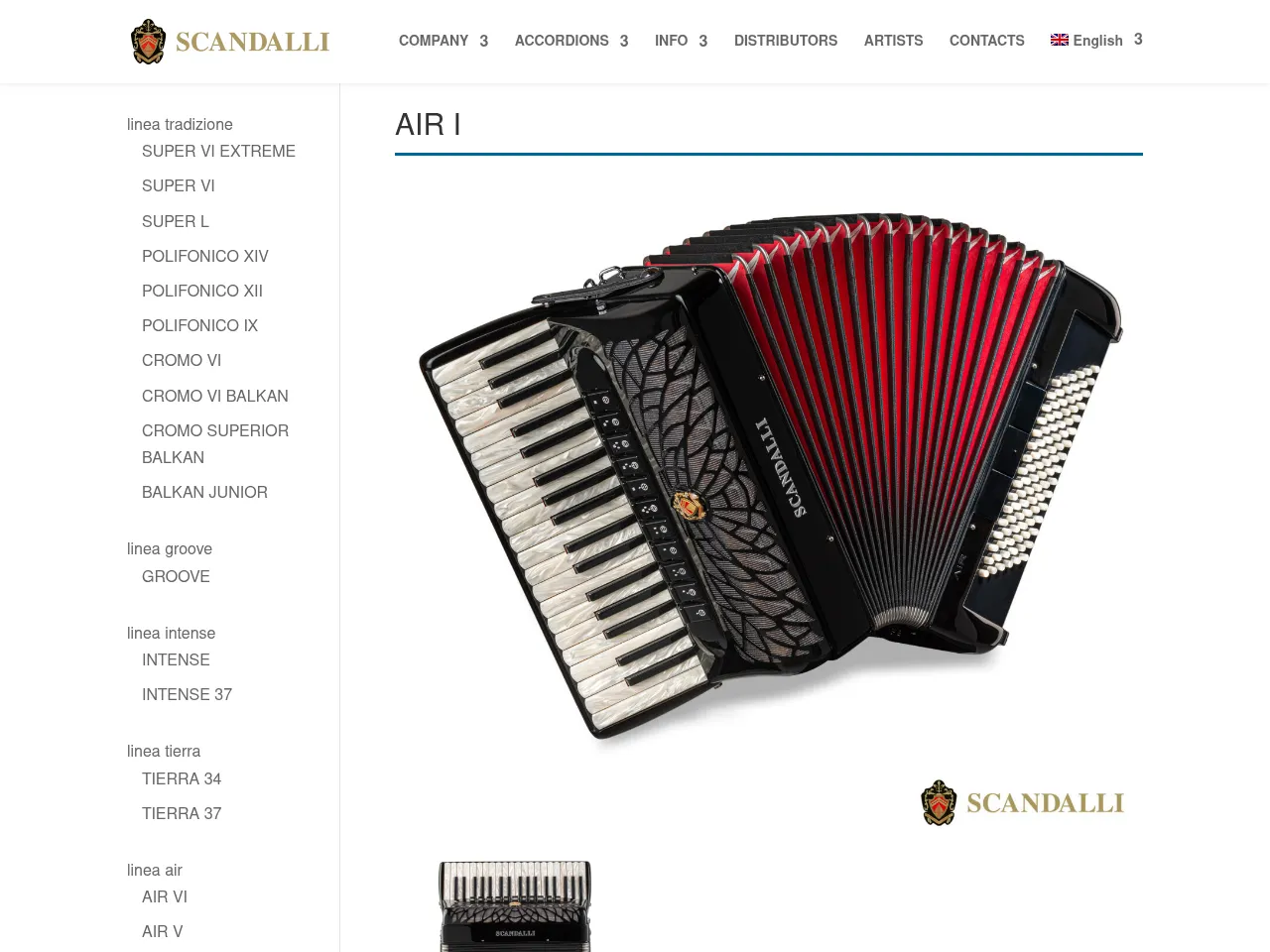
 Scandalli Air 41 Button Accordion
Scandalli
$2,100
Intermediate
Italy
Lightweight 41-button accordion designed for folk ensembles and outdoor performances, with advanced bellows and mid-range clarity optimized for ensemble work.
Scandalli Air 41 Button Accordion
Scandalli
$2,100
Intermediate
Italy
Lightweight 41-button accordion designed for folk ensembles and outdoor performances, with advanced bellows and mid-range clarity optimized for ensemble work.
 6
4.7
Castagnari C-Series Button Accordion
Castagnari
$3,200
Advanced
Italy
The Castagnari C-Series is a handcrafted Italian button accordion with punchy attack, singing sustained tones, and superb bellows control, purpose-built for traditional folk, tango, and cabaret music with premium hardwood construction.
6
4.7
Castagnari C-Series Button Accordion
Castagnari
$3,200
Advanced
Italy
The Castagnari C-Series is a handcrafted Italian button accordion with punchy attack, singing sustained tones, and superb bellows control, purpose-built for traditional folk, tango, and cabaret music with premium hardwood construction.
 7
4.6
7
4.6
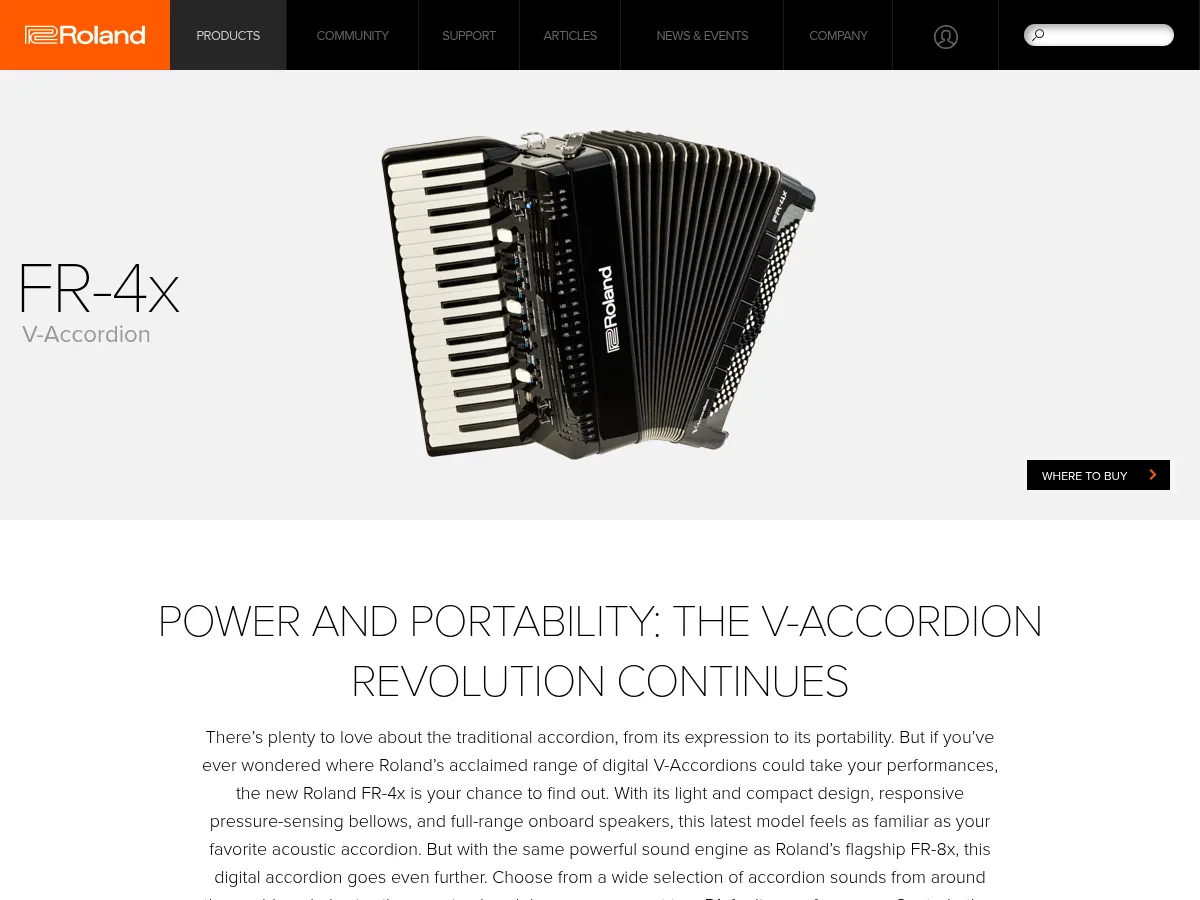
 Roland FR-4X Digital Accordion
Roland
$3,995
Intermediate
Japan
Revolutionary digital accordion with authentic bellows simulation and 120-button stradella bass, reproducing Italian, French, and German accordion traditions.
Roland FR-4X Digital Accordion
Roland
$3,995
Intermediate
Japan
Revolutionary digital accordion with authentic bellows simulation and 120-button stradella bass, reproducing Italian, French, and German accordion traditions.
 8
4.5
8
4.5
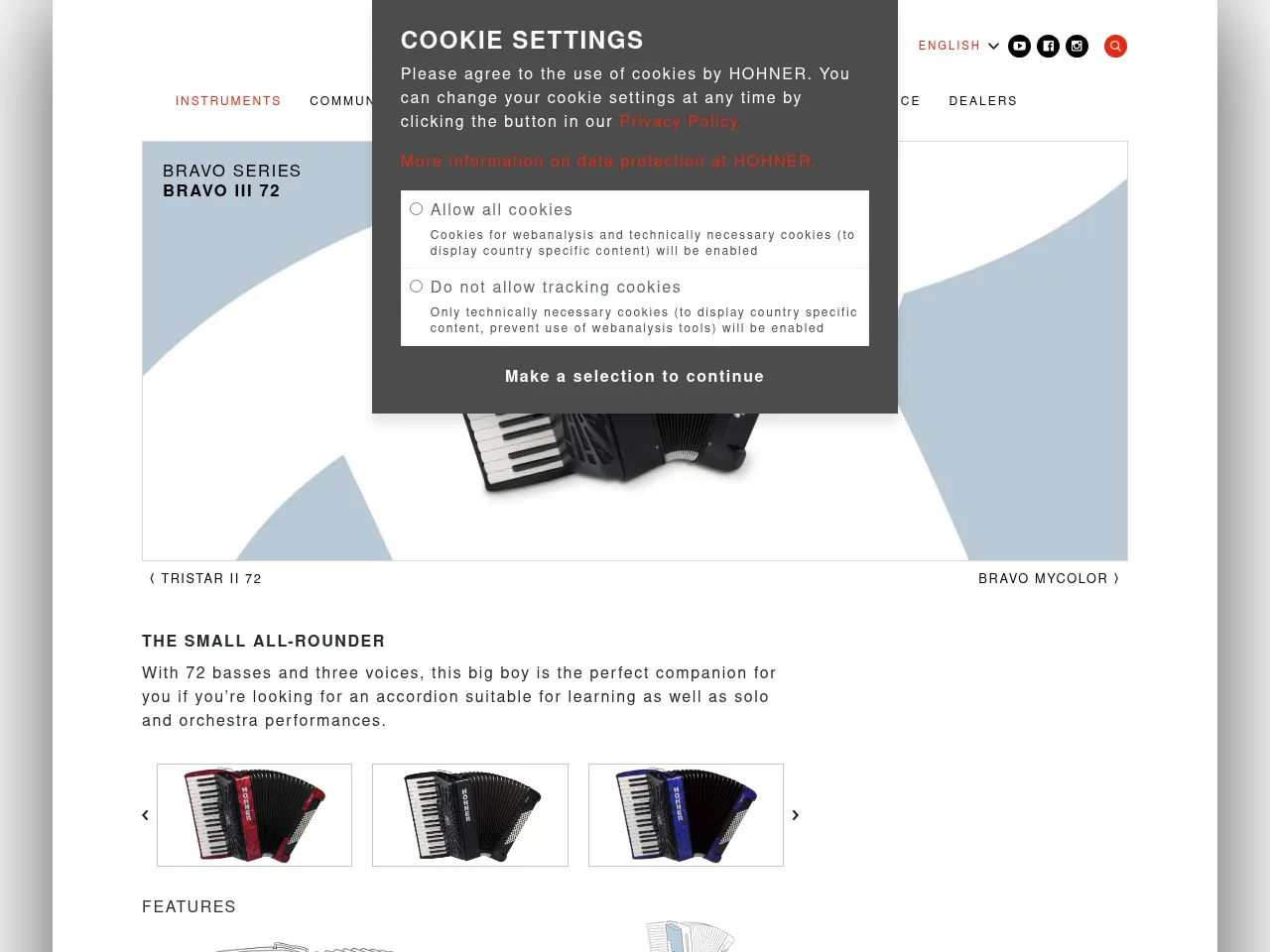
 Hohner Bravo III 72 Bass Piano Accordion
Hohner
$1,199
Intermediate
China
An intermediate 72-bass accordion with Italian-made reeds and three treble register switches, offering genuine Hohner sound in a durable ABS body that is lighter and more manageable than full-size models.
Hohner Bravo III 72 Bass Piano Accordion
Hohner
$1,199
Intermediate
China
An intermediate 72-bass accordion with Italian-made reeds and three treble register switches, offering genuine Hohner sound in a durable ABS body that is lighter and more manageable than full-size models.
 9
4.4
9
4.4
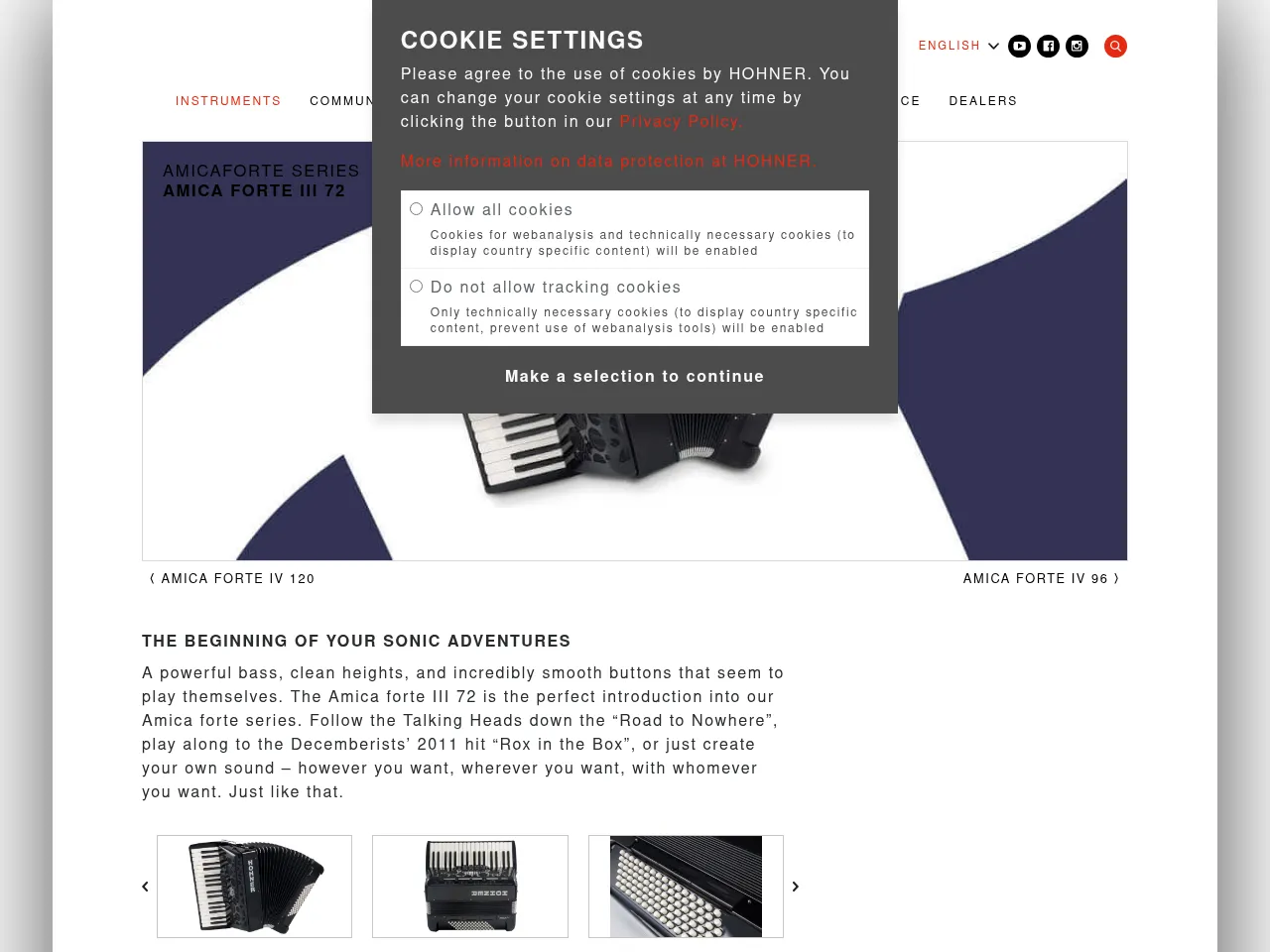
 Hohner Amica III 72 Piano Accordion
Hohner
$1,299
Beginner
Germany
A legendary student accordion with 72 keys and 34 buttons delivering warm, mellow tone, featuring lightweight aluminum reed plates and a reliable bellows system proven across decades of student use.
Hohner Amica III 72 Piano Accordion
Hohner
$1,299
Beginner
Germany
A legendary student accordion with 72 keys and 34 buttons delivering warm, mellow tone, featuring lightweight aluminum reed plates and a reliable bellows system proven across decades of student use.
 10
4.2
Weltmeister Stella 40 Piano Accordion
Weltmeister
$2,450
Intermediate
Germany
German-crafted mid-level piano accordion with 40 keys and 120 bass buttons, offering bright articulate tone and impressive bellows responsiveness for serious hobbyists.
10
4.2
Weltmeister Stella 40 Piano Accordion
Weltmeister
$2,450
Intermediate
Germany
German-crafted mid-level piano accordion with 40 keys and 120 bass buttons, offering bright articulate tone and impressive bellows responsiveness for serious hobbyists.