Ukuleles - Directory w/ AI Reviews
Soprano, concert, tenor, and baritone ukuleles
The ukulele is a small, four-stringed instrument that originated in Hawaii and is known for its bright, cheerful tone. It comes in four standard sizes: soprano, concert, tenor, and baritone, each offering different tonal ranges. The ukulele's portability, affordability, and gentle learning curve have made it one of the fastest-growing instruments in popularity.
History
The ukulele was developed in Hawaii in the 1880s by Portuguese immigrants who brought small guitar-like instruments called machetes and braguinhas. King David Kalakaua championed the instrument, integrating it into Hawaiian culture and royal events. The ukulele experienced revivals in the 1920s jazz age, the 1960s with Tiny Tim, and again in the 2010s through YouTube artists like Jake Shimabukuro.
Characteristics
Ukuleles are typically strung with nylon or fluorocarbon strings and tuned G-C-E-A (re-entrant tuning with a high G string). Soprano ukuleles produce the classic, bright "Hawaiian" sound, while tenor models offer more volume and deeper tone. The small fret spacing requires adaptation from guitar players, but makes the instrument accessible for players with smaller hands.
Notable Players
Israel Kamakawiwo'ole's ukulele rendition of "Over the Rainbow" became one of the most beloved recordings in music history. Jake Shimabukuro's virtuosic ukulele performances on YouTube introduced millions to the instrument's full potential. Tiny Tim's eccentric "Tiptoe Through the Tulips" performance on "Laugh-In" in 1968 brought the ukulele into American pop culture.
Fun Facts
The name "ukulele" roughly translates to "jumping flea" in Hawaiian, possibly describing the quick finger movements of players. There are more ukuleles sold in the United States each year than guitars, making it the best-selling fretted string instrument in America.
 1
4.6
1
4.6
 Flight NUS310
Flight
$55
Beginner
China
One of the best value soprano ukuleles with sapele construction delivering bright, lively tone, including a padded gig bag and reliable open-gear tuners that consistently exceed expectations for the price.
Flight NUS310
Flight
$55
Beginner
China
One of the best value soprano ukuleles with sapele construction delivering bright, lively tone, including a padded gig bag and reliable open-gear tuners that consistently exceed expectations for the price.
 2
4.6
2
4.6
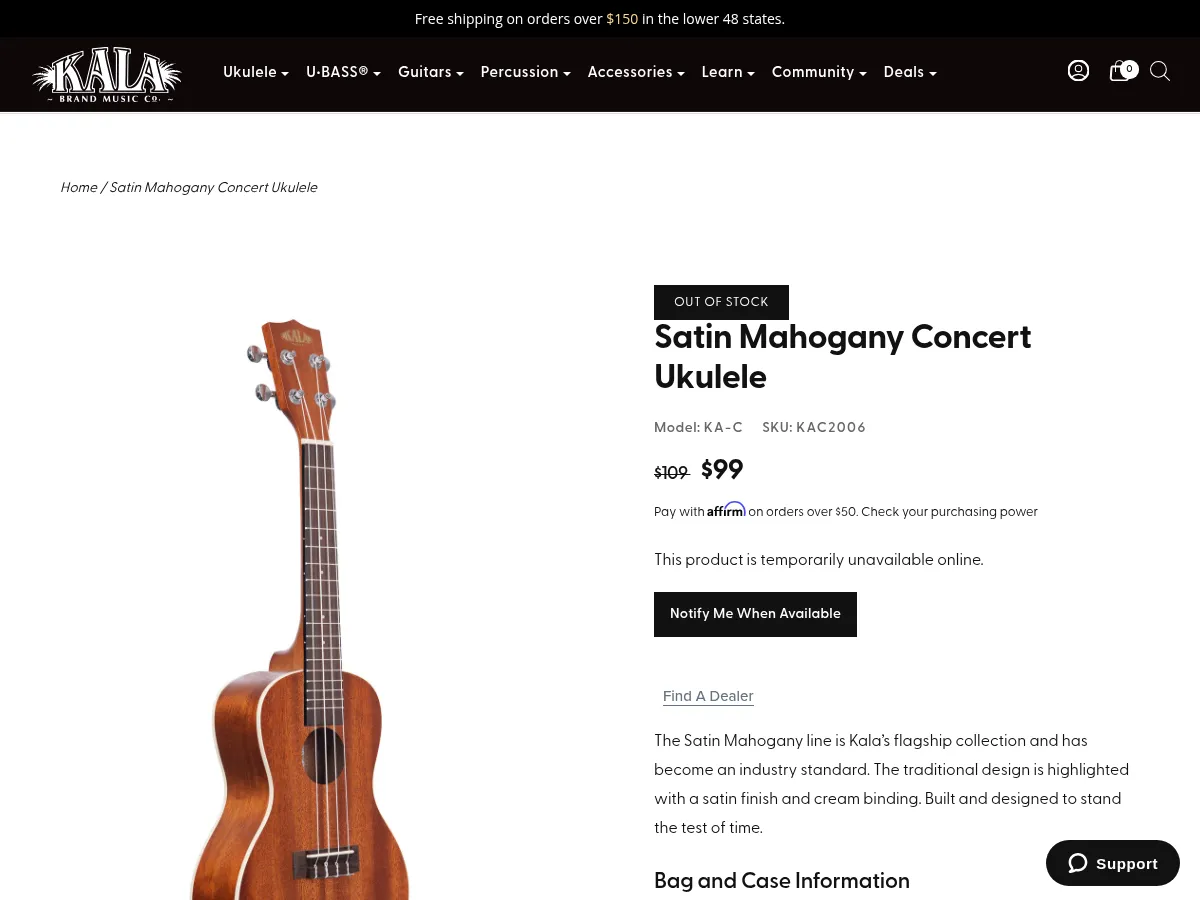
 Kala KA-C Mahogany Concert
Kala
$79
Beginner
China
A popular all-mahogany concert ukulele delivering warm, woody tone with GraphTech NuBone nut and Aquila strings, ideal for intermediate players seeking a step up from starter instruments.
Kala KA-C Mahogany Concert
Kala
$79
Beginner
China
A popular all-mahogany concert ukulele delivering warm, woody tone with GraphTech NuBone nut and Aquila strings, ideal for intermediate players seeking a step up from starter instruments.
 3
4.6
3
4.6
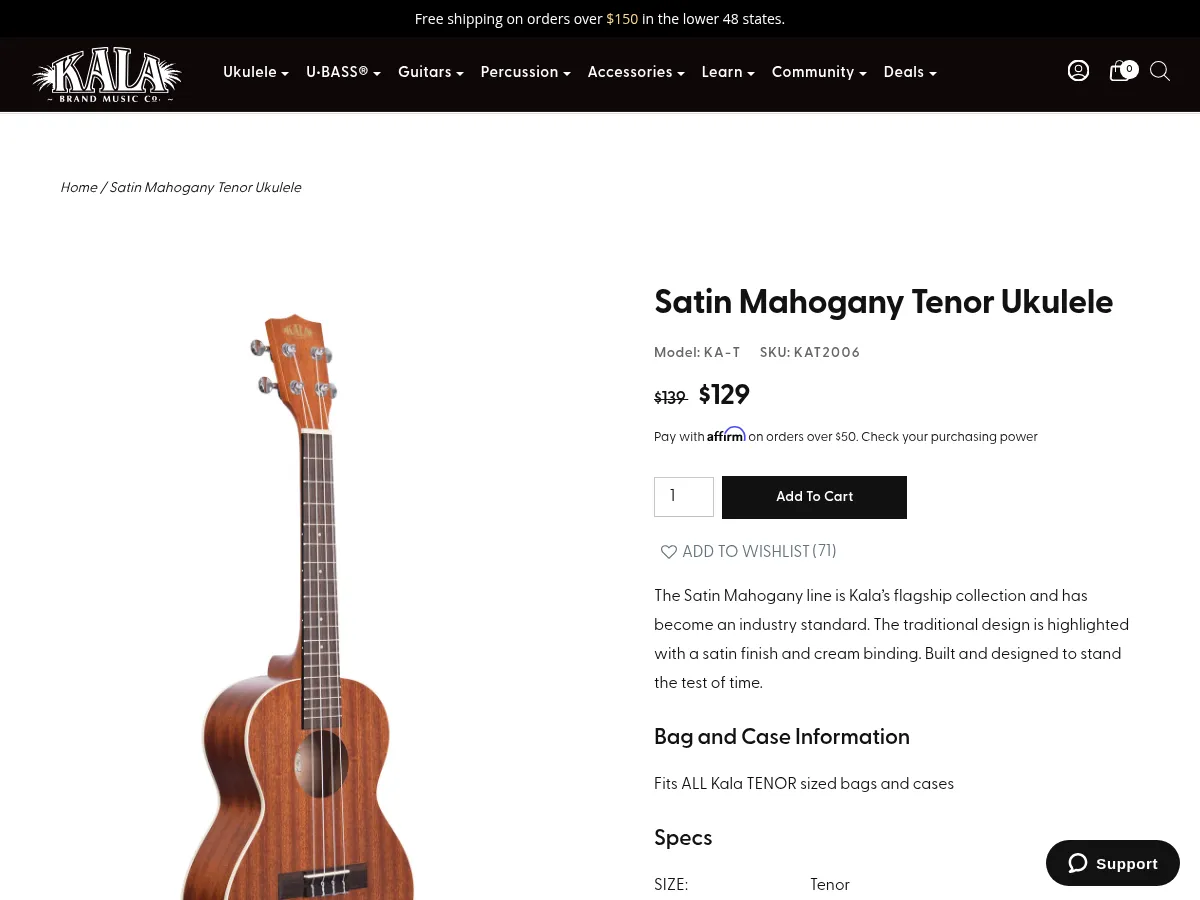
 Kala KA-T Tenor
Kala
$89
Intermediate
China
A versatile tenor ukulele with fuller, deeper sound than smaller sizes, offering extended sustain and a 17-inch scale length that appeals to guitarists transitioning to ukulele.
Kala KA-T Tenor
Kala
$89
Intermediate
China
A versatile tenor ukulele with fuller, deeper sound than smaller sizes, offering extended sustain and a 17-inch scale length that appeals to guitarists transitioning to ukulele.
 4
4.6
4
4.6
 Ohana CK-70
Ohana
$139
Intermediate
China
A solid-top concert ukulele with bone nut and saddle delivering refined articulate tone that punches above its price, with Grover tuners and clean rosewood fingerboard finish.
Ohana CK-70
Ohana
$139
Intermediate
China
A solid-top concert ukulele with bone nut and saddle delivering refined articulate tone that punches above its price, with Grover tuners and clean rosewood fingerboard finish.
 5
4.5
5
4.5
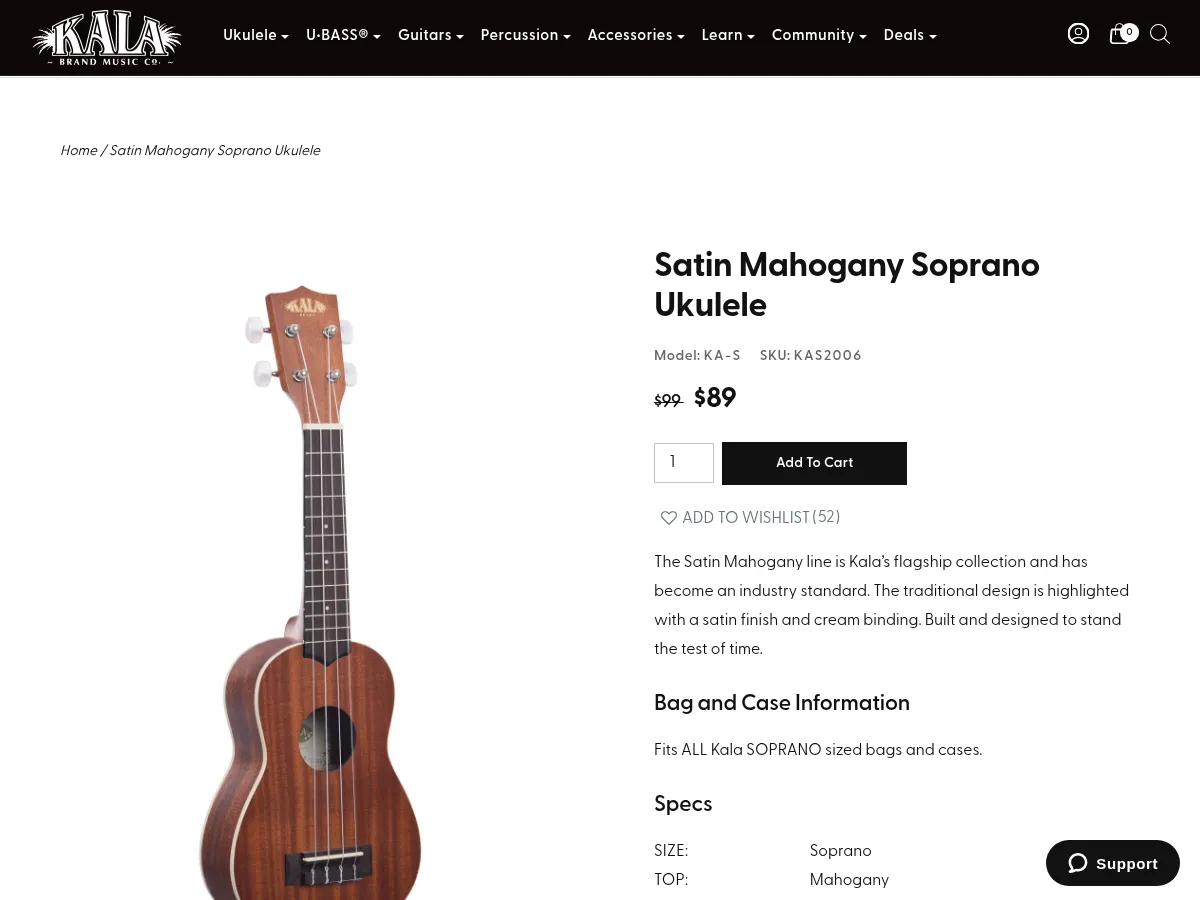
 Kala KA-S Soprano
Kala
$59
Beginner
China
A well-crafted soprano ukulele in the classic smallest size, producing bright, cheerful tone from its all-mahogany body with reliable die-cast tuners for stable pitch.
Kala KA-S Soprano
Kala
$59
Beginner
China
A well-crafted soprano ukulele in the classic smallest size, producing bright, cheerful tone from its all-mahogany body with reliable die-cast tuners for stable pitch.
 6
4.4
6
4.4
 Kala KA-SMHCE Soprano
Kala
$179
Intermediate
China
An electro-acoustic soprano ukulele with solid mahogany top, onboard pickup system, and cutaway design for upper-fret access, built for performers in amplified settings.
Kala KA-SMHCE Soprano
Kala
$179
Intermediate
China
An electro-acoustic soprano ukulele with solid mahogany top, onboard pickup system, and cutaway design for upper-fret access, built for performers in amplified settings.
 7
4.4
7
4.4
 Luna Tattoo Concert
Luna
$59
Beginner
China
A visually distinctive concert ukulele with laser-etched Hawaiian tattoo design on the mahogany top, combining unique aesthetics with warm, playable tone at a beginner-friendly price.
Luna Tattoo Concert
Luna
$59
Beginner
China
A visually distinctive concert ukulele with laser-etched Hawaiian tattoo design on the mahogany top, combining unique aesthetics with warm, playable tone at a beginner-friendly price.
 8
4.3
8
4.3
 Cordoba 20TM Tenor
Cordoba
$219
Intermediate
China
The Cordoba 20TM Tenor is a solid-top mahogany ukulele with deeper bass response and greater sustain from its tenor scale length, offering a richer, more guitar-like voice for fingerpicking, strumming, and melodic solo work.
Cordoba 20TM Tenor
Cordoba
$219
Intermediate
China
The Cordoba 20TM Tenor is a solid-top mahogany ukulele with deeper bass response and greater sustain from its tenor scale length, offering a richer, more guitar-like voice for fingerpicking, strumming, and melodic solo work.
 9
4.3
9
4.3
 Lanikai LU-21C Concert
Lanikai
$49
Beginner
China
A straightforward concert ukulele with nato body producing warm, balanced tone, open-gear chrome tuners, and reliable quality from a brand with Hawaiian heritage.
Lanikai LU-21C Concert
Lanikai
$49
Beginner
China
A straightforward concert ukulele with nato body producing warm, balanced tone, open-gear chrome tuners, and reliable quality from a brand with Hawaiian heritage.
 10
4.2
10
4.2
 Fender Grace VanderWaal Signature Ukulele
Fender
$79
Beginner
China
A soprano ukulele in collaboration with the singer-songwriter featuring a distinctive gold sparkle finish and sapele body, with a no-tie bridge and Fender headstock shape scaled to ukulele proportions.
Fender Grace VanderWaal Signature Ukulele
Fender
$79
Beginner
China
A soprano ukulele in collaboration with the singer-songwriter featuring a distinctive gold sparkle finish and sapele body, with a no-tie bridge and Fender headstock shape scaled to ukulele proportions.
 11
4.2
11
4.2
 Kala MK-S Makala Soprano
Kala
$39
Beginner
China
A budget-friendly starter soprano with Aquila Super Nylgut strings and gear tuners, delivering genuinely musical tone that avoids the tinny quality of ultra-cheap alternatives.
Kala MK-S Makala Soprano
Kala
$39
Beginner
China
A budget-friendly starter soprano with Aquila Super Nylgut strings and gear tuners, delivering genuinely musical tone that avoids the tinny quality of ultra-cheap alternatives.
 12
4.2
12
4.2
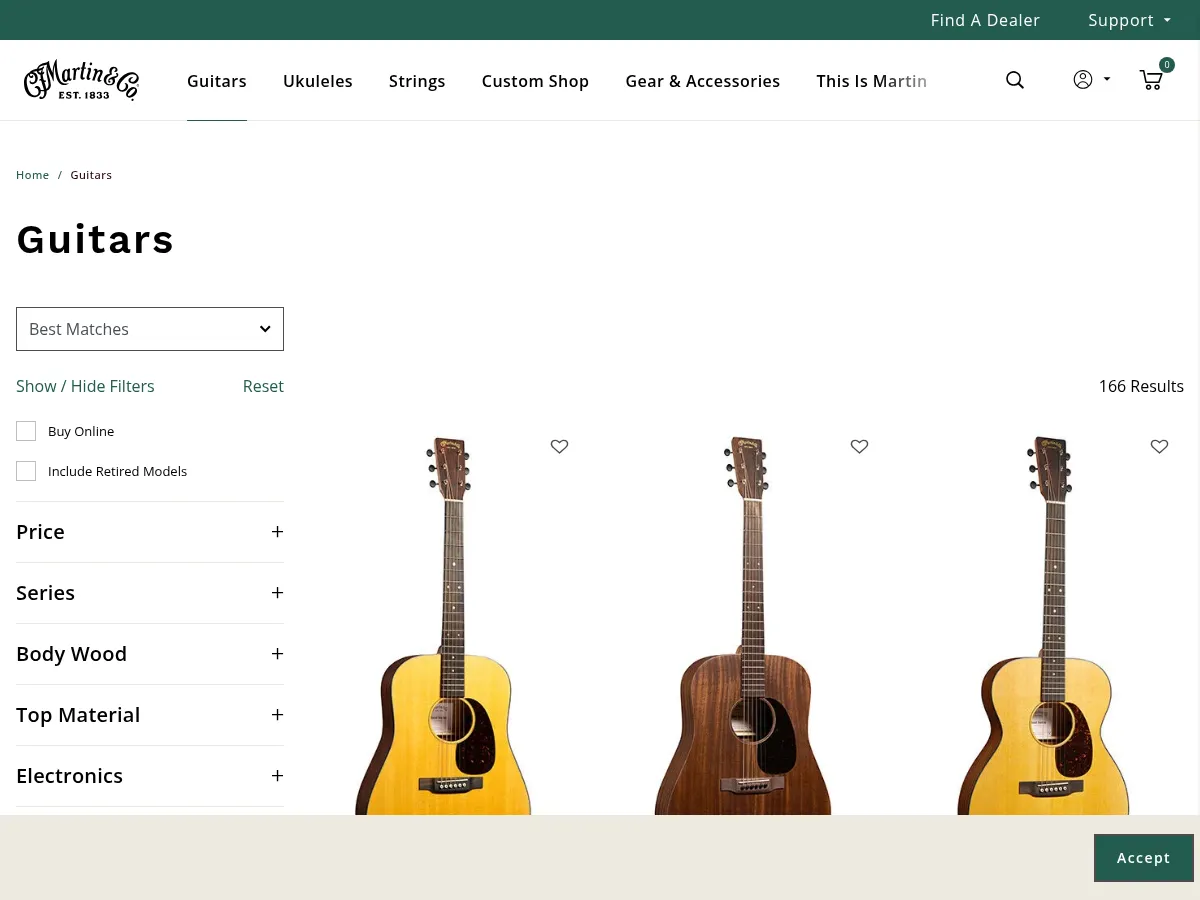
 Martin 0X Uke Bamboo Soprano
Martin
$99
Intermediate
Mexico
A soprano ukulele from the iconic guitar maker with durable bamboo-pattern HPL construction that is virtually immune to environmental changes, perfect as a travel companion.
Martin 0X Uke Bamboo Soprano
Martin
$99
Intermediate
Mexico
A soprano ukulele from the iconic guitar maker with durable bamboo-pattern HPL construction that is virtually immune to environmental changes, perfect as a travel companion.
 13
4.2
13
4.2
 Oscar Schmidt OU2
Oscar Schmidt
$69
Beginner
China
A popular concert ukulele offering warm, full sound at entry-level pricing with mahogany body, rosewood fingerboard, and geared tuners for reliable pitch stability.
Oscar Schmidt OU2
Oscar Schmidt
$69
Beginner
China
A popular concert ukulele offering warm, full sound at entry-level pricing with mahogany body, rosewood fingerboard, and geared tuners for reliable pitch stability.
 14
4.1
14
4.1
 Cordoba 15CM Concert
Cordoba
$69
Beginner
China
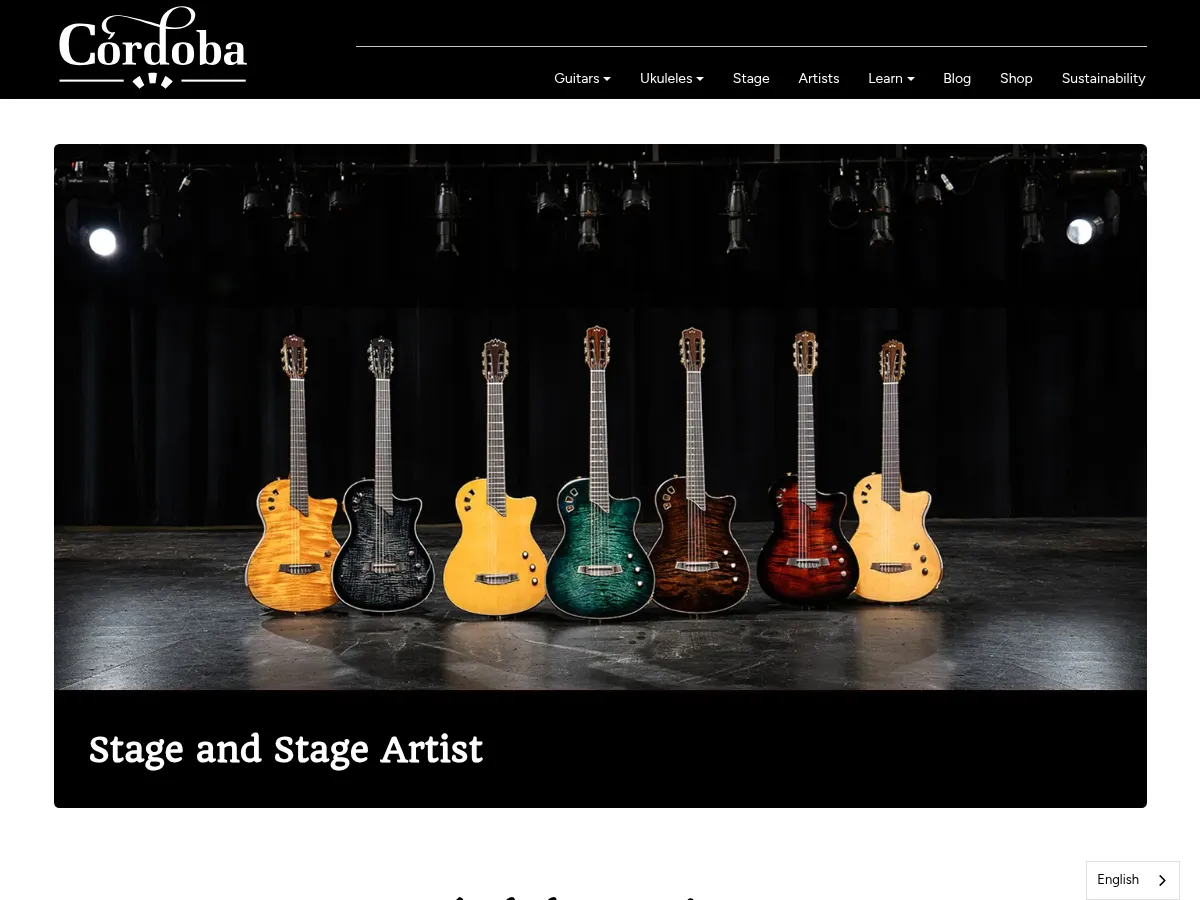
The Cordoba 15CM Concert brings classical guitar construction principles to the ukulele world, with all-mahogany construction, Aquila strings, and hand-decorated rosette delivering warm, refined tone at an accessible price.
Cordoba 15CM Concert
Cordoba
$69
Beginner
China
The Cordoba 15CM Concert brings classical guitar construction principles to the ukulele world, with all-mahogany construction, Aquila strings, and hand-decorated rosette delivering warm, refined tone at an accessible price.
 15
3.9
15
3.9
 Enya Nova U Mini
Enya
$49
Beginner
China
A compact carbon fiber composite soprano ukulele that is virtually indestructible for travel and outdoor play, producing a surprisingly bright, musical tone with consistent intonation and zero maintenance requirements.
Enya Nova U Mini
Enya
$49
Beginner
China
A compact carbon fiber composite soprano ukulele that is virtually indestructible for travel and outdoor play, producing a surprisingly bright, musical tone with consistent intonation and zero maintenance requirements.