Mandolins - Directory w/ AI Reviews
A-style and F-style mandolins for bluegrass, folk, and classical
The mandolin is a small stringed instrument with four pairs of strings (courses) tuned in fifths like a violin, played with a plectrum (pick). Its bright, sparkling tone and rapid tremolo technique give it a distinctive, instantly recognizable voice. The mandolin is central to bluegrass, classical, folk, and Italian music traditions.
History
The mandolin descended from the lute family in Italy during the 17th and 18th centuries, with the Neapolitan mandolin becoming the most popular style. Orville Gibson introduced the archtop, carved-body mandolin in the early 1900s, and Lloyd Loar designed the iconic Gibson F-5 model in 1922. Bill Monroe adopted the F-5 mandolin and essentially invented bluegrass music with it in the 1940s, establishing the mandolin as a lead instrument.
Characteristics
Mandolins are tuned G-D-A-E (low to high), identical to a violin, with each note doubled by a pair of strings strummed together. The tremolo technique, rapidly alternating pick strokes on a single course, sustains notes in a way that mimics a bowed instrument. Mandolins come in two main body styles: the teardrop A-style (versatile, affordable) and the scroll-body F-style (traditional bluegrass, more projecting).
Notable Players
Bill Monroe, the "Father of Bluegrass," defined the mandolin's role as a lead instrument on his 1922 Gibson F-5. Chris Thile is a MacArthur Fellow and Nickel Creek co-founder who has elevated the mandolin to virtuosic, genre-defying heights. David Grisman blended bluegrass mandolin with jazz to create "Dawg music," expanding the instrument's horizons.
Fun Facts
Bill Monroe's 1923 Gibson F-5 mandolin, signed by Lloyd Loar, is considered the "Holy Grail" of mandolins and is valued at over $1 million. The mandolin appears in the orchestral score for Mozart's opera "Don Giovanni," where it accompanies the famous serenade "Deh vieni alla finestra."
 1
4.8
1
4.8
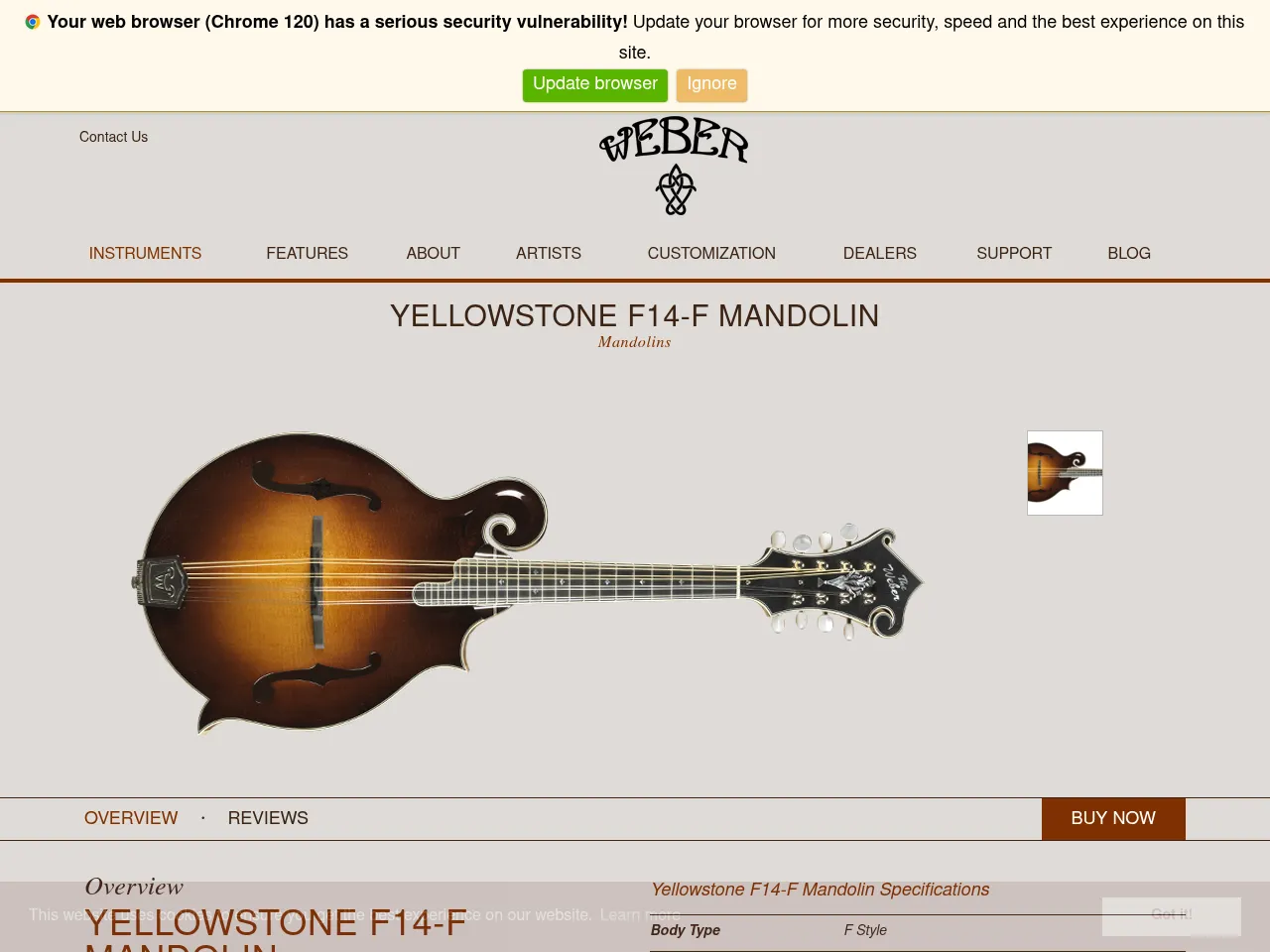
 Weber Yellowstone F-Style Mandolin
Weber
$5,400
Professional
United States
Handcrafted American F-style mandolin from Bend, Oregon, delivering powerful projection, crystalline clarity, and the tonal complexity of a professional-grade instrument.
Weber Yellowstone F-Style Mandolin
Weber
$5,400
Professional
United States
Handcrafted American F-style mandolin from Bend, Oregon, delivering powerful projection, crystalline clarity, and the tonal complexity of a professional-grade instrument.
 2
4.7
2
4.7
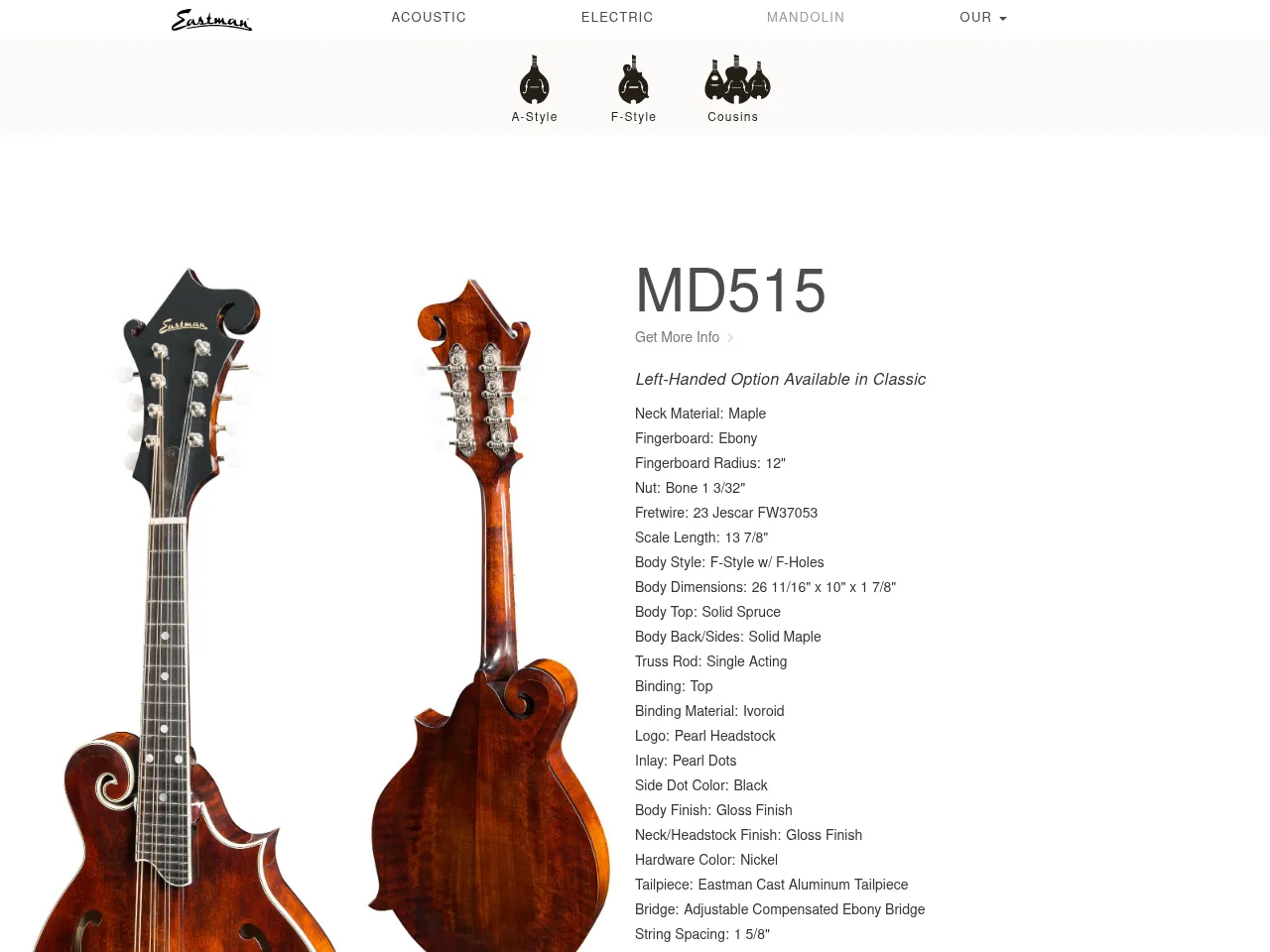
 Eastman MD515 F-Style Mandolin
Eastman
$1,999
Professional
China
The Eastman MD515 is a professional-grade F-style mandolin with powerful projection, quick attack, and excellent note definition that cuts through bluegrass ensembles, with dovetail neck joint well below American-made pricing.
Eastman MD515 F-Style Mandolin
Eastman
$1,999
Professional
China
The Eastman MD515 is a professional-grade F-style mandolin with powerful projection, quick attack, and excellent note definition that cuts through bluegrass ensembles, with dovetail neck joint well below American-made pricing.
 3
4.7
3
4.7
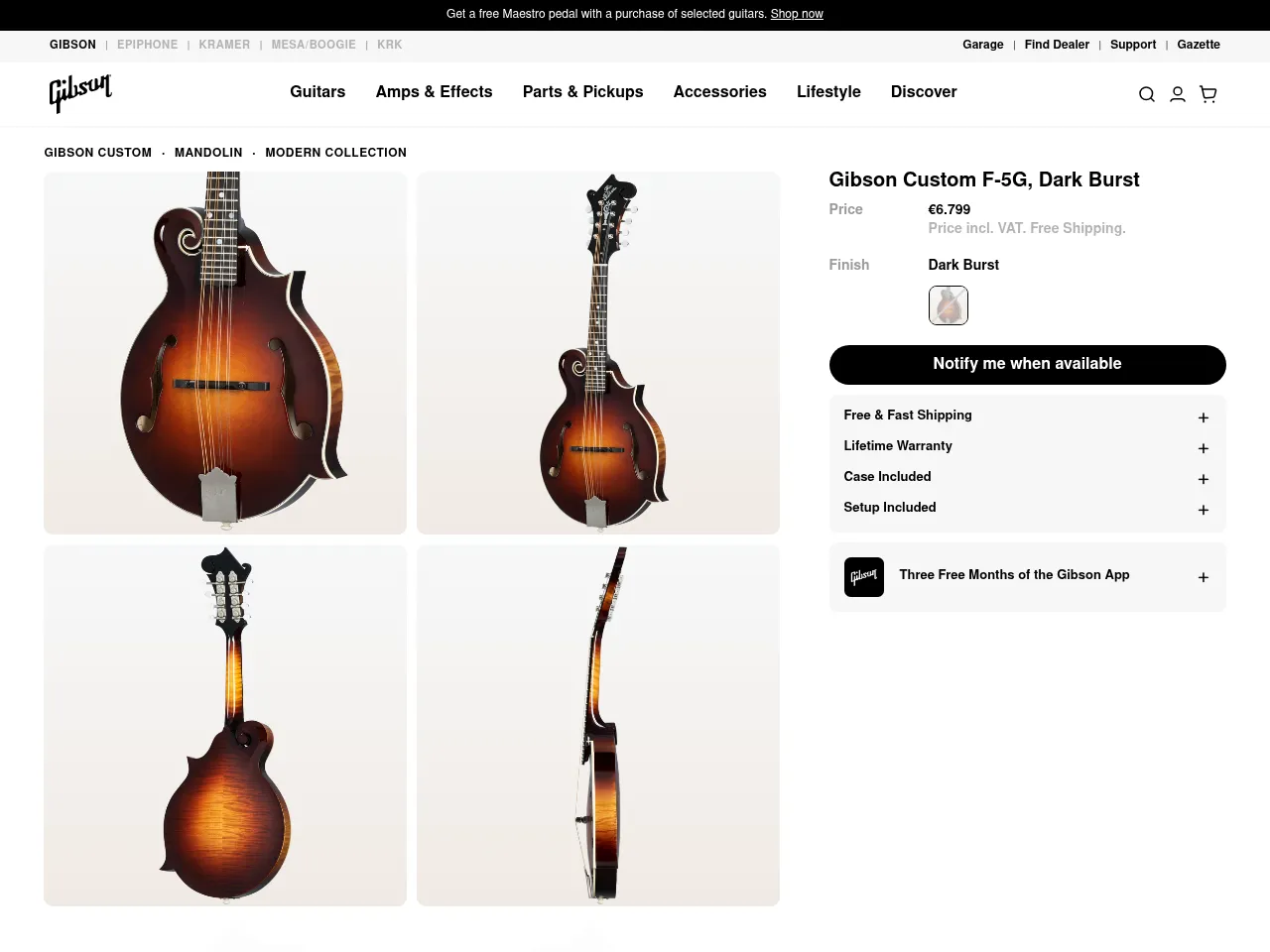
 Gibson F-5G Mandolin
Gibson
$5,999
Professional
United States
A premium American-made F-style mandolin with Adirondack spruce top and maple back built in Bozeman, Montana, delivering the powerful, cutting tone that has defined bluegrass for nearly a century.
Gibson F-5G Mandolin
Gibson
$5,999
Professional
United States
A premium American-made F-style mandolin with Adirondack spruce top and maple back built in Bozeman, Montana, delivering the powerful, cutting tone that has defined bluegrass for nearly a century.
 4
4.7
4
4.7
 Kentucky KM-1000 F-Style Mandolin
Kentucky
$3,200
Professional
China
Kentucky's master-grade flagship F-style mandolin with hand-carved Alpine spruce and Eastern European maple, delivering powerful, complex tone that competes with instruments costing far more.
Kentucky KM-1000 F-Style Mandolin
Kentucky
$3,200
Professional
China
Kentucky's master-grade flagship F-style mandolin with hand-carved Alpine spruce and Eastern European maple, delivering powerful, complex tone that competes with instruments costing far more.
 5
4.6
5
4.6
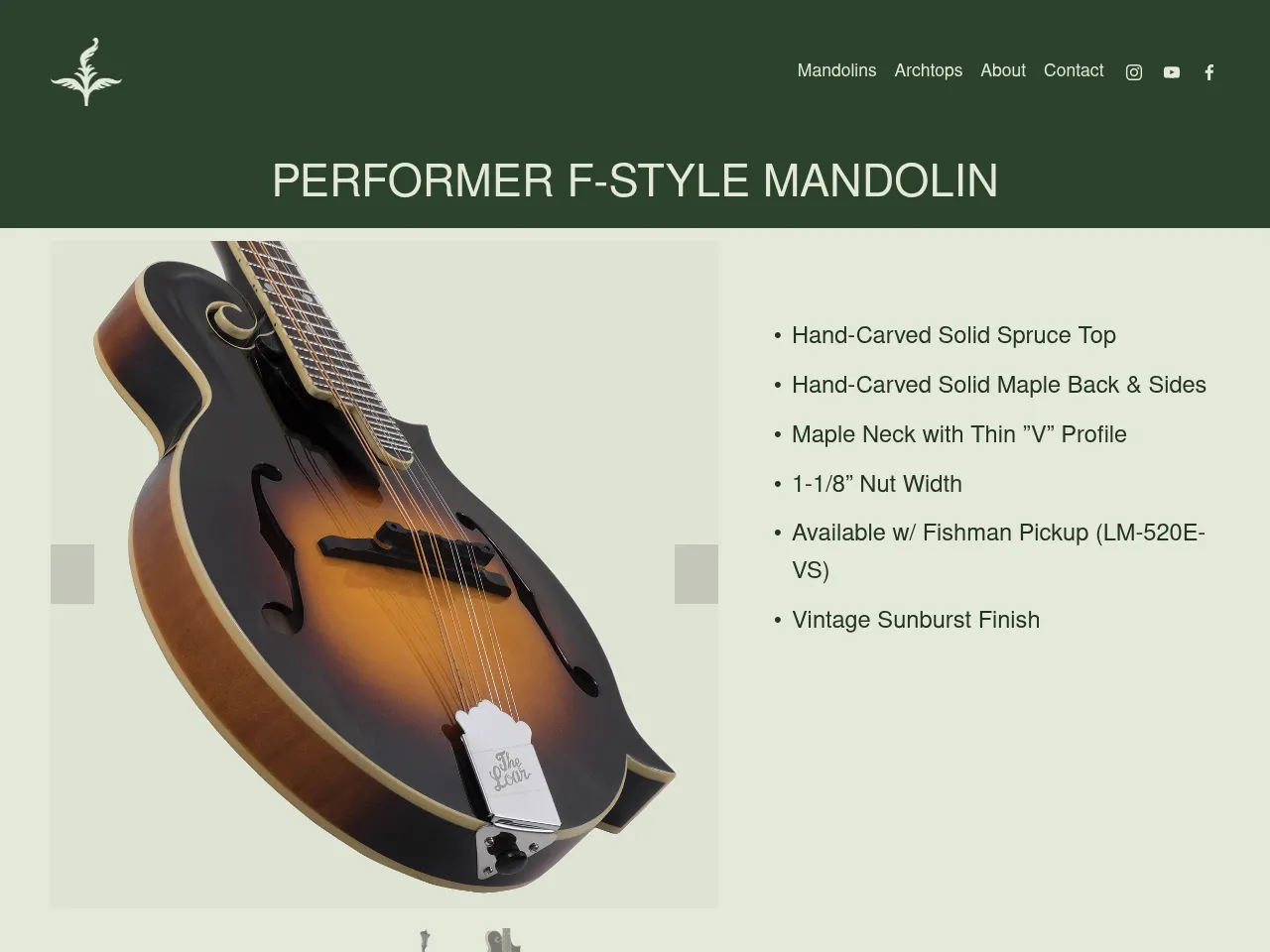
 The Loar LM-520 F-Style Mandolin
The Loar
$899
Intermediate
China
Hand-carved F-style mandolin with vintage-inspired satin finish delivering warm, mellow tone particularly suited for old-time, folk, and jazz styles.
The Loar LM-520 F-Style Mandolin
The Loar
$899
Intermediate
China
Hand-carved F-style mandolin with vintage-inspired satin finish delivering warm, mellow tone particularly suited for old-time, folk, and jazz styles.
 6
4.5
6
4.5
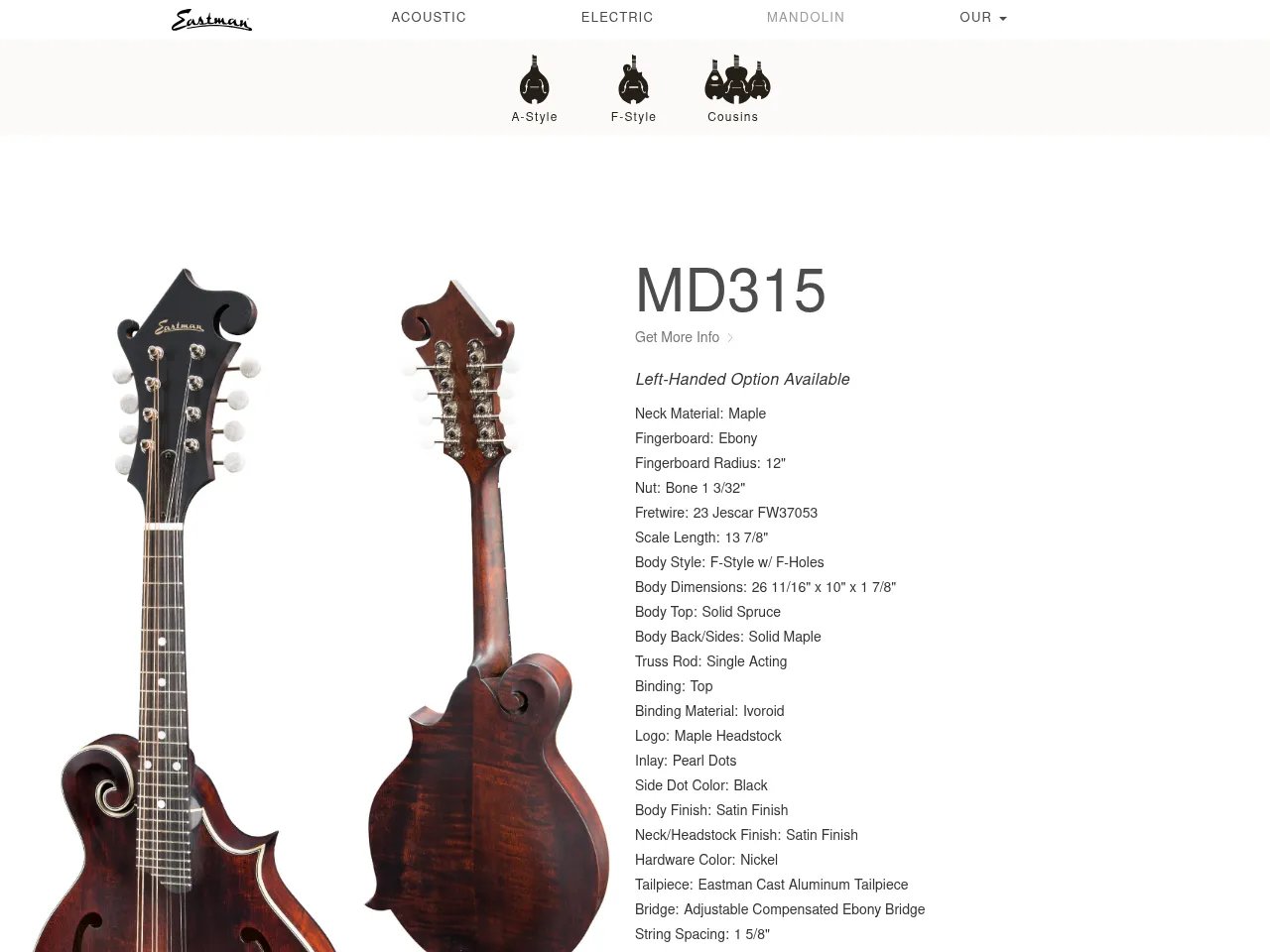
 Eastman MD315 F-Style Mandolin
Eastman
$1,098
Intermediate
China
The Eastman MD315 is a handcrafted F-style mandolin with hand-carved spruce and maple, spirit varnish, and a beautifully executed scroll, delivering bright, punchy tone versatile enough for bluegrass, folk, Celtic, and swing.
Eastman MD315 F-Style Mandolin
Eastman
$1,098
Intermediate
China
The Eastman MD315 is a handcrafted F-style mandolin with hand-carved spruce and maple, spirit varnish, and a beautifully executed scroll, delivering bright, punchy tone versatile enough for bluegrass, folk, Celtic, and swing.
 7
4.4
7
4.4
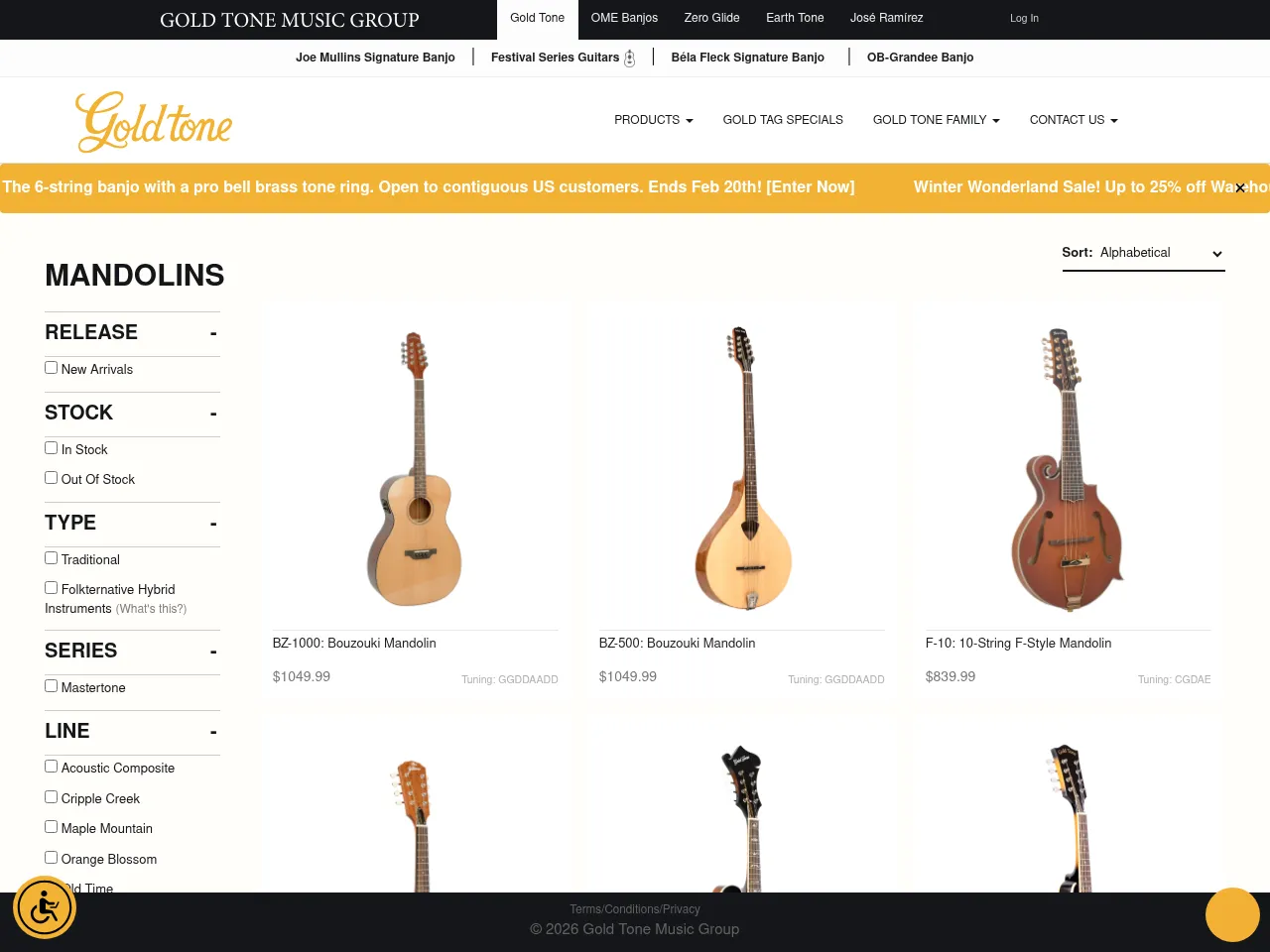
 Kentucky KM-256 A-Style Mandolin
Kentucky
$749
Intermediate
China
A solid intermediate A-style mandolin with hand-carved spruce and maple producing warm, balanced tone, popular among bluegrass and folk players for its above-average factory setup.
Kentucky KM-256 A-Style Mandolin
Kentucky
$749
Intermediate
China
A solid intermediate A-style mandolin with hand-carved spruce and maple producing warm, balanced tone, popular among bluegrass and folk players for its above-average factory setup.
 8
4.3
8
4.3
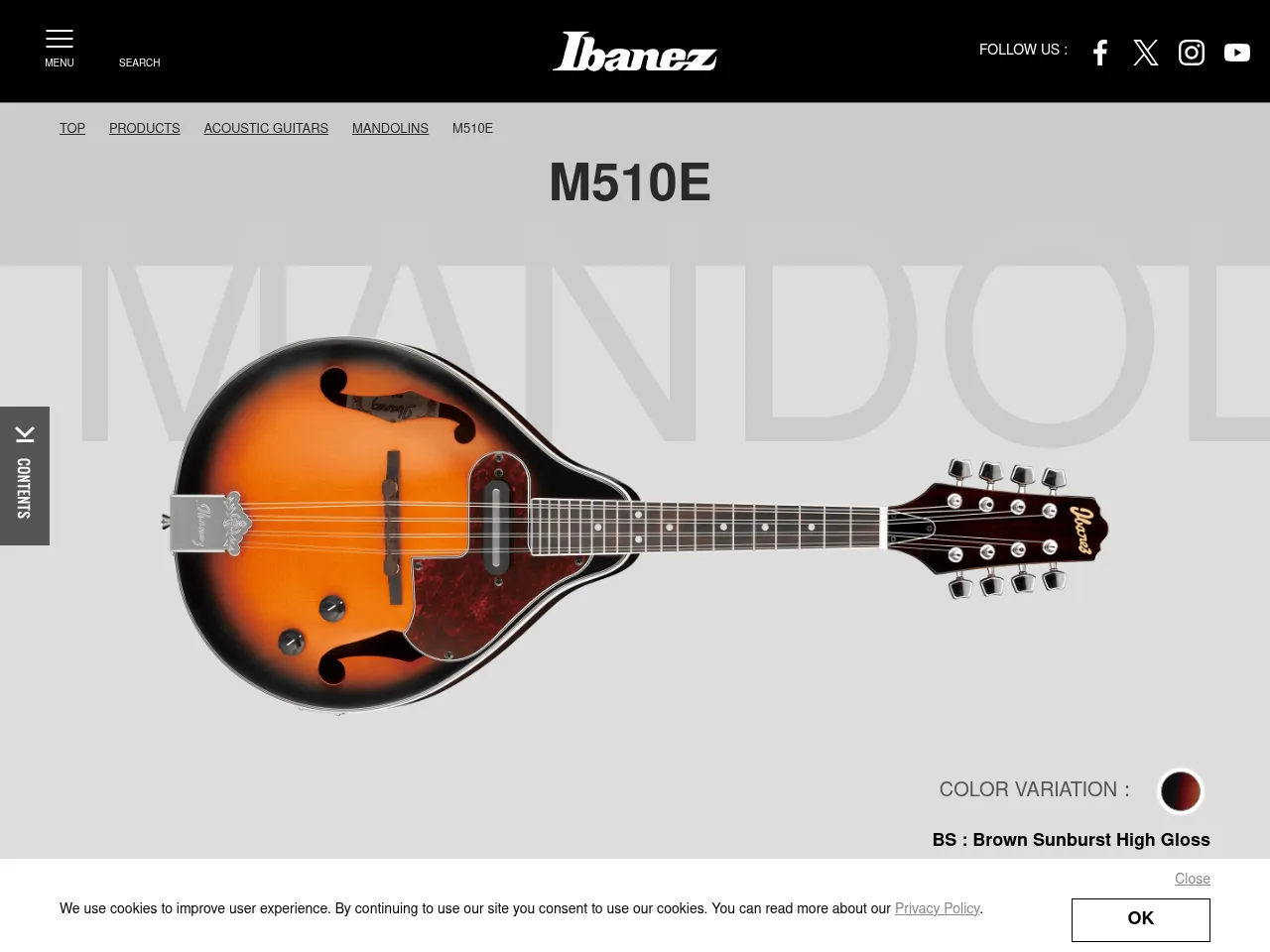
 Gold Tone GM-110+ A-Style Mandolin
Gold Tone
$499
Intermediate
China
An A-style mandolin with integrated pickup system and solid spruce top, equally at home in unplugged folk sessions and plugged-in stage settings with clean, feedback-resistant amplification.
Gold Tone GM-110+ A-Style Mandolin
Gold Tone
$499
Intermediate
China
An A-style mandolin with integrated pickup system and solid spruce top, equally at home in unplugged folk sessions and plugged-in stage settings with clean, feedback-resistant amplification.
 9
4.2
9
4.2
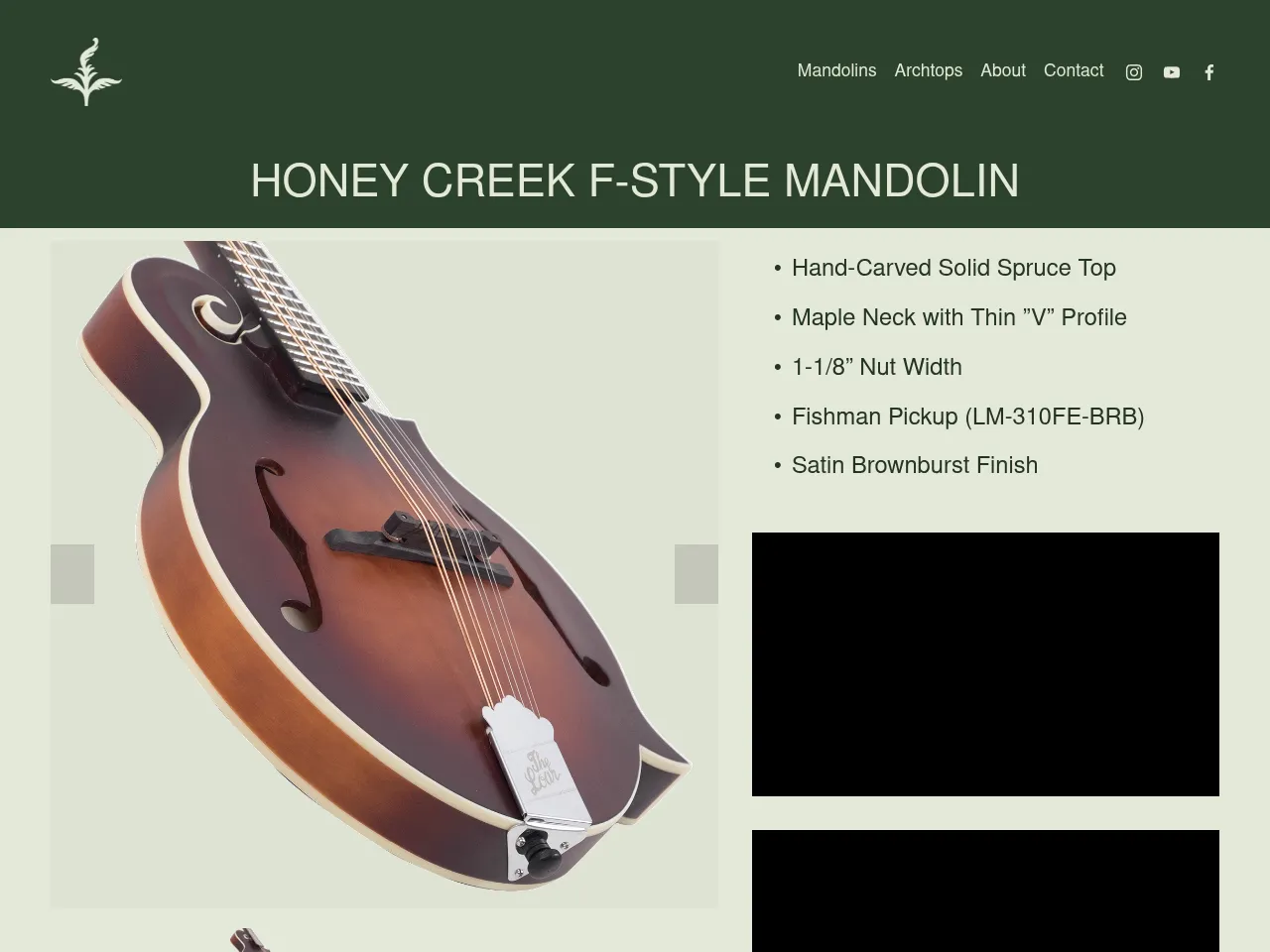
 Ibanez M510E A-Style Mandolin
Ibanez
$249
Beginner
China
A budget-friendly acoustic-electric mandolin with spruce top and built-in pickup system, ideal for beginners and singer-songwriters who need an affordable option for adding mandolin texture to live performances.
Ibanez M510E A-Style Mandolin
Ibanez
$249
Beginner
China
A budget-friendly acoustic-electric mandolin with spruce top and built-in pickup system, ideal for beginners and singer-songwriters who need an affordable option for adding mandolin texture to live performances.
 10
4.2
10
4.2
 The Loar LM-310F F-Style Mandolin
The Loar
$899
Intermediate
China
Hand-carved F-style mandolin with solid spruce top and maple body delivering clear, projecting tone and traditional bluegrass aesthetics at a mid-range price.
The Loar LM-310F F-Style Mandolin
The Loar
$899
Intermediate
China
Hand-carved F-style mandolin with solid spruce top and maple body delivering clear, projecting tone and traditional bluegrass aesthetics at a mid-range price.
 11
4.2
11
4.2
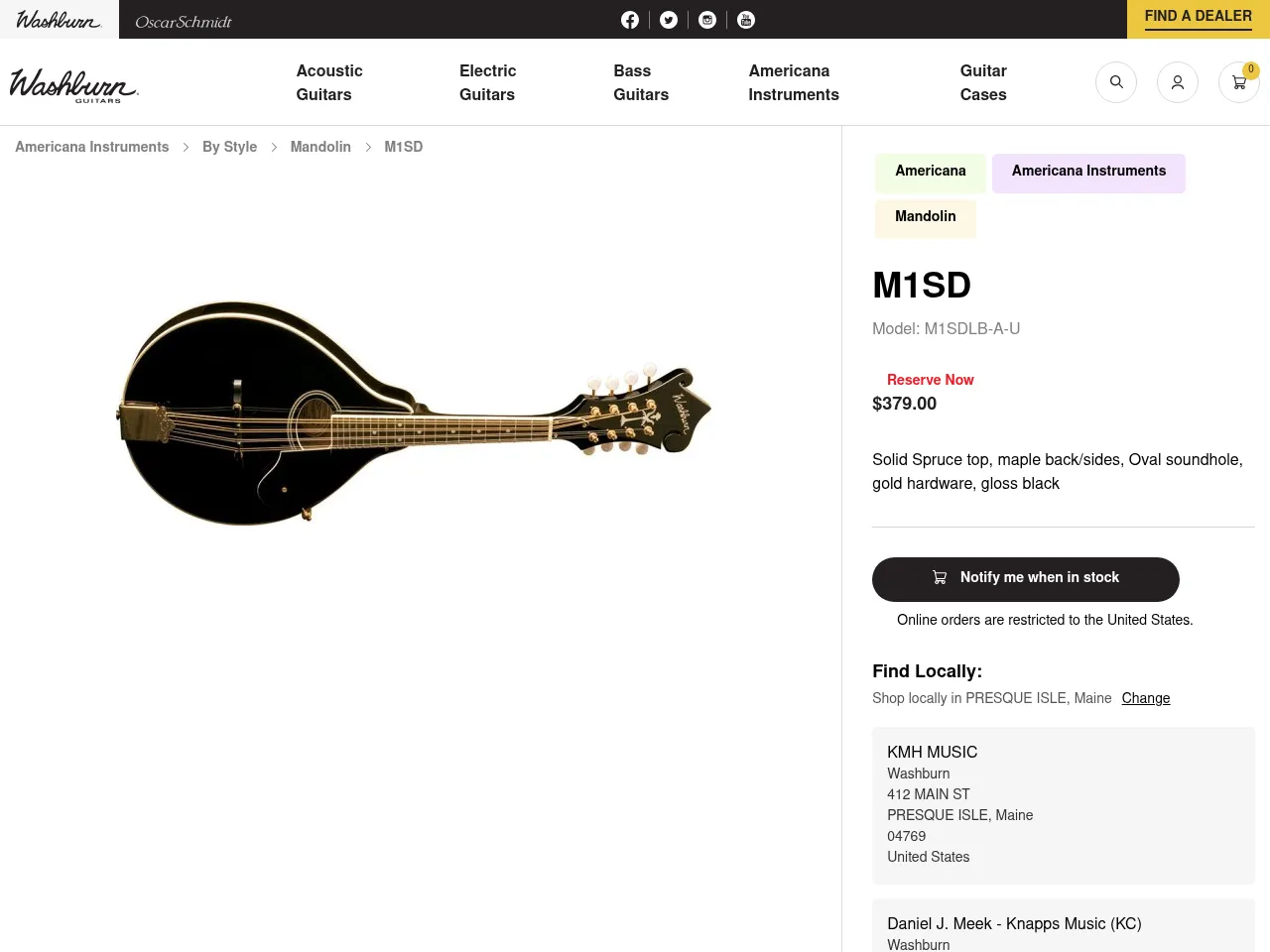
 Washburn M1SDL A-Style Mandolin
Washburn
$199
Beginner
China
Budget-friendly A-style mandolin featuring a solid spruce top and mahogany body, providing warm tone and reliable playability for beginners at an accessible price point.
Washburn M1SDL A-Style Mandolin
Washburn
$199
Beginner
China
Budget-friendly A-style mandolin featuring a solid spruce top and mahogany body, providing warm tone and reliable playability for beginners at an accessible price point.