Cellos - Directory w/ AI Reviews
Acoustic and electric cellos for classical, jazz, and contemporary music
The cello is a large bowed string instrument with a deep, rich, and warm tone that spans a range closely resembling the human voice. It is played seated with the instrument resting on a floor-mounted endpin between the player's knees. The cello holds a central role in orchestras, chamber music, and an increasingly prominent solo and crossover career.
History
The cello evolved from the viola da braccio family in the early 16th century in Italy, with Andrea Amati crafting some of the earliest examples. Antonio Stradivari standardized the cello's dimensions around 1710, establishing proportions that remain the standard today. Pablo Casals revolutionized cello performance in the early 20th century, bringing Bach's unaccompanied cello suites to widespread public attention.
Characteristics
The cello is tuned in fifths (C-G-D-A), one octave below the viola, and its four strings are played with a bow or plucked with the fingers. Its large resonating body produces warm, sonorous bass tones and brilliant, singing upper register notes. The endpin, introduced in the late 19th century, supports the instrument on the floor and allows the player to draw the bow freely.
Notable Players
Yo-Yo Ma is arguably the most famous living cellist, known for his extraordinary technique and genre-crossing collaborations. Jacqueline du Pre's passionate recording of the Elgar Cello Concerto is considered one of the greatest classical recordings ever made. 2Cellos (Luka Sulic and Stjepan Hauser) brought the cello into popular culture with their rock and pop arrangements.
Fun Facts
The cello's range and timbre are often described as the closest of any instrument to the human singing voice. A full-sized cello is about 4 feet tall, and its bow is slightly shorter than a violin bow despite the instrument being much larger.
 1
4.7
1
4.7
 Yamaha AVC7 Braviol Cello
Yamaha
$5,999
Professional
Japan
Professional-level cello with hand-selected tonewoods and expert craftsmanship, delivering a rich, complex tone with authority for orchestral performance and advanced repertoire.
Yamaha AVC7 Braviol Cello
Yamaha
$5,999
Professional
Japan
Professional-level cello with hand-selected tonewoods and expert craftsmanship, delivering a rich, complex tone with authority for orchestral performance and advanced repertoire.
 2
4.6
2
4.6
 Eastman VC405 Cello
Eastman
$2,499
Intermediate
China
The Eastman VC405 is a step-up cello with hand-carved spruce and flamed maple providing warm, resonant sound with good projection, arriving with proper workshop setup and attractive antique varnish for advancing players.
Eastman VC405 Cello
Eastman
$2,499
Intermediate
China
The Eastman VC405 is a step-up cello with hand-carved spruce and flamed maple providing warm, resonant sound with good projection, arriving with proper workshop setup and attractive antique varnish for advancing players.
 3
4.6
3
4.6
 Scott Cao STC-750 Cello
Scott Cao
$5,800
Professional
China
Professional-grade cello modeled after Stradivarius patterns with aged European spruce and premium maple, delivering broad, powerful tone for advanced performers.
Scott Cao STC-750 Cello
Scott Cao
$5,800
Professional
China
Professional-grade cello modeled after Stradivarius patterns with aged European spruce and premium maple, delivering broad, powerful tone for advanced performers.
 4
4.6
4
4.6
 Yamaha SVC-210 Silent Cello
Yamaha
$1,850
Intermediate
Indonesia
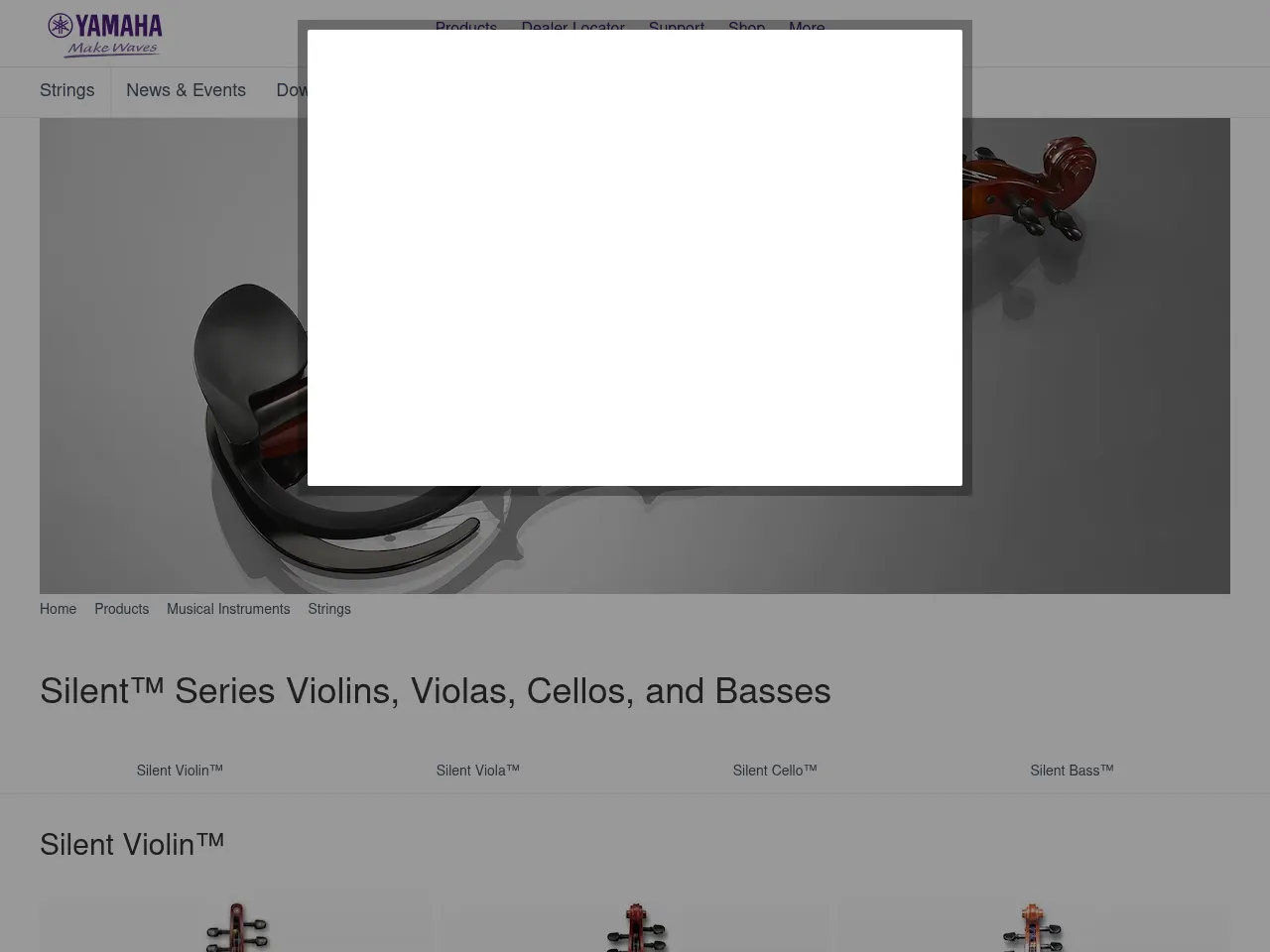
Innovative electric cello with a skeletal frame design and SRT preamp modeling, providing convincing acoustic tone through headphones and feedback-free amplified performance.
Yamaha SVC-210 Silent Cello
Yamaha
$1,850
Intermediate
Indonesia
Innovative electric cello with a skeletal frame design and SRT preamp modeling, providing convincing acoustic tone through headphones and feedback-free amplified performance.
 5
4.6
5
4.6
 Eastman VC605 Cello
Eastman
$5,520
Advanced
China
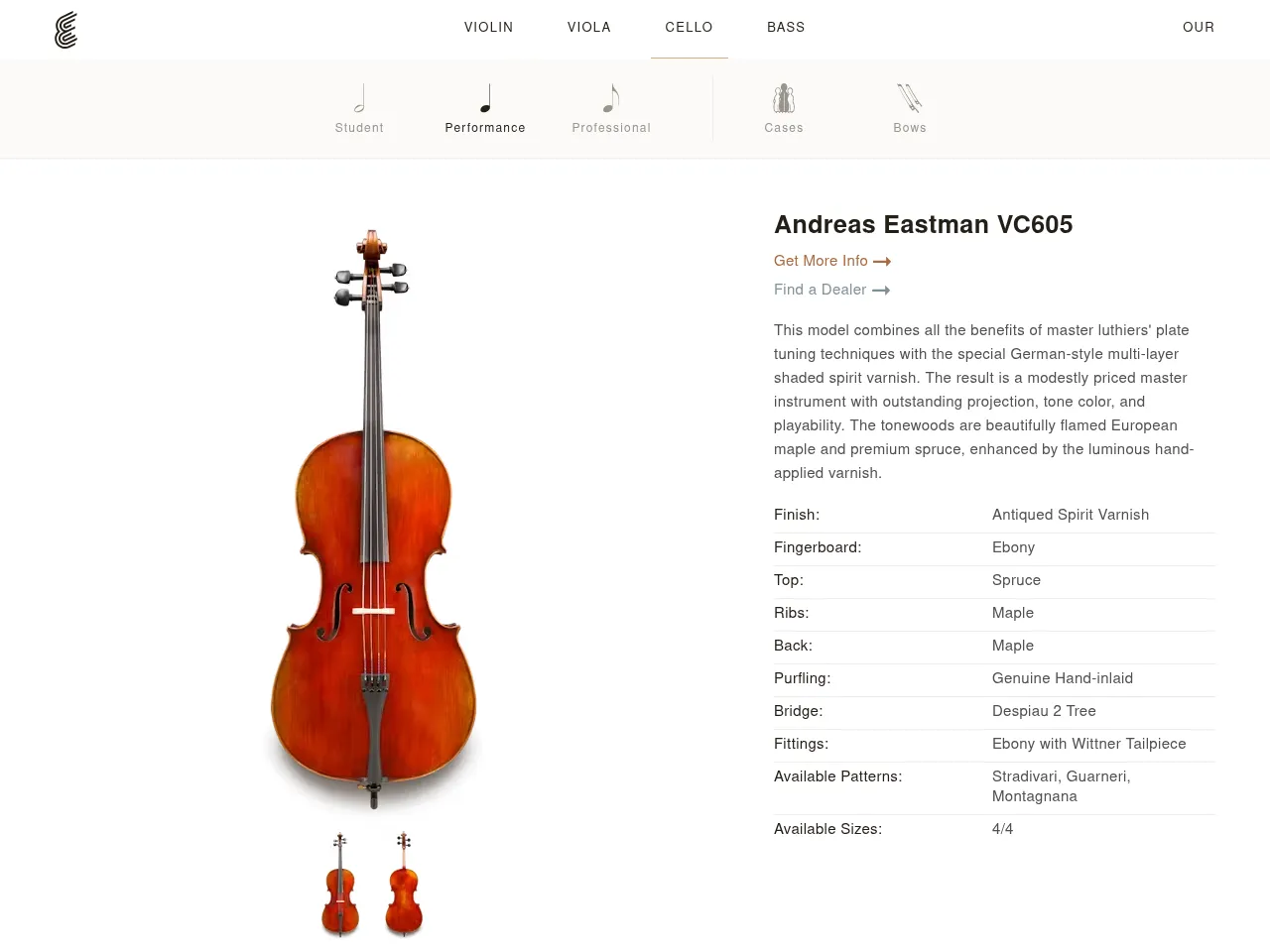
The Eastman VC605 represents the upper tier of Eastman's cello lineup, with select aged spruce and deeply flamed maple delivering impressive tonal authority in every register for advanced students and professional performers.
Eastman VC605 Cello
Eastman
$5,520
Advanced
China
The Eastman VC605 represents the upper tier of Eastman's cello lineup, with select aged spruce and deeply flamed maple delivering impressive tonal authority in every register for advanced students and professional performers.
 6
4.5
6
4.5
 Yamaha AVC5 Cello
Yamaha
$1,699
Beginner
China
Dependable student cello with solid tonewoods and excellent factory setup, delivering warm, resonant tone that supports musical development through the first several years of study.
Yamaha AVC5 Cello
Yamaha
$1,699
Beginner
China
Dependable student cello with solid tonewoods and excellent factory setup, delivering warm, resonant tone that supports musical development through the first several years of study.
 7
4.4
7
4.4
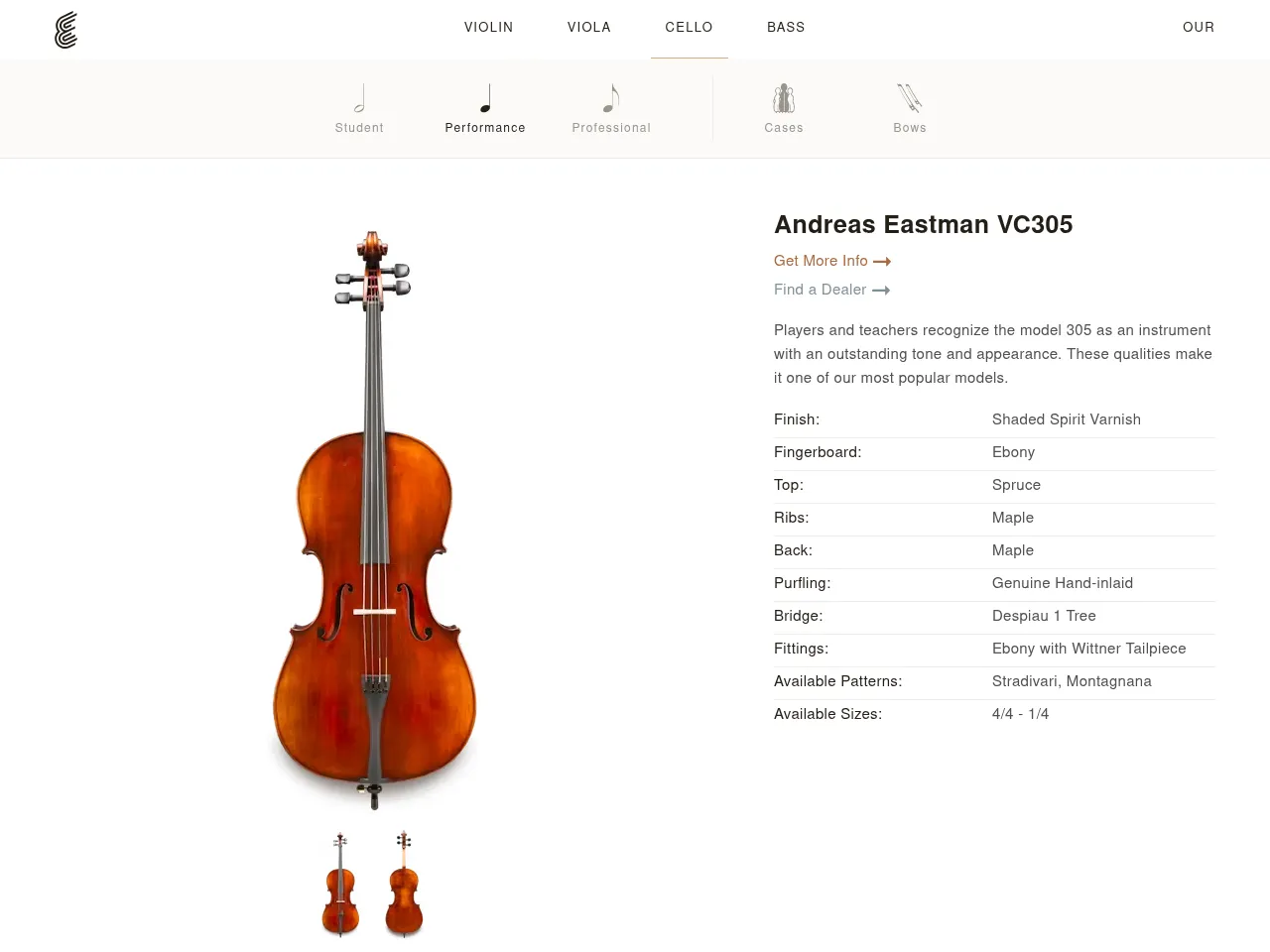
 Eastman VC305 Cello
Eastman
$2,880
Intermediate
China
The Eastman VC305 is a step-up cello with hand-carved spruce and flamed maple finished in spirit varnish, delivering full, complex tone with a dark singing quality on the lower strings for serious students.
Eastman VC305 Cello
Eastman
$2,880
Intermediate
China
The Eastman VC305 is a step-up cello with hand-carved spruce and flamed maple finished in spirit varnish, delivering full, complex tone with a dark singing quality on the lower strings for serious students.
 8
4.4
8
4.4
 Knilling Bucharest Cello
Knilling
$1,899
Intermediate
Romania
A Romanian-made intermediate cello carrying forward rich string-making tradition, with hand-carved spruce and maple producing warm, focused tone at a competitive price point.
Knilling Bucharest Cello
Knilling
$1,899
Intermediate
Romania
A Romanian-made intermediate cello carrying forward rich string-making tradition, with hand-carved spruce and maple producing warm, focused tone at a competitive price point.
 9
4.4
9
4.4
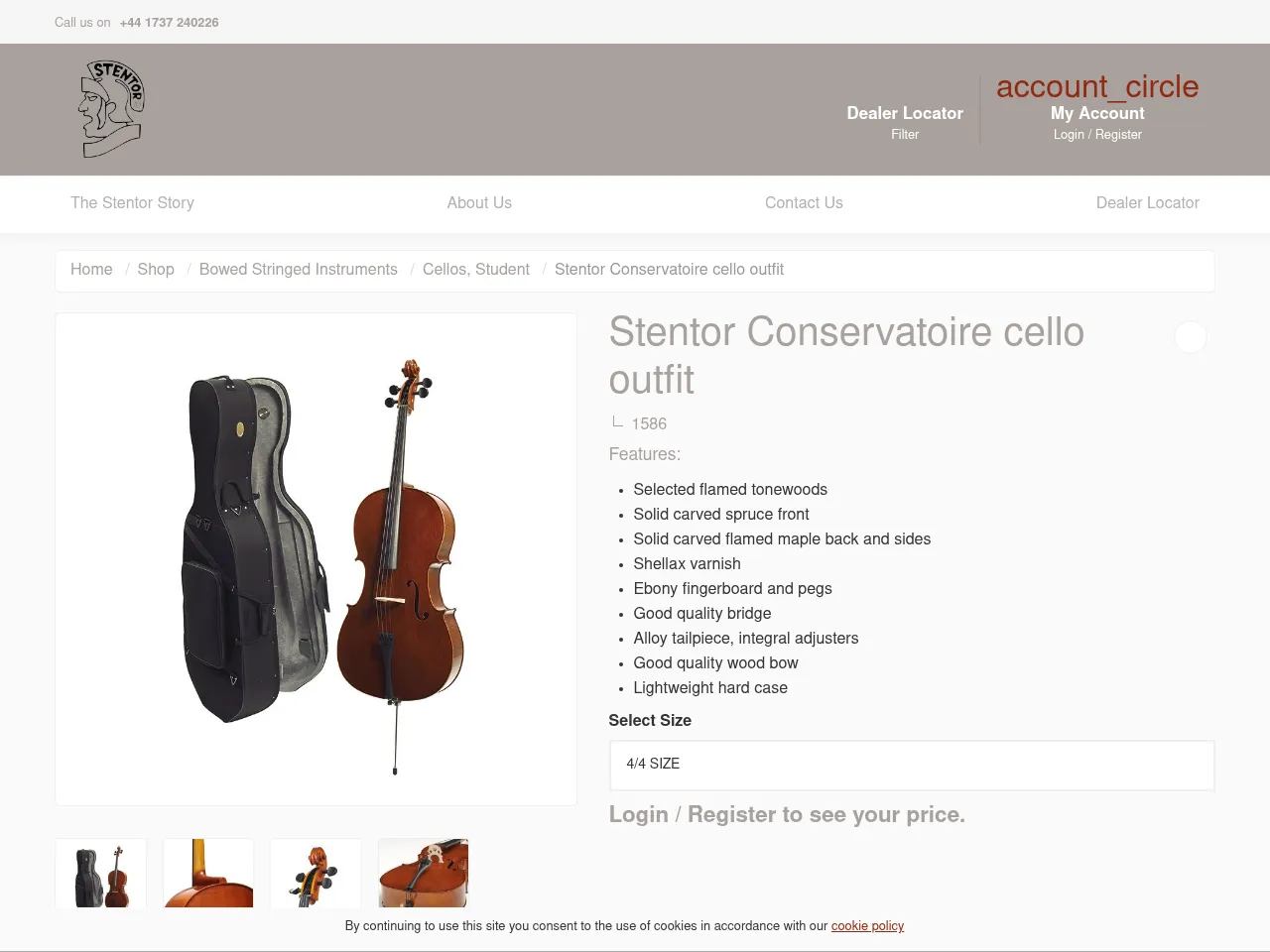
 Stentor Conservatoire Cello
Stentor
$1,450
Intermediate
China
Intermediate hand-carved cello with solid spruce top, flamed maple back, and oil varnish finish offering robust tone and quality tonewoods for advancing students.
Stentor Conservatoire Cello
Stentor
$1,450
Intermediate
China
Intermediate hand-carved cello with solid spruce top, flamed maple back, and oil varnish finish offering robust tone and quality tonewoods for advancing students.
 10
4.3
10
4.3
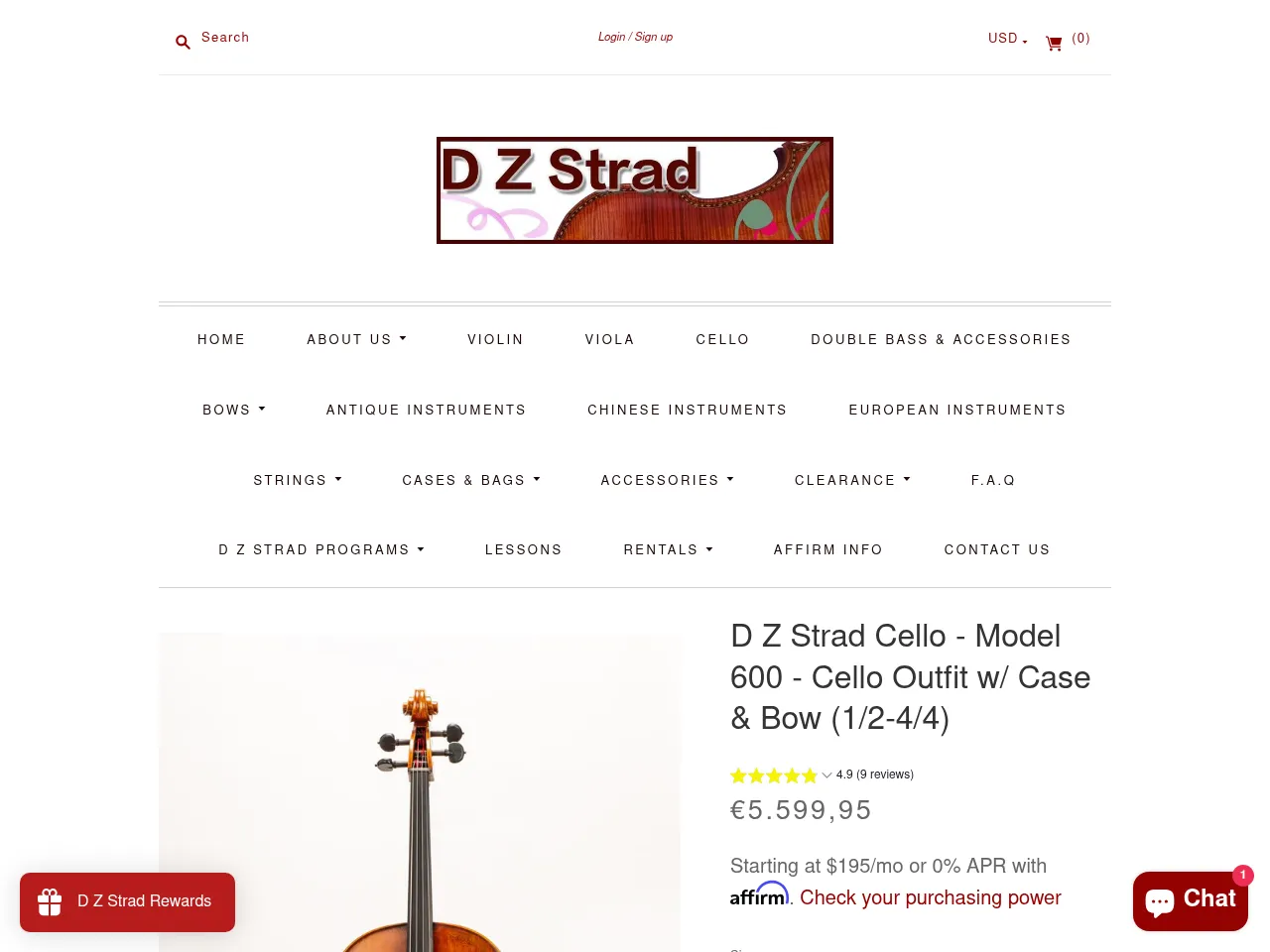
 DZ Strad Model 600 Cello
DZ Strad
$2,500
Intermediate
China
A handmade cello with solid spruce top and flamed maple back in antiqued oil varnish that delivers impressive richness and complexity, punching well above its price class for advancing students.
DZ Strad Model 600 Cello
DZ Strad
$2,500
Intermediate
China
A handmade cello with solid spruce top and flamed maple back in antiqued oil varnish that delivers impressive richness and complexity, punching well above its price class for advancing students.
 11
3.8
11
3.8
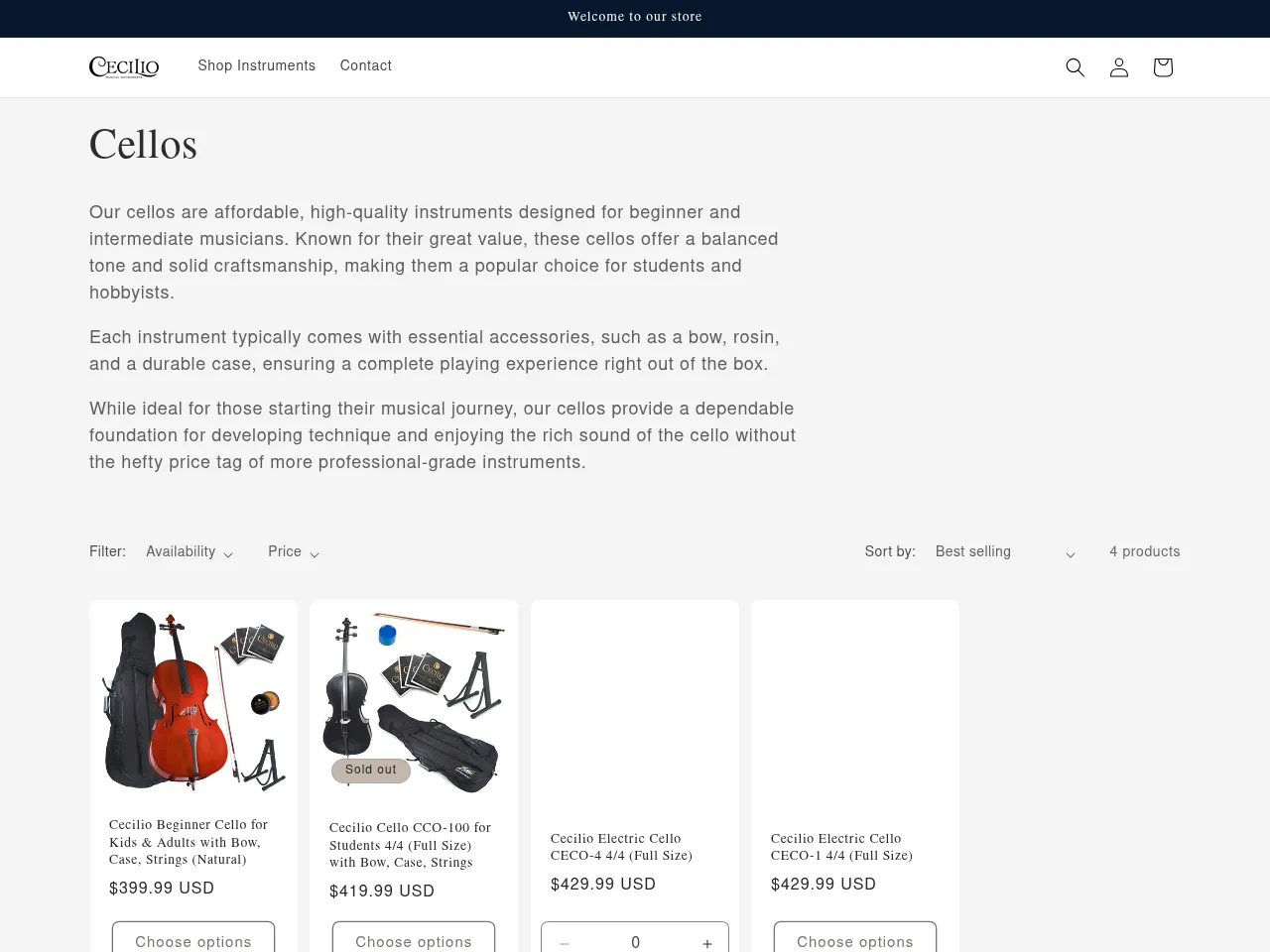
 Cecilio CCO-500 Cello
Cecilio
$599
Beginner
China
The Cecilio CCO-500 is a solid entry-level cello with a hand-carved spruce top, maple body, ebony fittings, and a complete outfit including case, bow, and strings, making quality string education accessible at a budget-friendly price.
Cecilio CCO-500 Cello
Cecilio
$599
Beginner
China
The Cecilio CCO-500 is a solid entry-level cello with a hand-carved spruce top, maple body, ebony fittings, and a complete outfit including case, bow, and strings, making quality string education accessible at a budget-friendly price.