PA Speakers - Directory w/ AI Reviews
Powered speakers, PA systems, and portable sound reinforcement
PA (Public Address) speakers are loudspeaker systems designed to amplify sound for audiences in live music, corporate events, houses of worship, and other public venues. They range from compact portable systems for small gatherings to massive line arrays for stadium concerts. A well-designed PA system ensures that every member of the audience hears clear, balanced sound.
History
Early PA systems in the 1920s and 1930s used simple horn-loaded speakers for public announcements and political rallies. The 1960s and 1970s concert era drove rapid PA development, with companies like JBL, Electro-Voice, and Cerwin-Vega building increasingly powerful systems. Modern line array technology, pioneered by L-Acoustics in the 1990s, revolutionized large-venue sound with consistent coverage and reduced feedback.
Characteristics
PA systems typically consist of full-range speakers (tops or mains) for mid and high frequencies and subwoofers for bass. Active (powered) speakers have built-in amplifiers and DSP processing, simplifying setup and ensuring matched components. Key specifications include power output (watts), frequency response, maximum SPL (sound pressure level), and dispersion pattern.
Notable Players
JBL Professional speakers are among the most widely used PA systems in clubs, churches, and portable sound applications worldwide. QSC's K-series and KLA line arrays set the standard for portable powered PA systems. L-Acoustics line arrays are the first choice for major concert tours, festivals, and permanent installations in venues worldwide.
Fun Facts
The Grateful Dead's legendary "Wall of Sound" PA system in 1974 used 604 speakers and 26,400 watts of power, filling stadiums without any stage monitors. The loudest PA system ever used at a concert reportedly reached 136 decibels, roughly equivalent to standing 100 feet from a jet engine at takeoff.
 1
4.8
1
4.8
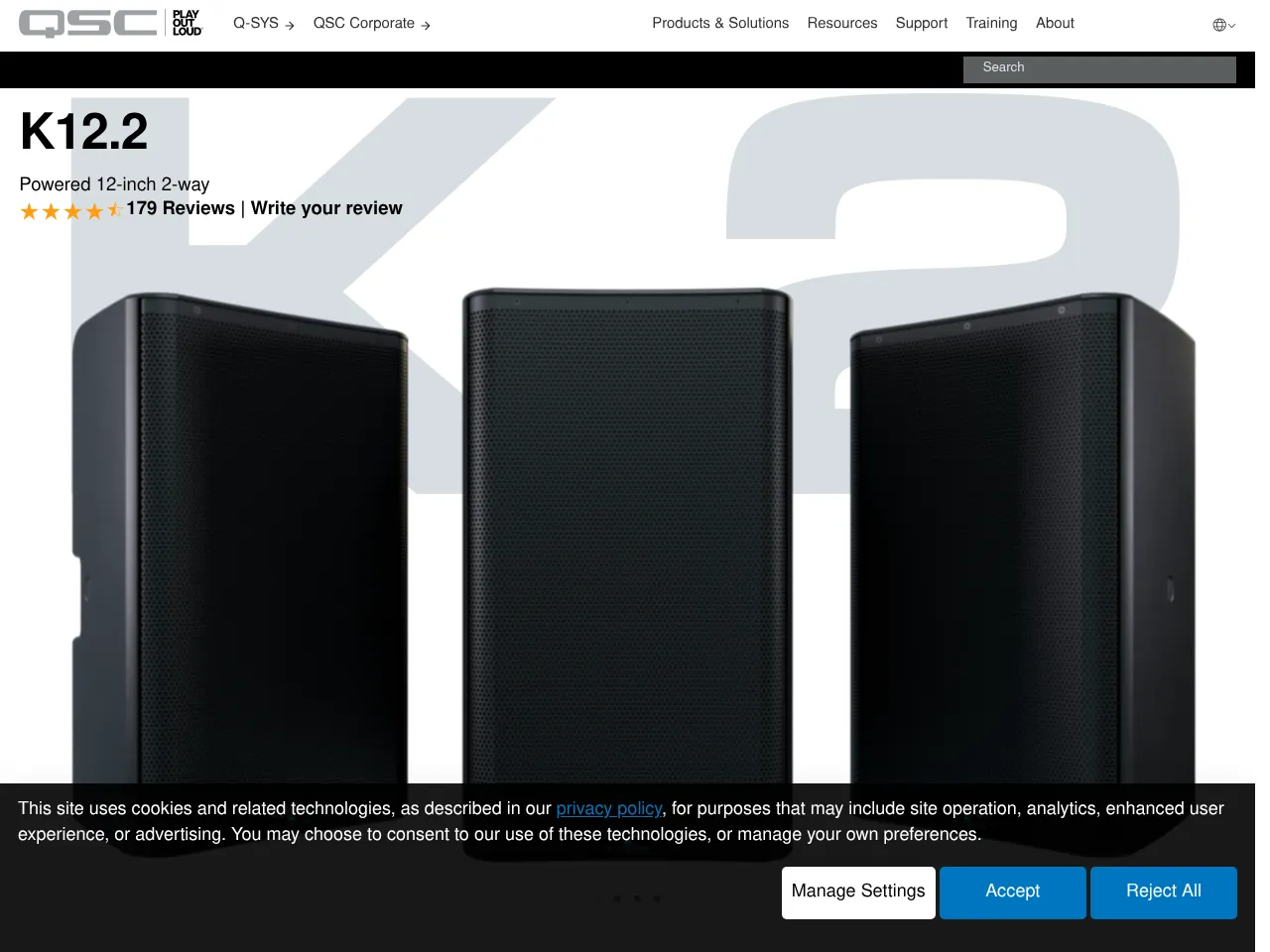
 QSC K12.2 12-Inch Powered PA Speaker
QSC
$799
Professional
China
Industry-standard 12-inch powered speaker delivering 2000 watts peak with DMT technology for seamless driver blending and studio-monitor accuracy in live sound.
QSC K12.2 12-Inch Powered PA Speaker
QSC
$799
Professional
China
Industry-standard 12-inch powered speaker delivering 2000 watts peak with DMT technology for seamless driver blending and studio-monitor accuracy in live sound.
 2
4.8
2
4.8
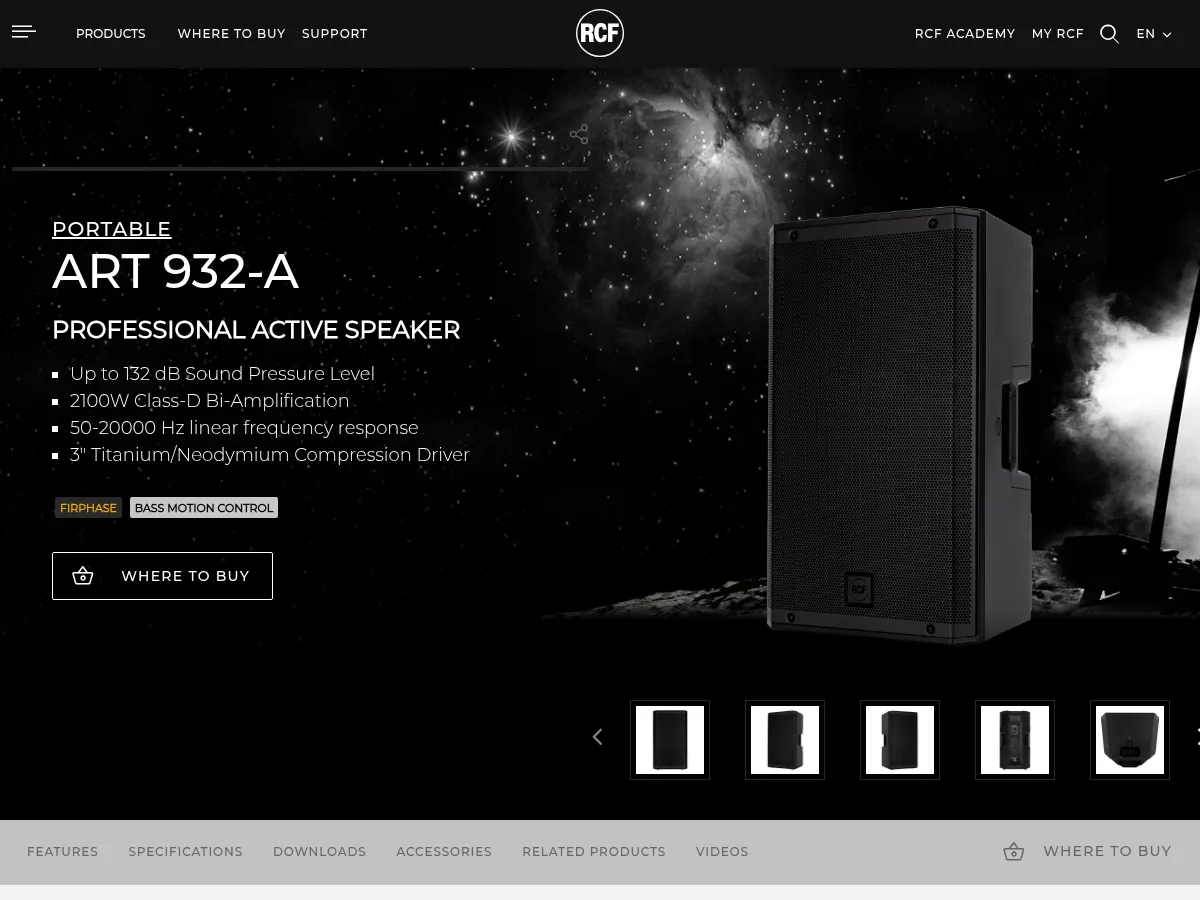
 RCF ART 932-A 12-Inch Powered Speaker
RCF
$999
Advanced
Italy
Italian-engineered 12-inch powered speaker with 2100 watts peak, FiRPHASE processing, and birch plywood cabinet for refined, musical sound.
RCF ART 932-A 12-Inch Powered Speaker
RCF
$999
Advanced
Italy
Italian-engineered 12-inch powered speaker with 2100 watts peak, FiRPHASE processing, and birch plywood cabinet for refined, musical sound.
 3
4.8
3
4.8
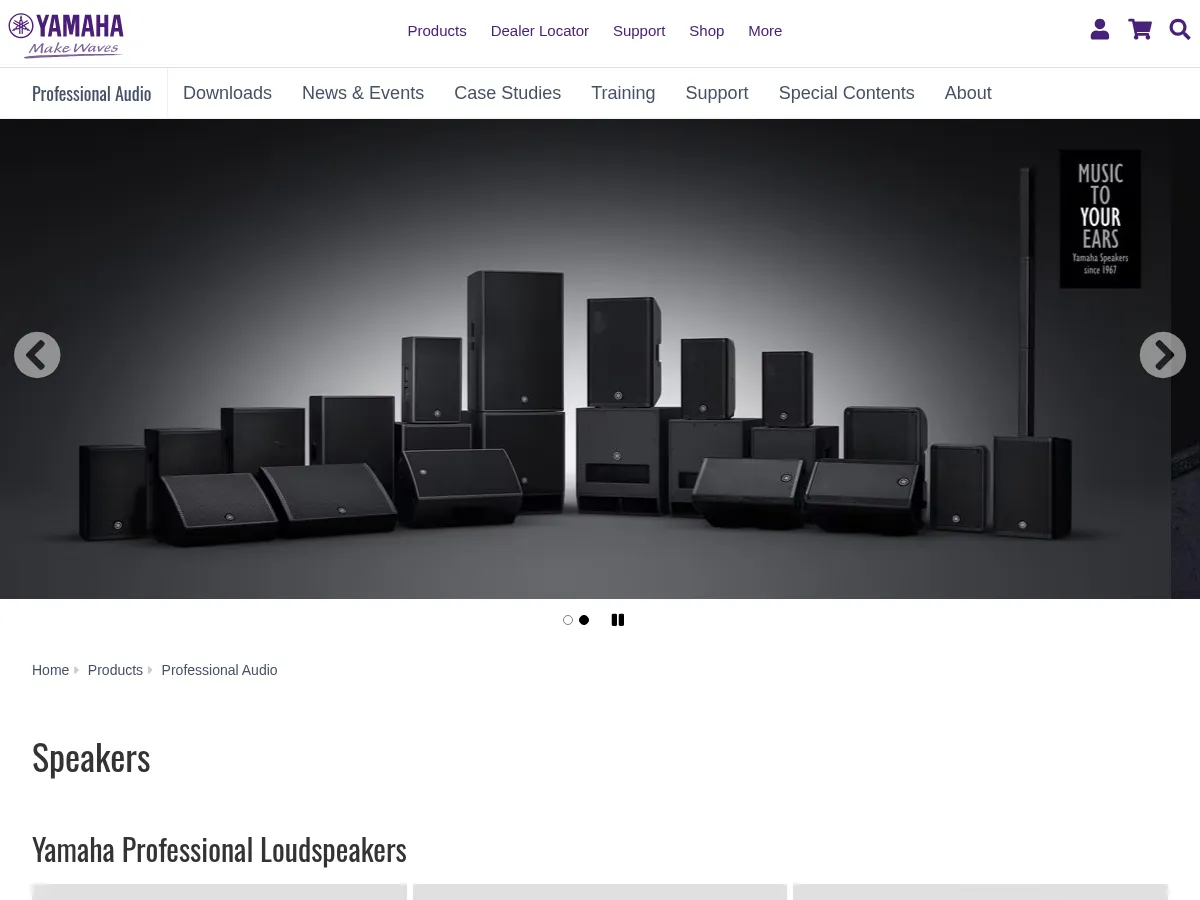
 Yamaha DXR12mkII Powered Speaker
Yamaha
$699
Intermediate
China
Professional 12-inch powered speaker with FIR-X linear-phase tuning and birch plywood enclosure, delivering studio-monitor accuracy and premium build for touring and installed sound.
Yamaha DXR12mkII Powered Speaker
Yamaha
$699
Intermediate
China
Professional 12-inch powered speaker with FIR-X linear-phase tuning and birch plywood enclosure, delivering studio-monitor accuracy and premium build for touring and installed sound.
 4
4.7
4
4.7
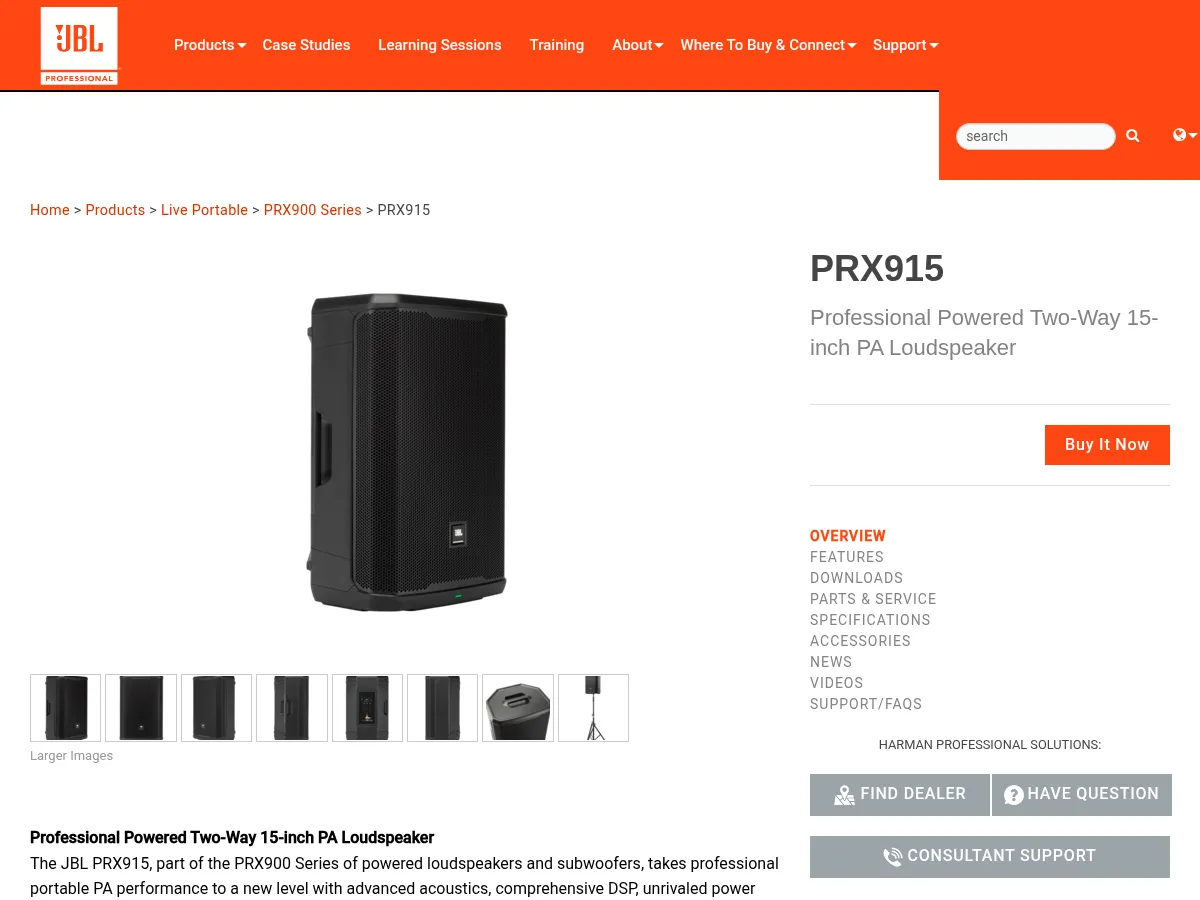
 JBL PRX915 15-Inch Powered Speaker
JBL
$1,199
Professional
Mexico
A tour-grade 15-inch powered speaker with 2000 watts peak, JBL compression driver, and advanced DSP suite in a birch plywood enclosure, delivering professional sound company performance with M10 suspension.
JBL PRX915 15-Inch Powered Speaker
JBL
$1,199
Professional
Mexico
A tour-grade 15-inch powered speaker with 2000 watts peak, JBL compression driver, and advanced DSP suite in a birch plywood enclosure, delivering professional sound company performance with M10 suspension.
 5
4.6
5
4.6
 Mackie SRM215 V-Class Powered Speaker
Mackie
$699
Intermediate
China
A 15-inch powered speaker delivering 2000 watts peak with advanced DSP, Automatic Feedback Suppression, and Bluetooth streaming, representing the top of Mackie's portable PA lineup.
Mackie SRM215 V-Class Powered Speaker
Mackie
$699
Intermediate
China
A 15-inch powered speaker delivering 2000 watts peak with advanced DSP, Automatic Feedback Suppression, and Bluetooth streaming, representing the top of Mackie's portable PA lineup.
 6
4.6
6
4.6
 QSC CP12 12-Inch Compact Powered Speaker
QSC
$499
Beginner
China
Compact 12-inch powered speaker distilling QSC's K.2 series quality into a lighter, more affordable package with 1000 watts peak power and Intrinsic Correction DSP.
QSC CP12 12-Inch Compact Powered Speaker
QSC
$499
Beginner
China
Compact 12-inch powered speaker distilling QSC's K.2 series quality into a lighter, more affordable package with 1000 watts peak power and Intrinsic Correction DSP.
 7
4.6
7
4.6
 Yamaha DBR15 Powered Speaker
Yamaha
$549
Beginner
China
Versatile 15-inch powered speaker delivering 1000W of bi-amplified power with Yamaha clarity, built for bands, DJs, and small venues needing reliable, clean sound.
Yamaha DBR15 Powered Speaker
Yamaha
$549
Beginner
China
Versatile 15-inch powered speaker delivering 1000W of bi-amplified power with Yamaha clarity, built for bands, DJs, and small venues needing reliable, clean sound.
 8
4.6
8
4.6
 Electro-Voice EVERSE 12 Battery-Powered Speaker
Electro-Voice
$899
Intermediate
China
The Electro-Voice EVERSE 12 is a weatherized, battery-powered 12-inch PA speaker with up to 12 hours of operation and IP43 weather resistance, redefining off-grid sound reinforcement for outdoor performers and remote events.
Electro-Voice EVERSE 12 Battery-Powered Speaker
Electro-Voice
$899
Intermediate
China
The Electro-Voice EVERSE 12 is a weatherized, battery-powered 12-inch PA speaker with up to 12 hours of operation and IP43 weather resistance, redefining off-grid sound reinforcement for outdoor performers and remote events.
 9
4.4
9
4.4
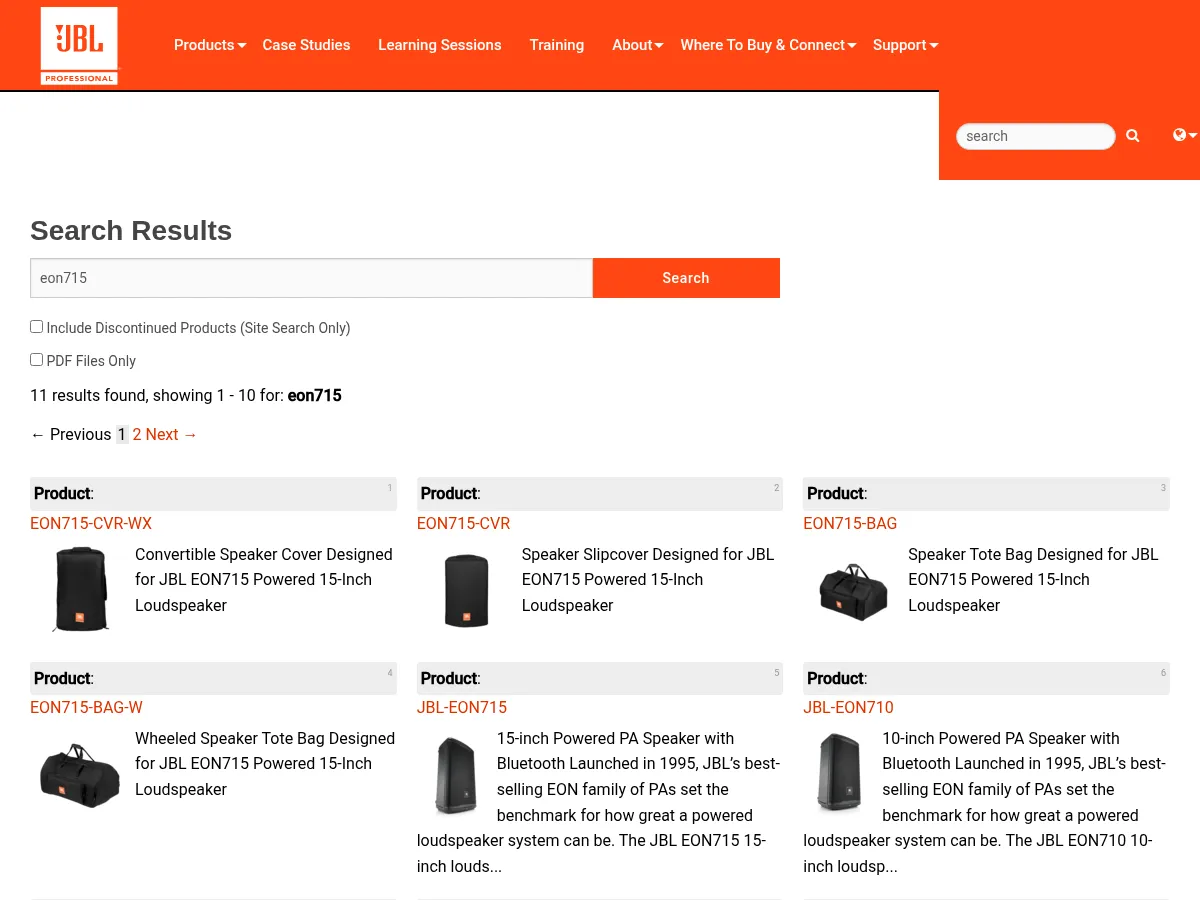
 JBL EON715 15-Inch Powered PA Speaker
JBL
$599
Beginner
Mexico
A 15-inch powered PA speaker delivering 1300 watts with JBL waveguide technology and dbx-derived DSP, offering room-filling sound with Bluetooth streaming and three-channel mixer at just 33 pounds.
JBL EON715 15-Inch Powered PA Speaker
JBL
$599
Beginner
Mexico
A 15-inch powered PA speaker delivering 1300 watts with JBL waveguide technology and dbx-derived DSP, offering room-filling sound with Bluetooth streaming and three-channel mixer at just 33 pounds.
 10
4.2
10
4.2
 Electro-Voice ZLX-12BT Powered Speaker
Electro-Voice
$449
Beginner
China
The Electro-Voice ZLX-12BT is a powered 12-inch speaker with Bluetooth 5.0 streaming and QuickSmartDSP processing, delivering professional EV sound quality at just 28 pounds for solo performers, events, and small venues.
Electro-Voice ZLX-12BT Powered Speaker
Electro-Voice
$449
Beginner
China
The Electro-Voice ZLX-12BT is a powered 12-inch speaker with Bluetooth 5.0 streaming and QuickSmartDSP processing, delivering professional EV sound quality at just 28 pounds for solo performers, events, and small venues.