Resonator Guitars - Directory w/ AI Reviews
Dobro, resonator, and slide guitars with metal resonating cones
Resonator guitars use one or more spun metal cones instead of a wooden soundboard to produce a distinctive, loud, metallic tone. Originally designed to be heard over other instruments before electric amplification existed, they became central to blues, bluegrass, and Hawaiian music. Their unique sound is instantly recognizable and impossible to replicate with conventional guitars.
History
John Dopyera invented the resonator guitar in the late 1920s in response to guitarists' need for more volume. His National and Dobro companies produced the first commercial models, with single-cone and tri-cone designs. The instruments became staples of pre-war blues and Hawaiian steel guitar music, and they remain essential in bluegrass and roots music today.
Characteristics
Resonator guitars amplify sound mechanically through aluminum cones housed within a metal or wooden body. Single-cone designs produce a focused, punchy sound favored by blues players, while tri-cone models offer smoother, more complex tones. They can be played conventionally or laid flat on the lap and played with a slide bar (lap-steel style).
Notable Players
Son House and Bukka White were early blues masters who helped define the resonator guitar's role in Delta blues. Jerry Douglas is widely regarded as the greatest Dobro player in bluegrass and has won 14 Grammy Awards. Dire Straits' Mark Knopfler prominently featured the National resonator guitar on the album "Brothers in Arms."
Fun Facts
The resonator guitar on the cover of Dire Straits' "Brothers in Arms" album is one of the most iconic instrument images in music history. Resonator guitars are sometimes called "Dobros," though Dobro is actually a brand name derived from "Dopyera Brothers."
 1
4.9
1
4.9
 National NRP Standard Steel 14-Fret Resonator
National
$2,975
Professional
USA
A premium handcrafted California resonator with hand-spun cone, mirror-perfect nickel plating, and ebony fingerboard, representing the pinnacle of modern resonator guitar construction.
National NRP Standard Steel 14-Fret Resonator
National
$2,975
Professional
USA
A premium handcrafted California resonator with hand-spun cone, mirror-perfect nickel plating, and ebony fingerboard, representing the pinnacle of modern resonator guitar construction.
 2
4.8
2
4.8
 National ResoRocket Wood Body Resonator
National
$2,575
Advanced
USA
A wood-body resonator blending metallic projection with woody warmth from its maple body, offering more versatility than all-metal designs with National's renowned handmade quality.
National ResoRocket Wood Body Resonator
National
$2,575
Advanced
USA
A wood-body resonator blending metallic projection with woody warmth from its maple body, offering more versatility than all-metal designs with National's renowned handmade quality.
 3
4.6
3
4.6
 Gretsch G9221 Bobtail Steel Round-Neck Resonator
Gretsch
$599
Intermediate
China
A steel-body round-neck resonator with built-in Fishman Nashville pickup delivering bright, raucous tone with natural amplified character, finished in a weathered pump finish that oozes vintage delta blues character.
Gretsch G9221 Bobtail Steel Round-Neck Resonator
Gretsch
$599
Intermediate
China
A steel-body round-neck resonator with built-in Fishman Nashville pickup delivering bright, raucous tone with natural amplified character, finished in a weathered pump finish that oozes vintage delta blues character.
 4
4.6
4
4.6
 Recording King RM-998-D Metal Body Resonator
Recording King
$1,299
Advanced
China
Premium metal-body resonator with hand-engraved German silver body and Quarterman cone, offering exceptional tone and visual artistry at a fraction of American-made prices.
Recording King RM-998-D Metal Body Resonator
Recording King
$1,299
Advanced
China
Premium metal-body resonator with hand-engraved German silver body and Quarterman cone, offering exceptional tone and visual artistry at a fraction of American-made prices.
 5
4.5
5
4.5
 Gretsch G9200 Boxcar Round-Neck Resonator
Gretsch
$360
Beginner
China
A round-neck resonator guitar with mahogany body and spider bridge delivering punchy, metallic tone at an entry-level price, with bone nut and Grover tuners ideal for blues and Americana.
Gretsch G9200 Boxcar Round-Neck Resonator
Gretsch
$360
Beginner
China
A round-neck resonator guitar with mahogany body and spider bridge delivering punchy, metallic tone at an entry-level price, with bone nut and Grover tuners ideal for blues and Americana.
 6
4.5
6
4.5
 Recording King RR-36-VS Maxwell Series Resonator
Recording King
$599
Intermediate
China
Single-cone bell brass resonator guitar with hand-spun 9.5-inch cone delivering bright, loud tone with classic metallic bite at a mid-range price.
Recording King RR-36-VS Maxwell Series Resonator
Recording King
$599
Intermediate
China
Single-cone bell brass resonator guitar with hand-spun 9.5-inch cone delivering bright, loud tone with classic metallic bite at a mid-range price.
 7
4.4
7
4.4
 Gretsch G9210 Boxcar Square-Neck Resonator Guitar
Gretsch
$499
Intermediate
China
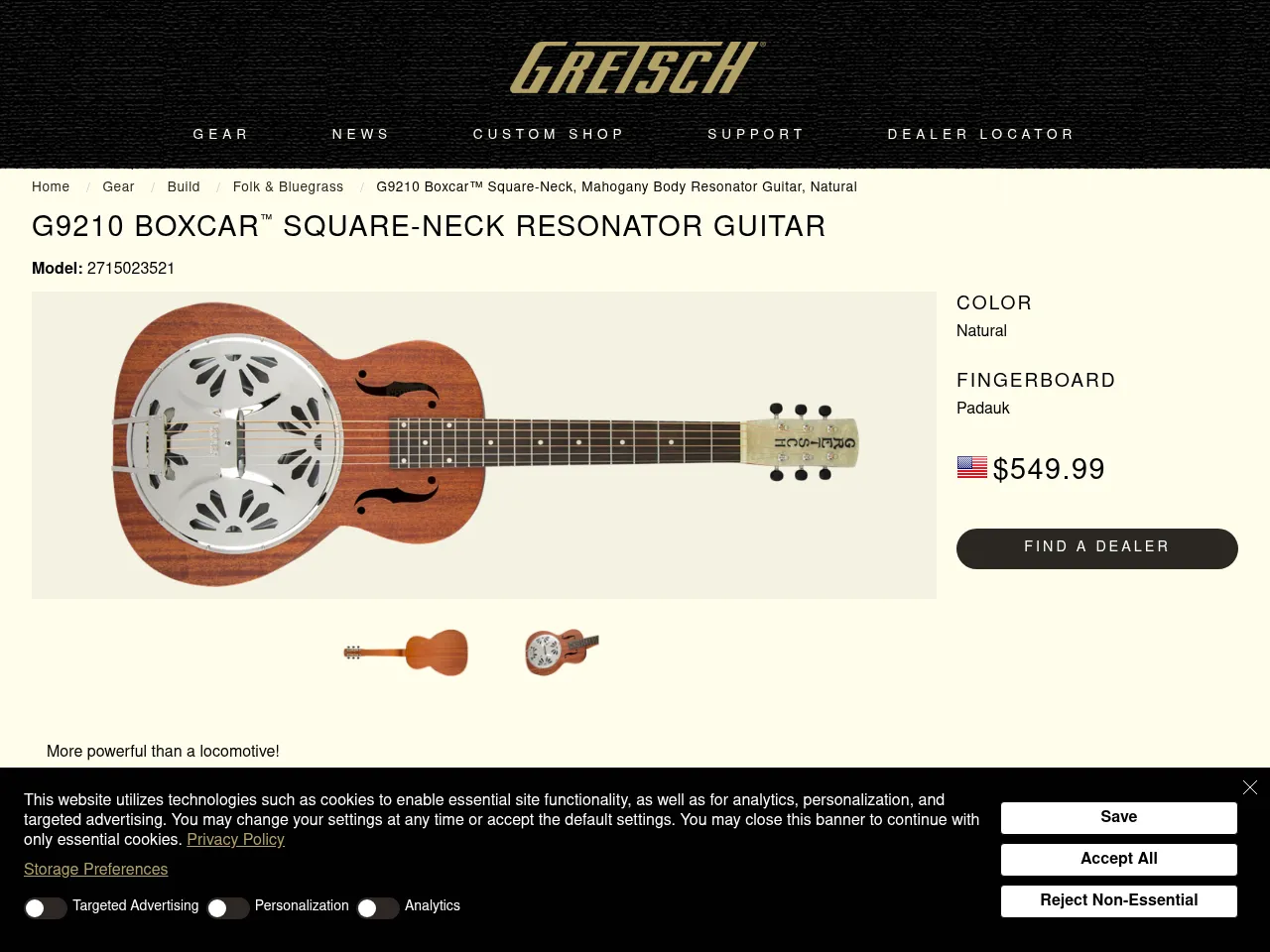
A square-neck lap-style resonator with Fishman Nashville pickup designed exclusively for slide and Dobro players, delivering authentic tone for bluegrass and Hawaiian music with gig-ready amplification.
Gretsch G9210 Boxcar Square-Neck Resonator Guitar
Gretsch
$499
Intermediate
China
A square-neck lap-style resonator with Fishman Nashville pickup designed exclusively for slide and Dobro players, delivering authentic tone for bluegrass and Hawaiian music with gig-ready amplification.
 8
4.4
8
4.4
 Regal RC-51 Metal Body Tricone Resonator
Regal
$849
Intermediate
South Korea
Tricone resonator with German silver body and three six-inch cones producing sweet, piano-like sustain and bell-like harmonic overtones at an accessible price.
Regal RC-51 Metal Body Tricone Resonator
Regal
$849
Intermediate
South Korea
Tricone resonator with German silver body and three six-inch cones producing sweet, piano-like sustain and bell-like harmonic overtones at an accessible price.
 9
4.2
9
4.2
 Epiphone Dobro Hound Dog M-14 Metal Body
Epiphone
$399
Beginner
China
A metal-body round-neck resonator guitar delivering aggressive volume and cutting tone at an accessible price, with a spider bridge and Grover tuners suited for blues and slide guitar playing.
Epiphone Dobro Hound Dog M-14 Metal Body
Epiphone
$399
Beginner
China
A metal-body round-neck resonator guitar delivering aggressive volume and cutting tone at an accessible price, with a spider bridge and Grover tuners suited for blues and slide guitar playing.
 10
4.2
10
4.2
 Regal RD-40M Roundneck Resonator Guitar
Regal
$399
Intermediate
China
Round-neck mahogany-body resonator guitar delivering warm, woody tone with metallic resonator character, versatile for both standard fretting and slide playing.
Regal RD-40M Roundneck Resonator Guitar
Regal
$399
Intermediate
China
Round-neck mahogany-body resonator guitar delivering warm, woody tone with metallic resonator character, versatile for both standard fretting and slide playing.