Classical Guitars - Directory w/ AI Reviews
Nylon-string classical and flamenco guitars
Classical guitars use nylon strings and a wide, flat fingerboard designed for fingerpicking technique. They produce a warm, mellow tone that is central to classical, flamenco, and Latin American music traditions. Their gentle string tension and comfortable playability make them an excellent choice for beginners.
History
The classical guitar as we know it was defined by Spanish luthier Antonio de Torres Jurado in the mid-19th century, who established the body dimensions and fan bracing still used today. Andres Segovia championed the instrument in the 20th century, elevating it to concert-hall status. The adoption of nylon strings in the 1940s, replacing gut strings, improved tuning stability and consistency.
Characteristics
Classical guitars have a wider neck than steel-string acoustics, allowing fingers to fret individual strings cleanly for complex polyphonic music. Nylon strings produce a softer, warmer tone with less sustain than steel strings. The playing position traditionally involves resting the guitar on the left leg with a footstool, though modern supports have become popular alternatives.
Notable Players
Andres Segovia is credited with establishing the classical guitar as a respected concert instrument in the 20th century. John Williams (the guitarist) is considered one of the finest classical guitarists for his impeccable technique and tone. Paco de Lucia revolutionized flamenco guitar and bridged it with jazz and world music.
Fun Facts
Classical guitar repertoire spans over 400 years, from Renaissance lute transcriptions to modern compositions. The classical guitar is one of the few instruments where the performer simultaneously handles melody, harmony, bass, and rhythm.
 1
4.6
1
4.6
 Godin ACS Slim Nylon
Godin
$1,695
Advanced
Canada
A unique Canadian-made nylon-string designed for amplified performance with a slim body profile, synth-access 13-pin output, and crossover-friendly fingerboard dimensions for electric guitar players.
Godin ACS Slim Nylon
Godin
$1,695
Advanced
Canada
A unique Canadian-made nylon-string designed for amplified performance with a slim body profile, synth-access 13-pin output, and crossover-friendly fingerboard dimensions for electric guitar players.
 2
4.6
2
4.6
 Kremona Rosa Morena
Kremona
$549
Intermediate
Bulgaria
A Bulgarian-made classical guitar with solid red cedar top and Indian rosewood back, producing warm, dark tone with extended sustain that rewards legato and expressive playing.
Kremona Rosa Morena
Kremona
$549
Intermediate
Bulgaria
A Bulgarian-made classical guitar with solid red cedar top and Indian rosewood back, producing warm, dark tone with extended sustain that rewards legato and expressive playing.
 3
4.6
3
4.6
 Kremona Soloist S65C
Kremona
$599
Intermediate
Bulgaria
A Bulgarian classical guitar with solid cedar top, cutaway for upper-fret access, and warm responsive tone, ideal for contemporary classical, Latin, and jazz repertoire.
Kremona Soloist S65C
Kremona
$599
Intermediate
Bulgaria
A Bulgarian classical guitar with solid cedar top, cutaway for upper-fret access, and warm responsive tone, ideal for contemporary classical, Latin, and jazz repertoire.
 4
4.6
4
4.6
 La Patrie Etude
La Patrie
$329
Beginner
Canada
A Canadian-made classical guitar with solid cedar top and wild cherry back, benefiting from modern manufacturing precision at the La Patrie workshop in Quebec.
La Patrie Etude
La Patrie
$329
Beginner
Canada
A Canadian-made classical guitar with solid cedar top and wild cherry back, benefiting from modern manufacturing precision at the La Patrie workshop in Quebec.
 5
4.6
5
4.6
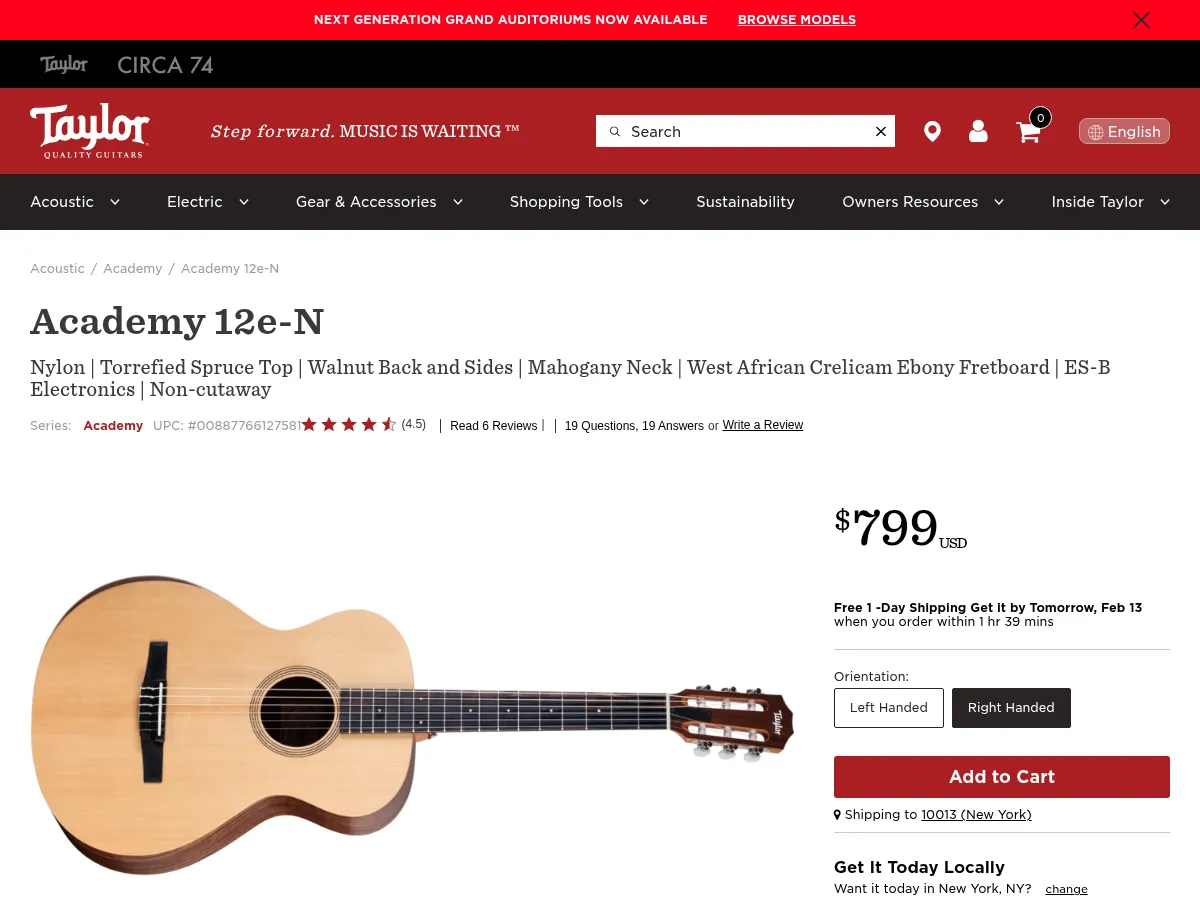
 Taylor Academy 12e-N
Taylor
$549
Beginner
Mexico
Modern nylon-string acoustic-electric with narrower-than-classical nut width, armrest contour, and ES-N pickup, bridging steel-string and classical worlds.
Taylor Academy 12e-N
Taylor
$549
Beginner
Mexico
Modern nylon-string acoustic-electric with narrower-than-classical nut width, armrest contour, and ES-N pickup, bridging steel-string and classical worlds.
 6
4.6
6
4.6
 Yamaha CG122MS
Yamaha
$199
Beginner
Indonesia
Entry-level classical guitar with a solid spruce top and matte finish, delivering warm, responsive tone and consistent Yamaha quality ideal for beginning classical students.
Yamaha CG122MS
Yamaha
$199
Beginner
Indonesia
Entry-level classical guitar with a solid spruce top and matte finish, delivering warm, responsive tone and consistent Yamaha quality ideal for beginning classical students.
 7
4.6
7
4.6
 Yamaha CG192S
Yamaha
$599
Advanced
Japan
Performance-level classical guitar with all-solid European spruce and rosewood construction, offering rich projection, dynamic range, and refined craftsmanship for advanced players.
Yamaha CG192S
Yamaha
$599
Advanced
Japan
Performance-level classical guitar with all-solid European spruce and rosewood construction, offering rich projection, dynamic range, and refined craftsmanship for advanced players.
 8
4.6
8
4.6
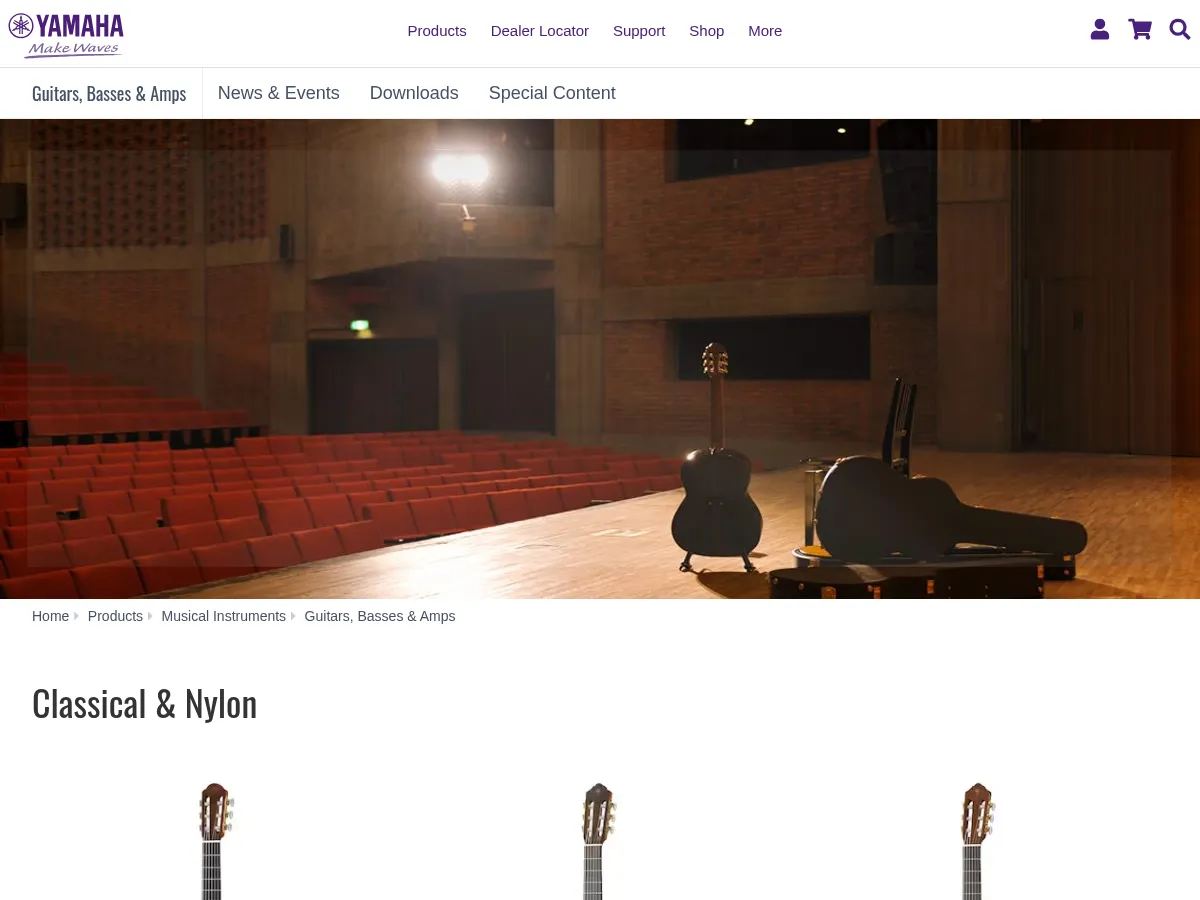
 Yamaha NCX3
Yamaha
$1,199
Professional
Japan
Premium nylon-string electro-acoustic with the advanced Atmosfeel three-sensor pickup system and a thin crossover body, delivering exceptional amplified tone for performing musicians.
Yamaha NCX3
Yamaha
$1,199
Professional
Japan
Premium nylon-string electro-acoustic with the advanced Atmosfeel three-sensor pickup system and a thin crossover body, delivering exceptional amplified tone for performing musicians.
 9
4.5
9
4.5
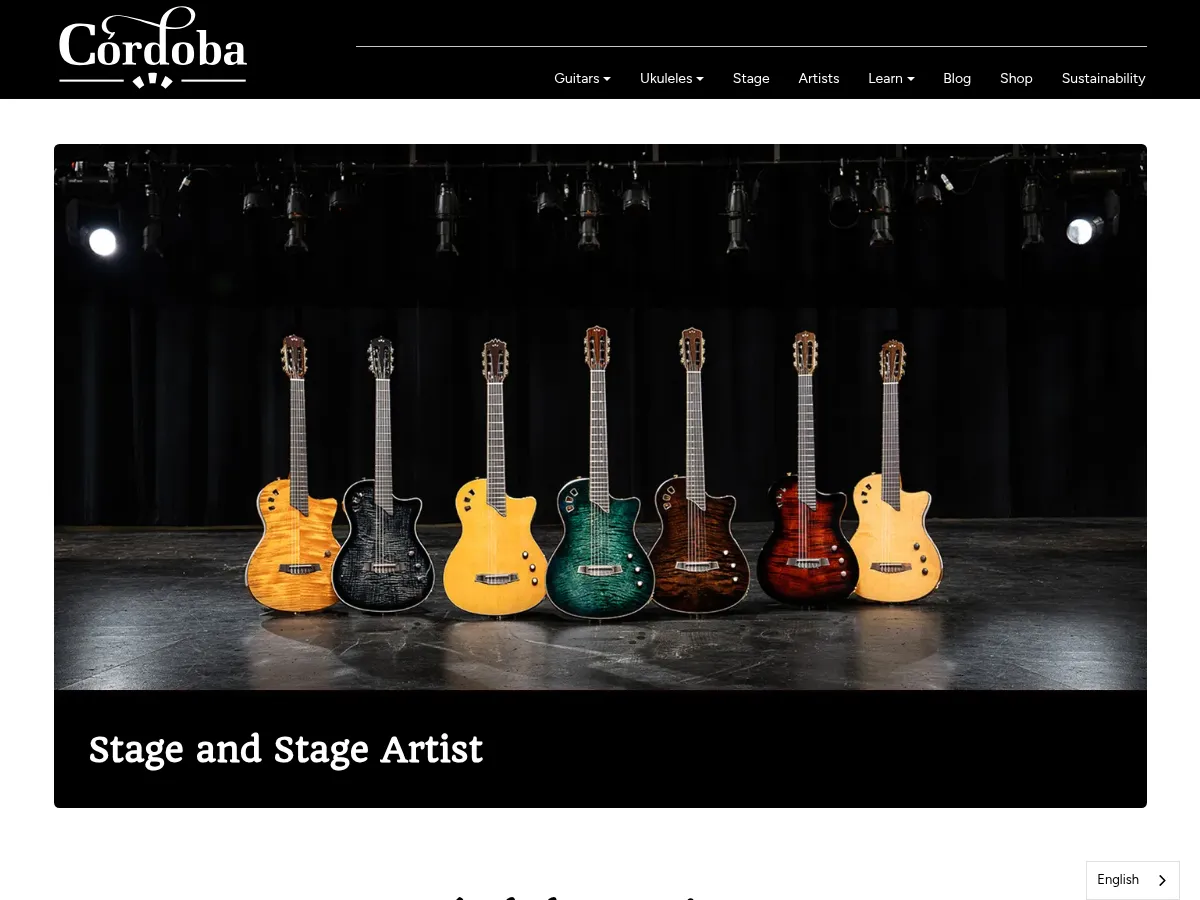
 Cordoba C9 Crossover
Cordoba
$799
Advanced
China
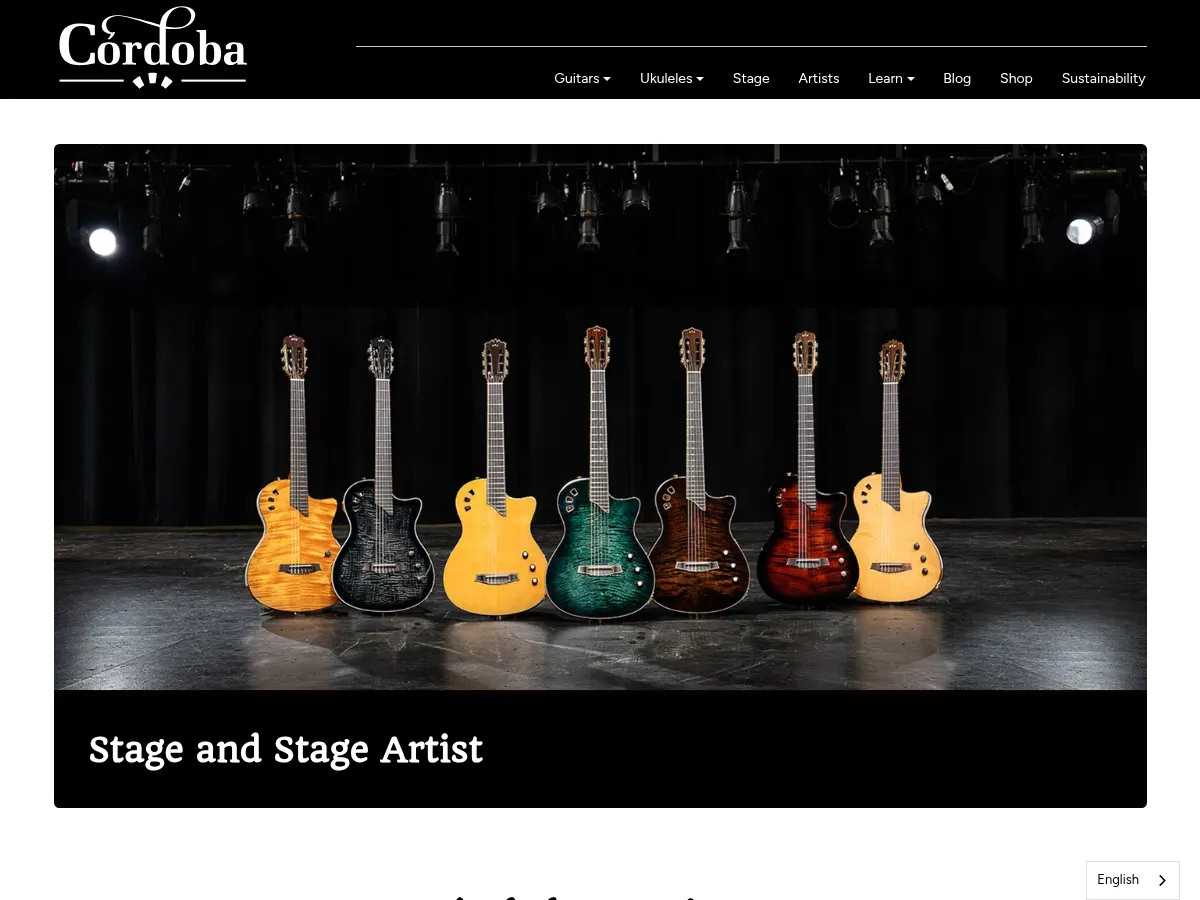
The Cordoba C9 Crossover features a narrower 48mm neck and radiused fingerboard for steel-string and electric players transitioning to nylon strings, delivering concert-level spruce and mahogany tone in a more familiar playing format.
Cordoba C9 Crossover
Cordoba
$799
Advanced
China
The Cordoba C9 Crossover features a narrower 48mm neck and radiused fingerboard for steel-string and electric players transitioning to nylon strings, delivering concert-level spruce and mahogany tone in a more familiar playing format.
 10
4.5
10
4.5
 Alhambra 5P
Alhambra
$649
Intermediate
Spain
The Alhambra 5P represents the sweet spot in Alhambra's lineup, pairing a solid German spruce top with Indian rosewood back and sides for a bright, projecting tone with rich harmonic complexity that rewards serious students and advancing amateurs.
Alhambra 5P
Alhambra
$649
Intermediate
Spain
The Alhambra 5P represents the sweet spot in Alhambra's lineup, pairing a solid German spruce top with Indian rosewood back and sides for a bright, projecting tone with rich harmonic complexity that rewards serious students and advancing amateurs.
 11
4.4
11
4.4
 Cordoba C7
Cordoba
$399
Intermediate
China
The Cordoba C7 features all-solid European spruce and Indian rosewood producing a bright, projecting tone with rich overtones, offering a meaningful tonal step up for advancing classical students and serious hobbyists.
Cordoba C7
Cordoba
$399
Intermediate
China
The Cordoba C7 features all-solid European spruce and Indian rosewood producing a bright, projecting tone with rich overtones, offering a meaningful tonal step up for advancing classical students and serious hobbyists.
 12
4.4
12
4.4
 Takamine GC5CE
Takamine
$499
Intermediate
China
Electro-acoustic classical guitar with cutaway body, solid spruce top, and Takamine TP-4T preamp for reliable amplified nylon-string performance.
Takamine GC5CE
Takamine
$499
Intermediate
China
Electro-acoustic classical guitar with cutaway body, solid spruce top, and Takamine TP-4T preamp for reliable amplified nylon-string performance.
 13
4.4
13
4.4
 Yamaha NTX1
Yamaha
$599
Intermediate
China
Modern nylon-string acoustic-electric with Atmosfeel pickup, thin NTX body, and a narrower nut width, designed for gigging players transitioning from steel-string guitars.
Yamaha NTX1
Yamaha
$599
Intermediate
China
Modern nylon-string acoustic-electric with Atmosfeel pickup, thin NTX body, and a narrower nut width, designed for gigging players transitioning from steel-string guitars.
 14
4.4
14
4.4
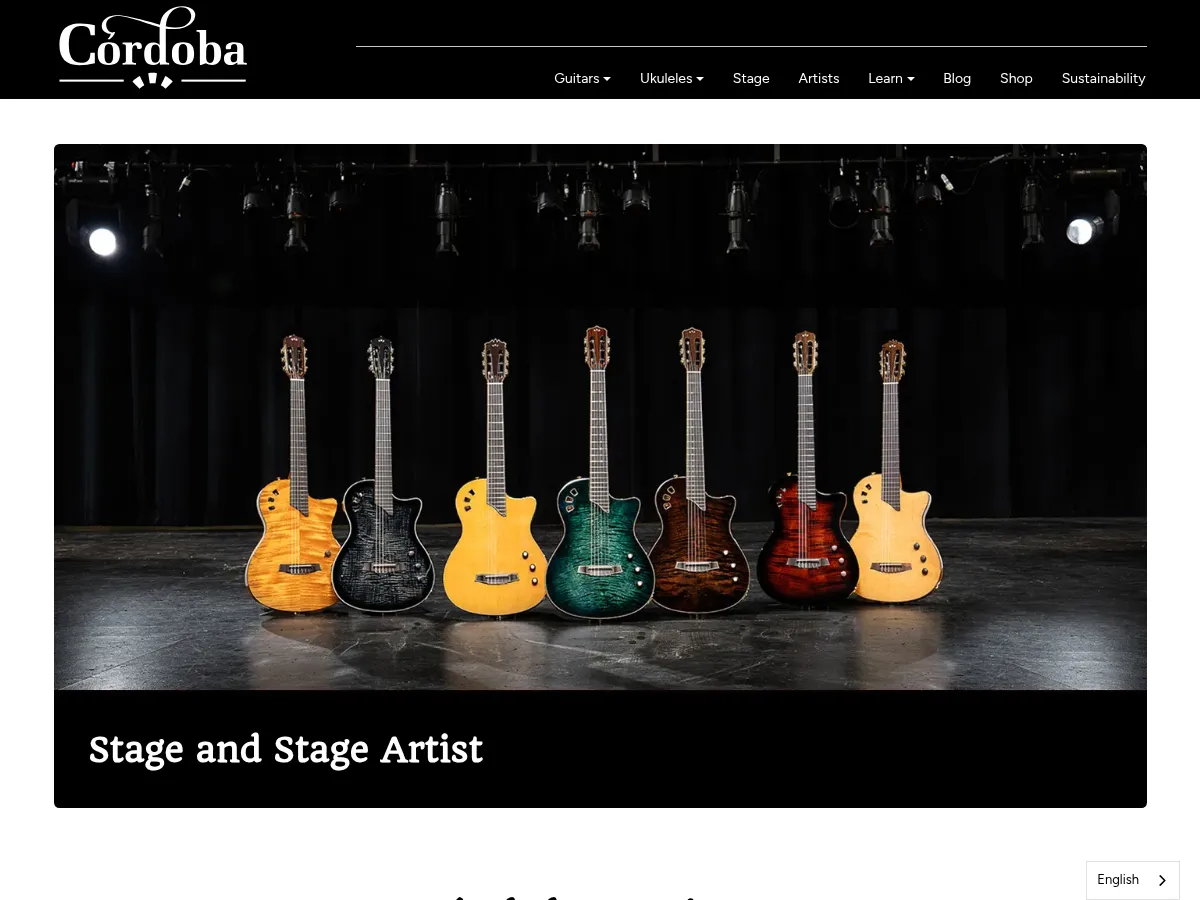
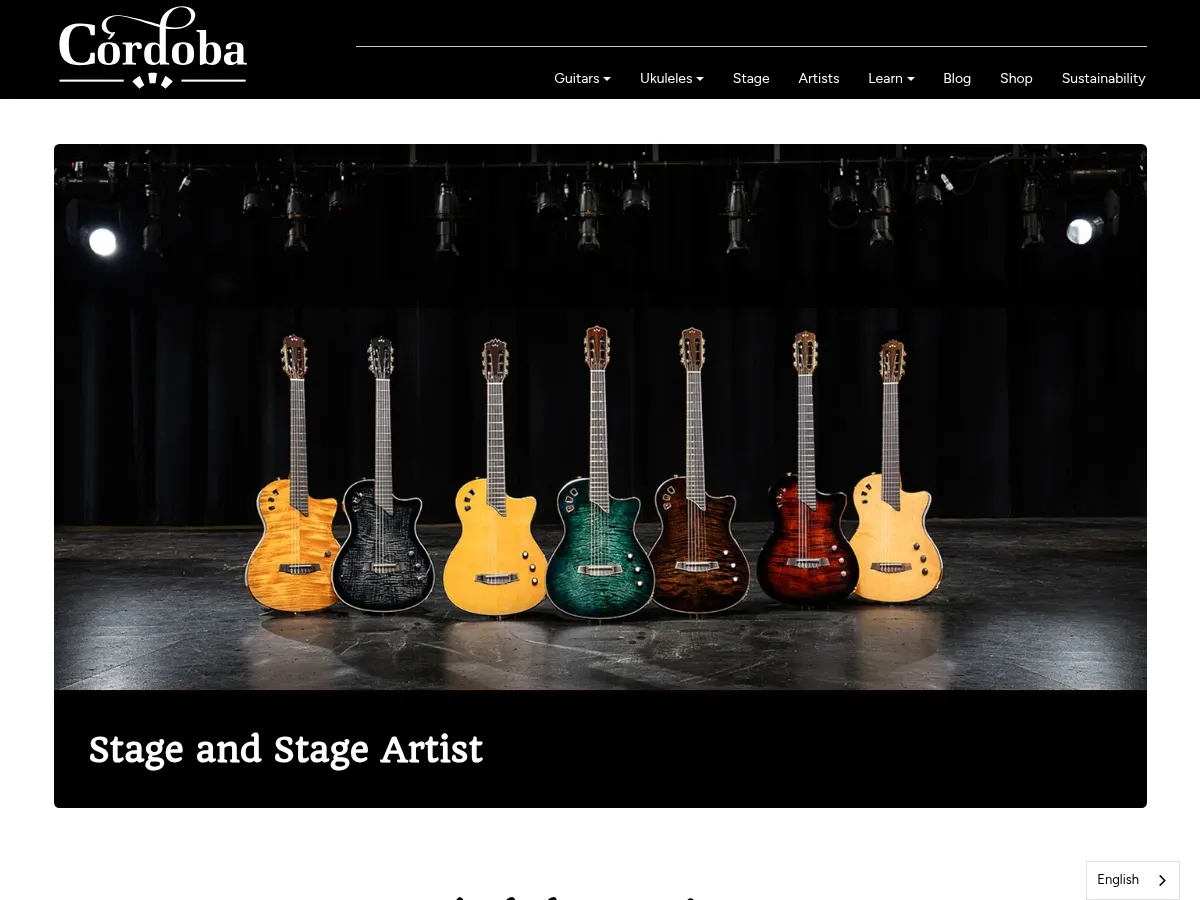
 Cordoba GK Studio
Cordoba
$849
Advanced
China
The Cordoba GK Studio is a nylon-string guitar purpose-built for amplified performance, with a thin body, cypress and spruce construction, Fishman Presys Blend pickup, and cutaway ideal for performing flamenco and jazz guitarists.
Cordoba GK Studio
Cordoba
$849
Advanced
China
The Cordoba GK Studio is a nylon-string guitar purpose-built for amplified performance, with a thin body, cypress and spruce construction, Fishman Presys Blend pickup, and cutaway ideal for performing flamenco and jazz guitarists.
 15
4.3
15
4.3
 Alhambra 3C
Alhambra
$499
Intermediate
Spain
The Alhambra 3C is a Spanish-made classical guitar with a solid German spruce top, traditional fan bracing, and Spanish heel construction that delivers authentic European tonal character and craftsmanship for serious classical guitar students.
Alhambra 3C
Alhambra
$499
Intermediate
Spain
The Alhambra 3C is a Spanish-made classical guitar with a solid German spruce top, traditional fan bracing, and Spanish heel construction that delivers authentic European tonal character and craftsmanship for serious classical guitar students.
 16
4.3
16
4.3
 Cordoba C5
Cordoba
$279
Beginner
China
The Cordoba C5 is a solid cedar-top classical guitar with traditional Spanish fan bracing and mahogany back and sides, delivering warm, focused tone with clear note separation as an excellent entry point for nylon-string students.
Cordoba C5
Cordoba
$279
Beginner
China
The Cordoba C5 is a solid cedar-top classical guitar with traditional Spanish fan bracing and mahogany back and sides, delivering warm, focused tone with clear note separation as an excellent entry point for nylon-string students.
 17
4.2
17
4.2
 Lucero LC150S
Lucero
$129
Beginner
China
An entry-level classical guitar offering a solid spruce top where most competitors use laminates, with bone nut and saddle providing surprising value for beginning students.
Lucero LC150S
Lucero
$129
Beginner
China
An entry-level classical guitar offering a solid spruce top where most competitors use laminates, with bone nut and saddle providing surprising value for beginning students.