Guitar Strings - Directory w/ AI Reviews
Electric, acoustic, bass, and classical guitar strings
Guitar strings are the vibrating elements that produce sound on all types of guitars, and they are the most frequently replaced component of the instrument. String material, gauge, and construction directly affect tone, playability, and feel. Choosing the right strings is one of the simplest yet most impactful ways to improve your guitar's sound.
History
Early guitar strings were made from animal gut, which remained the standard for centuries until the development of nylon and steel alternatives. Albert Augustine partnered with Andres Segovia to develop the first nylon guitar strings in the 1940s, replacing unreliable gut strings on classical guitars. Ernie Ball revolutionized electric guitar strings in the 1960s by offering custom-gauge sets that players like Eric Clapton and Jimi Hendrix demanded.
Characteristics
Electric guitar strings use steel cores with nickel-plated or pure nickel wrapping, with nickel-plated being brighter and pure nickel warmer. Acoustic guitar strings feature bronze or phosphor bronze winding, with phosphor bronze lasting longer and sounding warmer. String gauge (thickness) affects both tone and playability: lighter gauges are easier to bend and play, while heavier gauges produce fuller tone and more volume.
Notable Players
Ernie Ball strings are the most popular electric guitar strings worldwide, used by artists from Slash to John Mayer. D'Addario is the largest string manufacturer in the world, producing strings for virtually every stringed instrument. Elixir pioneered coated strings that last three to five times longer than uncoated strings by reducing corrosion from finger oils.
Fun Facts
A guitar string vibrates hundreds of times per second; the high E string on a guitar vibrates at approximately 330 Hz. If you stretched all the strings produced by D'Addario in a single year end to end, they would reach from the Earth to the Moon and back.
 1
4.8
1
4.8
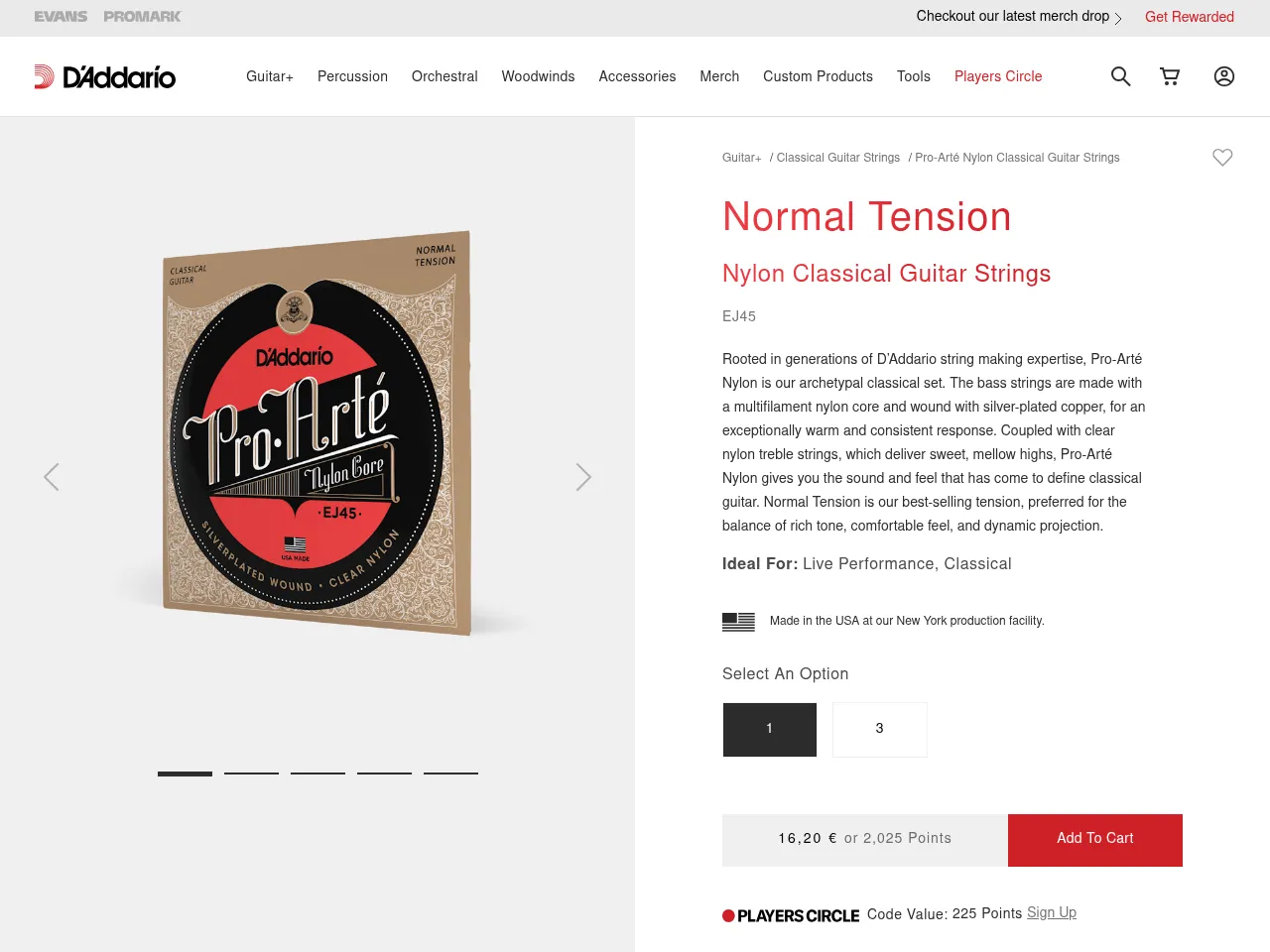
 D'Addario EJ45 Pro-Arte Classical Guitar Strings Normal Tension
D'Addario
$11
Beginner
United States
D'Addario EJ45 Pro-Arte are the world's best-selling classical guitar strings, with laser-sorted clear nylon trebles and silver-plated copper wound basses delivering reliable, balanced tone as the standard reference for nylon-string players.
D'Addario EJ45 Pro-Arte Classical Guitar Strings Normal Tension
D'Addario
$11
Beginner
United States
D'Addario EJ45 Pro-Arte are the world's best-selling classical guitar strings, with laser-sorted clear nylon trebles and silver-plated copper wound basses delivering reliable, balanced tone as the standard reference for nylon-string players.
 2
4.7
2
4.7
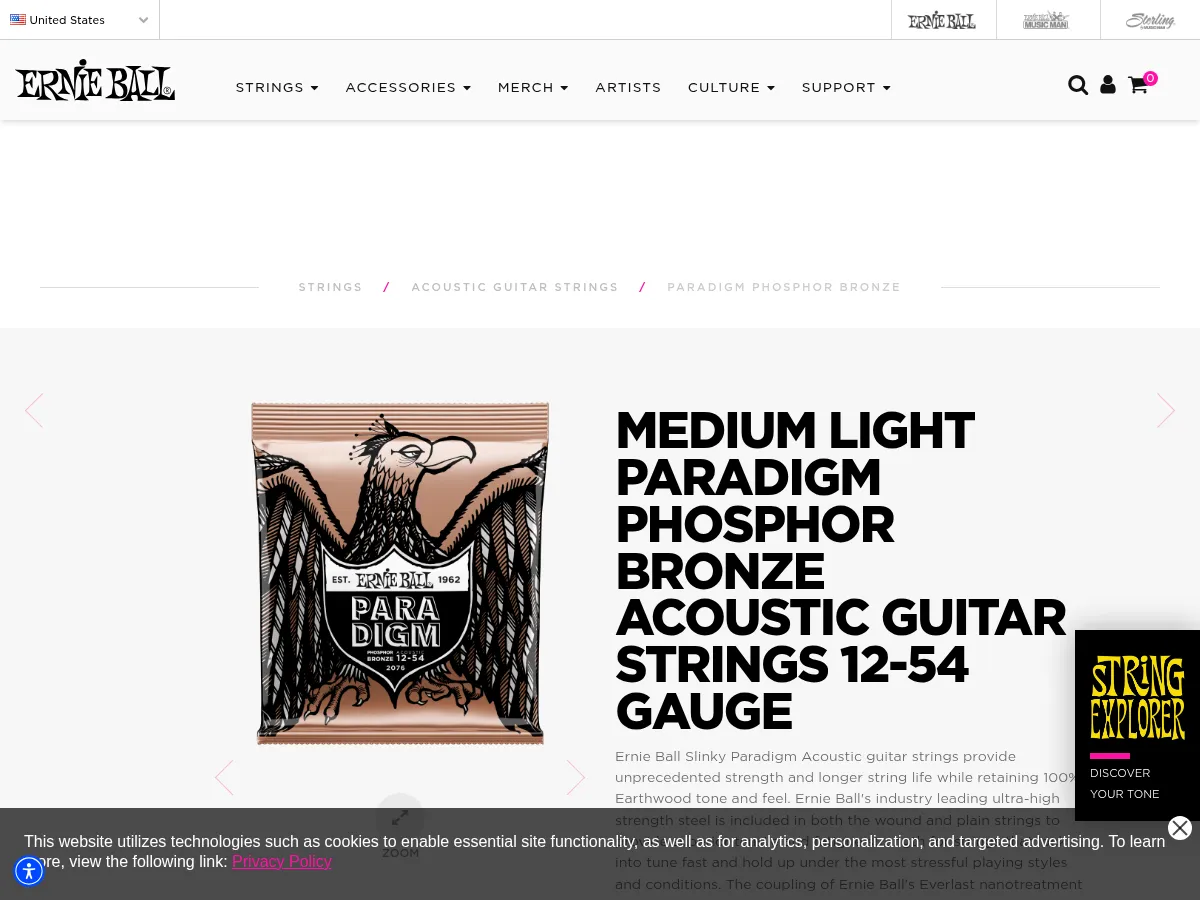
 Ernie Ball Paradigm Phosphor Bronze Medium Light .012-.054
Ernie Ball
$17
Intermediate
United States
Technologically advanced acoustic strings with plasma-enhanced wire and Everlast nano-coating that increase break resistance by 35 percent while maintaining natural phosphor bronze warmth and uncoated feel.
Ernie Ball Paradigm Phosphor Bronze Medium Light .012-.054
Ernie Ball
$17
Intermediate
United States
Technologically advanced acoustic strings with plasma-enhanced wire and Everlast nano-coating that increase break resistance by 35 percent while maintaining natural phosphor bronze warmth and uncoated feel.
 3
4.7
3
4.7
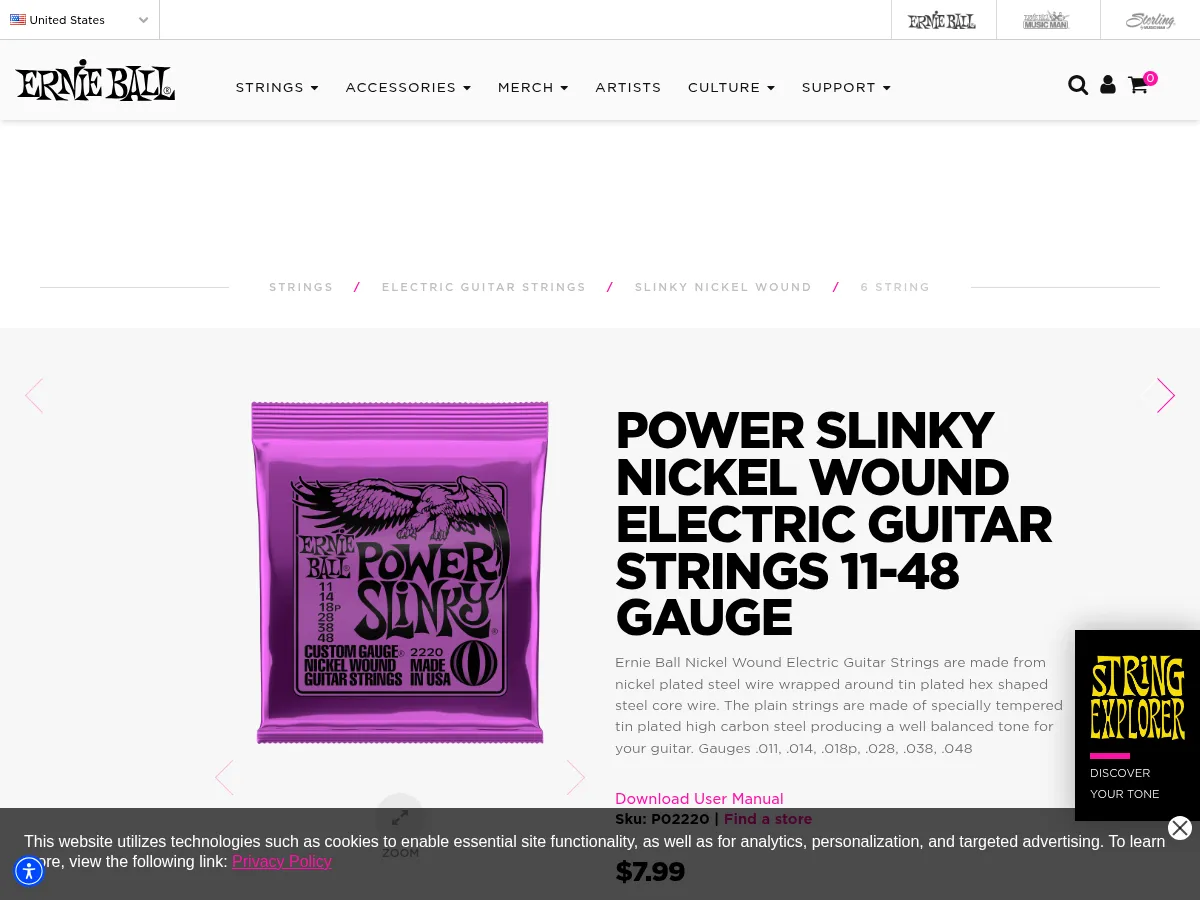
 Ernie Ball Power Slinky .011-.048
Ernie Ball
$6
Intermediate
United States
A heavier-gauge electric string set delivering increased tension, fuller body, and tighter low end ideal for hard rock, metal, and drop tunings where aggressive picking demands strings that maintain definition.
Ernie Ball Power Slinky .011-.048
Ernie Ball
$6
Intermediate
United States
A heavier-gauge electric string set delivering increased tension, fuller body, and tighter low end ideal for hard rock, metal, and drop tunings where aggressive picking demands strings that maintain definition.
 4
4.7
4
4.7
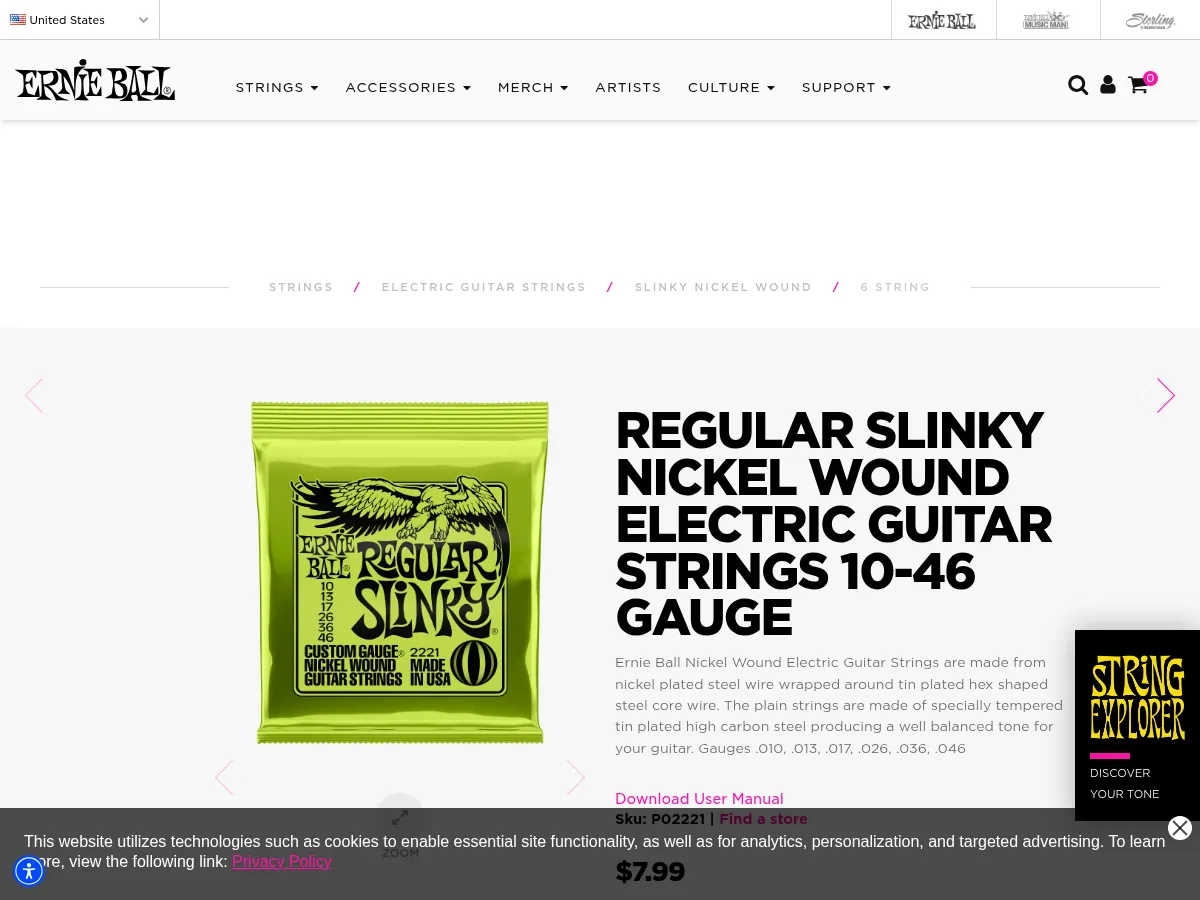
 Ernie Ball Regular Slinky .010-.046
Ernie Ball
$6
Beginner
United States
The best-selling electric guitar strings in the world, delivering the bright, balanced nickel-plated steel tone that has defined rock and blues since the 1960s in the versatile .010-.046 gauge.
Ernie Ball Regular Slinky .010-.046
Ernie Ball
$6
Beginner
United States
The best-selling electric guitar strings in the world, delivering the bright, balanced nickel-plated steel tone that has defined rock and blues since the 1960s in the versatile .010-.046 gauge.
 5
4.7
5
4.7
 Martin MA540 Authentic Acoustic Lifespan 2.0 Light
Martin
$14
Beginner
United States
Premium coated phosphor bronze strings combining Martin's 190-year heritage with Lifespan 2.0 coating technology for warm, rich acoustic tone with dramatically extended string life.
Martin MA540 Authentic Acoustic Lifespan 2.0 Light
Martin
$14
Beginner
United States
Premium coated phosphor bronze strings combining Martin's 190-year heritage with Lifespan 2.0 coating technology for warm, rich acoustic tone with dramatically extended string life.
 6
4.6
6
4.6
 Elixir Optiweb Electric Strings .010-.046
Elixir
$15
Intermediate
United States
Elixir's most advanced coated electric strings using microscopically thin Optiweb technology that delivers the crisp feel of uncoated strings while lasting three to five times longer than conventional sets.
Elixir Optiweb Electric Strings .010-.046
Elixir
$15
Intermediate
United States
Elixir's most advanced coated electric strings using microscopically thin Optiweb technology that delivers the crisp feel of uncoated strings while lasting three to five times longer than conventional sets.
 7
4.6
7
4.6
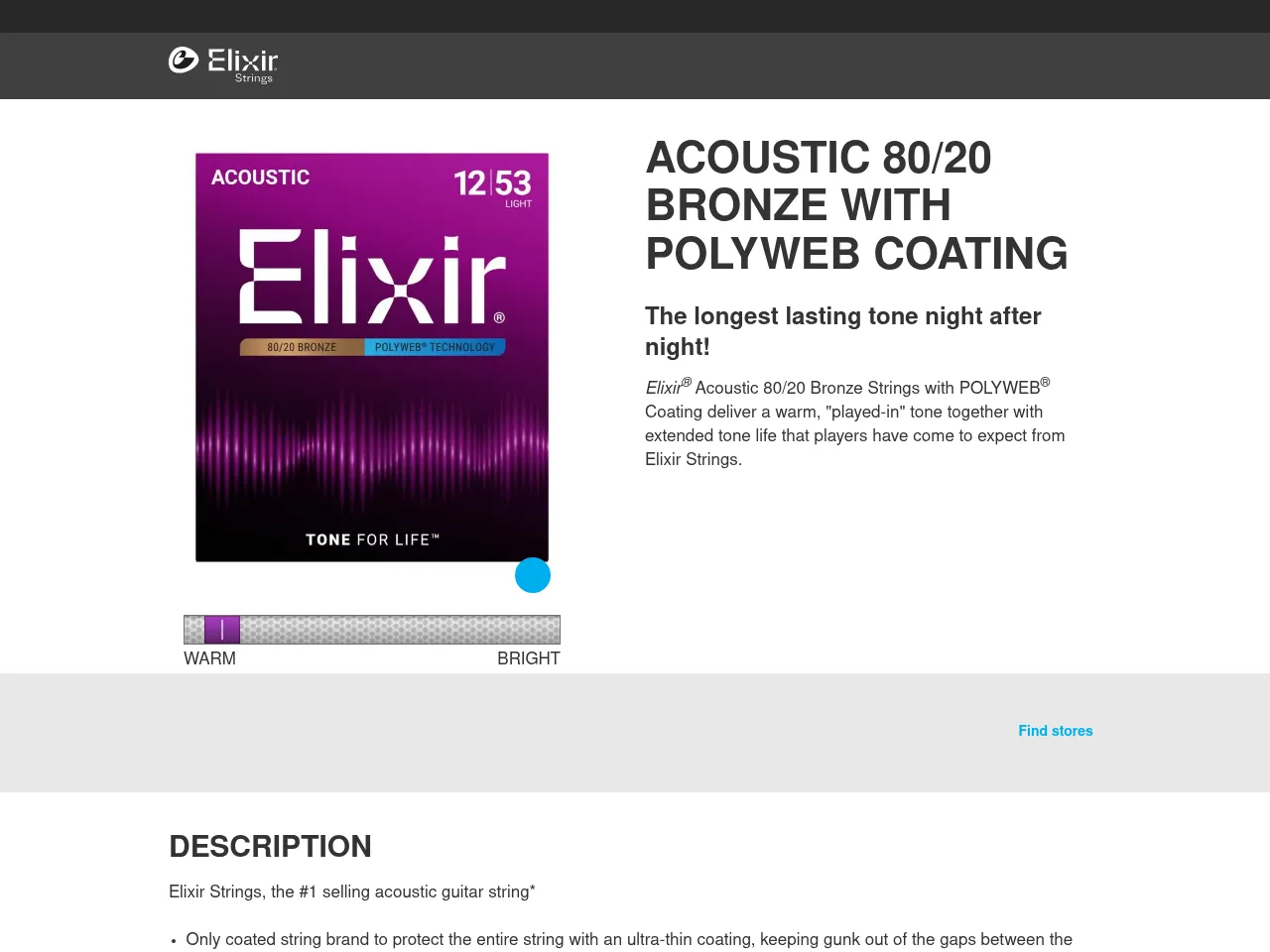
 Elixir Polyweb Acoustic Guitar Strings Light .012-.053
Elixir
$15
Beginner
United States
Coated acoustic strings with Elixir's thicker Polyweb coating that delivers a warm, mellow tone with a slick feel and dramatically extended string life, particularly popular among touring acoustic musicians.
Elixir Polyweb Acoustic Guitar Strings Light .012-.053
Elixir
$15
Beginner
United States
Coated acoustic strings with Elixir's thicker Polyweb coating that delivers a warm, mellow tone with a slick feel and dramatically extended string life, particularly popular among touring acoustic musicians.
 8
4.6
8
4.6
 D'Addario NYXL1046 Regular Light
D'Addario
$13
Intermediate
United States
D'Addario NYXL1046 strings feature a reformulated high-carbon steel core and nickel-plated wrap delivering greater tuning stability, enhanced midrange presence, and increased break resistance over conventional nickel wound strings.
D'Addario NYXL1046 Regular Light
D'Addario
$13
Intermediate
United States
D'Addario NYXL1046 strings feature a reformulated high-carbon steel core and nickel-plated wrap delivering greater tuning stability, enhanced midrange presence, and increased break resistance over conventional nickel wound strings.
 9
4.5
9
4.5
 D'Addario EJ16 Phosphor Bronze Light .012-.053
D'Addario
$7
Beginner
United States
D'Addario EJ16 Phosphor Bronze Light strings are the world's best-selling acoustic guitar strings, delivering industry-standard warm, bright, balanced tone with consistent quality from computer-controlled winding in .012-.053 gauge.
D'Addario EJ16 Phosphor Bronze Light .012-.053
D'Addario
$7
Beginner
United States
D'Addario EJ16 Phosphor Bronze Light strings are the world's best-selling acoustic guitar strings, delivering industry-standard warm, bright, balanced tone with consistent quality from computer-controlled winding in .012-.053 gauge.
 10
4.5
10
4.5
 DR Strings Pure Blues PHR-10
DR Strings
$9
Intermediate
United States
Handmade round-core electric guitar strings with pure nickel wrap that deliver vintage warmth, enhanced flexibility, and rich overtone complexity, crafted in New Jersey using a slow, precise winding process.
DR Strings Pure Blues PHR-10
DR Strings
$9
Intermediate
United States
Handmade round-core electric guitar strings with pure nickel wrap that deliver vintage warmth, enhanced flexibility, and rich overtone complexity, crafted in New Jersey using a slow, precise winding process.
 11
4.4
11
4.4
 Elixir Nanoweb 80/20 Bronze Light .012-.053
Elixir
$15
Intermediate
United States
Industry-leading coated acoustic guitar strings with Nanoweb coating for maximum longevity and a smooth playing feel, using bright 80/20 bronze alloy that projects clearly for strumming and live performance.
Elixir Nanoweb 80/20 Bronze Light .012-.053
Elixir
$15
Intermediate
United States
Industry-leading coated acoustic guitar strings with Nanoweb coating for maximum longevity and a smooth playing feel, using bright 80/20 bronze alloy that projects clearly for strumming and live performance.
 12
4.4
12
4.4
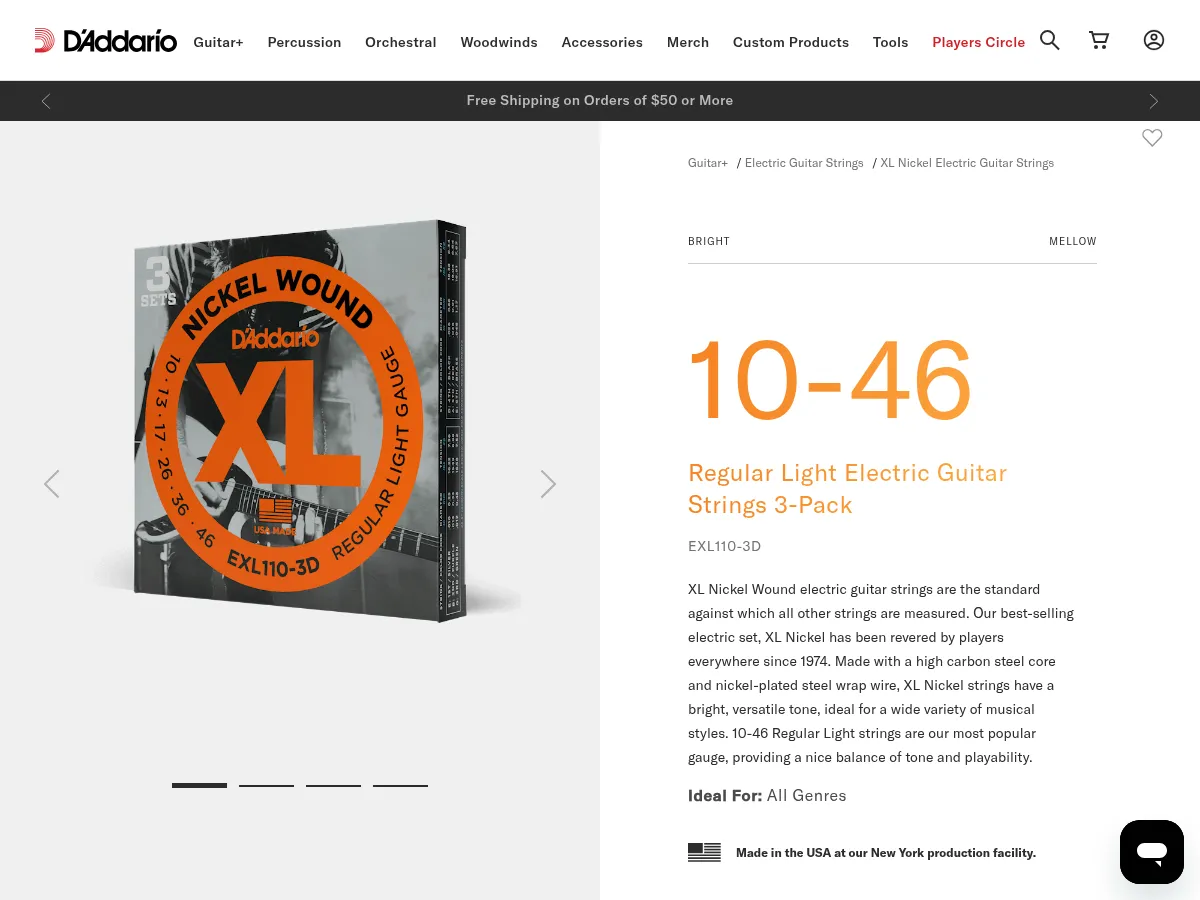
 D'Addario EXL110 XL Nickel Wound Regular Light .010-.046
D'Addario
$6
Beginner
United States
D'Addario EXL110 XL Nickel Wound Regular Light strings are a cornerstone of electric guitar playing, delivering bright, versatile tone with consistent gauge accuracy and reliable tuning stability in the universally comfortable .010-.046 gauge.
D'Addario EXL110 XL Nickel Wound Regular Light .010-.046
D'Addario
$6
Beginner
United States
D'Addario EXL110 XL Nickel Wound Regular Light strings are a cornerstone of electric guitar playing, delivering bright, versatile tone with consistent gauge accuracy and reliable tuning stability in the universally comfortable .010-.046 gauge.