Flutes - Directory w/ AI Reviews
Concert flutes, piccolo, and alto flutes
The flute is a woodwind instrument played by blowing across an embouchure hole, producing a clear, bright, and agile tone. It is the highest-pitched standard orchestral woodwind and one of the oldest known instruments in human history. The flute appears in orchestral, chamber, solo, jazz, and world music traditions around the globe.
History
Bone flutes dating back over 40,000 years have been found in European caves, making the flute one of humanity's oldest instruments. The modern concert flute was developed by Theobald Boehm in the 1840s, who created the key system and cylindrical bore still used today. The silver flute became standard in orchestras by the late 19th century, and the instrument gained a prominent jazz voice through players like Herbie Mann in the 1960s.
Characteristics
The concert flute is a transverse (side-blown) instrument, typically made of silver, nickel silver, or gold, with a range of over three octaves. Sound is produced by directing an air stream across the embouchure hole, with the player's lips and air control determining tone quality. The Boehm key system uses a series of padded keys to open and close tone holes, enabling rapid chromatic passages.
Notable Players
James Galway, "The Man with the Golden Flute," brought the instrument to mainstream audiences through his crossover recordings and charismatic performances. Jean-Pierre Rampal revived interest in the flute as a solo concert instrument in the mid-20th century. Ian Anderson of Jethro Tull famously brought the flute into rock music, performing while standing on one leg.
Fun Facts
Flutes are the only woodwind instruments that do not use a reed; sound is produced entirely by the player's air stream hitting the edge of the embouchure hole. The oldest known musical instrument is a flute made from a vulture bone, discovered in a German cave and dated to approximately 40,000 years ago.
 1
4.8
1
4.8
 Muramatsu DS Professional Concert Flute
Muramatsu
$7,999
Professional
Japan
A professional sterling silver flute from one of Japan's most revered makers, with handmade headjoint delivering warm, complex tone and completely silent hand-assembled key mechanism.
Muramatsu DS Professional Concert Flute
Muramatsu
$7,999
Professional
Japan
A professional sterling silver flute from one of Japan's most revered makers, with handmade headjoint delivering warm, complex tone and completely silent hand-assembled key mechanism.
 2
4.8
2
4.8
 Yamaha YFL-222 Standard Concert Flute
Yamaha
$899
Beginner
Indonesia
World's most recommended student flute with closed-hole keys, accurate intonation, and reliable build quality that has made it the default choice for school band programs globally.
Yamaha YFL-222 Standard Concert Flute
Yamaha
$899
Beginner
Indonesia
World's most recommended student flute with closed-hole keys, accurate intonation, and reliable build quality that has made it the default choice for school band programs globally.
 3
4.7
3
4.7
 Haynes Q3 Professional Concert Flute
Haynes
$9,995
Professional
USA
A professional flute from one of America's most storied makers with all-sterling-silver construction and hand-cut headjoint, delivering extraordinary warmth, depth, and legendary Haynes responsiveness.
Haynes Q3 Professional Concert Flute
Haynes
$9,995
Professional
USA
A professional flute from one of America's most storied makers with all-sterling-silver construction and hand-cut headjoint, delivering extraordinary warmth, depth, and legendary Haynes responsiveness.
 4
4.7
4
4.7
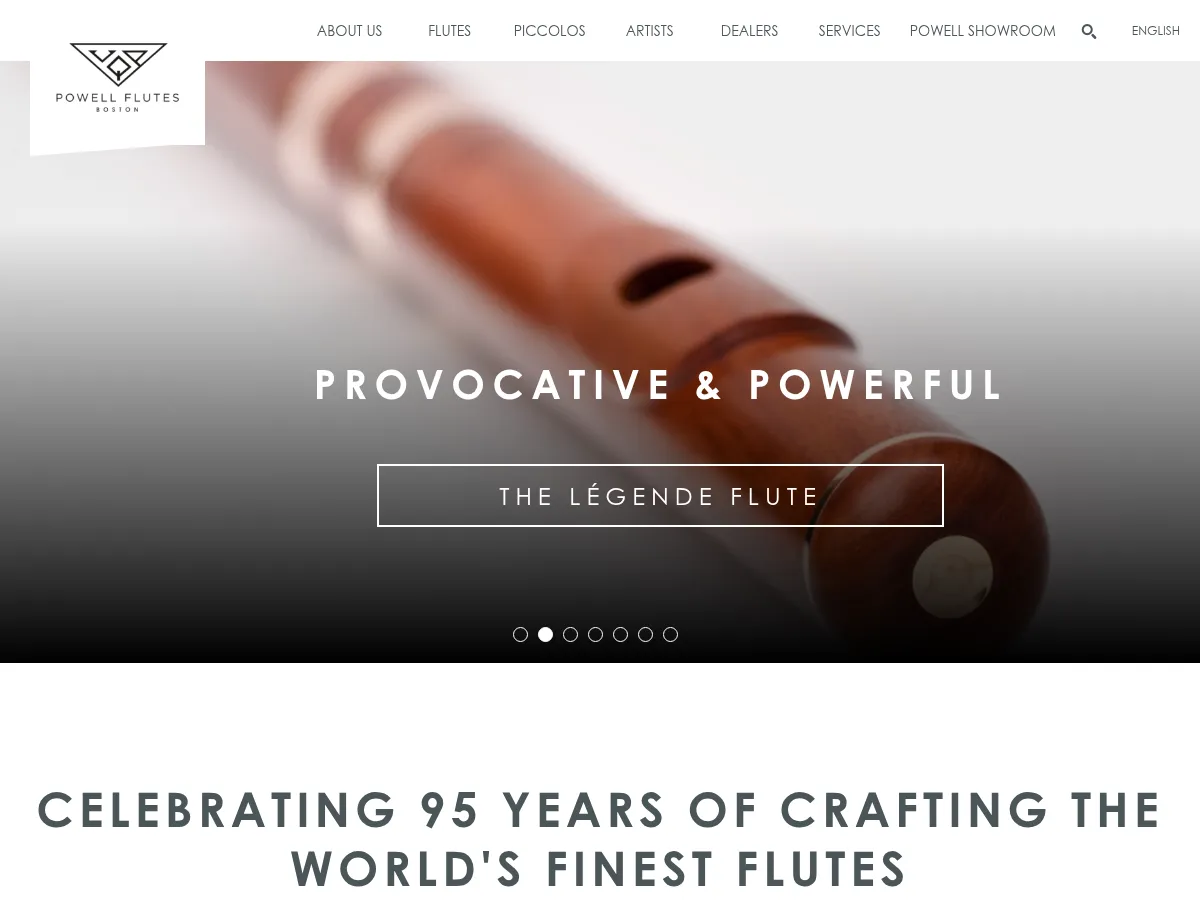
 Powell Sonare 601 Intermediate Concert Flute
Powell
$2,199
Intermediate
USA
An intermediate flute with hand-finished sterling silver headjoint by Powell's craftspeople, bringing professional-maker influence to the step-up market with French-pointed arm mechanism.
Powell Sonare 601 Intermediate Concert Flute
Powell
$2,199
Intermediate
USA
An intermediate flute with hand-finished sterling silver headjoint by Powell's craftspeople, bringing professional-maker influence to the step-up market with French-pointed arm mechanism.
 5
4.7
5
4.7
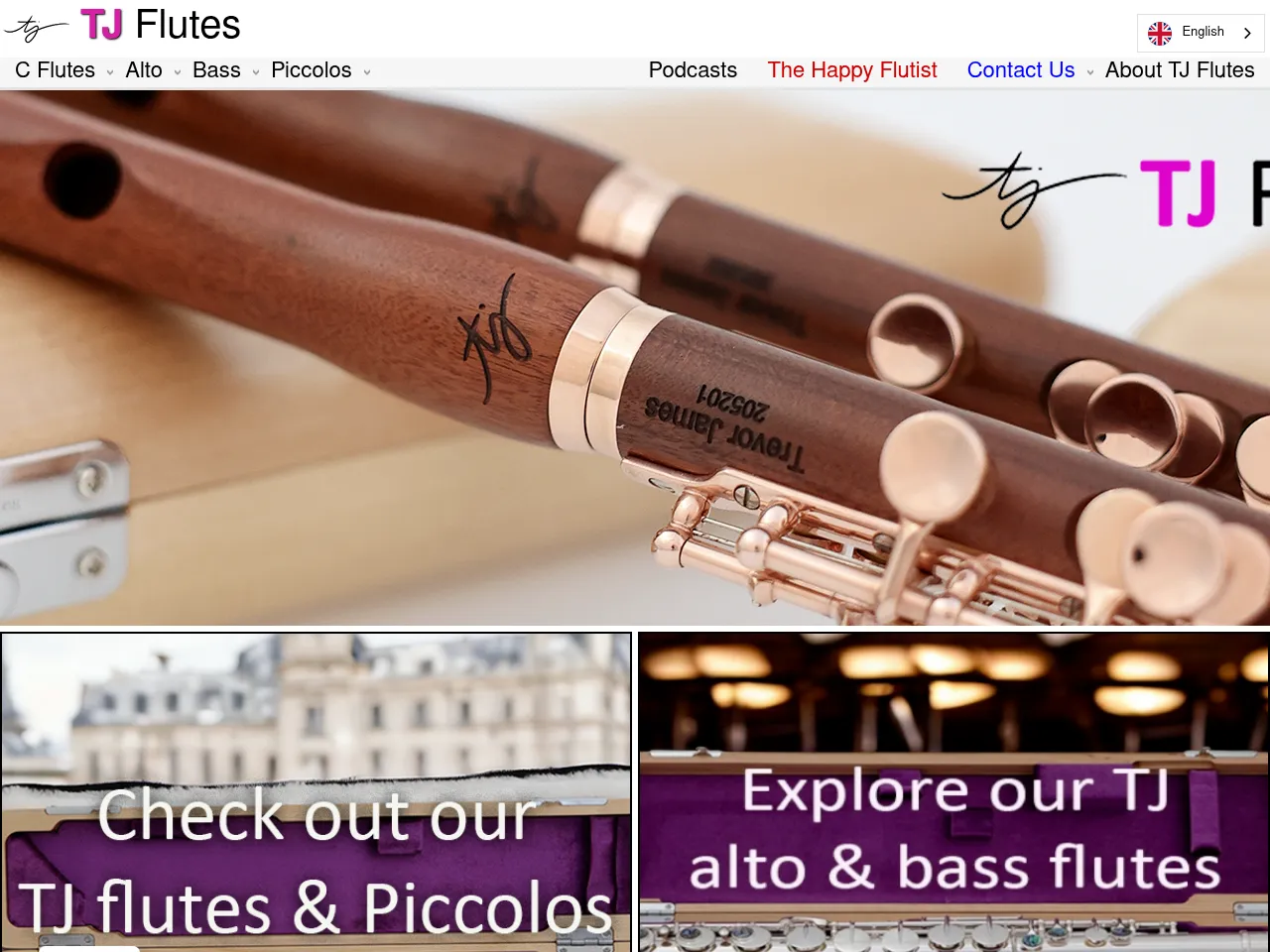
 Trevor James 10X Student Concert Flute
Trevor James
$399
Beginner
Taiwan
Student concert flute with silver-plated body, offset G key, and easy-blowing headjoint producing warm tone favored by teachers and band directors.
Trevor James 10X Student Concert Flute
Trevor James
$399
Beginner
Taiwan
Student concert flute with silver-plated body, offset G key, and easy-blowing headjoint producing warm tone favored by teachers and band directors.
 6
4.7
6
4.7
 Yamaha YFL-362 Intermediate Concert Flute
Yamaha
$1,449
Intermediate
Japan
Intermediate flute with a sterling silver headjoint and silver-plated body, delivering warmer, more colorful tone for advancing students preparing for auditions and ensemble playing.
Yamaha YFL-362 Intermediate Concert Flute
Yamaha
$1,449
Intermediate
Japan
Intermediate flute with a sterling silver headjoint and silver-plated body, delivering warmer, more colorful tone for advancing students preparing for auditions and ensemble playing.
 7
4.7
7
4.7
 Altus 907E Professional Concert Flute
Altus
$6,799
Professional
Japan
The Altus 907E is a handcrafted professional concert flute in all-sterling-silver with the distinctive Z-cut headjoint, delivering exceptional responsiveness, tonal warmth, and a singing upper register beloved by professional flutists worldwide.
Altus 907E Professional Concert Flute
Altus
$6,799
Professional
Japan
The Altus 907E is a handcrafted professional concert flute in all-sterling-silver with the distinctive Z-cut headjoint, delivering exceptional responsiveness, tonal warmth, and a singing upper register beloved by professional flutists worldwide.
 8
4.6
Jupiter JFL710A Student Concert Flute
Jupiter
$649
Beginner
Taiwan
A well-engineered student flute with cupronickel body, offset G key, split E mechanism, and closed-hole keys designed for easy sound production, providing reliable performance for beginning band students.
8
4.6
Jupiter JFL710A Student Concert Flute
Jupiter
$649
Beginner
Taiwan
A well-engineered student flute with cupronickel body, offset G key, split E mechanism, and closed-hole keys designed for easy sound production, providing reliable performance for beginning band students.
 9
4.6
9
4.6
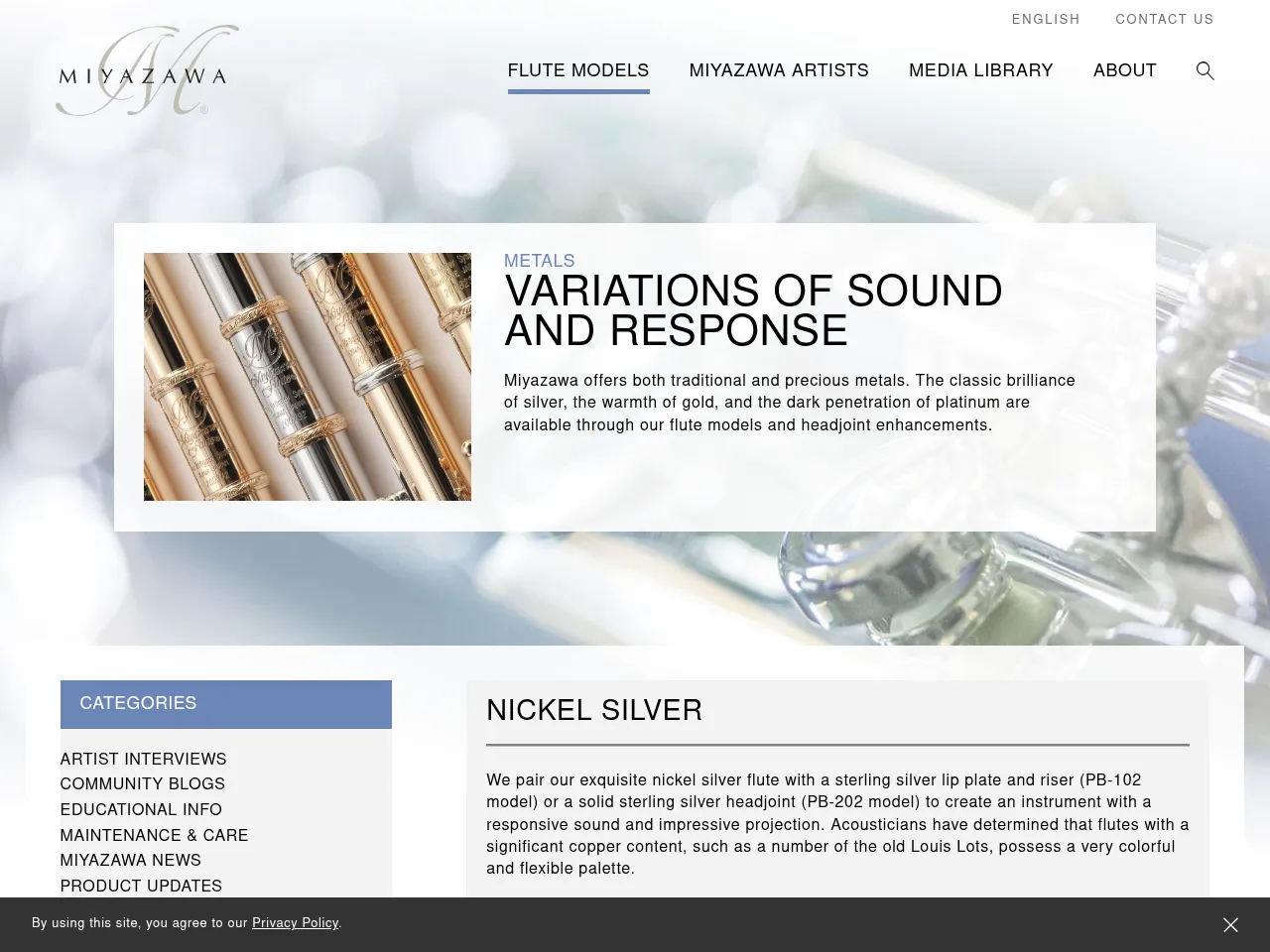
 Miyazawa PB-102 Professional Concert Flute
Miyazawa
$4,999
Professional
Japan
A professional Japanese concert flute in sterling silver with hand-cut headjoint, delivering rich singing tone with exceptional sensitivity and completely silent key action.
Miyazawa PB-102 Professional Concert Flute
Miyazawa
$4,999
Professional
Japan
A professional Japanese concert flute in sterling silver with hand-cut headjoint, delivering rich singing tone with exceptional sensitivity and completely silent key action.
 10
4.6
10
4.6
 Pearl PF-665RE Quantz Intermediate Concert Flute
Pearl
$1,899
Intermediate
Taiwan
An intermediate flute with sterling silver headjoint and Pearl's one-piece core bar mechanism for long-term key alignment, offering features and quality that punch above the price.
Pearl PF-665RE Quantz Intermediate Concert Flute
Pearl
$1,899
Intermediate
Taiwan
An intermediate flute with sterling silver headjoint and Pearl's one-piece core bar mechanism for long-term key alignment, offering features and quality that punch above the price.
 11
4.6
11
4.6
 Yamaha YFL-577H Professional Concert Flute
Yamaha
$5,499
Professional
Japan
Professional all-sterling-silver concert flute with a hand-finished headjoint, delivering warm projection, exceptional key precision, and reliable intonation for orchestral and solo performance.
Yamaha YFL-577H Professional Concert Flute
Yamaha
$5,499
Professional
Japan
Professional all-sterling-silver concert flute with a hand-finished headjoint, delivering warm projection, exceptional key precision, and reliable intonation for orchestral and solo performance.
 12
4.5
12
4.5
 Azumi AZ-Z3RE Intermediate Concert Flute
Azumi
$2,499
Intermediate
Japan
The Azumi AZ-Z3RE is an intermediate flute that benefits from an Altus-made Britannia silver Z-cut headjoint, producing tone and responsiveness closer to professional instruments at a fraction of the cost for serious advancing students.
Azumi AZ-Z3RE Intermediate Concert Flute
Azumi
$2,499
Intermediate
Japan
The Azumi AZ-Z3RE is an intermediate flute that benefits from an Altus-made Britannia silver Z-cut headjoint, producing tone and responsiveness closer to professional instruments at a fraction of the cost for serious advancing students.
 13
4.4
13
4.4
 Gemeinhardt 3OB Professional Concert Flute
Gemeinhardt
$3,899
Professional
USA
A professional concert flute with solid silver body and open-hole French model keys, delivering a warm, full tone with multiple configuration options backed by decades of American flute-making tradition.
Gemeinhardt 3OB Professional Concert Flute
Gemeinhardt
$3,899
Professional
USA
A professional concert flute with solid silver body and open-hole French model keys, delivering a warm, full tone with multiple configuration options backed by decades of American flute-making tradition.