Electronic Drums - Directory w/ AI Reviews
Electronic drum kits and percussion pads
Electronic drum kits use rubber or mesh pads and digital sound modules to replicate the playing experience of acoustic drums with adjustable volume. They are ideal for practice, recording, and live performance where volume control is essential. Modern electronic kits offer remarkably realistic feel and sound, along with features impossible on acoustic kits.
History
The first commercial electronic drums appeared in the late 1970s, with Simmons' hexagonal SDS-5 pads becoming an iconic 1980s sound. Roland entered the market in 1997 with the V-Drums series, which used mesh heads and advanced triggering to dramatically improve playability. Today, flagship electronic kits from Roland and ATV rival acoustic drums in feel and sonic realism.
Characteristics
Electronic kits use trigger sensors in pads to detect strikes, sending MIDI data to a sound module that produces the audio. Mesh heads offer the most realistic stick rebound and feel, while rubber pads are more affordable and durable. Sound modules contain hundreds of drum kit presets and allow users to customize every aspect of each drum's sound.
Notable Players
Bill Bruford of King Crimson and Yes was an early adopter of Simmons electronic drums in progressive rock. Travis Barker has used Roland V-Drums for practice and recording alongside his acoustic kits. Questlove of The Roots frequently uses hybrid acoustic-electronic setups for his versatile live performances.
Fun Facts
Modern electronic drum modules can store thousands of sounds, allowing a drummer to switch from a jazz kit to an 808 hip-hop kit with the press of a button. The Roland TD-50X module uses over 100 microphone positions sampled on each drum to recreate the experience of playing in a professional studio.
 1
4.9
1
4.9
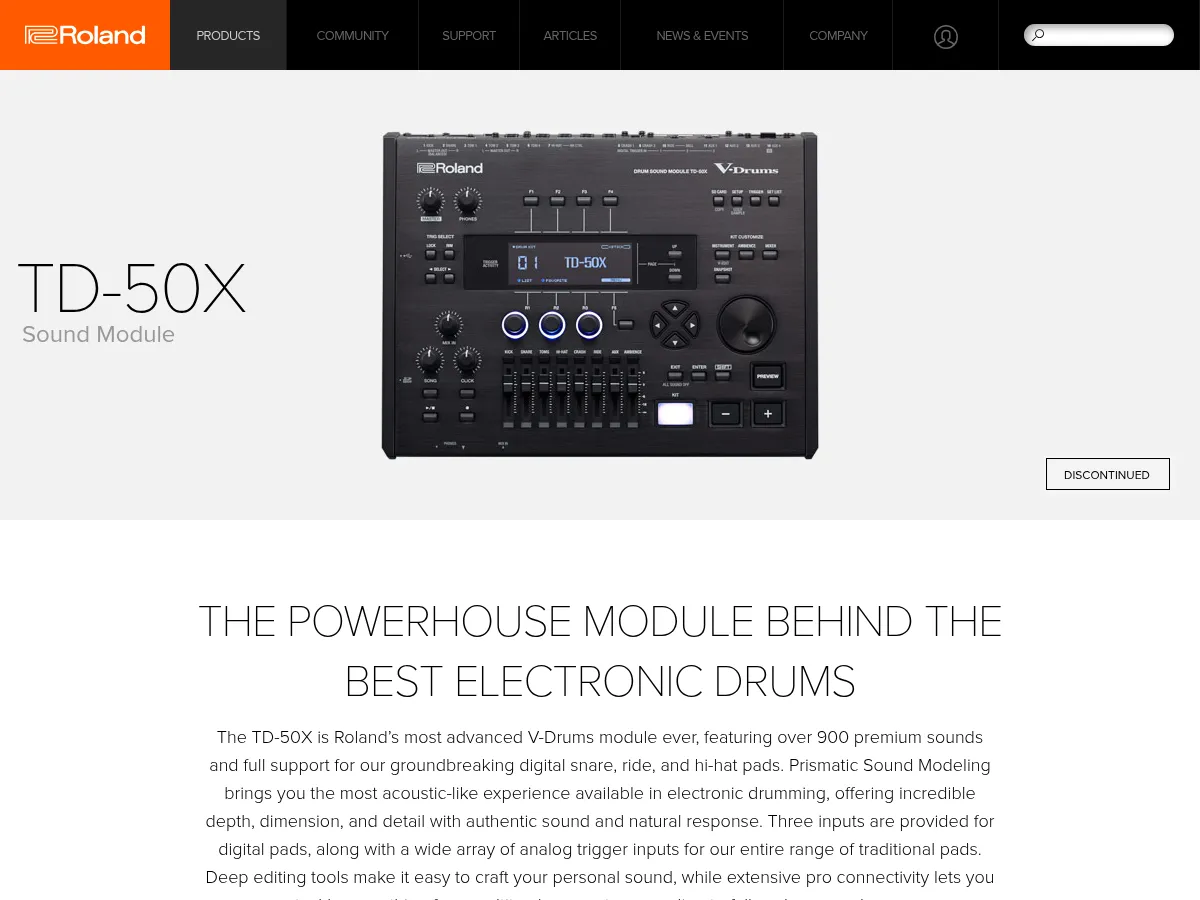
 Roland TD-50X
Roland
$3,499
Professional
Japan
Flagship V-Drums module with Prismatic Sound Modeling generating tones through deep physical modeling, 32-channel USB audio, and 900+ instruments.
Roland TD-50X
Roland
$3,499
Professional
Japan
Flagship V-Drums module with Prismatic Sound Modeling generating tones through deep physical modeling, 32-channel USB audio, and 900+ instruments.
 2
4.8
2
4.8
 Roland TD-27KV2
Roland
$3,499
Advanced
Malaysia
Premium electronic kit with Prismatic Sound Modeling, 14-inch PD-140DS digital snare capturing ghost notes and buzz rolls, and VH-14D digital hi-hat.
Roland TD-27KV2
Roland
$3,499
Advanced
Malaysia
Premium electronic kit with Prismatic Sound Modeling, 14-inch PD-140DS digital snare capturing ghost notes and buzz rolls, and VH-14D digital hi-hat.
 3
4.8
3
4.8
 Yamaha DTX10K-M
Yamaha
$4,999
Professional
Japan
Flagship electronic drum kit with TCS pads, birch-shell rack, and the advanced DTX-PROX module, delivering professional sound quality and visual presence for stage and studio.
Yamaha DTX10K-M
Yamaha
$4,999
Professional
Japan
Flagship electronic drum kit with TCS pads, birch-shell rack, and the advanced DTX-PROX module, delivering professional sound quality and visual presence for stage and studio.
 4
4.7
4
4.7
 Roland TD-17KVX2
Roland
$1,999
Intermediate
Malaysia
Mid-range electronic kit with 12-inch PDX-12 snare, VH-10 hi-hat on standard stand, and modeling technology delivering professional-grade sound for intermediate drummers.
Roland TD-17KVX2
Roland
$1,999
Intermediate
Malaysia
Mid-range electronic kit with 12-inch PDX-12 snare, VH-10 hi-hat on standard stand, and modeling technology delivering professional-grade sound for intermediate drummers.
 5
4.7
5
4.7
 Roland VAD506
Roland
$5,999
Professional
Malaysia
Flagship V-Drums Acoustic Design kit with full-size wooden shells, TD-27 module, PD-140DS digital snare, and VH-14D hi-hat for the ultimate electronic-acoustic hybrid.
Roland VAD506
Roland
$5,999
Professional
Malaysia
Flagship V-Drums Acoustic Design kit with full-size wooden shells, TD-27 module, PD-140DS digital snare, and VH-14D hi-hat for the ultimate electronic-acoustic hybrid.
 6
4.6
6
4.6
 ATV EXS-5
ATV
$4,499
Professional
Japan
The ATV EXS-5 is a premium electronic drum kit designed by the original V-Drums team, with meticulously sampled sounds, natural mesh-head feel, and subtle per-hit tonal variation delivering the most authentic acoustic drum experience in electronic form.
ATV EXS-5
ATV
$4,499
Professional
Japan
The ATV EXS-5 is a premium electronic drum kit designed by the original V-Drums team, with meticulously sampled sounds, natural mesh-head feel, and subtle per-hit tonal variation delivering the most authentic acoustic drum experience in electronic form.
 7
4.4
7
4.4
 KAT Percussion KT-300
KAT Percussion
$799
Intermediate
China
A mid-range electronic drum kit with mesh heads on all pads, larger-than-average cymbal sizes, and USB sample loading capability for intermediate drummers seeking value and functionality.
KAT Percussion KT-300
KAT Percussion
$799
Intermediate
China
A mid-range electronic drum kit with mesh heads on all pads, larger-than-average cymbal sizes, and USB sample loading capability for intermediate drummers seeking value and functionality.
 8
4.4
8
4.4
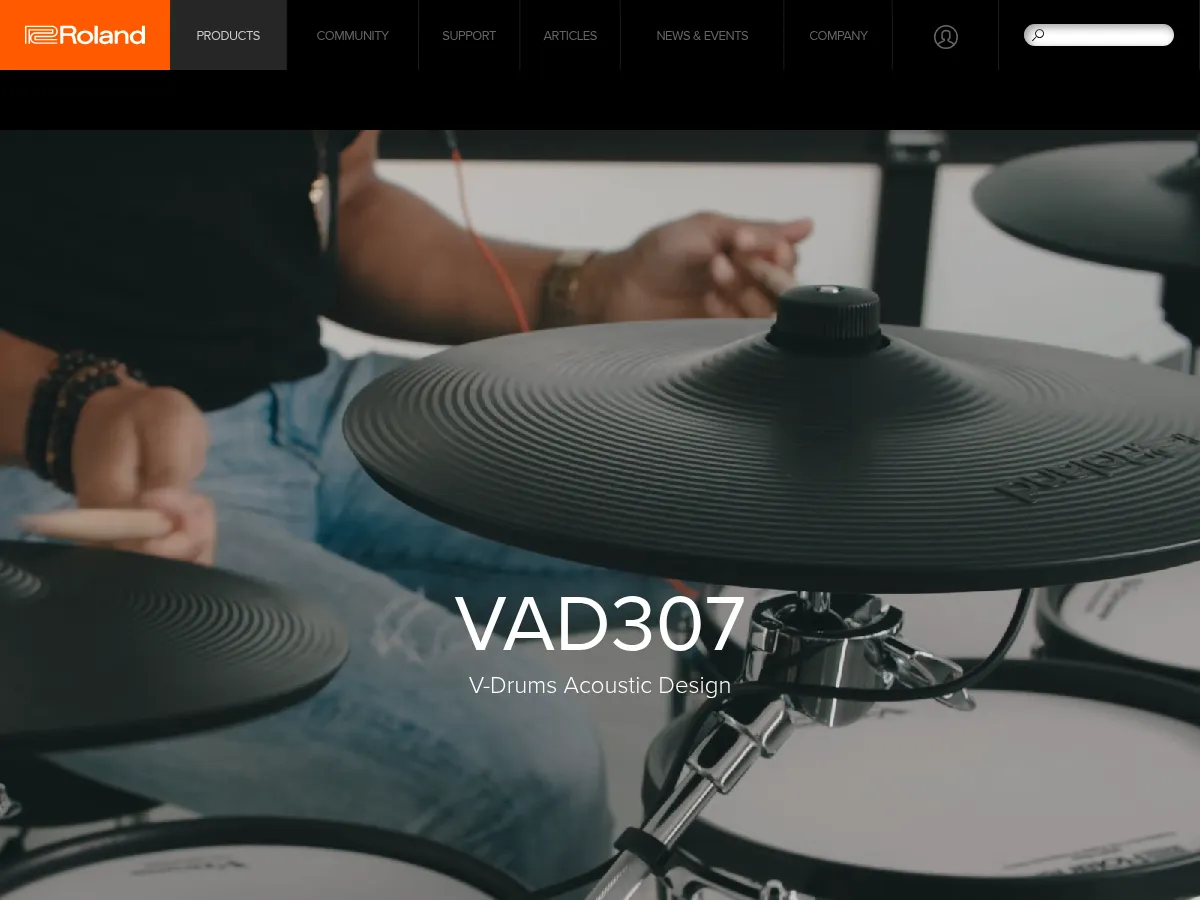
 Roland VAD307
Roland
$2,799
Intermediate
Malaysia
Mid-range V-Drums Acoustic Design kit with wooden shells, TD-17 module, and mesh heads combining the look of acoustic drums with electronic convenience.
Roland VAD307
Roland
$2,799
Intermediate
Malaysia
Mid-range V-Drums Acoustic Design kit with wooden shells, TD-17 module, and mesh heads combining the look of acoustic drums with electronic convenience.
 9
4.4
9
4.4
 Yamaha DTX6K-X
Yamaha
$1,499
Intermediate
China
Mid-range electronic kit with TCS silicone heads and KIT MODIFIER technology, delivering authentic acoustic drum character with real-time ambient and tonal adjustments.
Yamaha DTX6K-X
Yamaha
$1,499
Intermediate
China
Mid-range electronic kit with TCS silicone heads and KIT MODIFIER technology, delivering authentic acoustic drum character with real-time ambient and tonal adjustments.
 10
4.3
10
4.3
 Roland TD-07KV
Roland
$899
Beginner
Malaysia
Entry-level electronic drum kit with mesh heads on all pads, Bluetooth audio streaming, and built-in coaching features at an accessible price point.
Roland TD-07KV
Roland
$899
Beginner
Malaysia
Entry-level electronic drum kit with mesh heads on all pads, Bluetooth audio streaming, and built-in coaching features at an accessible price point.
 11
4.3
11
4.3
 Alesis Strike Pro Special Edition
Alesis
$1,999
Advanced
China
The Alesis Strike Pro Special Edition is a flagship electronic drum kit with full-size mesh pads up to 14 inches, a 16-inch three-zone ride cymbal, and over 1,800 sounds, delivering a playing experience that mirrors the physical scale of a real acoustic kit.
Alesis Strike Pro Special Edition
Alesis
$1,999
Advanced
China
The Alesis Strike Pro Special Edition is a flagship electronic drum kit with full-size mesh pads up to 14 inches, a 16-inch three-zone ride cymbal, and over 1,800 sounds, delivering a playing experience that mirrors the physical scale of a real acoustic kit.
 12
4.2
12
4.2
 Simmons Titan 70
Simmons
$699
Beginner
China
Full-featured electronic kit with mesh head pads, 450+ sounds, and coaching functions delivering capable performance at a competitive budget price.
Simmons Titan 70
Simmons
$699
Beginner
China
Full-featured electronic kit with mesh head pads, 450+ sounds, and coaching functions delivering capable performance at a competitive budget price.
 13
4.2
13
4.2
 Yamaha DTX432K
Yamaha
$549
Beginner
China
Budget-friendly electronic drum kit with silicone pads and a gamified training app, offering reliable Yamaha quality and a compact footprint for beginning drummers.
Yamaha DTX432K
Yamaha
$549
Beginner
China
Budget-friendly electronic drum kit with silicone pads and a gamified training app, offering reliable Yamaha quality and a compact footprint for beginning drummers.
 14
4.1
14
4.1
 Alesis Nitro Max
Alesis
$349
Beginner
China
The Alesis Nitro Max is an affordable mesh-head electronic drum kit with Bluetooth audio streaming and 440 sounds, providing a quiet, natural-feeling practice setup that makes it an ideal starter kit for new drummers in apartments and shared spaces.
Alesis Nitro Max
Alesis
$349
Beginner
China
The Alesis Nitro Max is an affordable mesh-head electronic drum kit with Bluetooth audio streaming and 440 sounds, providing a quiet, natural-feeling practice setup that makes it an ideal starter kit for new drummers in apartments and shared spaces.
 15
3.9
15
3.9
 Alesis Surge Mesh
Alesis
$449
Beginner
China
The Alesis Surge Mesh is a budget-friendly eight-piece electronic drum kit offering mesh heads across all pads with USB sample loading, making it one of the most affordable ways to experience quiet, natural-feeling mesh-head drumming at home.
Alesis Surge Mesh
Alesis
$449
Beginner
China
The Alesis Surge Mesh is a budget-friendly eight-piece electronic drum kit offering mesh heads across all pads with USB sample loading, making it one of the most affordable ways to experience quiet, natural-feeling mesh-head drumming at home.
 16
3.7
16
3.7
 Donner DED-200
Donner
$299
Beginner
China
A budget-friendly electronic drum kit with mesh heads on all pads that provides 225 sounds across 20 kits, plus USB-MIDI output for virtual instrument triggering, making it practical for apartment practice.
Donner DED-200
Donner
$299
Beginner
China
A budget-friendly electronic drum kit with mesh heads on all pads that provides 225 sounds across 20 kits, plus USB-MIDI output for virtual instrument triggering, making it practical for apartment practice.