Cymbals - Directory w/ AI Reviews
Hi-hats, crashes, rides, and splash cymbals from top brands
Cymbals are circular metal plates that produce a wide range of sounds from shimmering washes to sharp, cutting accents. They are essential components of drum kits and orchestral percussion sections, providing rhythmic punctuation and tonal color. Cymbal types include hi-hats, rides, crashes, splashes, and chinas, each serving distinct musical roles.
History
Cymbals originated in Asia Minor and China thousands of years ago, with early examples found in ancient Turkish, Chinese, and Indian cultures. The Zildjian company, founded in Constantinople in 1623 by Avedis Zildjian, has been making cymbals for over 400 years using a secret alloy. Modern cymbal manufacturing was shaped by Turkish and Italian craftsmanship traditions, with Zildjian, Sabian, Meinl, and Paiste dominating the market.
Characteristics
Cymbals are typically made from bronze alloys, most commonly B20 (80% copper, 20% tin) or B8 (92% copper, 8% tin). Hammering and lathing during manufacturing determine the cymbal's tone, sustain, and brightness. Thinner cymbals respond faster and produce darker, trashier tones, while thicker cymbals are louder, brighter, and more cutting.
Notable Players
Avedis Zildjian developed the cymbal alloy that has been a closely guarded family secret for four centuries. Elvin Jones's explosive, polyrhythmic cymbal work with John Coltrane redefined jazz drumming. Art Blakey's powerful ride cymbal technique drove the hard bop movement and influenced generations of jazz drummers.
Fun Facts
The Zildjian company is one of the oldest continuously operating businesses in the world, predating the United States by over 150 years. A single cymbal can contain over 5,000 individual hammer strikes during the manufacturing process.
 1
4.8
1
4.8
 Meinl Byzance 18" Dark Crash
Meinl
$429
Advanced
Turkey
A hand-hammered 18-inch Turkish B20 bronze crash cymbal with warm, complex tone and fast explosive response, designed for jazz, acoustic, and studio contexts.
Meinl Byzance 18" Dark Crash
Meinl
$429
Advanced
Turkey
A hand-hammered 18-inch Turkish B20 bronze crash cymbal with warm, complex tone and fast explosive response, designed for jazz, acoustic, and studio contexts.
 2
4.8
2
4.8
 Meinl Byzance 20" Vintage Sand Ride
Meinl
$519
Professional
Turkey
An extraordinarily dry ride cymbal with sandblasted matte finish producing crystalline stick definition and almost no sustain, beloved by jazz, gospel, and neo-soul drummers.
Meinl Byzance 20" Vintage Sand Ride
Meinl
$519
Professional
Turkey
An extraordinarily dry ride cymbal with sandblasted matte finish producing crystalline stick definition and almost no sustain, beloved by jazz, gospel, and neo-soul drummers.
 3
4.8
3
4.8
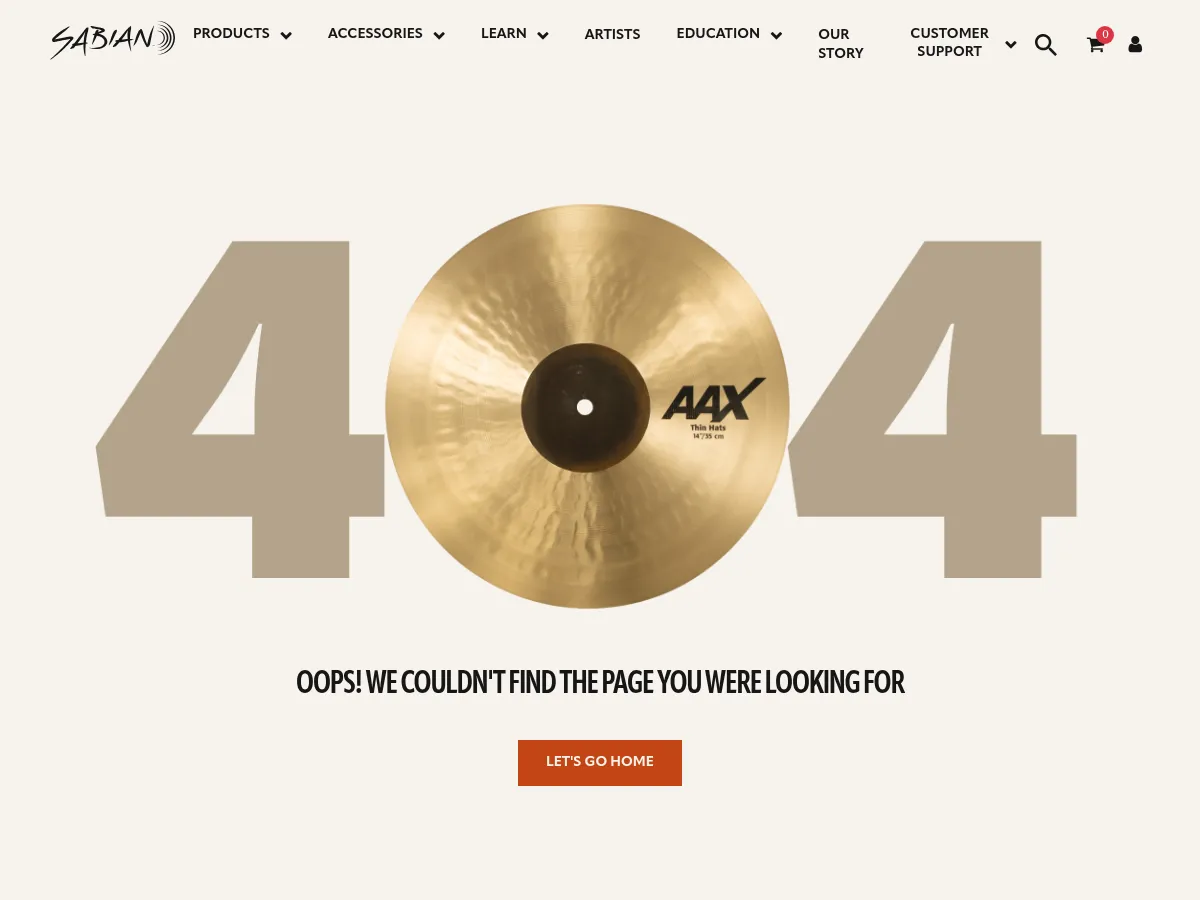
 Sabian HHX 21" Raw Bell Dry Ride
Sabian
$529
Professional
Canada
Hand-hammered B20 bronze ride with raw unlathed bell and controlled dryness, standard equipment for gospel, R&B, and modern pop session drummers.
Sabian HHX 21" Raw Bell Dry Ride
Sabian
$529
Professional
Canada
Hand-hammered B20 bronze ride with raw unlathed bell and controlled dryness, standard equipment for gospel, R&B, and modern pop session drummers.
 4
4.8
4
4.8
 Zildjian A 18" Medium Thin Crash
Zildjian
$329
Intermediate
United States
Classic B20 bronze crash cymbal with a warm, full-bodied sound and smooth decay, a mainstay in professional drumming that helped define the modern crash cymbal voice.
Zildjian A 18" Medium Thin Crash
Zildjian
$329
Intermediate
United States
Classic B20 bronze crash cymbal with a warm, full-bodied sound and smooth decay, a mainstay in professional drumming that helped define the modern crash cymbal voice.
 5
4.8
5
4.8
 Zildjian K 14" Hi-Hats
Zildjian
$549
Professional
United States
Legendary hand-hammered hi-hats with a dark, complex voice and woody articulation, setting the gold standard for jazz, session, and studio drumming for decades.
Zildjian K 14" Hi-Hats
Zildjian
$549
Professional
United States
Legendary hand-hammered hi-hats with a dark, complex voice and woody articulation, setting the gold standard for jazz, session, and studio drumming for decades.
 6
4.8
6
4.8
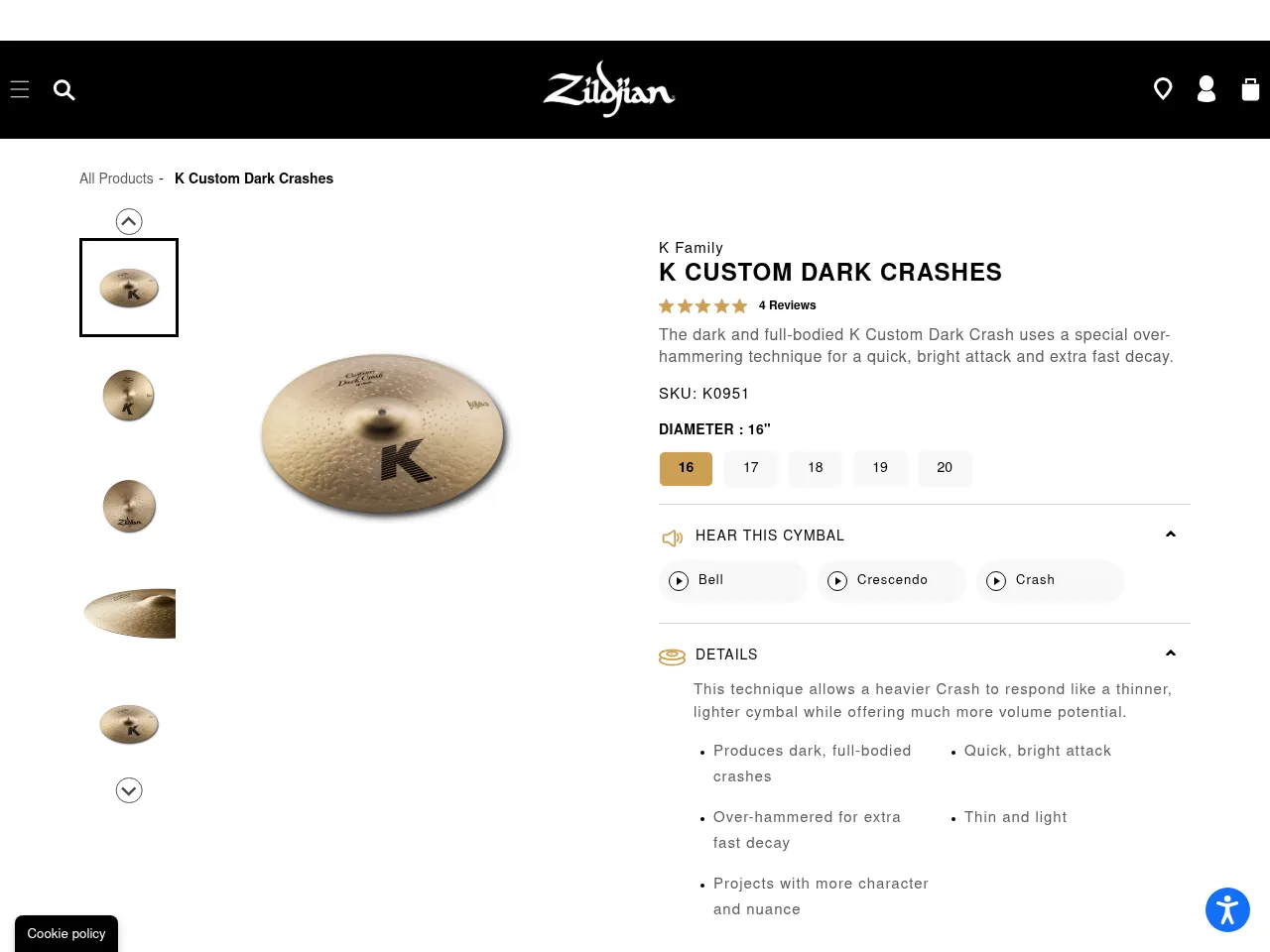
 Zildjian K 18-inch Dark Crash
Zildjian
$349
Professional
United States
Thin hand-hammered dark crash with warm, fast response and smooth musical decay, prized by jazz and session drummers for its rich complexity and recording quality.
Zildjian K 18-inch Dark Crash
Zildjian
$349
Professional
United States
Thin hand-hammered dark crash with warm, fast response and smooth musical decay, prized by jazz and session drummers for its rich complexity and recording quality.
 7
4.8
7
4.8
 Zildjian K Custom 20" Dark Ride
Zildjian
$449
Professional
United States
Sophisticated dark ride with dry stick definition and complex overtone layers, a favorite among jazz and fusion drummers who demand nuanced, musical cymbal articulation.
Zildjian K Custom 20" Dark Ride
Zildjian
$449
Professional
United States
Sophisticated dark ride with dry stick definition and complex overtone layers, a favorite among jazz and fusion drummers who demand nuanced, musical cymbal articulation.
 8
4.7
8
4.7
 Sabian AAX 14" Medium Hi-Hats
Sabian
$449
Intermediate
Canada
Versatile B20 bronze hi-hats with crisp chick sound and clean stick definition, one of the most popular hi-hat choices across rock, pop, and worship.
Sabian AAX 14" Medium Hi-Hats
Sabian
$449
Intermediate
Canada
Versatile B20 bronze hi-hats with crisp chick sound and clean stick definition, one of the most popular hi-hat choices across rock, pop, and worship.
 9
4.7
9
4.7
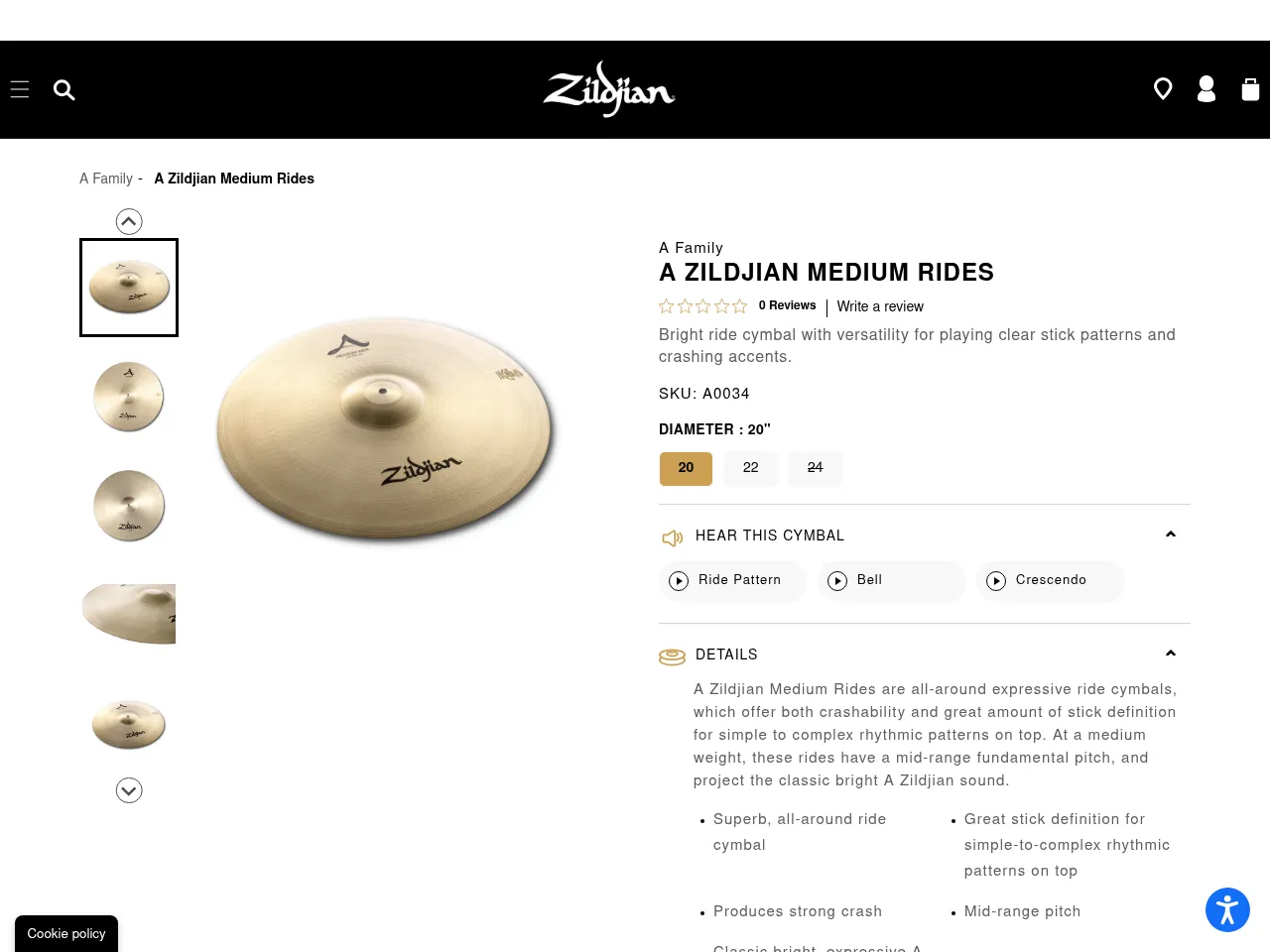
 Zildjian A 20-inch Medium Ride
Zildjian
$349
Intermediate
United States
Versatile medium-weight ride cymbal delivering clear stick definition with a warm musical wash, one of the most widely used and recorded ride cymbals in popular music.
Zildjian A 20-inch Medium Ride
Zildjian
$349
Intermediate
United States
Versatile medium-weight ride cymbal delivering clear stick definition with a warm musical wash, one of the most widely used and recorded ride cymbals in popular music.
 10
4.7
10
4.7
 Zildjian A Custom 10" Splash
Zildjian
$179
Intermediate
United States
Bright, quick 10-inch splash cymbal with a brilliant finish and glassy refined tone, providing instant shimmering accents with short, controlled sustain.
Zildjian A Custom 10" Splash
Zildjian
$179
Intermediate
United States
Bright, quick 10-inch splash cymbal with a brilliant finish and glassy refined tone, providing instant shimmering accents with short, controlled sustain.
 11
4.7
11
4.7
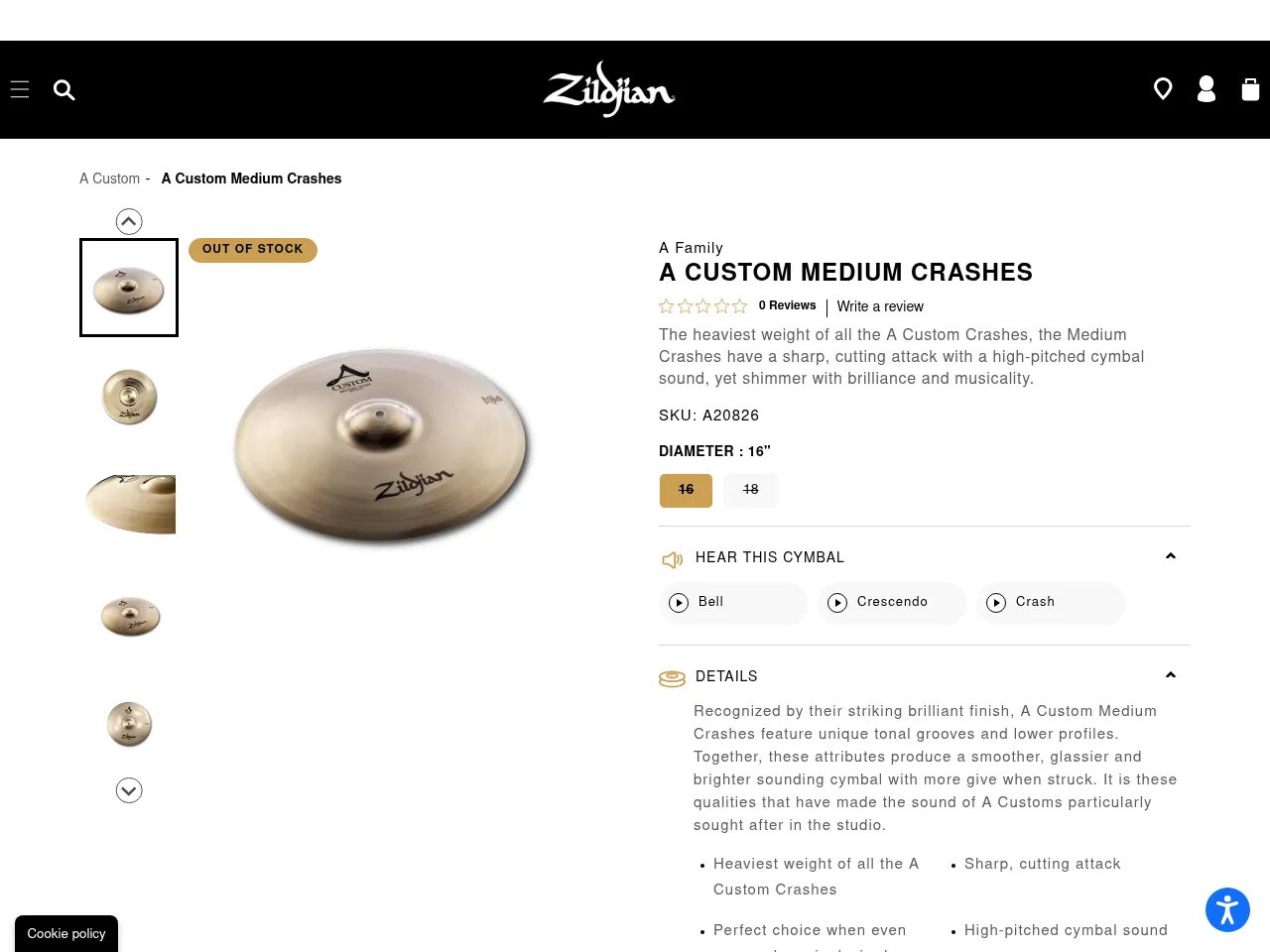
 Zildjian A Custom 16" Medium Crash
Zildjian
$299
Intermediate
United States
Industry-standard 16-inch crash with a bright, shimmering brilliant finish and fast attack, delivering versatile performance across rock, pop, jazz, and worship settings.
Zildjian A Custom 16" Medium Crash
Zildjian
$299
Intermediate
United States
Industry-standard 16-inch crash with a bright, shimmering brilliant finish and fast attack, delivering versatile performance across rock, pop, jazz, and worship settings.
 12
4.6
12
4.6
 Sabian AAX 18" Chinese Cymbal
Sabian
$349
Advanced
Canada
Powerful 18-inch Chinese effects cymbal with upturned flange delivering explosive, trashy crash tones that cut through even the loudest band settings.
Sabian AAX 18" Chinese Cymbal
Sabian
$349
Advanced
Canada
Powerful 18-inch Chinese effects cymbal with upturned flange delivering explosive, trashy crash tones that cut through even the loudest band settings.
 13
4.6
13
4.6
 Sabian AAX 20-inch Medium Ride
Sabian
$329
Intermediate
Canada
Bright, articulate 20-inch ride cymbal with excellent stick definition and controlled wash, well suited for rock, pop, and contemporary drumming.
Sabian AAX 20-inch Medium Ride
Sabian
$329
Intermediate
Canada
Bright, articulate 20-inch ride cymbal with excellent stick definition and controlled wash, well suited for rock, pop, and contemporary drumming.
 14
4.2
14
4.2
 Sabian B8X 16" Thin Crash
Sabian
$109
Beginner
Canada
Budget-friendly 16-inch B8 bronze crash with fast, responsive attack and clean decay, the go-to recommendation for beginning drummers building their first setup.
Sabian B8X 16" Thin Crash
Sabian
$109
Beginner
Canada
Budget-friendly 16-inch B8 bronze crash with fast, responsive attack and clean decay, the go-to recommendation for beginning drummers building their first setup.
 15
3.7
15
3.7
 Meinl HCS 20" Ride
Meinl
$65
Beginner
Germany
An entry-level brass alloy ride cymbal providing functional stick definition and bell accents at the most affordable price, suitable for beginning drummers and school programs.
Meinl HCS 20" Ride
Meinl
$65
Beginner
Germany
An entry-level brass alloy ride cymbal providing functional stick definition and bell accents at the most affordable price, suitable for beginning drummers and school programs.