Audio Interfaces - Directory w/ AI Reviews
USB and Thunderbolt audio interfaces for recording
Audio interfaces are hardware devices that convert analog audio signals (from microphones and instruments) into digital data for recording on a computer, and vice versa. They are the essential bridge between the analog world of sound and the digital world of music production. Every home studio, podcast setup, and professional recording environment relies on an audio interface.
History
Early digital recording required expensive, dedicated hardware from companies like Digidesign (Pro Tools) and Apogee. The advent of USB in the late 1990s enabled affordable desktop audio interfaces, democratizing home recording. Focusrite's Scarlett series, launched in 2012, became the best-selling audio interface line by making professional-quality recording accessible to beginners.
Characteristics
Audio interfaces feature microphone preamps with phantom power, instrument inputs for guitars and basses, and line inputs for keyboards and outboard gear. Key specifications include sample rate (44.1 kHz to 192 kHz), bit depth (typically 24-bit), and round-trip latency. Connectivity options include USB, Thunderbolt, and USB-C, with Thunderbolt offering the lowest latency.
Notable Players
Focusrite's Scarlett 2i2 is the world's best-selling audio interface, found in bedrooms and studios worldwide. Universal Audio's Apollo series pioneered real-time DSP processing for plugin emulations of classic analog hardware. RME interfaces are the industry standard for professional studios demanding ultra-low latency and rock-solid driver stability.
Fun Facts
A modern $150 audio interface can achieve recording quality that would have required $50,000 worth of equipment in the 1990s. The latency of a good audio interface (under 5 milliseconds) is faster than the speed of sound traveling 5 feet through air.
 1
4.9
1
4.9
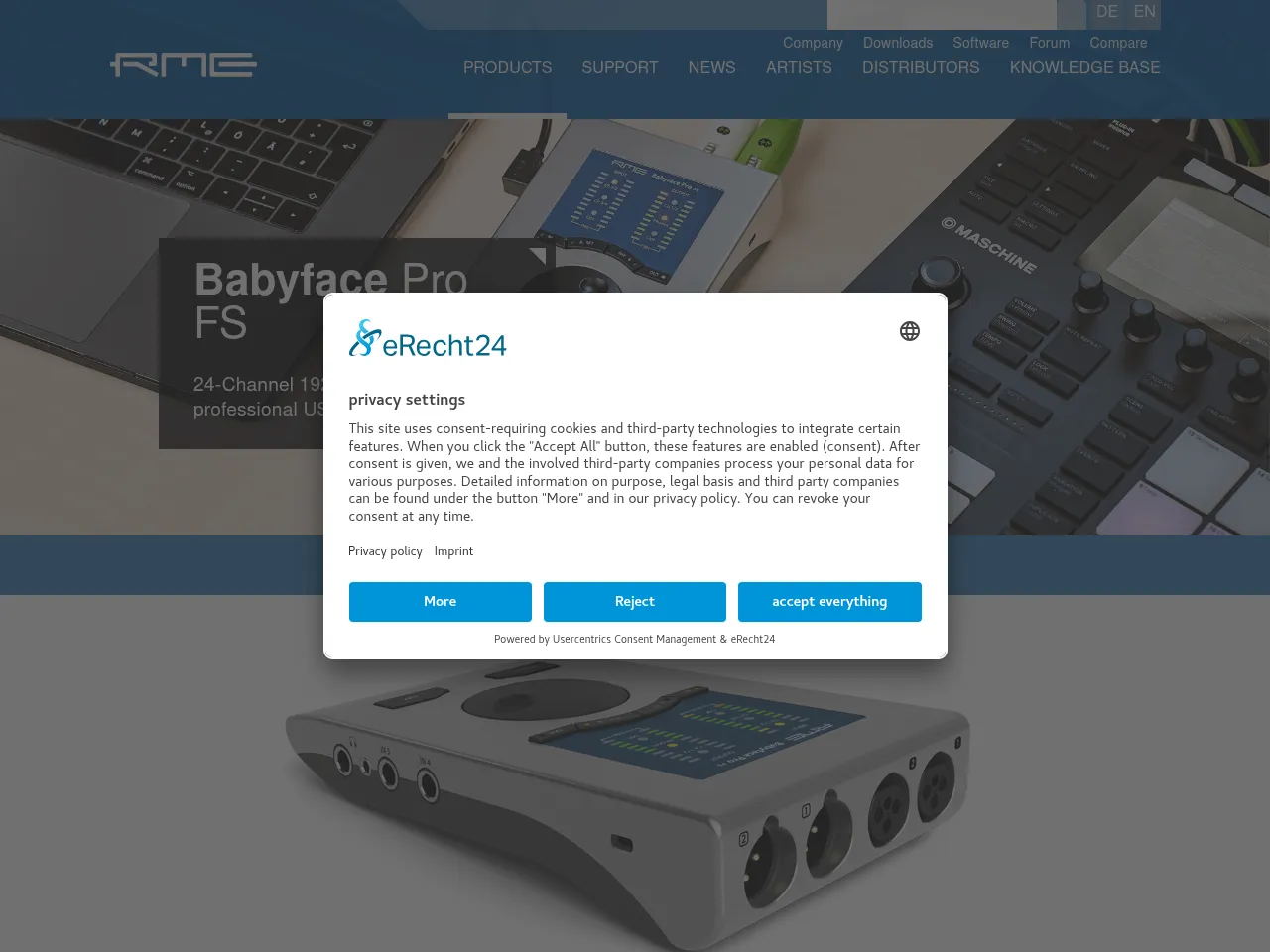
 RME Babyface Pro FS
RME
$879
Professional
Germany
Portable professional USB interface with SteadyClock FS jitter reduction and TotalMix FX DSP mixer, delivering reference-class conversion in a compact format.
RME Babyface Pro FS
RME
$879
Professional
Germany
Portable professional USB interface with SteadyClock FS jitter reduction and TotalMix FX DSP mixer, delivering reference-class conversion in a compact format.
 2
4.8
2
4.8
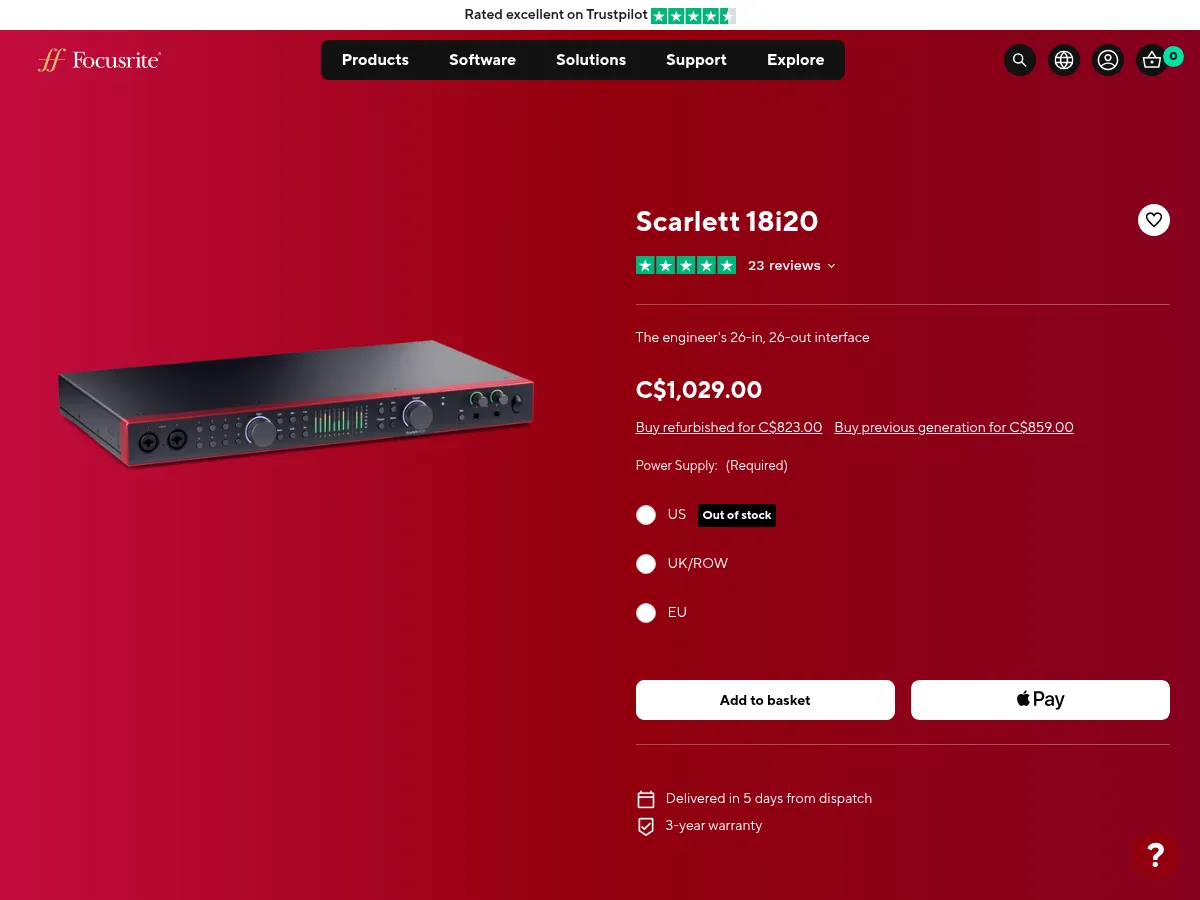
 Focusrite Scarlett 18i20 4th Gen
Focusrite
$549
Professional
China
A rack-mountable 18-in/20-out interface with eight upgraded Scarlett preamps and ADAT expansion, designed for full-band recording sessions with comprehensive routing and dual MIDI connections.
Focusrite Scarlett 18i20 4th Gen
Focusrite
$549
Professional
China
A rack-mountable 18-in/20-out interface with eight upgraded Scarlett preamps and ADAT expansion, designed for full-band recording sessions with comprehensive routing and dual MIDI connections.
 3
4.8
3
4.8
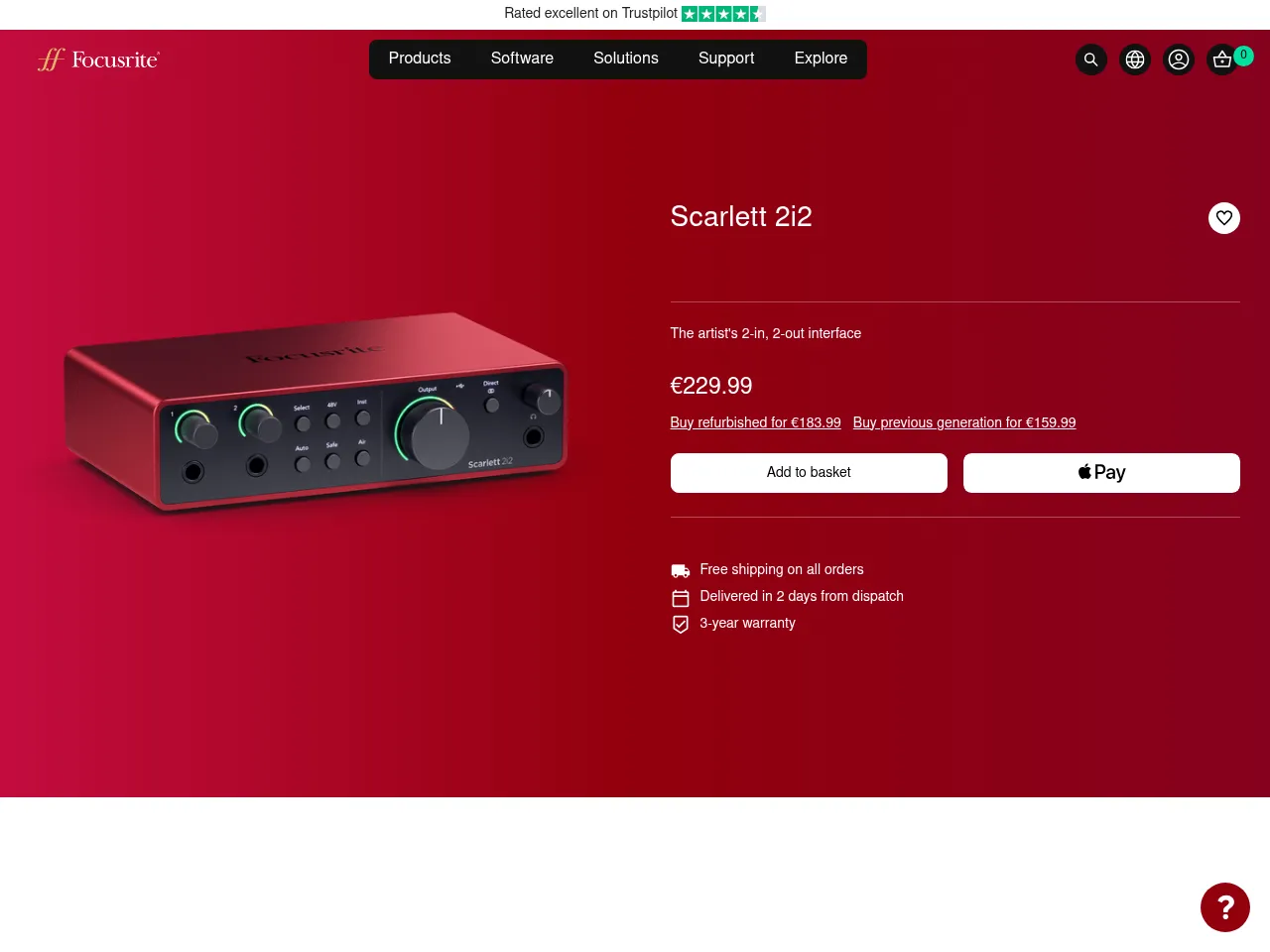
 Focusrite Scarlett 2i2 4th Gen
Focusrite
$189
Beginner
China
The world's best-selling audio interface with redesigned preamps offering 69dB of gain, Air mode for ISA-style shimmer, and Auto Gain for beginners, all in a bus-powered aluminum enclosure.
Focusrite Scarlett 2i2 4th Gen
Focusrite
$189
Beginner
China
The world's best-selling audio interface with redesigned preamps offering 69dB of gain, Air mode for ISA-style shimmer, and Auto Gain for beginners, all in a bus-powered aluminum enclosure.
 4
4.8
4
4.8
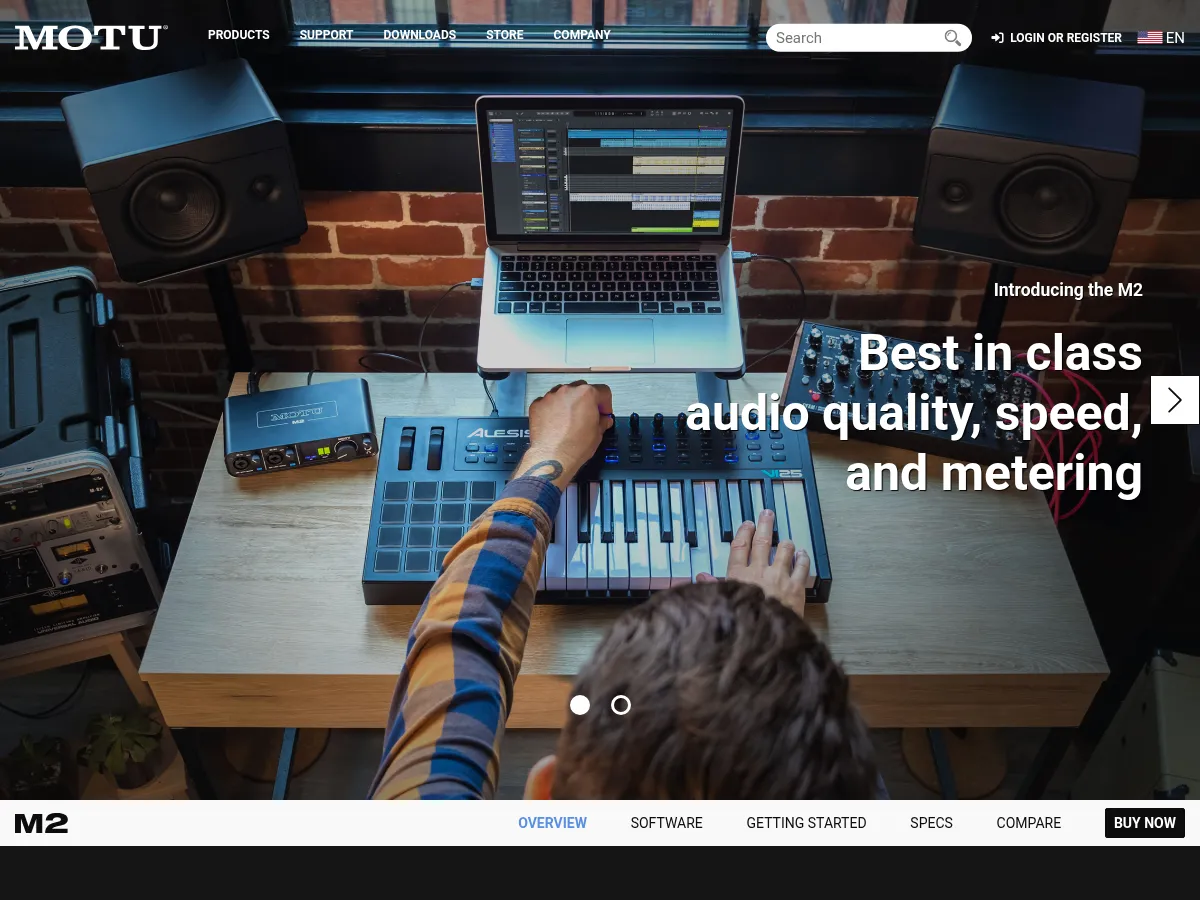
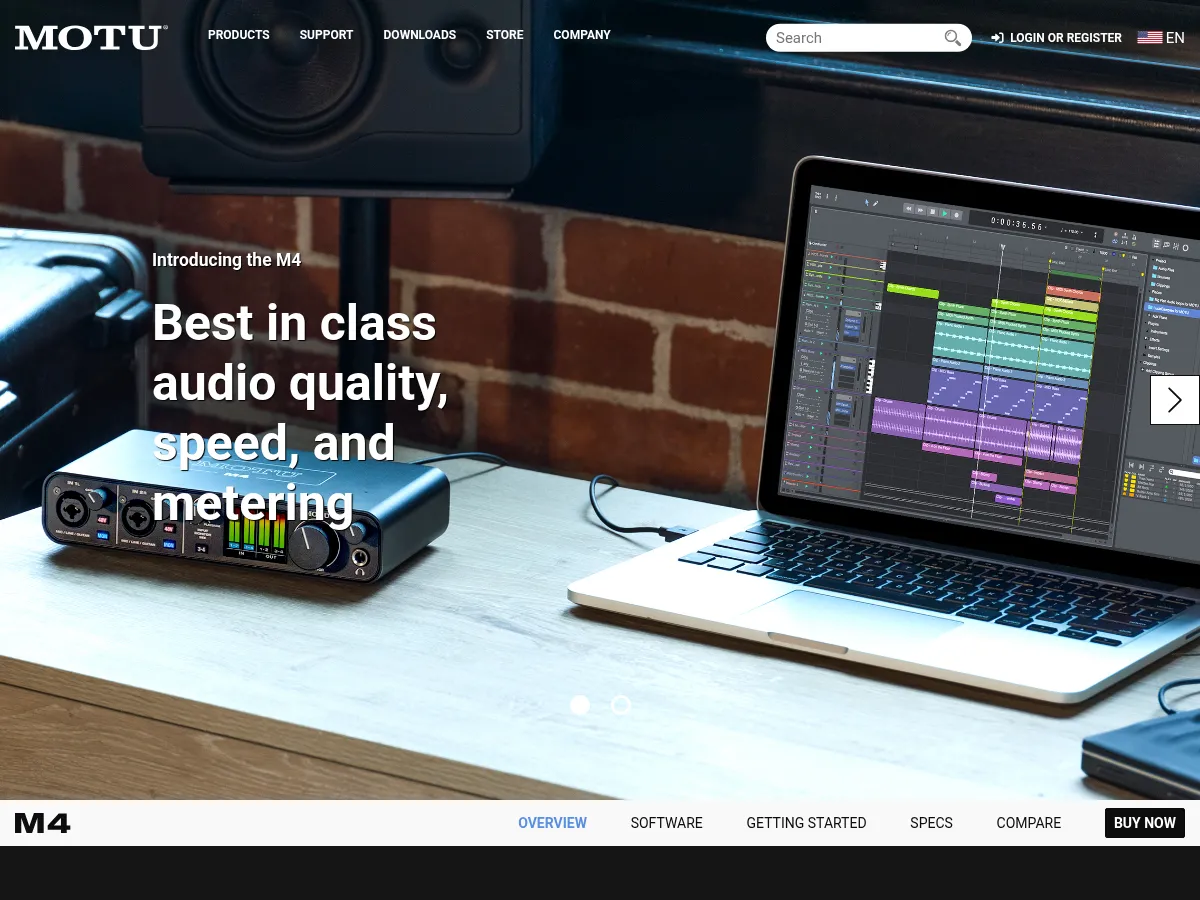
 MOTU M2
MOTU
$199
Intermediate
United States
A two-input USB-C interface with ESS Sabre32 Ultra DAC delivering audiophile-grade 120 dB dynamic range, full-color metering, and loopback function for streaming.
MOTU M2
MOTU
$199
Intermediate
United States
A two-input USB-C interface with ESS Sabre32 Ultra DAC delivering audiophile-grade 120 dB dynamic range, full-color metering, and loopback function for streaming.
 5
4.8
5
4.8
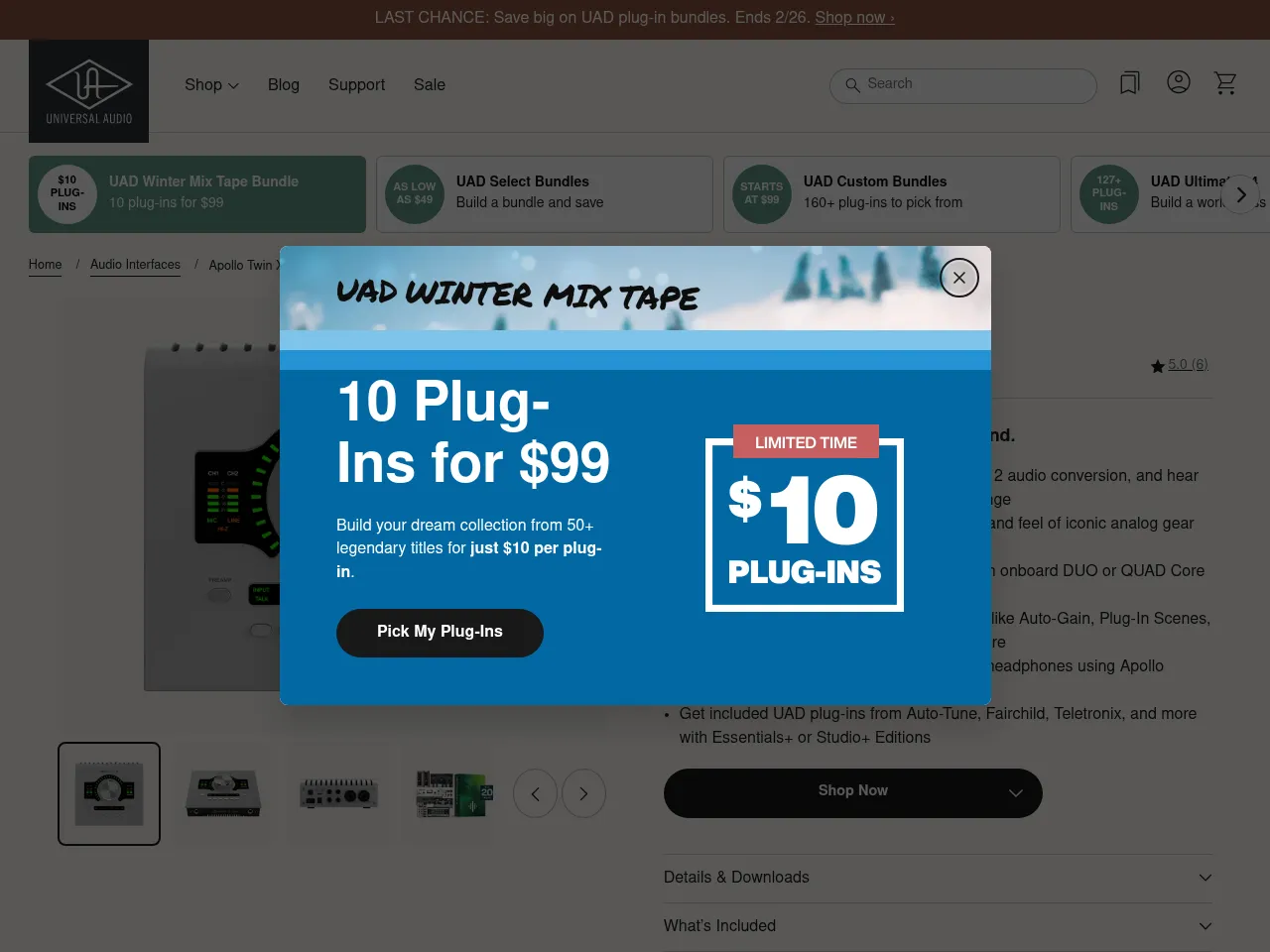
 MOTU M4
MOTU
$269
Intermediate
United States
A four-input interface extending the M-series with ESS Sabre32 DAC quality, dual headphone outputs, four balanced outputs, and additional line inputs for synthesizers and processors.
MOTU M4
MOTU
$269
Intermediate
United States
A four-input interface extending the M-series with ESS Sabre32 DAC quality, dual headphone outputs, four balanced outputs, and additional line inputs for synthesizers and processors.
 6
4.8
6
4.8
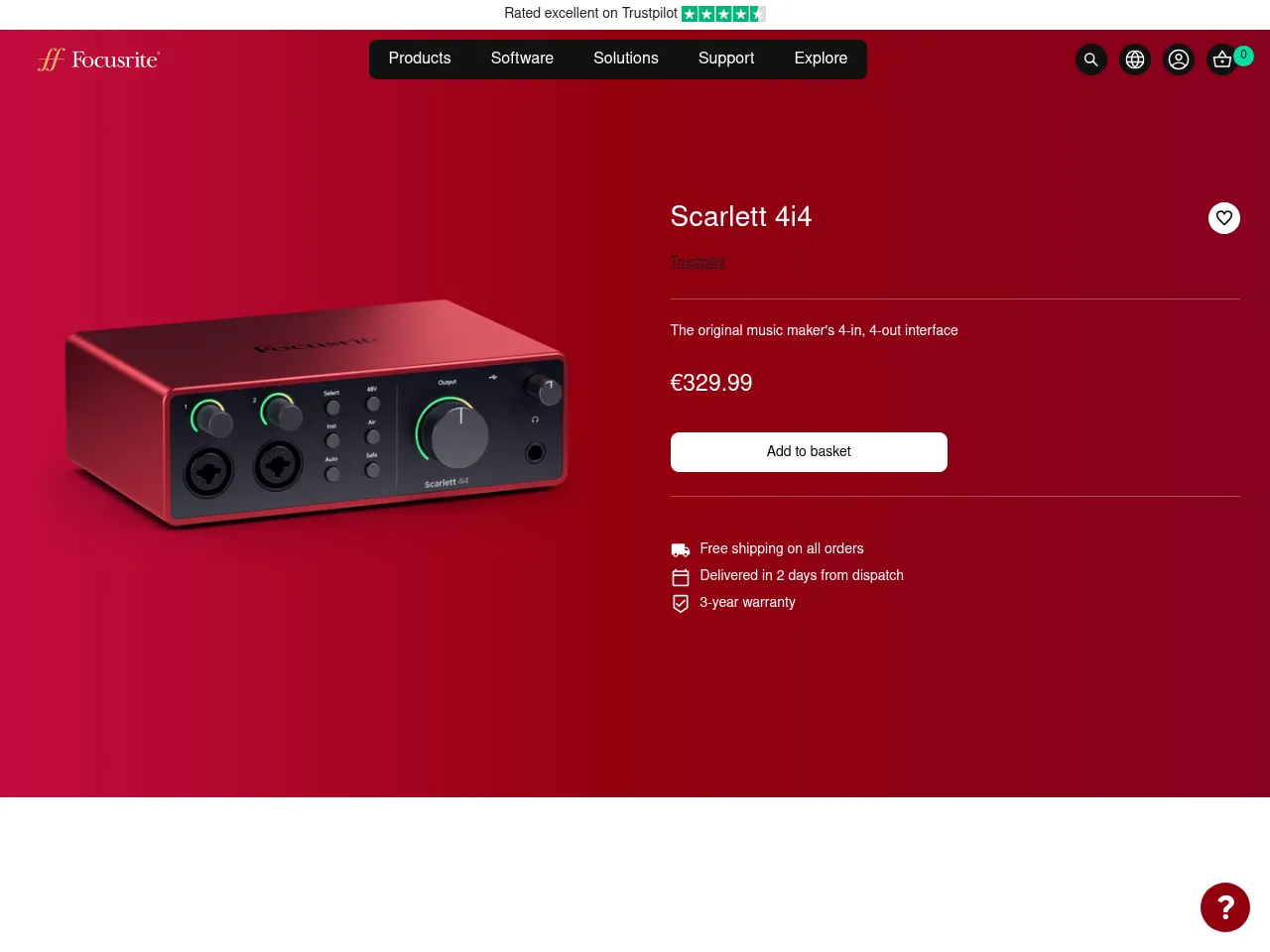
 Universal Audio Apollo Twin X
Universal Audio
$1,399
Professional
United States
Premium Thunderbolt 3 interface with Unison preamp modeling, onboard QUAD DSP for running UAD plugins at near-zero latency, and elite-class conversion.
Universal Audio Apollo Twin X
Universal Audio
$1,399
Professional
United States
Premium Thunderbolt 3 interface with Unison preamp modeling, onboard QUAD DSP for running UAD plugins at near-zero latency, and elite-class conversion.
 7
4.7
7
4.7
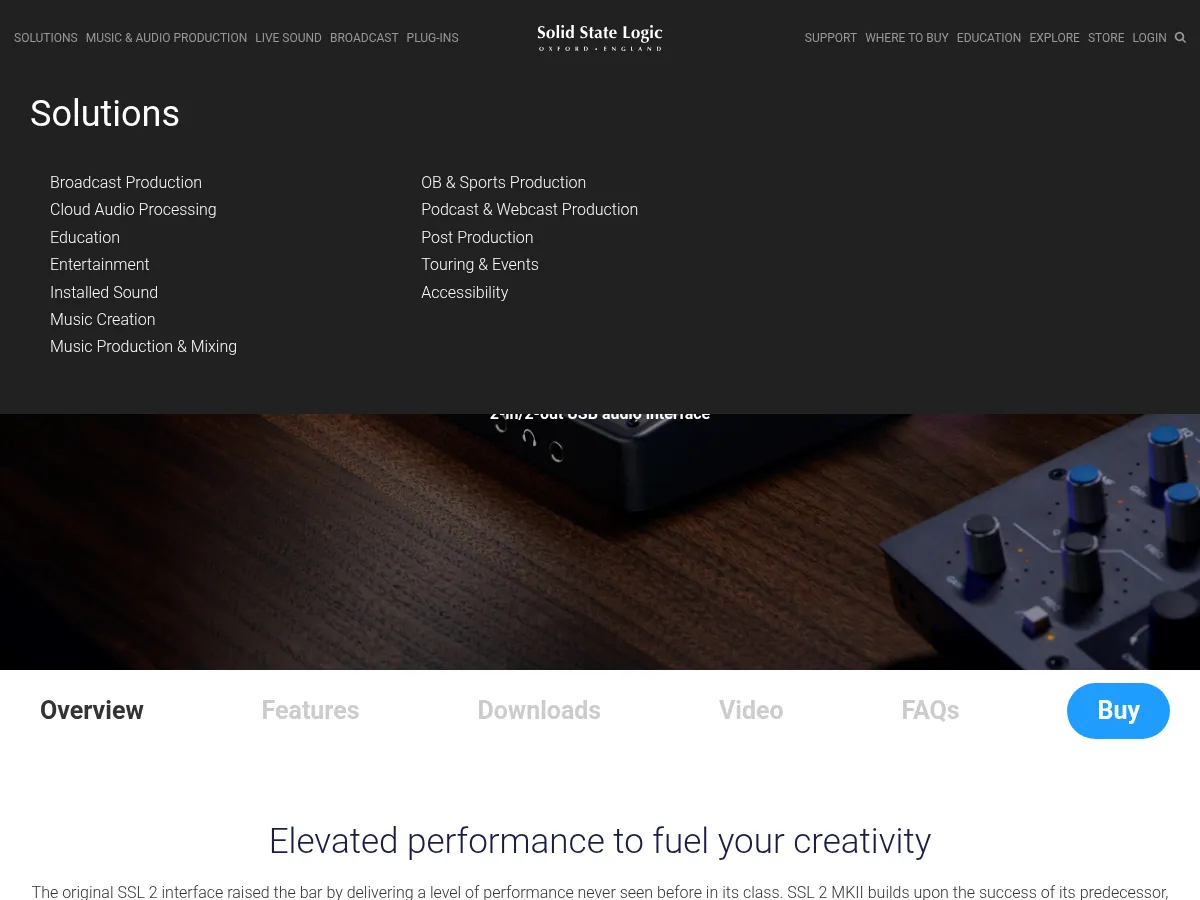
 Focusrite Scarlett 4i4 4th Gen
Focusrite
$279
Intermediate
China
A four-in/four-out interface bridging simple and larger setups with two preamps, rear line inputs, and MIDI I/O, ideal for electronic musicians and producers who need flexible routing with quality conversion.
Focusrite Scarlett 4i4 4th Gen
Focusrite
$279
Intermediate
China
A four-in/four-out interface bridging simple and larger setups with two preamps, rear line inputs, and MIDI I/O, ideal for electronic musicians and producers who need flexible routing with quality conversion.
 8
4.7
8
4.7
 SSL SSL2
SSL
$229
Intermediate
China
Two-input USB-C interface from SSL with 4K Legacy mode engaging analog enhancement inspired by the classic 4000 series console for vintage warmth.
SSL SSL2
SSL
$229
Intermediate
China
Two-input USB-C interface from SSL with 4K Legacy mode engaging analog enhancement inspired by the classic 4000 series console for vintage warmth.
 9
4.7
9
4.7
 SSL SSL2+
SSL
$299
Intermediate
China
Two-input, four-output SSL interface expanding on the SSL2 with additional outputs, two independent headphone outs, and MIDI I/O for collaborative sessions.
SSL SSL2+
SSL
$299
Intermediate
China
Two-input, four-output SSL interface expanding on the SSL2 with additional outputs, two independent headphone outs, and MIDI I/O for collaborative sessions.
 10
4.6
10
4.6
 Focusrite Scarlett Solo 4th Gen
Focusrite
$129
Beginner
China
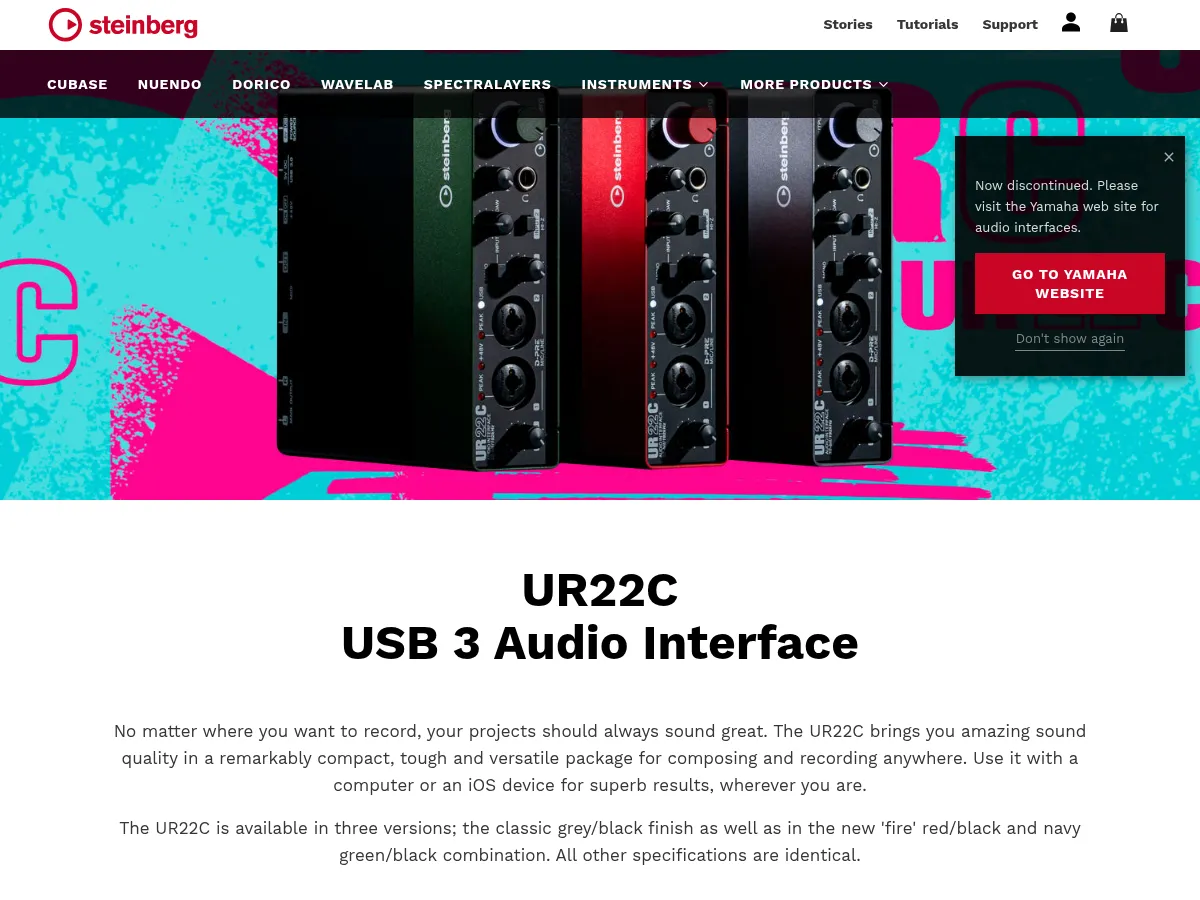
A compact single-channel interface with the same upgraded preamp topology as the full Scarlett range, featuring Air mode, Auto Gain, and bus-powered simplicity for solo recording and podcasting.
Focusrite Scarlett Solo 4th Gen
Focusrite
$129
Beginner
China
A compact single-channel interface with the same upgraded preamp topology as the full Scarlett range, featuring Air mode, Auto Gain, and bus-powered simplicity for solo recording and podcasting.
 11
4.6
11
4.6
 Steinberg UR22C
Steinberg
$169
Intermediate
China
Two-input USB 3.0 interface from the creators of Cubase with D-PRE Class-A preamps, 32-bit/192 kHz conversion, and included Cubase AI software.
Steinberg UR22C
Steinberg
$169
Intermediate
China
Two-input USB 3.0 interface from the creators of Cubase with D-PRE Class-A preamps, 32-bit/192 kHz conversion, and included Cubase AI software.
 12
4.6
12
4.6
 Universal Audio Volt 176
Universal Audio
$229
Beginner
China
Single-channel USB interface with built-in hardware 1176-style compressor and 610-style Vintage preamp mode, bringing classic studio processing into affordable recording.
Universal Audio Volt 176
Universal Audio
$229
Beginner
China
Single-channel USB interface with built-in hardware 1176-style compressor and 610-style Vintage preamp mode, bringing classic studio processing into affordable recording.
 13
4.6
13
4.6
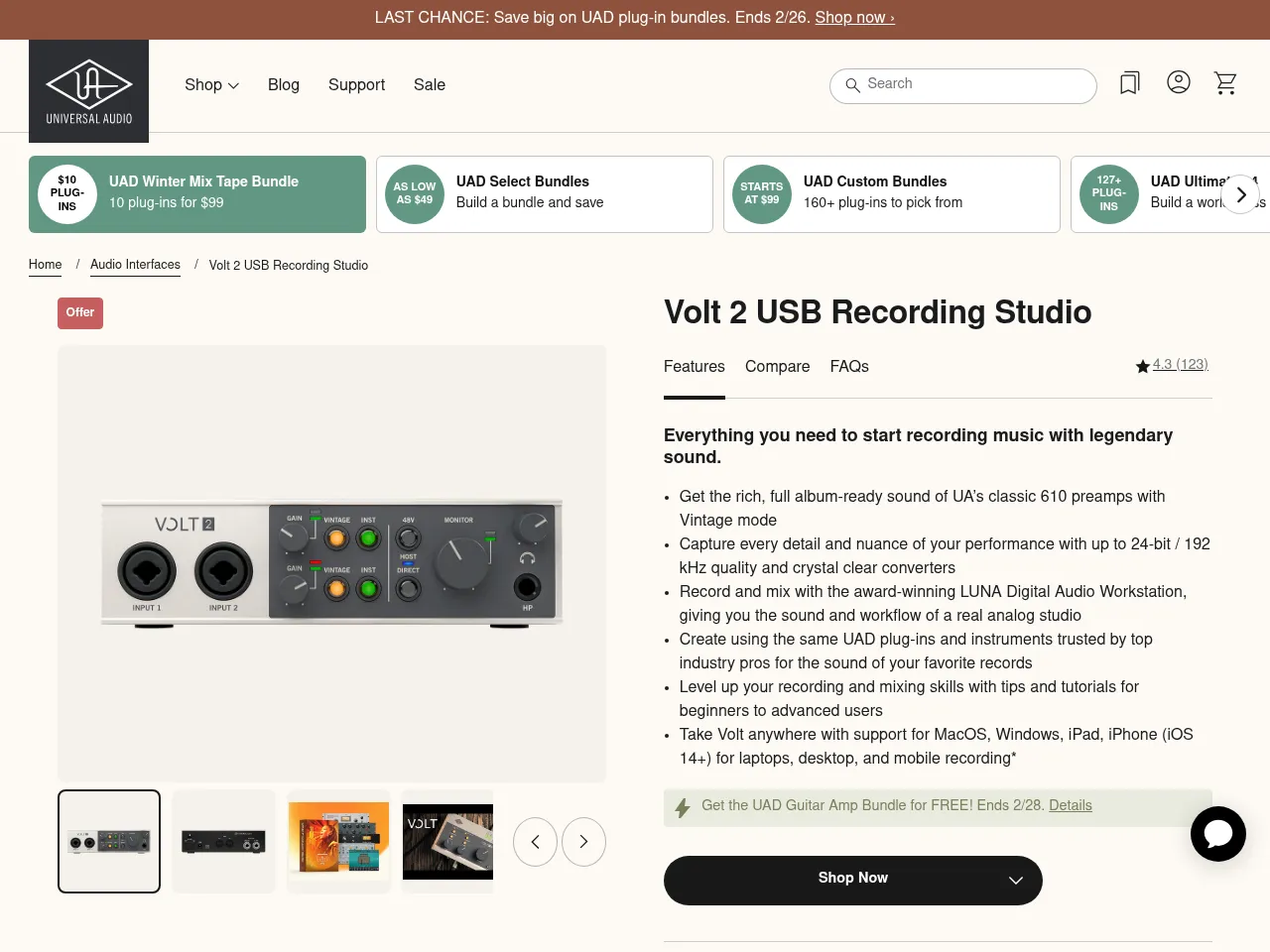
 Universal Audio Volt 2
Universal Audio
$179
Beginner
China
Two-input USB interface with switchable Vintage mode based on UA 610 tube preamp topology, adding hardware analog warmth at a budget-friendly price.
Universal Audio Volt 2
Universal Audio
$179
Beginner
China
Two-input USB interface with switchable Vintage mode based on UA 610 tube preamp topology, adding hardware analog warmth at a budget-friendly price.
 14
4.6
14
4.6
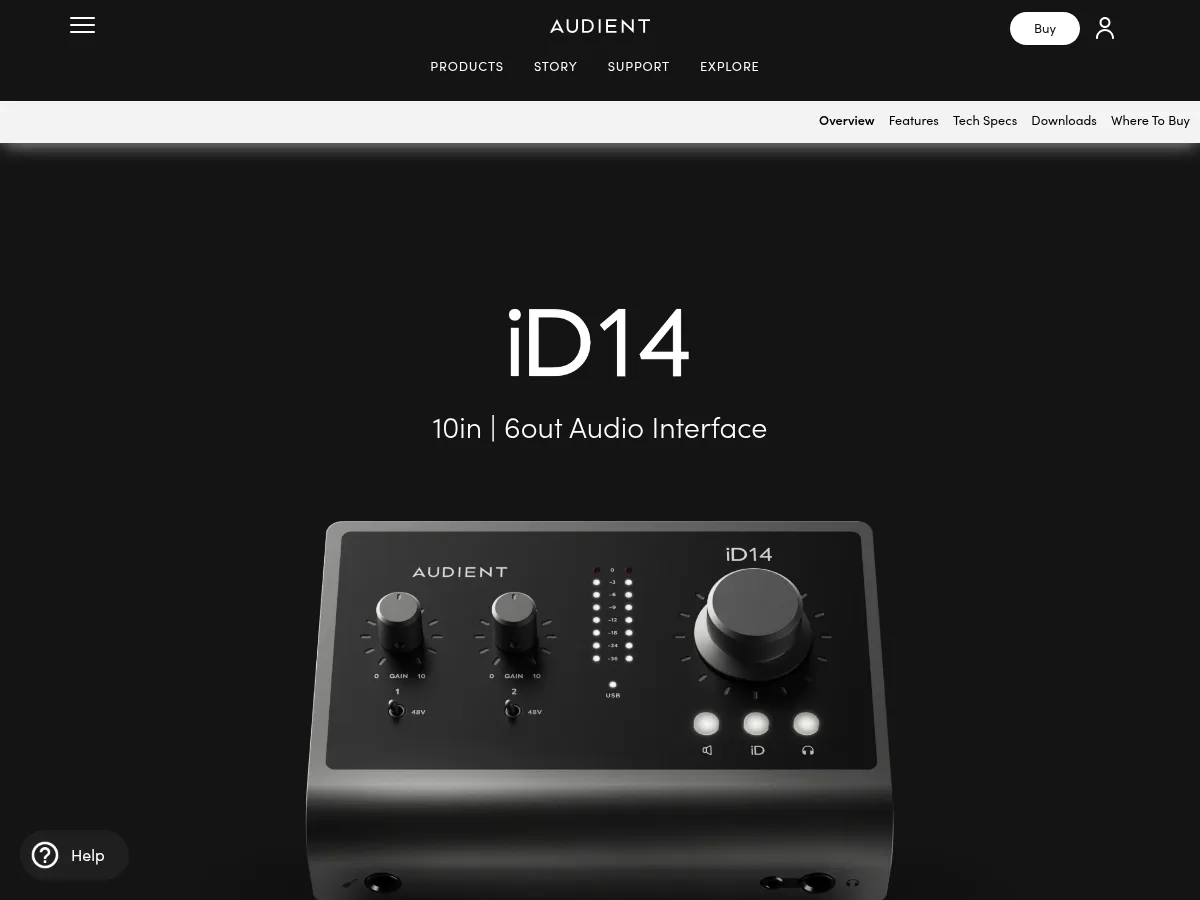
 Audient iD14 MkII
Audient
$299
Intermediate
China
The Audient iD14 MkII delivers console-grade Class A preamps derived from the ASP8024 Heritage Edition in a compact desktop format, with ADAT expansion to ten inputs and over 120 dB dynamic range for discerning home studio producers.
Audient iD14 MkII
Audient
$299
Intermediate
China
The Audient iD14 MkII delivers console-grade Class A preamps derived from the ASP8024 Heritage Edition in a compact desktop format, with ADAT expansion to ten inputs and over 120 dB dynamic range for discerning home studio producers.
 15
4.4
15
4.4
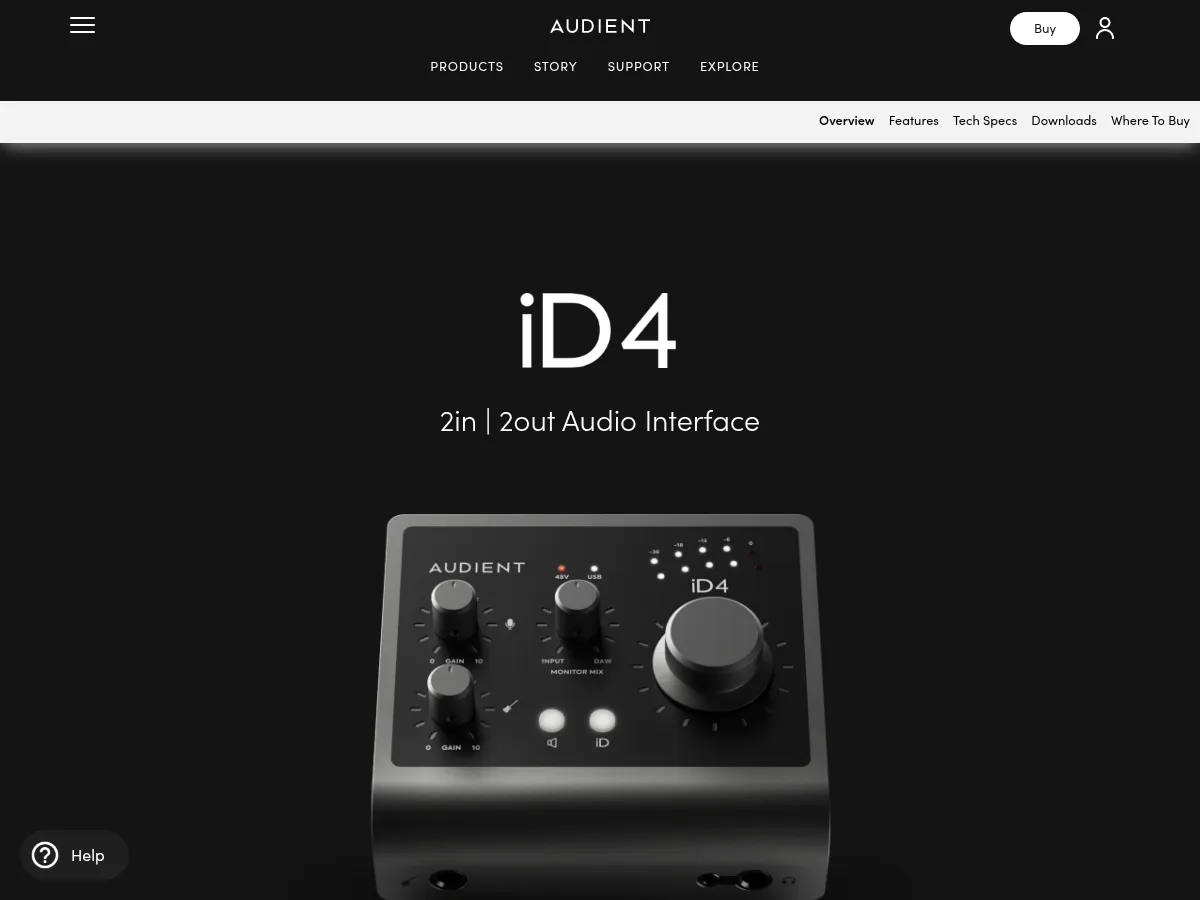
 Audient iD4 MkII
Audient
$199
Intermediate
China
The Audient iD4 MkII punches above its price with a console-quality Class-A preamp, a discrete JFET instrument input, and an ESS Sabre32 DAC, delivering professional recording fidelity for guitarists and vocalists in a premium metal chassis.
Audient iD4 MkII
Audient
$199
Intermediate
China
The Audient iD4 MkII punches above its price with a console-quality Class-A preamp, a discrete JFET instrument input, and an ESS Sabre32 DAC, delivering professional recording fidelity for guitarists and vocalists in a premium metal chassis.
 16
4.4
16
4.4
 PreSonus Studio 24c
PreSonus
$169
Intermediate
China
A USB-C interface with XMAX-L preamps delivering over 100 dB dynamic range at 24-bit/192kHz, MIDI I/O, and included Studio One Artist for intermediate home studios.
PreSonus Studio 24c
PreSonus
$169
Intermediate
China
A USB-C interface with XMAX-L preamps delivering over 100 dB dynamic range at 24-bit/192kHz, MIDI I/O, and included Studio One Artist for intermediate home studios.
 17
4.3
17
4.3
 Native Instruments Komplete Audio 2
Native Instruments
$139
Beginner
China
A two-input interface designed for the NI ecosystem with clean preamps and an extensive software bundle including Maschine Essentials and Komplete instruments at a competitive price.
Native Instruments Komplete Audio 2
Native Instruments
$139
Beginner
China
A two-input interface designed for the NI ecosystem with clean preamps and an extensive software bundle including Maschine Essentials and Komplete instruments at a competitive price.
 18
4.2
18
4.2
 Arturia MiniFuse 2
Arturia
$129
Beginner
China
The Arturia MiniFuse 2 is a stylish two-input USB-C audio interface with clean 56 dB preamps and an exceptional software bundle including Analog Lab Intro and Ableton Live Lite, providing beginners with a complete production-ready recording setup.
Arturia MiniFuse 2
Arturia
$129
Beginner
China
The Arturia MiniFuse 2 is a stylish two-input USB-C audio interface with clean 56 dB preamps and an exceptional software bundle including Analog Lab Intro and Ableton Live Lite, providing beginners with a complete production-ready recording setup.
 19
4.2
19
4.2
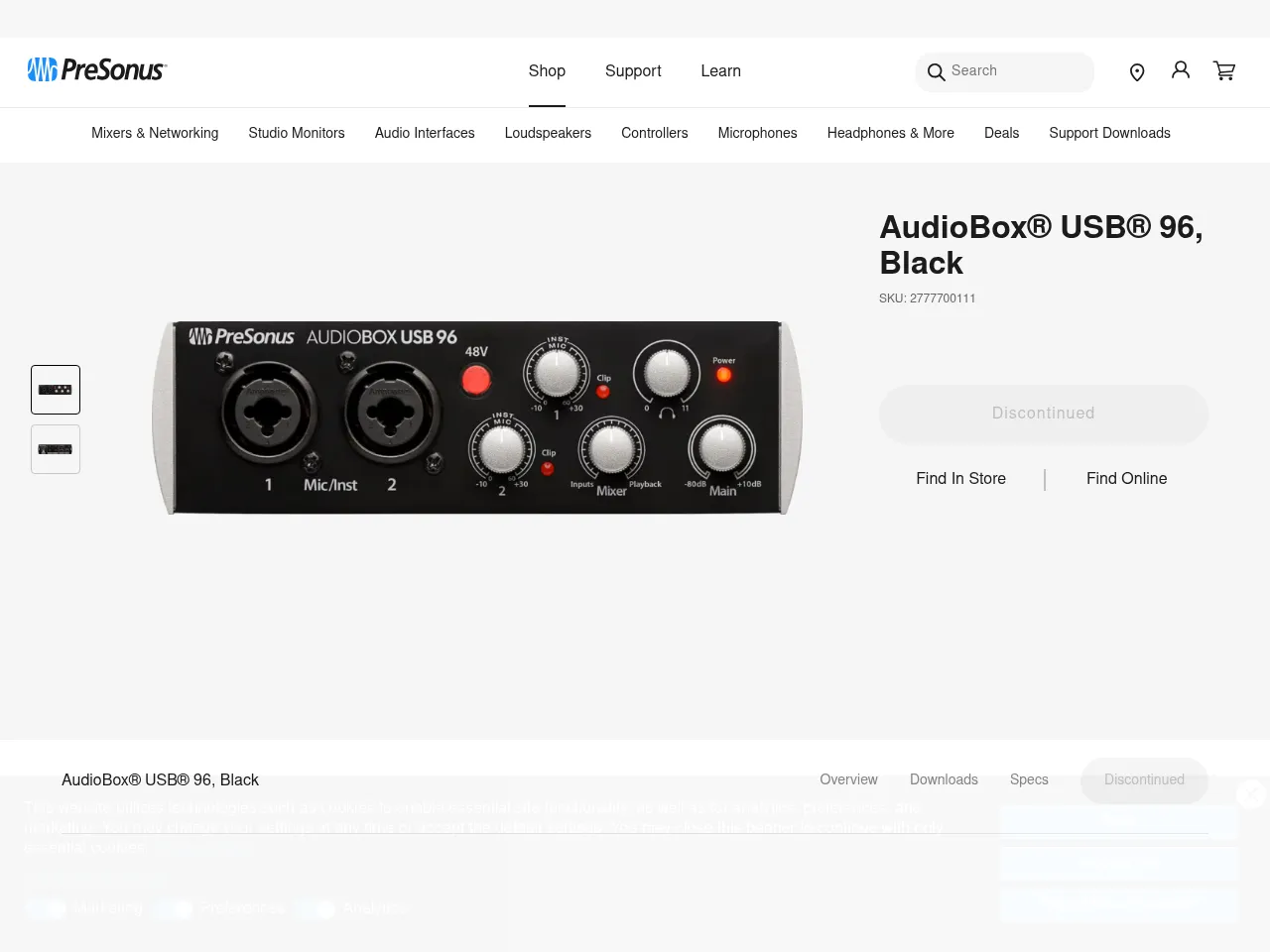
 PreSonus AudioBox USB 96
PreSonus
$99
Beginner
China
A budget two-channel USB interface with Class A preamps, 24-bit/96kHz conversion, MIDI I/O, and included Studio One Artist DAW providing everything beginners need to start recording.
PreSonus AudioBox USB 96
PreSonus
$99
Beginner
China
A budget two-channel USB interface with Class A preamps, 24-bit/96kHz conversion, MIDI I/O, and included Studio One Artist DAW providing everything beginners need to start recording.
 20
4.2
20
4.2
 Zoom UAC-2
Zoom
$199
Intermediate
China
USB 3.0 audio interface achieving ultra-low 2.2ms latency at 96kHz, ideal for musicians monitoring through DAW effects and virtual instruments in near-real-time.
Zoom UAC-2
Zoom
$199
Intermediate
China
USB 3.0 audio interface achieving ultra-low 2.2ms latency at 96kHz, ideal for musicians monitoring through DAW effects and virtual instruments in near-real-time.