Acoustic Pianos - Directory w/ AI Reviews
Grand pianos and upright pianos from top manufacturers
Acoustic pianos are mechanical instruments that produce sound when felt-covered hammers strike steel strings inside a wooden frame. Available as grand and upright configurations, they deliver unmatched dynamic range, tonal complexity, and tactile response. The acoustic piano remains the gold standard for classical performance, composition, and music education.
History
Bartolomeo Cristofori invented the piano around 1700 in Florence, Italy, creating an instrument that could play both soft (piano) and loud (forte). The instrument evolved dramatically through the 18th and 19th centuries as iron frames replaced wooden ones, enabling higher string tension and greater volume. Steinway & Sons, founded in 1853, introduced innovations like the overstrung scale and duplex scaling that defined the modern concert grand.
Characteristics
Grand pianos range from about 5 feet (baby grand) to over 9 feet (concert grand), with longer strings producing richer, more complex overtones. Upright pianos position the strings vertically to save space while still delivering genuine acoustic tone. The complex interaction of hammers, strings, soundboard, and pedals creates a nuanced, organic sound that digital instruments strive to emulate.
Notable Players
Vladimir Horowitz was considered one of the greatest pianists of the 20th century, renowned for his virtuosity on Steinway concert grands. Glenn Gould's eccentric but brilliant Bach interpretations transformed classical piano performance. Lang Lang has brought classical piano to enormous global audiences with his dynamic concert performances.
Fun Facts
A concert grand piano contains over 12,000 individual parts, and its roughly 230 strings exert a combined tension of about 20 tons on the iron frame. The piano has the widest range of any standard orchestral instrument, spanning over seven octaves from A0 to C8.
 1
4.9
1
4.9
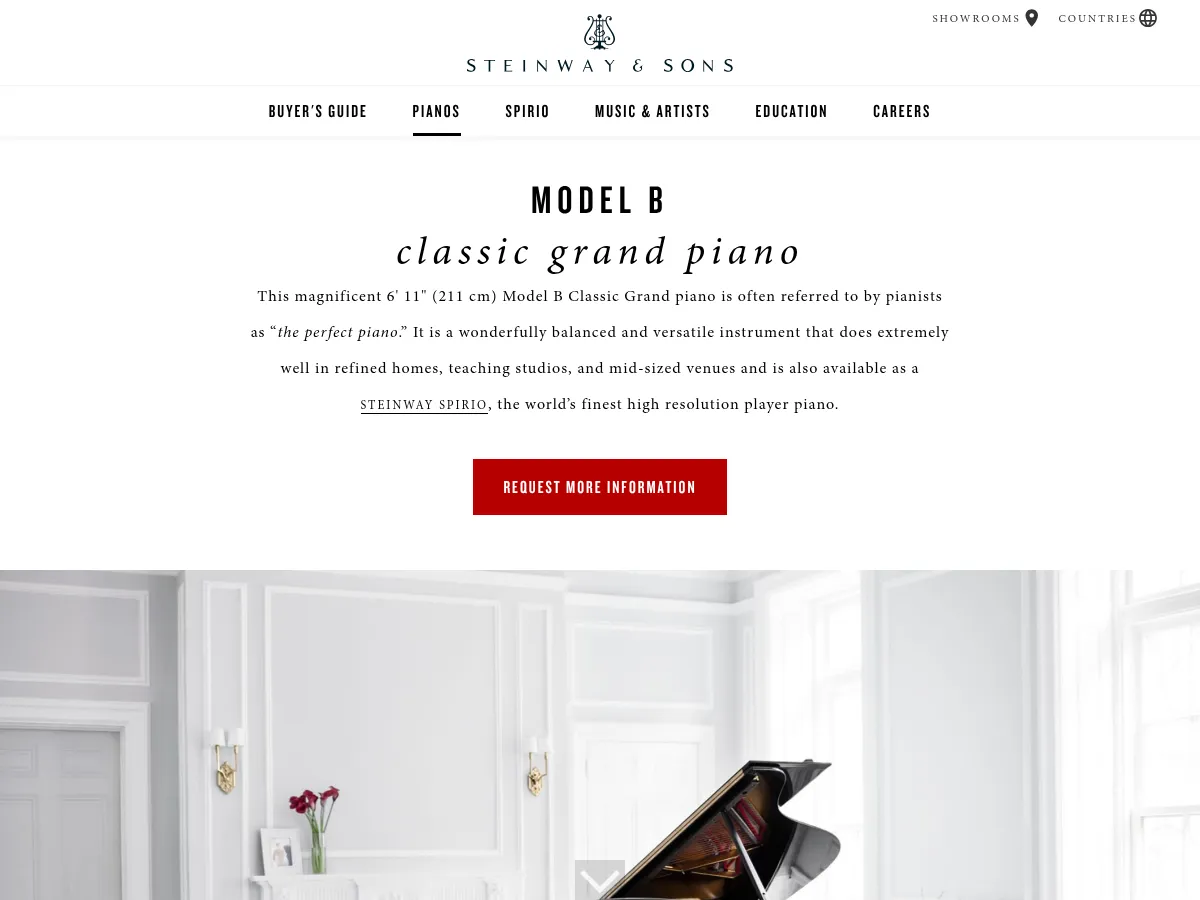
 Steinway Model B Grand Piano
Steinway & Sons
$122,400
Professional
United States
Legendary six-foot-ten grand piano nicknamed 'the perfect piano' with proprietary Diaphragmatic Soundboard and Accelerated Action, handcrafted over a year.
Steinway Model B Grand Piano
Steinway & Sons
$122,400
Professional
United States
Legendary six-foot-ten grand piano nicknamed 'the perfect piano' with proprietary Diaphragmatic Soundboard and Accelerated Action, handcrafted over a year.
 2
4.8
2
4.8
 Bosendorfer 185VC Grand Piano
Bosendorfer
$84,000
Professional
Austria
The Bosendorfer 185VC is a Viennese grand piano with unique solid spruce rim construction that turns the entire cabinet into a resonating body, producing distinctive warmth, singing sustain, and rich lower-register character.
Bosendorfer 185VC Grand Piano
Bosendorfer
$84,000
Professional
Austria
The Bosendorfer 185VC is a Viennese grand piano with unique solid spruce rim construction that turns the entire cabinet into a resonating body, producing distinctive warmth, singing sustain, and rich lower-register character.
 3
4.8
3
4.8
 Kawai K-500 Upright Piano
Kawai
$16,995
Advanced
Japan
A fifty-one-inch professional upright rivaling many baby grands in performance, with Millennium III action and duplex scaling that produces concert-quality tone in a vertical format.
Kawai K-500 Upright Piano
Kawai
$16,995
Advanced
Japan
A fifty-one-inch professional upright rivaling many baby grands in performance, with Millennium III action and duplex scaling that produces concert-quality tone in a vertical format.
 4
4.8
4
4.8
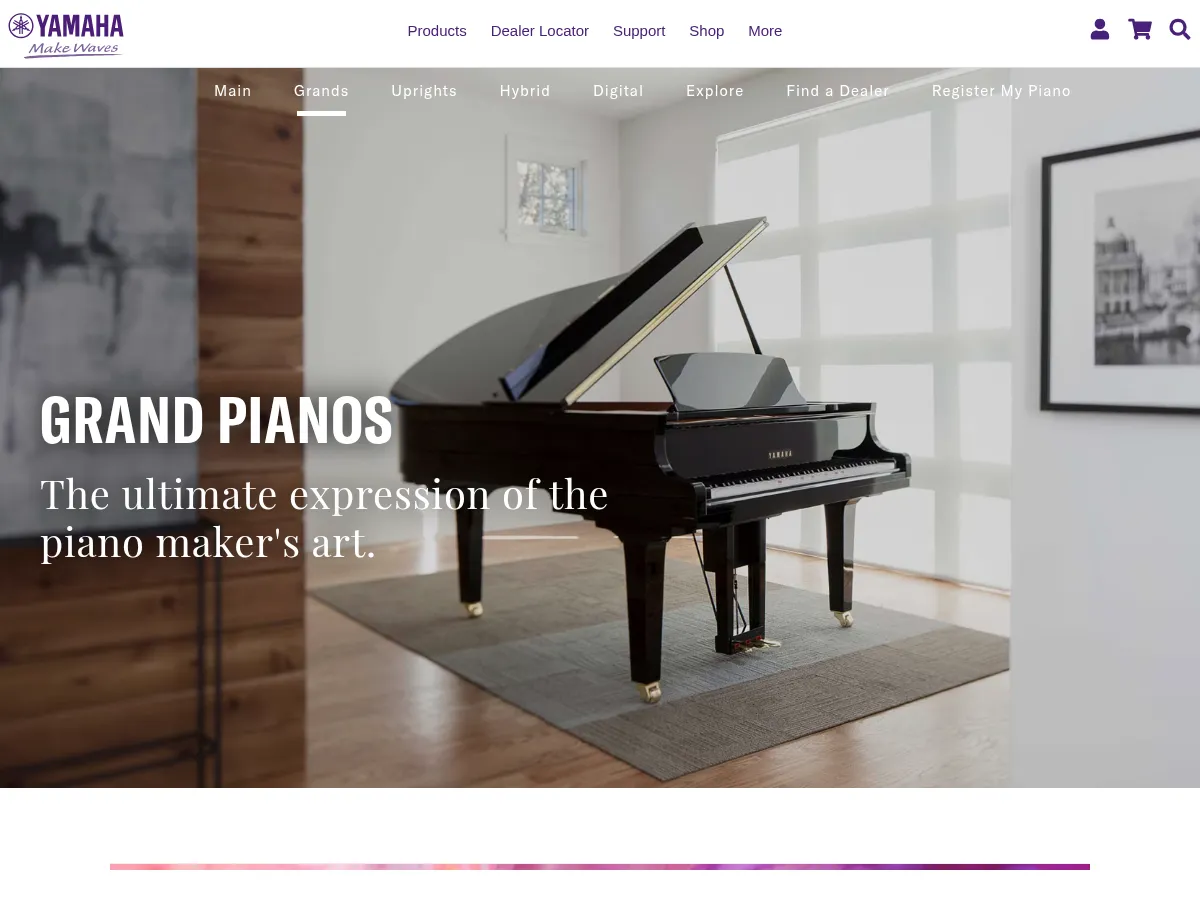
 Yamaha C3X Grand Piano
Yamaha
$46,599
Professional
Japan
Six-foot-one conservatory grand piano offering a refined balance of power, tonal richness, and responsive touch, built at Yamaha's flagship factory in Kakegawa, Japan.
Yamaha C3X Grand Piano
Yamaha
$46,599
Professional
Japan
Six-foot-one conservatory grand piano offering a refined balance of power, tonal richness, and responsive touch, built at Yamaha's flagship factory in Kakegawa, Japan.
 5
4.8
5
4.8
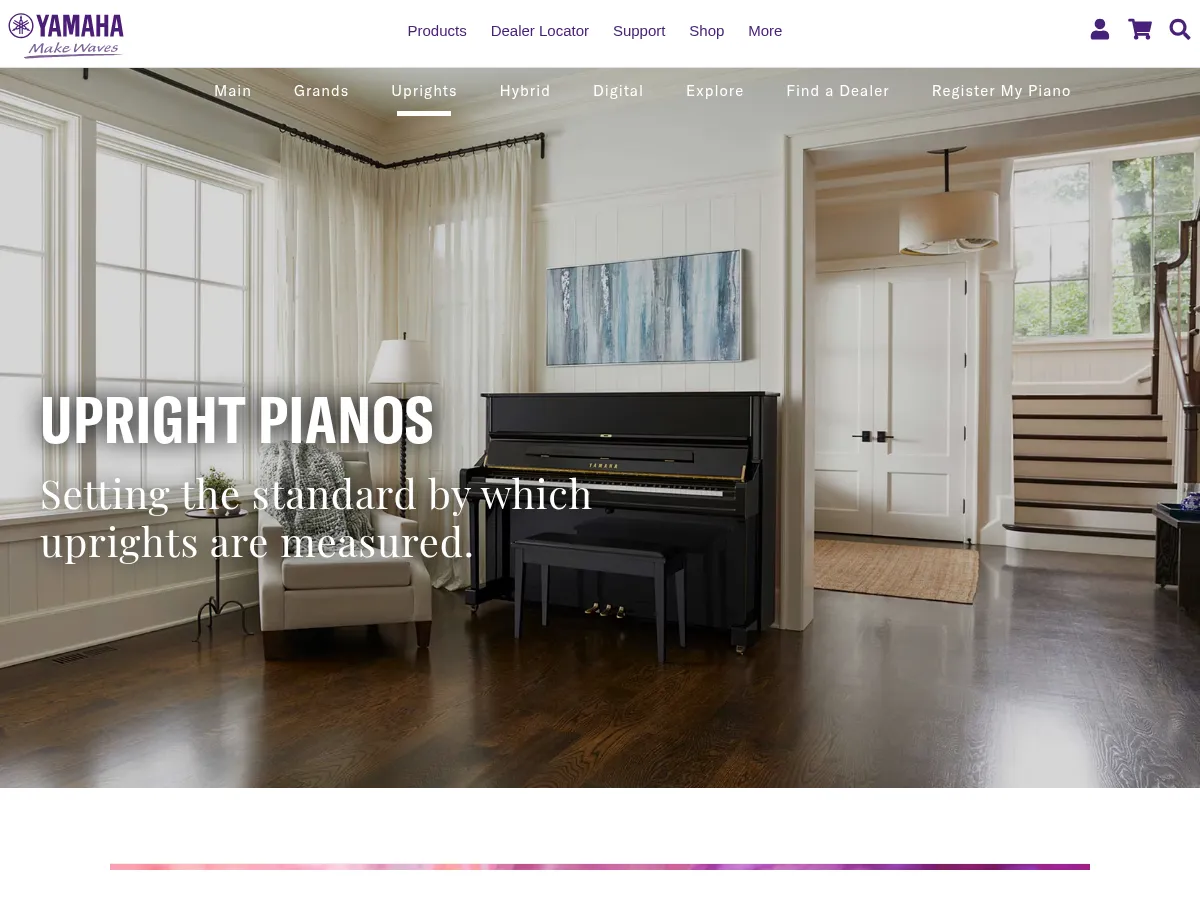
 Yamaha U1 Upright Piano
Yamaha
$13,299
Intermediate
Japan
Iconic 48-inch professional upright piano with a near-grand action feel and clear, balanced tone, trusted by music programs and private studios worldwide for decades.
Yamaha U1 Upright Piano
Yamaha
$13,299
Intermediate
Japan
Iconic 48-inch professional upright piano with a near-grand action feel and clear, balanced tone, trusted by music programs and private studios worldwide for decades.
 6
4.8
6
4.8
 Yamaha U3 Upright Piano
Yamaha
$15,999
Professional
Japan
Premium 52-inch upright piano with extended strings and larger soundboard, delivering tonal depth and dynamic range that rivals many baby grand pianos.
Yamaha U3 Upright Piano
Yamaha
$15,999
Professional
Japan
Premium 52-inch upright piano with extended strings and larger soundboard, delivering tonal depth and dynamic range that rivals many baby grand pianos.
 7
4.7
7
4.7
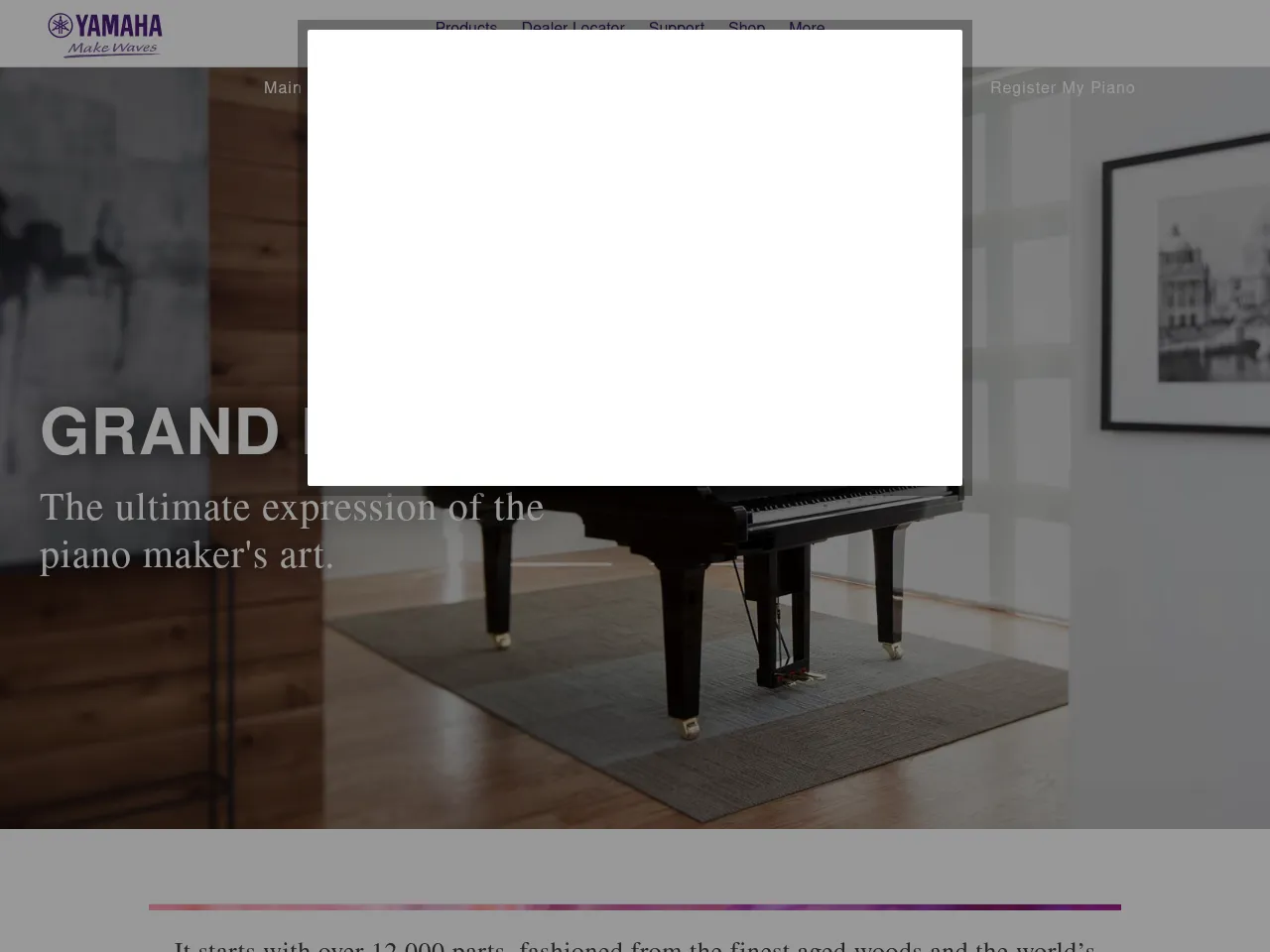
 Kawai GX-3 Grand Piano
Kawai
$39,995
Professional
Japan
A six-foot-two grand from Kawai's flagship GX Series with carbon fiber Millennium III action, delivering exceptionally fast repetition speed and climate-stable performance for advanced pianists.
Kawai GX-3 Grand Piano
Kawai
$39,995
Professional
Japan
A six-foot-two grand from Kawai's flagship GX Series with carbon fiber Millennium III action, delivering exceptionally fast repetition speed and climate-stable performance for advanced pianists.
 8
4.7
8
4.7
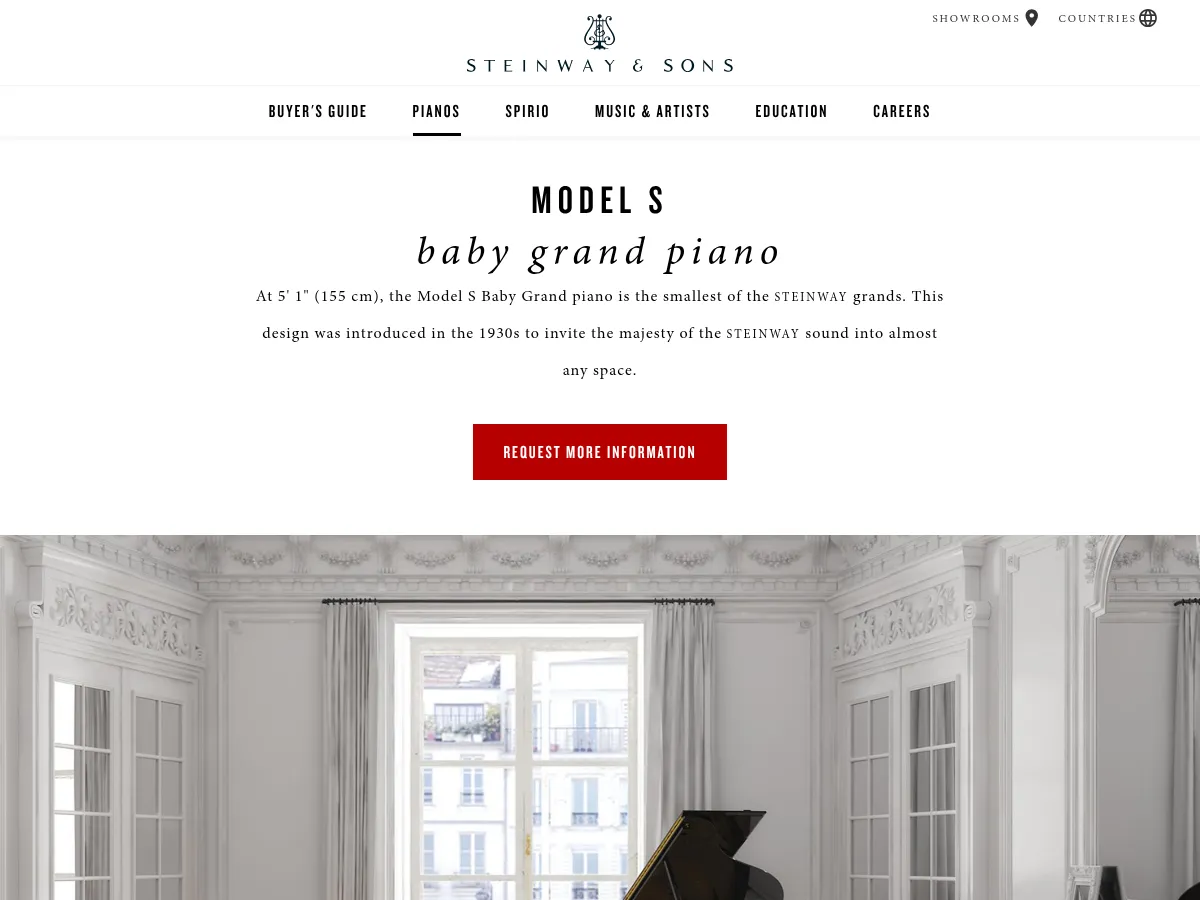
 Yamaha C1X Grand Piano
Yamaha
$22,999
Intermediate
Japan
Compact baby grand from the CX Series with design insights from the flagship CFX, delivering a surprisingly full and mature sound in a room-friendly 5-foot 3-inch size.
Yamaha C1X Grand Piano
Yamaha
$22,999
Intermediate
Japan
Compact baby grand from the CX Series with design insights from the flagship CFX, delivering a surprisingly full and mature sound in a room-friendly 5-foot 3-inch size.
 9
4.6
9
4.6
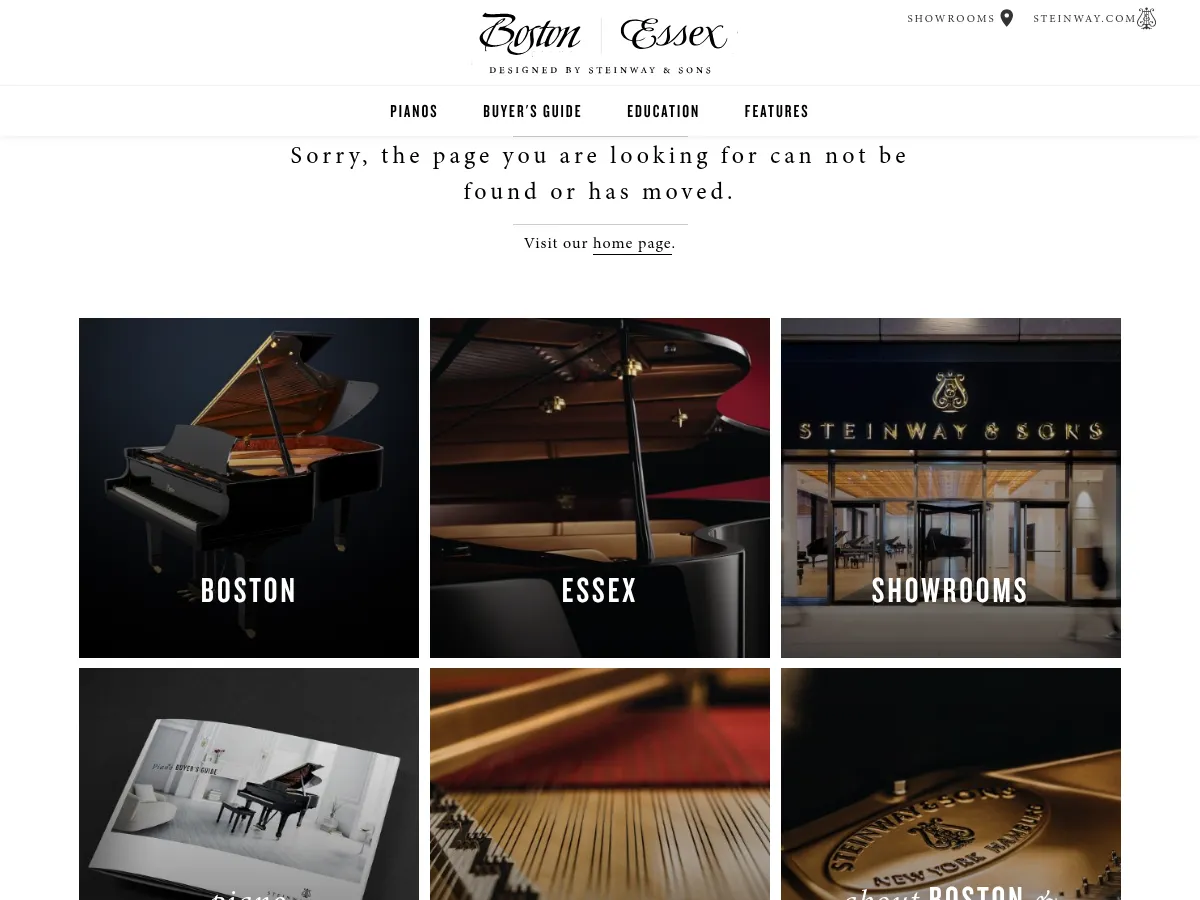
 Steinway Model S Baby Grand Piano
Steinway & Sons
$74,300
Professional
United States
Steinway's most compact grand piano bringing legendary craftsmanship and unmistakable tone into smaller living spaces with the same materials as the concert grand.
Steinway Model S Baby Grand Piano
Steinway & Sons
$74,300
Professional
United States
Steinway's most compact grand piano bringing legendary craftsmanship and unmistakable tone into smaller living spaces with the same materials as the concert grand.
 10
4.5
10
4.5
 Boston GP-178 Grand Piano
Boston
$22,900
Advanced
Japan
The Boston GP-178 is a grand piano designed by Steinway and Sons with their patented wide-tail design, providing a larger soundboard for greater bass power and projection, offering Steinway DNA at a more accessible price point.
Boston GP-178 Grand Piano
Boston
$22,900
Advanced
Japan
The Boston GP-178 is a grand piano designed by Steinway and Sons with their patented wide-tail design, providing a larger soundboard for greater bass power and projection, offering Steinway DNA at a more accessible price point.
 11
4.4
11
4.4
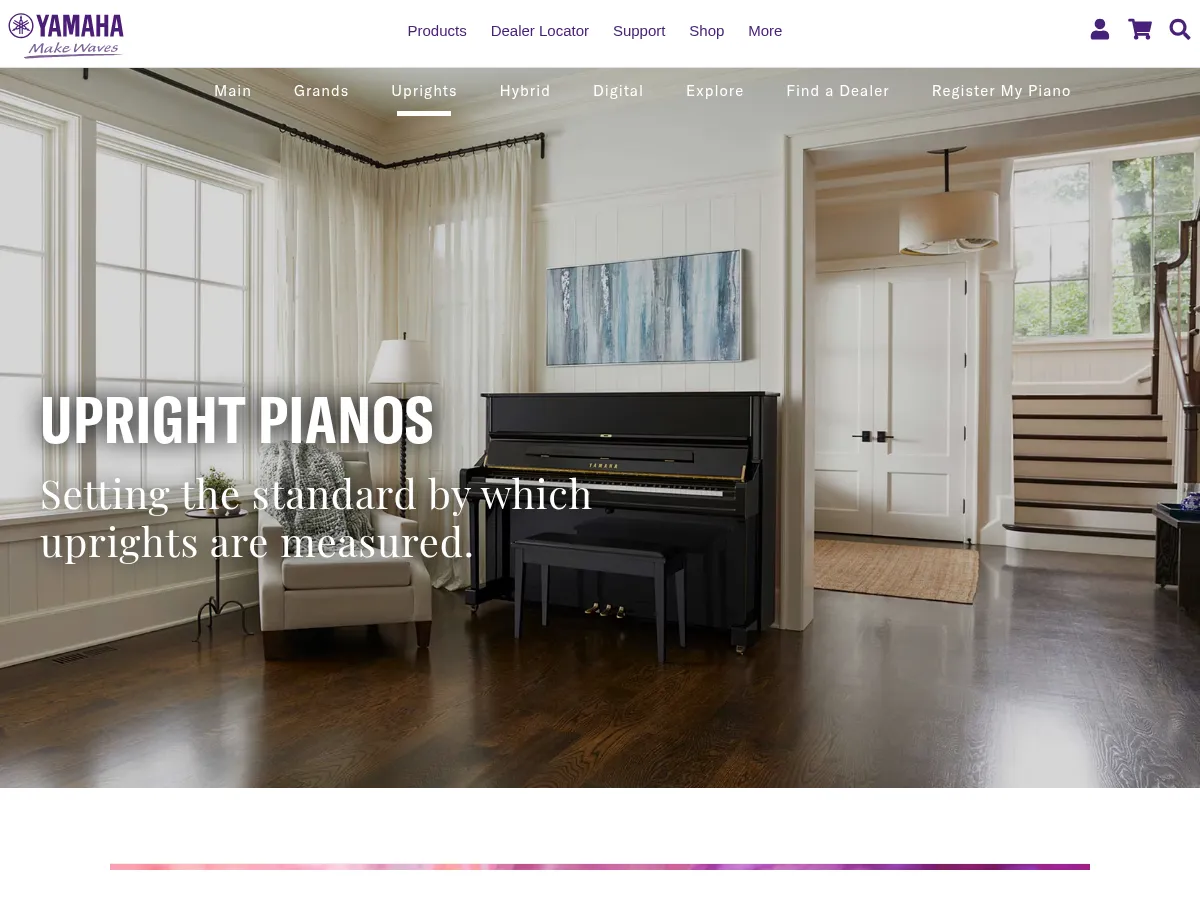
 Kawai GL-10 Baby Grand Piano
Kawai
$14,995
Intermediate
Indonesia
Kawai's most compact baby grand at five feet, featuring Ultra-Responsive Action II with ABS-Carbon components and a solid spruce soundboard for authentic grand piano tone in small spaces.
Kawai GL-10 Baby Grand Piano
Kawai
$14,995
Intermediate
Indonesia
Kawai's most compact baby grand at five feet, featuring Ultra-Responsive Action II with ABS-Carbon components and a solid spruce soundboard for authentic grand piano tone in small spaces.
 12
4.2
12
4.2
 Yamaha B2 Upright Piano
Yamaha
$5,699
Beginner
Indonesia
Entry-level 45-inch upright piano with a solid spruce soundboard, offering genuine Yamaha acoustic quality and responsive action for beginning students and families.
Yamaha B2 Upright Piano
Yamaha
$5,699
Beginner
Indonesia
Entry-level 45-inch upright piano with a solid spruce soundboard, offering genuine Yamaha acoustic quality and responsive action for beginning students and families.