Acoustic Guitars - Directory w/ AI Reviews
Steel-string acoustic and acoustic-electric guitars
Acoustic guitars produce sound through the vibration of strings amplified by a hollow wooden body, requiring no external amplification. They are one of the most accessible and widely played instruments in the world. From campfire singalongs to concert stages, acoustic guitars are prized for their warm, natural tone.
History
The modern acoustic guitar evolved from earlier stringed instruments brought to Spain by the Moors in the Middle Ages. Antonio de Torres Jurado standardized the body shape and fan bracing pattern in the 1850s, creating the template for the classical guitar. C.F. Martin introduced X-bracing in the 1840s, which allowed steel strings and gave birth to the modern steel-string acoustic.
Characteristics
Acoustic guitars rely on a soundboard (top), back, sides, and an internal bracing pattern to project sound. Spruce and cedar are common top woods, while rosewood and mahogany are favored for backs and sides. Body shapes range from small parlor guitars to large dreadnoughts and jumbos, each producing distinct tonal qualities and volume levels.
Notable Players
Robert Johnson's Delta blues recordings in the 1930s established the acoustic guitar as a solo voice in American music. James Taylor's fingerpicking style became synonymous with the singer-songwriter movement of the 1970s. Tommy Emmanuel is widely regarded as one of the greatest fingerstyle acoustic guitarists alive today.
Fun Facts
The word "guitar" derives from the Spanish "guitarra," which itself traces back to the ancient Greek "kithara." Martin's D-28 acoustic guitar has appeared on more hit recordings than any other single guitar model.
 1
4.9
1
4.9
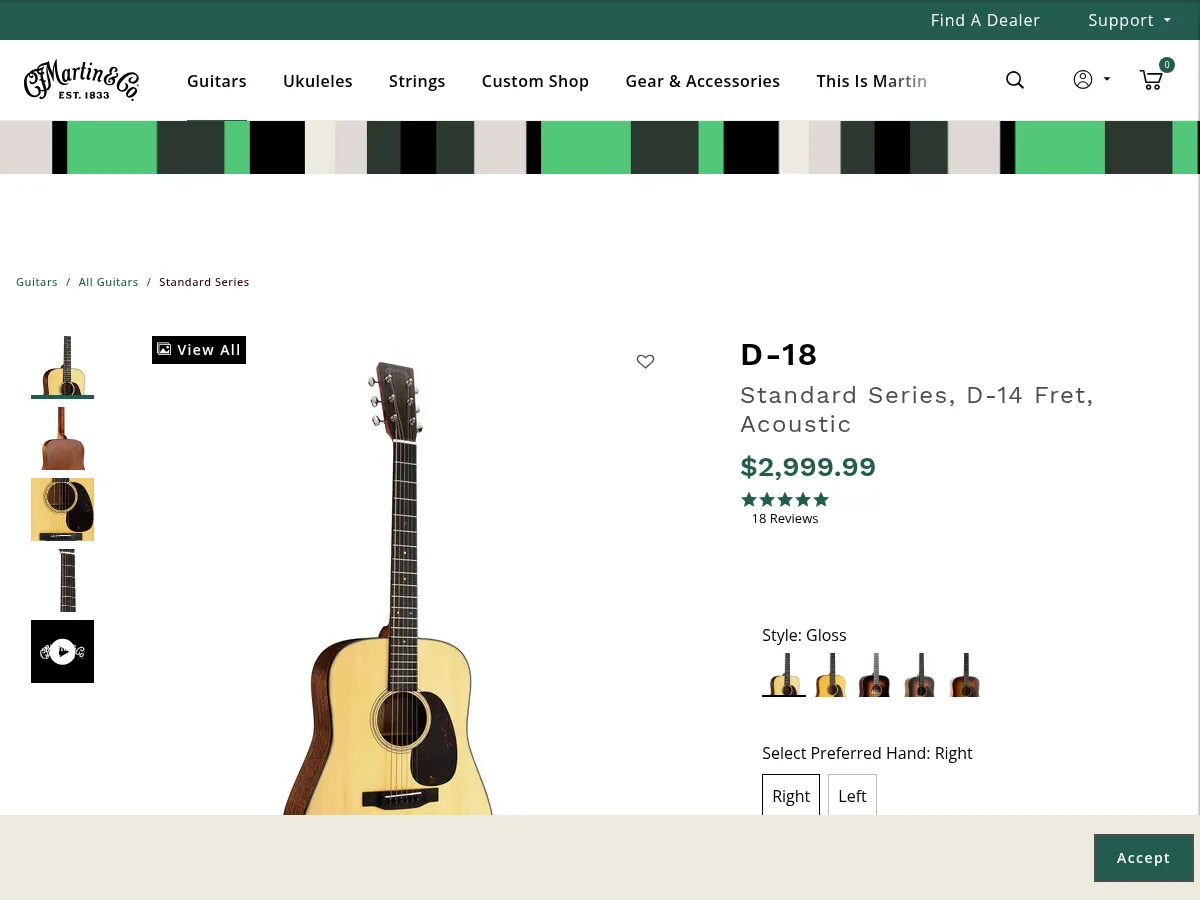
 Martin D-18
Martin
$2,999
Advanced
USA
A venerable Martin dreadnought pairing Sitka spruce with mahogany for warm, focused tone and strong midrange, with forward-shifted bracing and dovetail neck joint craftsmanship.
Martin D-18
Martin
$2,999
Advanced
USA
A venerable Martin dreadnought pairing Sitka spruce with mahogany for warm, focused tone and strong midrange, with forward-shifted bracing and dovetail neck joint craftsmanship.
 2
4.9
2
4.9
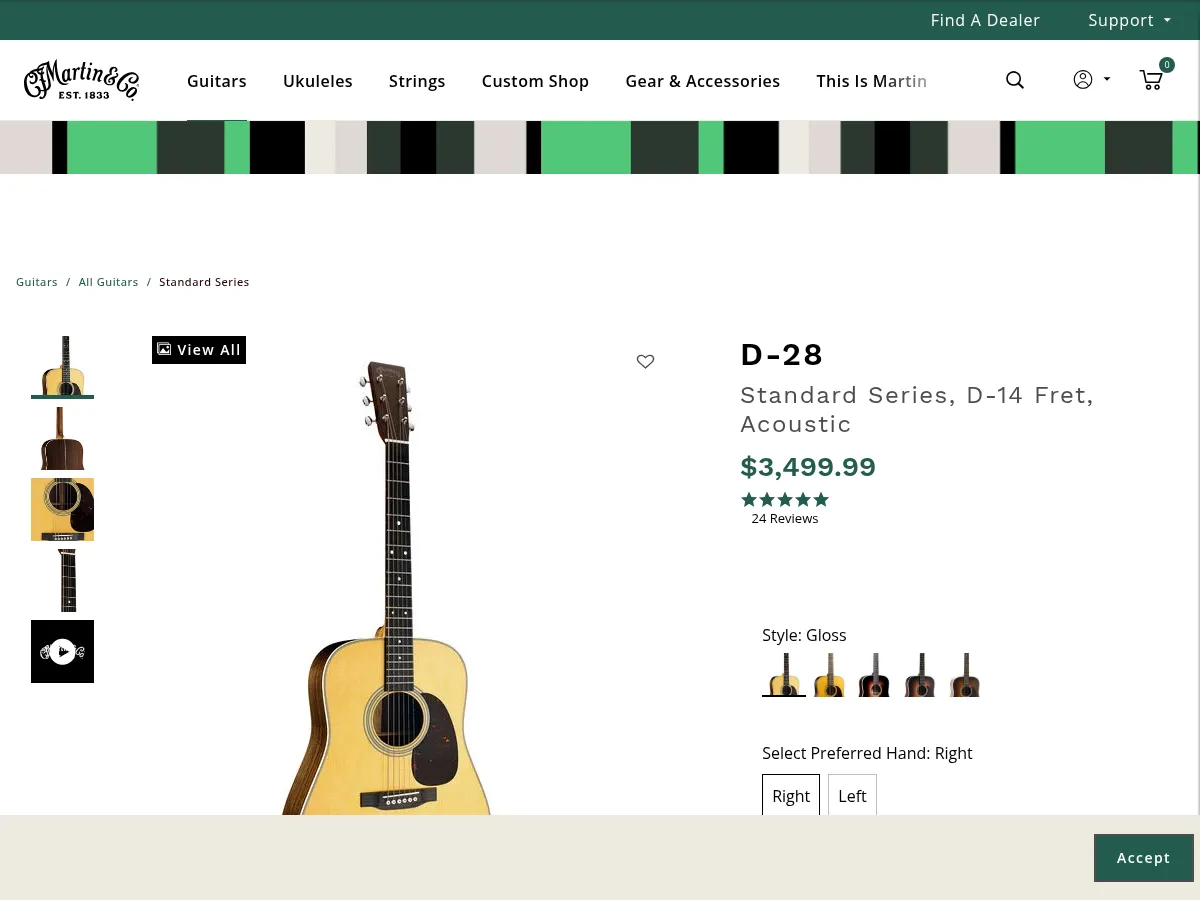
 Martin D-28
Martin
$3,299
Professional
USA
One of the most iconic acoustic guitars ever produced, delivering the benchmark dreadnought sound with spruce and rosewood construction that has shaped folk, country, and bluegrass for nearly a century.
Martin D-28
Martin
$3,299
Professional
USA
One of the most iconic acoustic guitars ever produced, delivering the benchmark dreadnought sound with spruce and rosewood construction that has shaped folk, country, and bluegrass for nearly a century.
 3
4.9
3
4.9
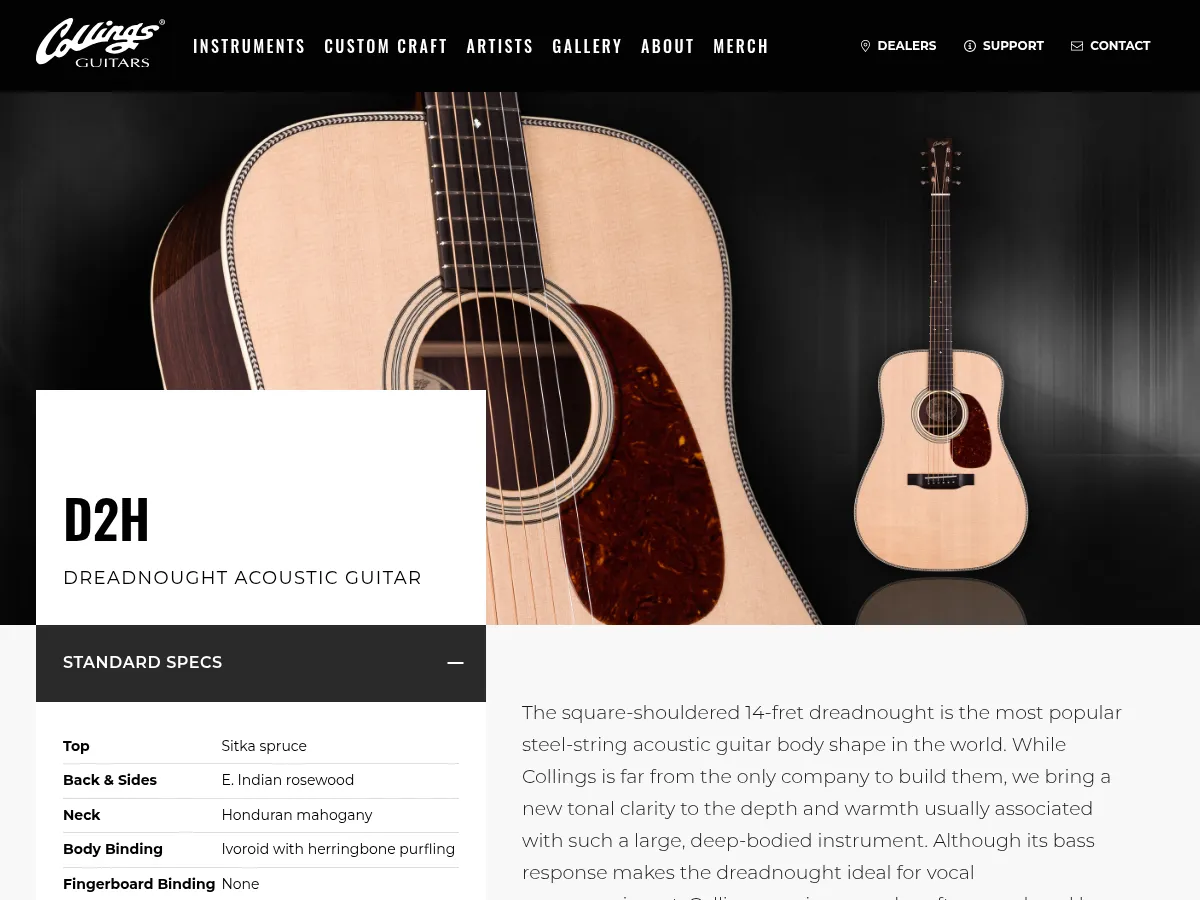
 Collings D2H
Collings
$5,950
Professional
USA
The Collings D2H is a handcrafted American dreadnought representing the pinnacle of modern acoustic guitar construction, with Adirondack bracing, hide glue, and meticulous hand-voicing producing extraordinary clarity, balance, and power.
Collings D2H
Collings
$5,950
Professional
USA
The Collings D2H is a handcrafted American dreadnought representing the pinnacle of modern acoustic guitar construction, with Adirondack bracing, hide glue, and meticulous hand-voicing producing extraordinary clarity, balance, and power.
 4
4.8
4
4.8
 Gibson Hummingbird Standard
Gibson
$3,199
Professional
USA
An iconic square-shouldered dreadnought with solid spruce top and mahogany back delivering bold, assertive strumming power, featuring the signature hummingbird pickguard and thermally-aged bracing.
Gibson Hummingbird Standard
Gibson
$3,199
Professional
USA
An iconic square-shouldered dreadnought with solid spruce top and mahogany back delivering bold, assertive strumming power, featuring the signature hummingbird pickguard and thermally-aged bracing.
 5
4.8
5
4.8
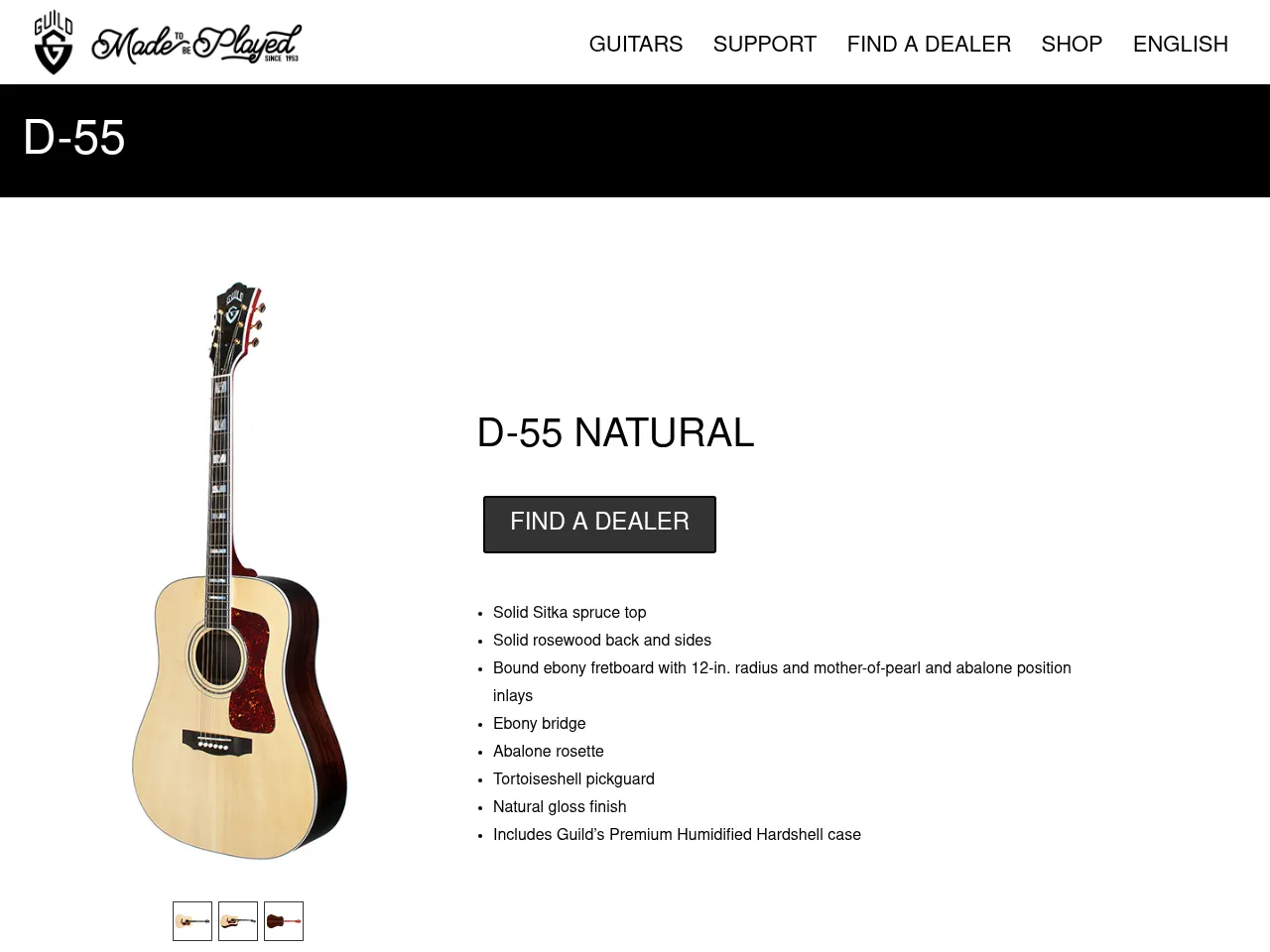
 Guild D-55
Guild
$3,299
Professional
USA
A legendary jumbo dreadnought with solid spruce and rosewood delivering massive, room-filling sound with thunderous bass, featuring Guild's arched back design and ornate abalone appointments.
Guild D-55
Guild
$3,299
Professional
USA
A legendary jumbo dreadnought with solid spruce and rosewood delivering massive, room-filling sound with thunderous bass, featuring Guild's arched back design and ornate abalone appointments.
 6
4.8
6
4.8
 Seagull S6 Original
Seagull
$499
Intermediate
Canada
Canadian-made acoustic with solid cedar top and wild cherry body, delivering warm, immediately responsive tone with handcrafted quality at a budget-friendly price.
Seagull S6 Original
Seagull
$499
Intermediate
Canada
Canadian-made acoustic with solid cedar top and wild cherry body, delivering warm, immediately responsive tone with handcrafted quality at a budget-friendly price.
 7
4.8
7
4.8
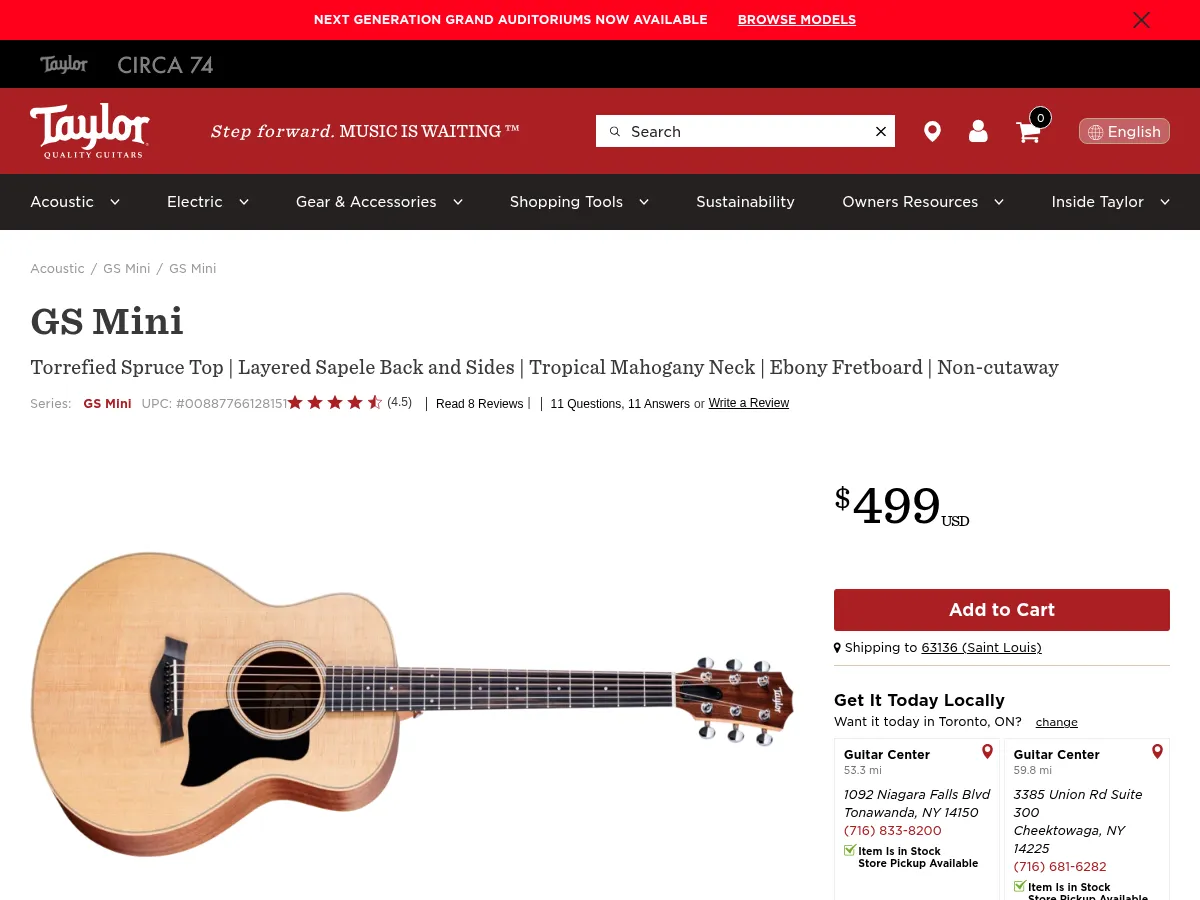
 Taylor 814ce
Taylor
$3,799
Professional
USA
Flagship grand auditorium with solid rosewood and spruce, V-Class bracing, beveled armrest, and premium appointments for uncompromising professional performance.
Taylor 814ce
Taylor
$3,799
Professional
USA
Flagship grand auditorium with solid rosewood and spruce, V-Class bracing, beveled armrest, and premium appointments for uncompromising professional performance.
 8
4.8
8
4.8
 Taylor GS Mini
Taylor
$549
All Levels
Mexico
Scaled-down grand symphony producing surprisingly full tone from a compact travel-friendly body with solid spruce top and 23.5-inch scale length.
Taylor GS Mini
Taylor
$549
All Levels
Mexico
Scaled-down grand symphony producing surprisingly full tone from a compact travel-friendly body with solid spruce top and 23.5-inch scale length.
 9
4.8
9
4.8
 Yamaha FG800
Yamaha
$219
Beginner
China
Budget dreadnought with a solid spruce top and scalloped bracing, widely regarded as one of the best starter acoustic guitars for its consistent quality and warm tone.
Yamaha FG800
Yamaha
$219
Beginner
China
Budget dreadnought with a solid spruce top and scalloped bracing, widely regarded as one of the best starter acoustic guitars for its consistent quality and warm tone.
 10
4.8
10
4.8
 Yamaha FS800
Yamaha
$219
Beginner
China
Concert-sized acoustic guitar offering focused, balanced tone in a smaller body ideal for fingerstyle playing, younger players, and those who find dreadnoughts too large.
Yamaha FS800
Yamaha
$219
Beginner
China
Concert-sized acoustic guitar offering focused, balanced tone in a smaller body ideal for fingerstyle playing, younger players, and those who find dreadnoughts too large.
 11
4.8
11
4.8
 Yamaha LL16 ARE
Yamaha
$799
Advanced
China
All-solid-wood jumbo acoustic with A.R.E.-treated spruce top and rosewood body, delivering mature, open tone from day one at an exceptional value for its construction.
Yamaha LL16 ARE
Yamaha
$799
Advanced
China
All-solid-wood jumbo acoustic with A.R.E.-treated spruce top and rosewood body, delivering mature, open tone from day one at an exceptional value for its construction.
 12
4.7
12
4.7
 Gibson J-45 Standard
Gibson
$2,699
Professional
USA
One of the most celebrated acoustic guitars in history with solid spruce and mahogany delivering warm, woody midrange focus that earned it the nickname 'The Workhorse' among singer-songwriters since the 1940s.
Gibson J-45 Standard
Gibson
$2,699
Professional
USA
One of the most celebrated acoustic guitars in history with solid spruce and mahogany delivering warm, woody midrange focus that earned it the nickname 'The Workhorse' among singer-songwriters since the 1940s.
 13
4.7
13
4.7
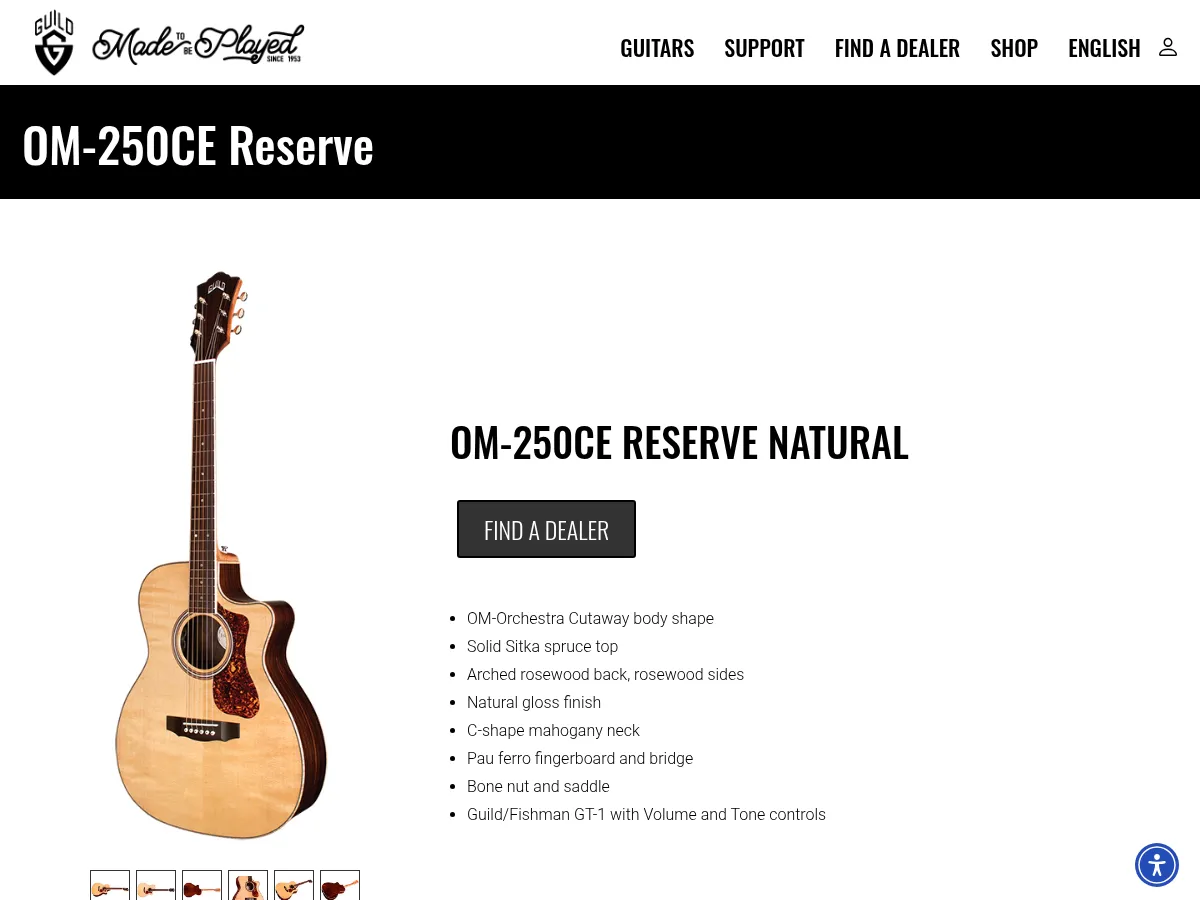
 Guild OM-250CE
Guild
$999
Intermediate
China
A cutaway orchestra model with solid spruce and rosewood delivering balanced, articulate tone with clear note separation, featuring discreet Fishman Sonitone electronics for natural amplified sound.
Guild OM-250CE
Guild
$999
Intermediate
China
A cutaway orchestra model with solid spruce and rosewood delivering balanced, articulate tone with clear note separation, featuring discreet Fishman Sonitone electronics for natural amplified sound.
 14
4.7
14
4.7
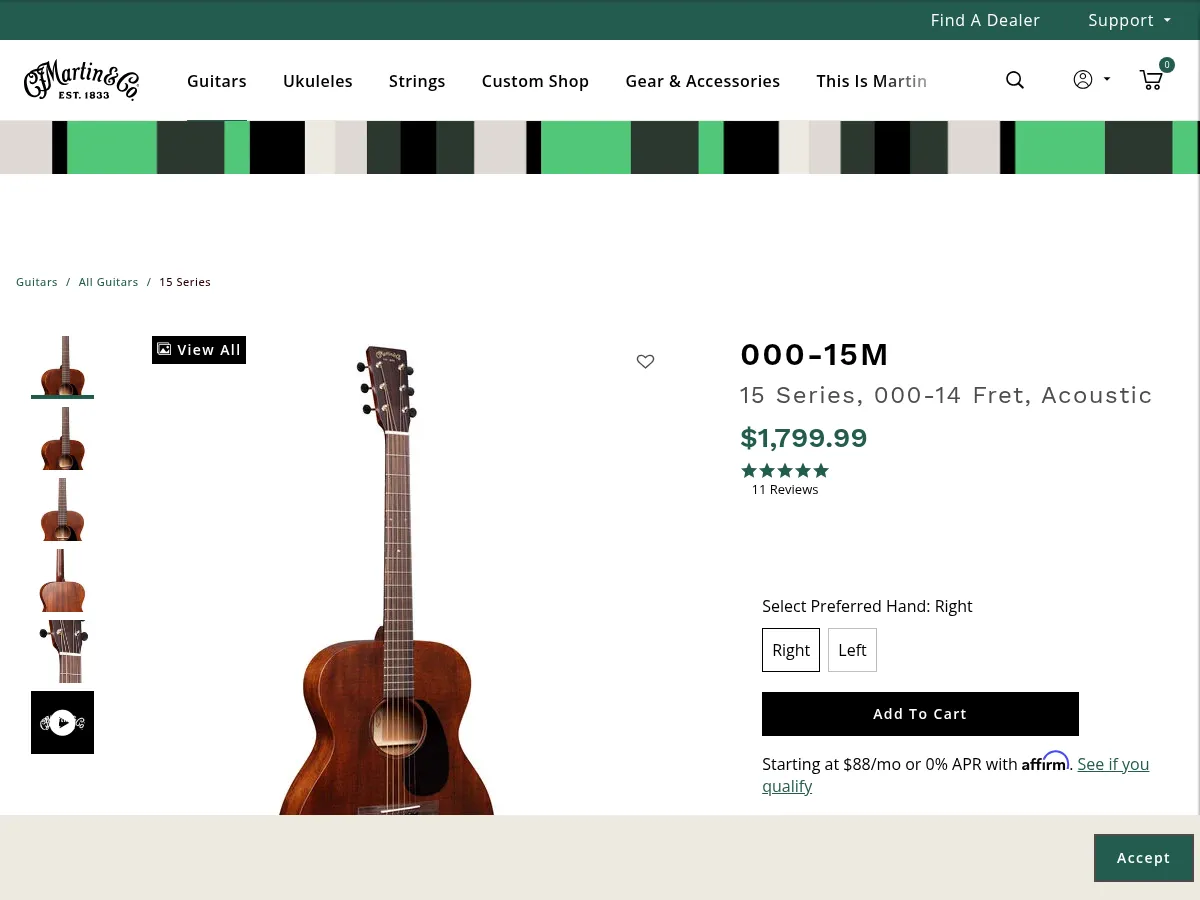
 Martin 000-15M
Martin
$1,499
Advanced
USA
An all-mahogany auditorium guitar delivering warm, intimate tone with strong midrange, ideal for fingerstyle and singer-songwriters who prioritize recording-friendly warmth over projection.
Martin 000-15M
Martin
$1,499
Advanced
USA
An all-mahogany auditorium guitar delivering warm, intimate tone with strong midrange, ideal for fingerstyle and singer-songwriters who prioritize recording-friendly warmth over projection.
 15
4.7
15
4.7
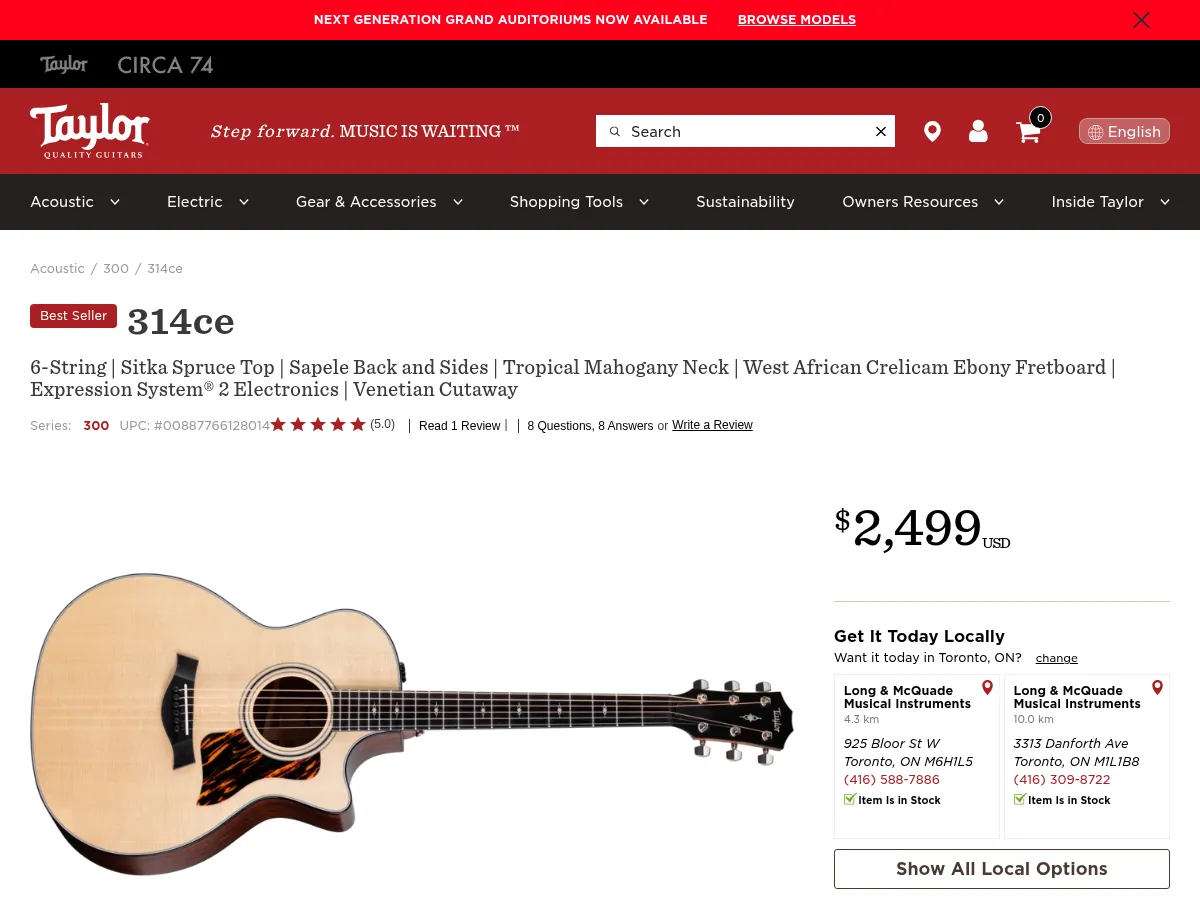
 Taylor 314ce
Taylor
$1,899
Advanced
USA
All-solid grand auditorium with Sitka spruce top, solid sapele body, and V-Class bracing delivering professional-grade tone and improved intonation.
Taylor 314ce
Taylor
$1,899
Advanced
USA
All-solid grand auditorium with Sitka spruce top, solid sapele body, and V-Class bracing delivering professional-grade tone and improved intonation.
 16
4.7
16
4.7
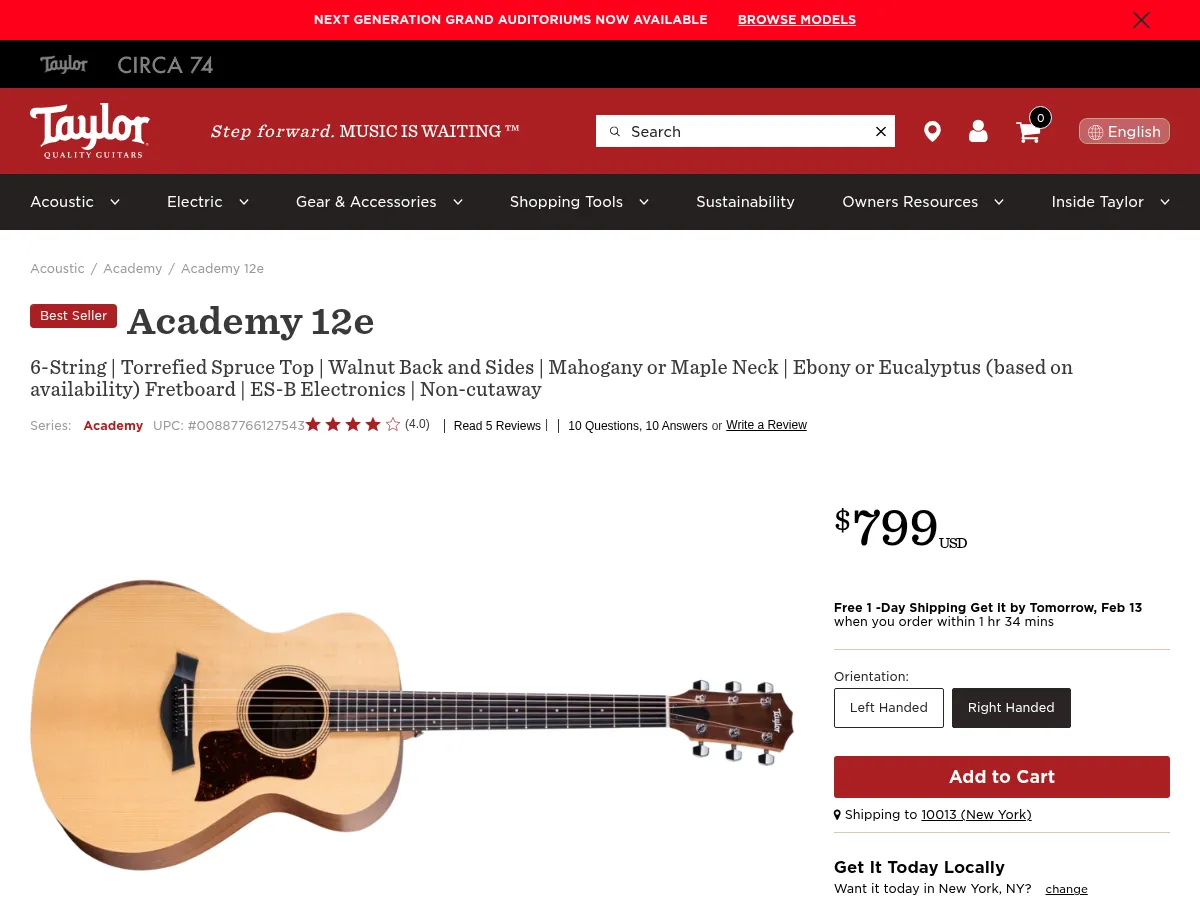
 Taylor Academy 12e
Taylor
$599
Beginner
Mexico
Beginner-focused grand concert with solid spruce top, armrest contour, narrower nut width, and ES-B electronics designed to make learning more comfortable.
Taylor Academy 12e
Taylor
$599
Beginner
Mexico
Beginner-focused grand concert with solid spruce top, armrest contour, narrower nut width, and ES-B electronics designed to make learning more comfortable.
 17
4.7
17
4.7
 Yamaha FG830
Yamaha
$329
Beginner
China
Step-up dreadnought with solid spruce top and solid rosewood back and sides, offering noticeably richer tonal depth and complexity over the entry-level FG800.
Yamaha FG830
Yamaha
$329
Beginner
China
Step-up dreadnought with solid spruce top and solid rosewood back and sides, offering noticeably richer tonal depth and complexity over the entry-level FG800.
 18
4.6
18
4.6
 Gibson L-00 Standard
Gibson
$2,499
Advanced
United States
A small-body acoustic with solid spruce and mahogany delivering focused, warm tone with strong midrange presence that sits beautifully beneath the voice, ideal for fingerstyle and singer-songwriter applications.
Gibson L-00 Standard
Gibson
$2,499
Advanced
United States
A small-body acoustic with solid spruce and mahogany delivering focused, warm tone with strong midrange presence that sits beautifully beneath the voice, ideal for fingerstyle and singer-songwriter applications.
 19
4.6
19
4.6
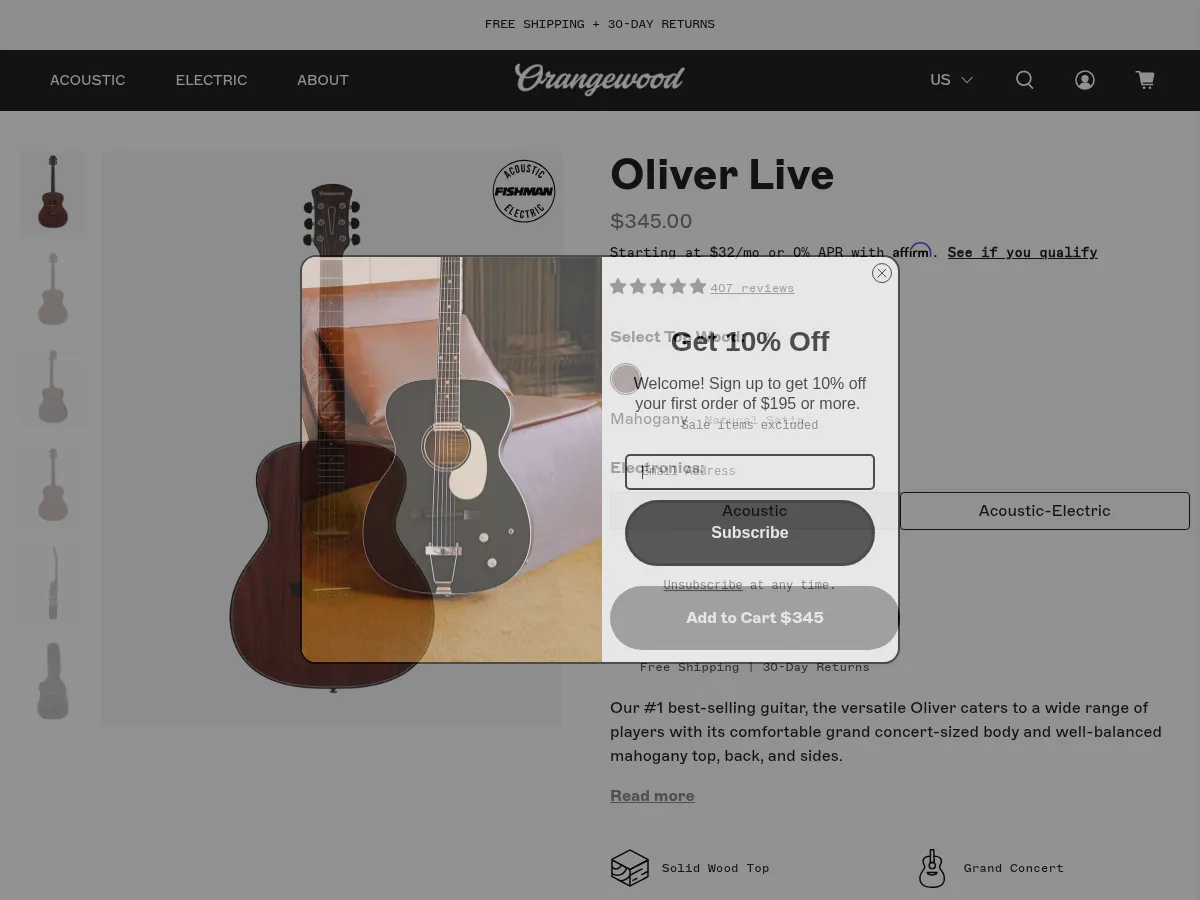
 Orangewood Oliver Mahogany
Orangewood
$195
Beginner
China
A direct-to-consumer all-mahogany dreadnought with solid top and bone nut at a remarkably low price, delivering surprising warmth and quality for beginners and casual players.
Orangewood Oliver Mahogany
Orangewood
$195
Beginner
China
A direct-to-consumer all-mahogany dreadnought with solid top and bone nut at a remarkably low price, delivering surprising warmth and quality for beginners and casual players.
 20
4.6
20
4.6
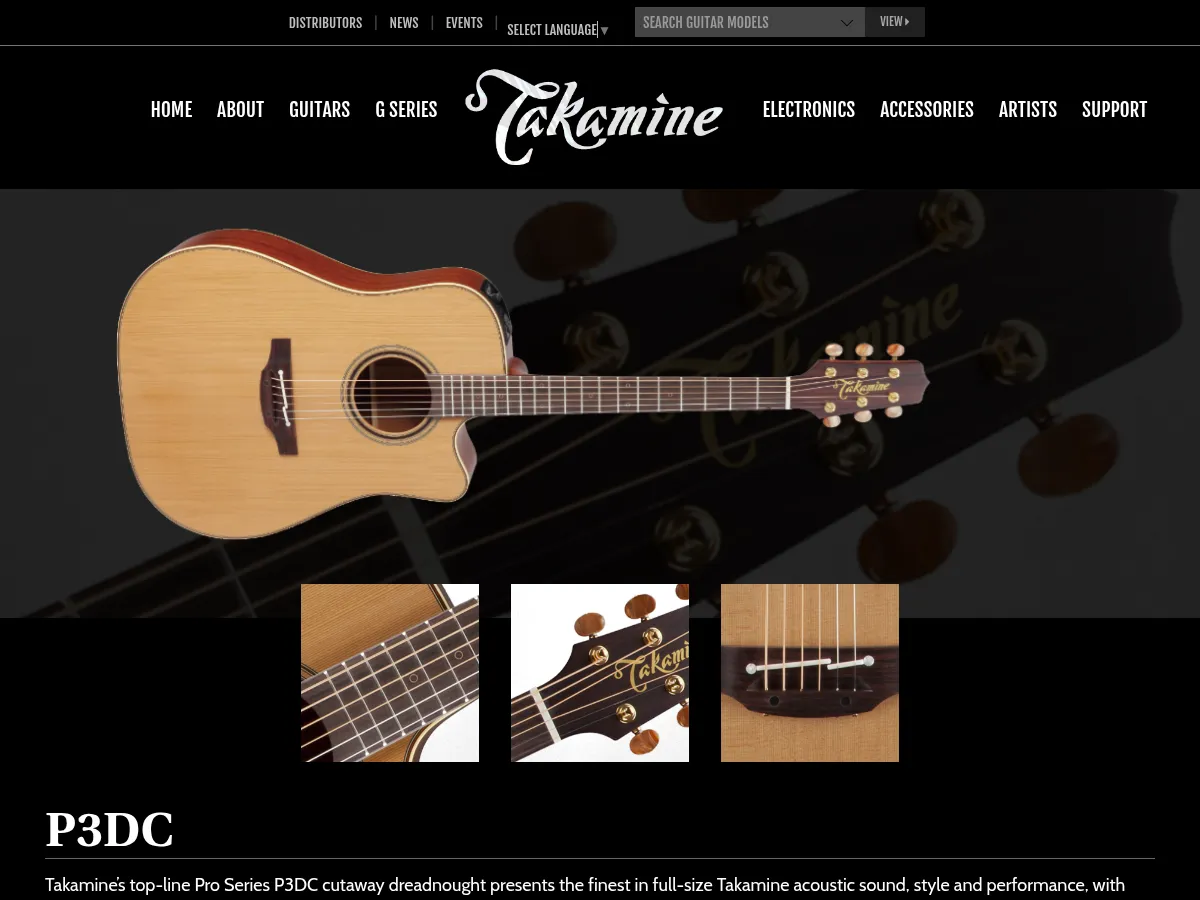
 Takamine P3DC
Takamine
$1,499
Advanced
Japan
Pro Series dreadnought cutaway with solid cedar top, solid sapele body, and legendary CT4B II preamp delivering warm, reliable amplified acoustic tone.
Takamine P3DC
Takamine
$1,499
Advanced
Japan
Pro Series dreadnought cutaway with solid cedar top, solid sapele body, and legendary CT4B II preamp delivering warm, reliable amplified acoustic tone.
 21
4.6
21
4.6
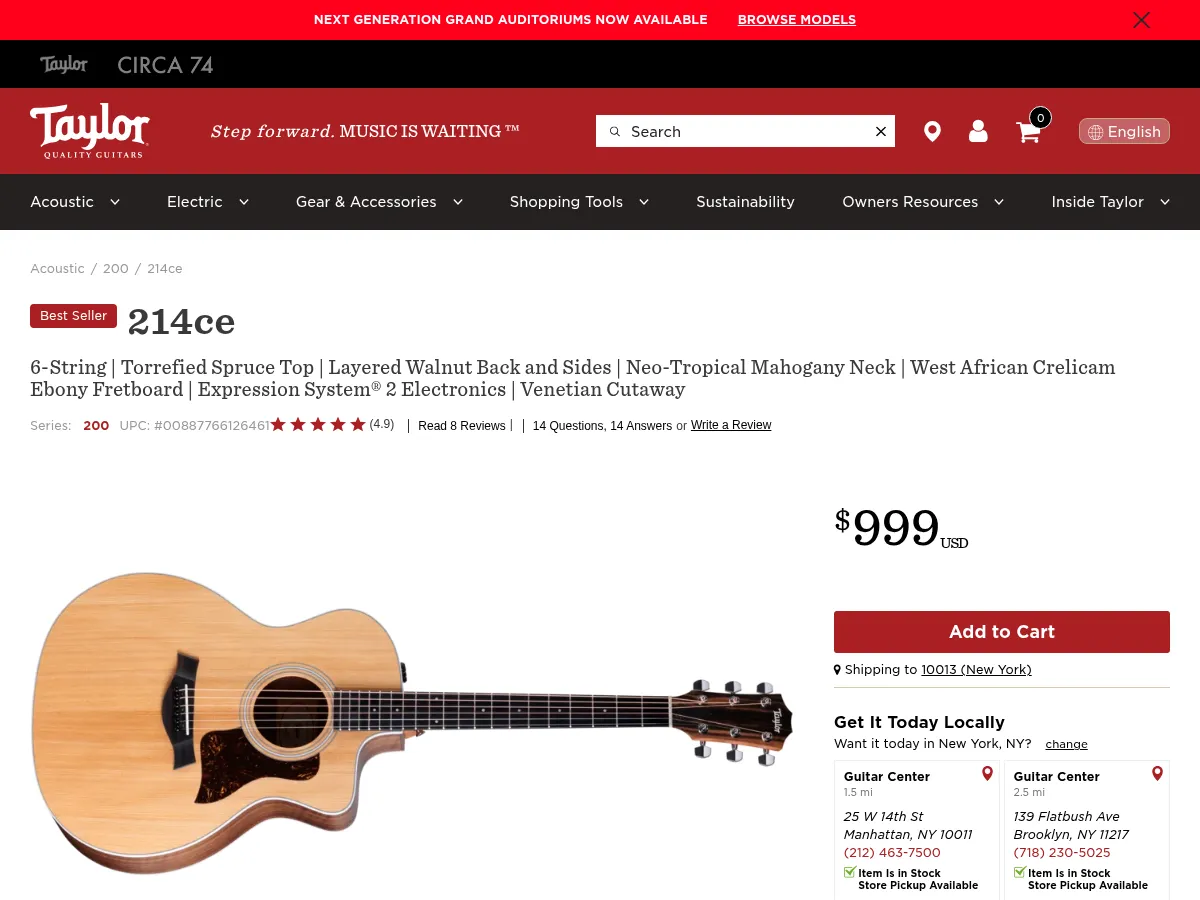
 Taylor 214ce
Taylor
$1,199
Intermediate
Mexico
Grand auditorium acoustic-electric entering Taylor's solid-top lineup with Sitka spruce, layered rosewood, and ES2 electronics for versatile mid-range performance.
Taylor 214ce
Taylor
$1,199
Intermediate
Mexico
Grand auditorium acoustic-electric entering Taylor's solid-top lineup with Sitka spruce, layered rosewood, and ES2 electronics for versatile mid-range performance.
 22
4.5
22
4.5
 Blueridge BR-160
Blueridge
$799
Intermediate
China
The Blueridge BR-160 is a dreadnought with all-solid tonewoods and hand-carved pre-war-style bracing delivering surprisingly powerful, authentic bluegrass tone and projection at a fraction of the cost of premium American-made dreadnoughts.
Blueridge BR-160
Blueridge
$799
Intermediate
China
The Blueridge BR-160 is a dreadnought with all-solid tonewoods and hand-carved pre-war-style bracing delivering surprisingly powerful, authentic bluegrass tone and projection at a fraction of the cost of premium American-made dreadnoughts.
 23
4.4
23
4.4
 Epiphone Hummingbird Studio
Epiphone
$349
Intermediate
China
An affordable version of Gibson's iconic Hummingbird with solid spruce top and Fishman pickup, capturing the distinctive square-shouldered dreadnought sound and famous floral pickguard at a fraction of the price.
Epiphone Hummingbird Studio
Epiphone
$349
Intermediate
China
An affordable version of Gibson's iconic Hummingbird with solid spruce top and Fishman pickup, capturing the distinctive square-shouldered dreadnought sound and famous floral pickguard at a fraction of the price.
 24
4.4
24
4.4
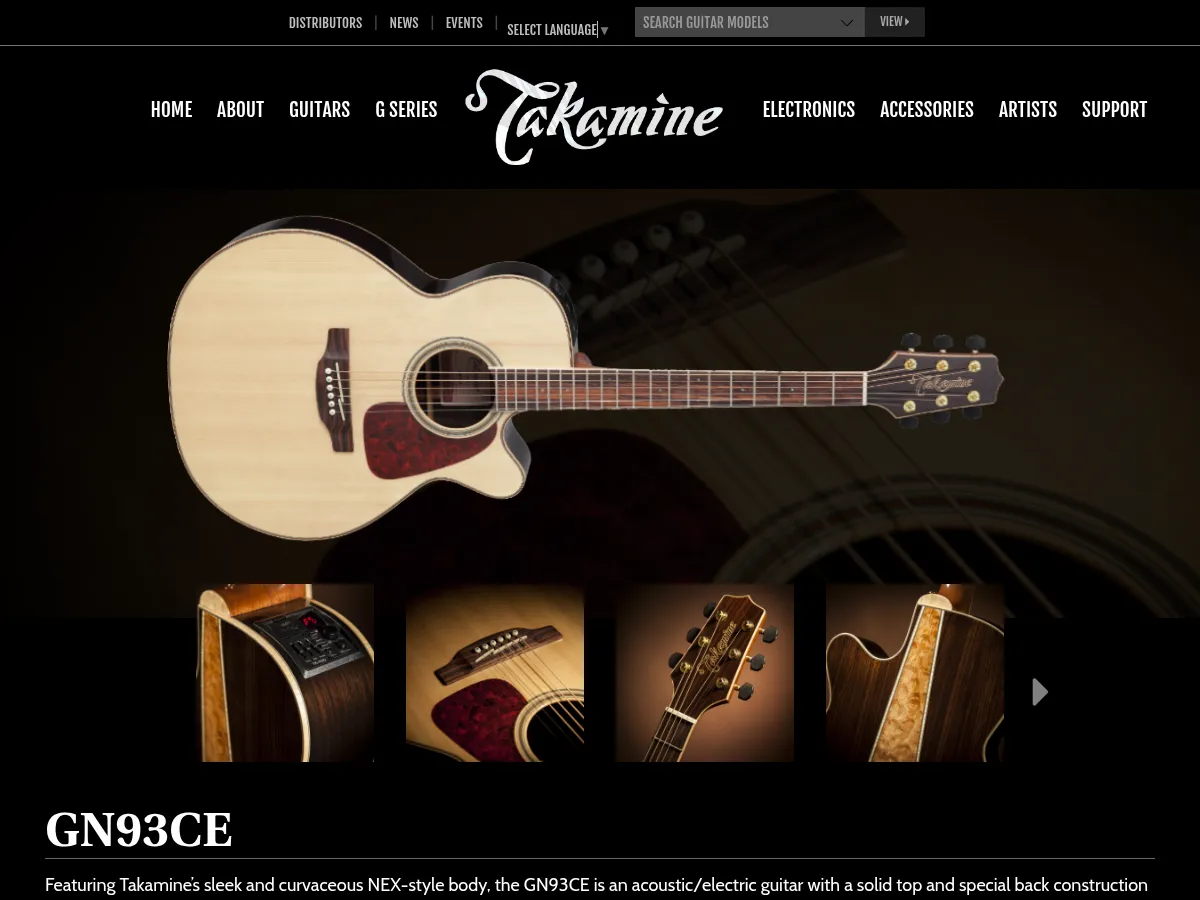
 Takamine GN93CE
Takamine
$599
Intermediate
China
Nylon-string acoustic-electric in NEX body shape with solid spruce top, quilted maple body, and road-proven Takamine electronics for gigging fingerstyle players.
Takamine GN93CE
Takamine
$599
Intermediate
China
Nylon-string acoustic-electric in NEX body shape with solid spruce top, quilted maple body, and road-proven Takamine electronics for gigging fingerstyle players.
 25
4.3
25
4.3
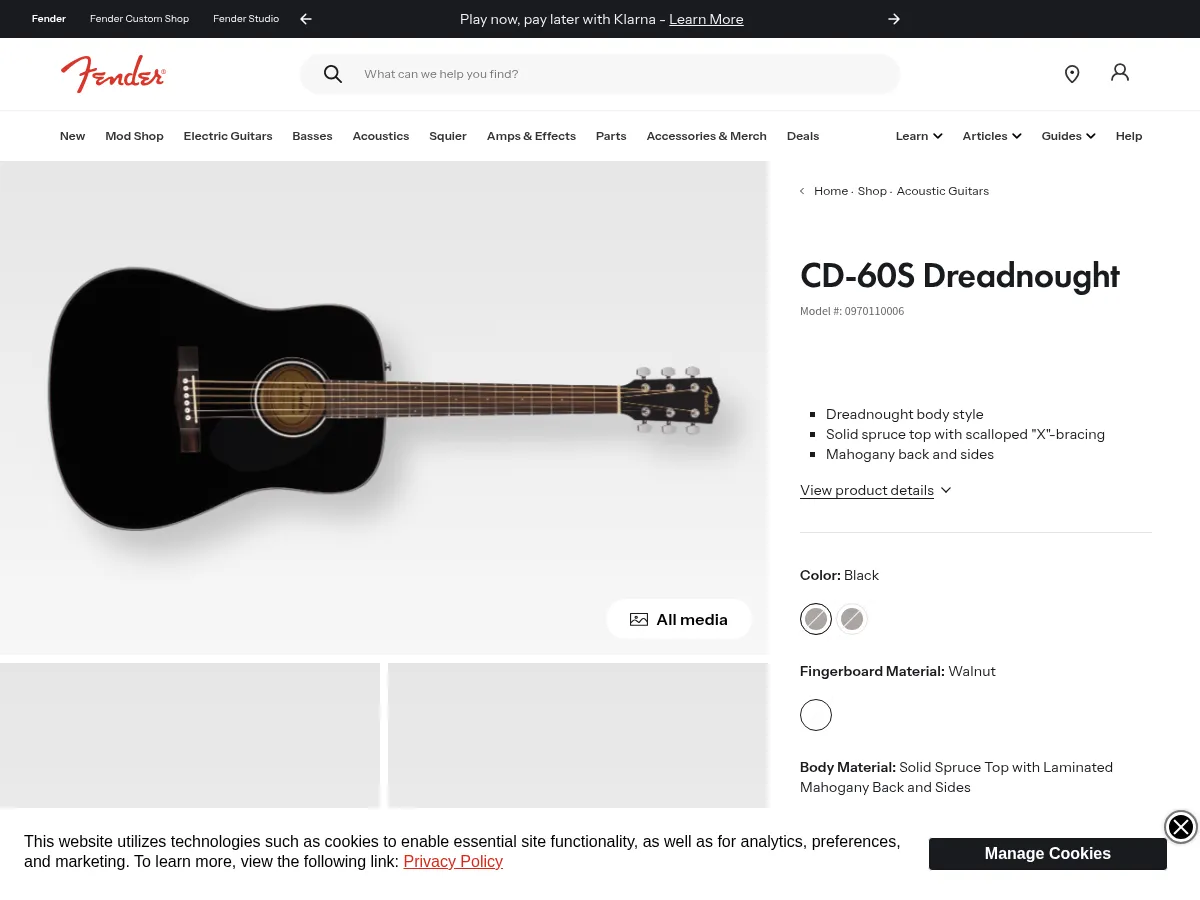
 Fender CD-60S
Fender
$219
Beginner
China
A budget-friendly dreadnought with solid mahogany top and Easy-Play setup featuring rolled fingerboard edges, producing warm, mellow tones that complement vocals while remaining comfortable for beginners.
Fender CD-60S
Fender
$219
Beginner
China
A budget-friendly dreadnought with solid mahogany top and Easy-Play setup featuring rolled fingerboard edges, producing warm, mellow tones that complement vocals while remaining comfortable for beginners.
 26
4.2
26
4.2
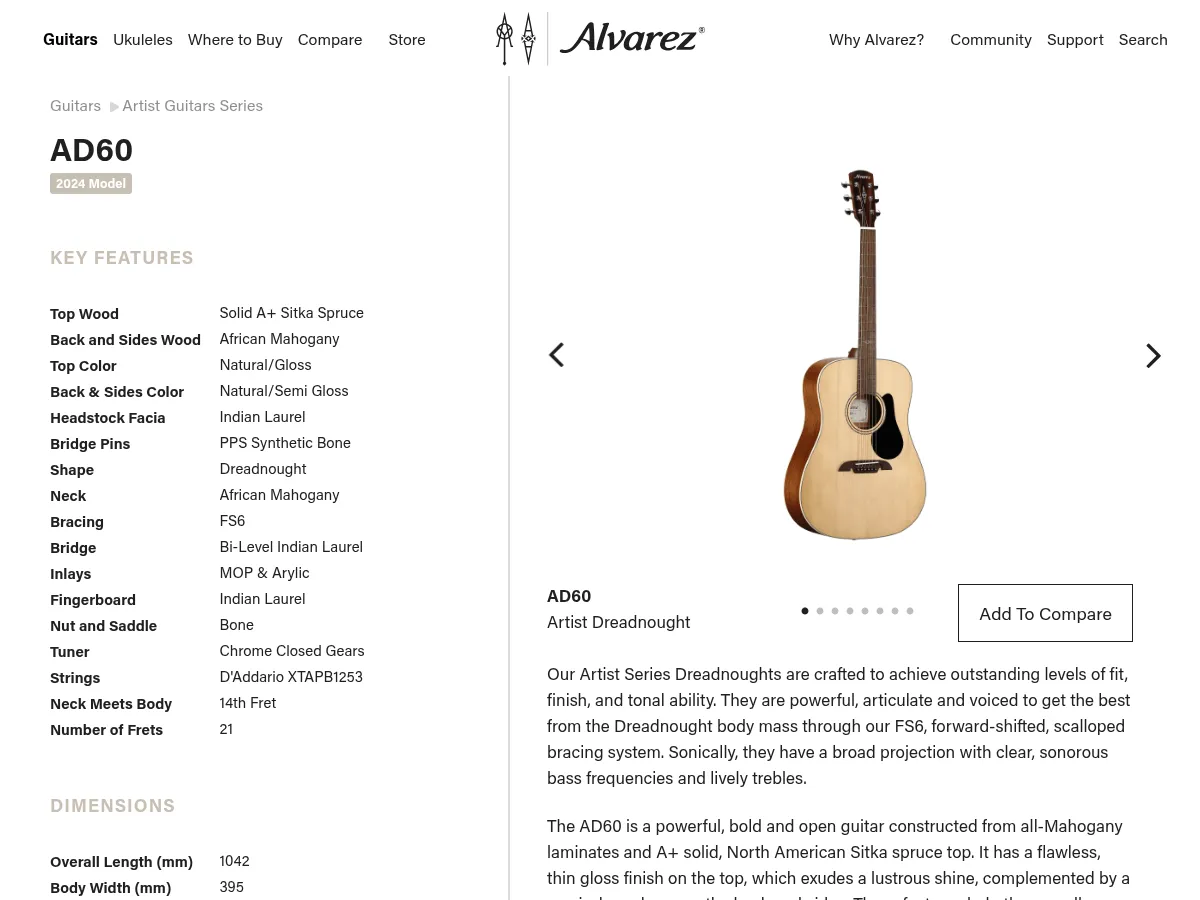
 Alvarez AD60
Alvarez
$299
Beginner
China
The Alvarez AD60 is a solid-top dreadnought that hits the sweet spot between entry-level and mid-range, with forward-shifted scalloped bracing and a solid Sitka spruce top delivering responsive projection and warm tone at an accessible price.
Alvarez AD60
Alvarez
$299
Beginner
China
The Alvarez AD60 is a solid-top dreadnought that hits the sweet spot between entry-level and mid-range, with forward-shifted scalloped bracing and a solid Sitka spruce top delivering responsive projection and warm tone at an accessible price.
 27
4.2
27
4.2
 Fender Newporter Player
Fender
$449
Beginner
China
A small-body acoustic-electric from the California Series with solid spruce top and Fishman pickup, featuring a 24.1-inch scale and electric-style neck that eases the transition for electric players.
Fender Newporter Player
Fender
$449
Beginner
China
A small-body acoustic-electric from the California Series with solid spruce top and Fishman pickup, featuring a 24.1-inch scale and electric-style neck that eases the transition for electric players.
 28
4.2
28
4.2
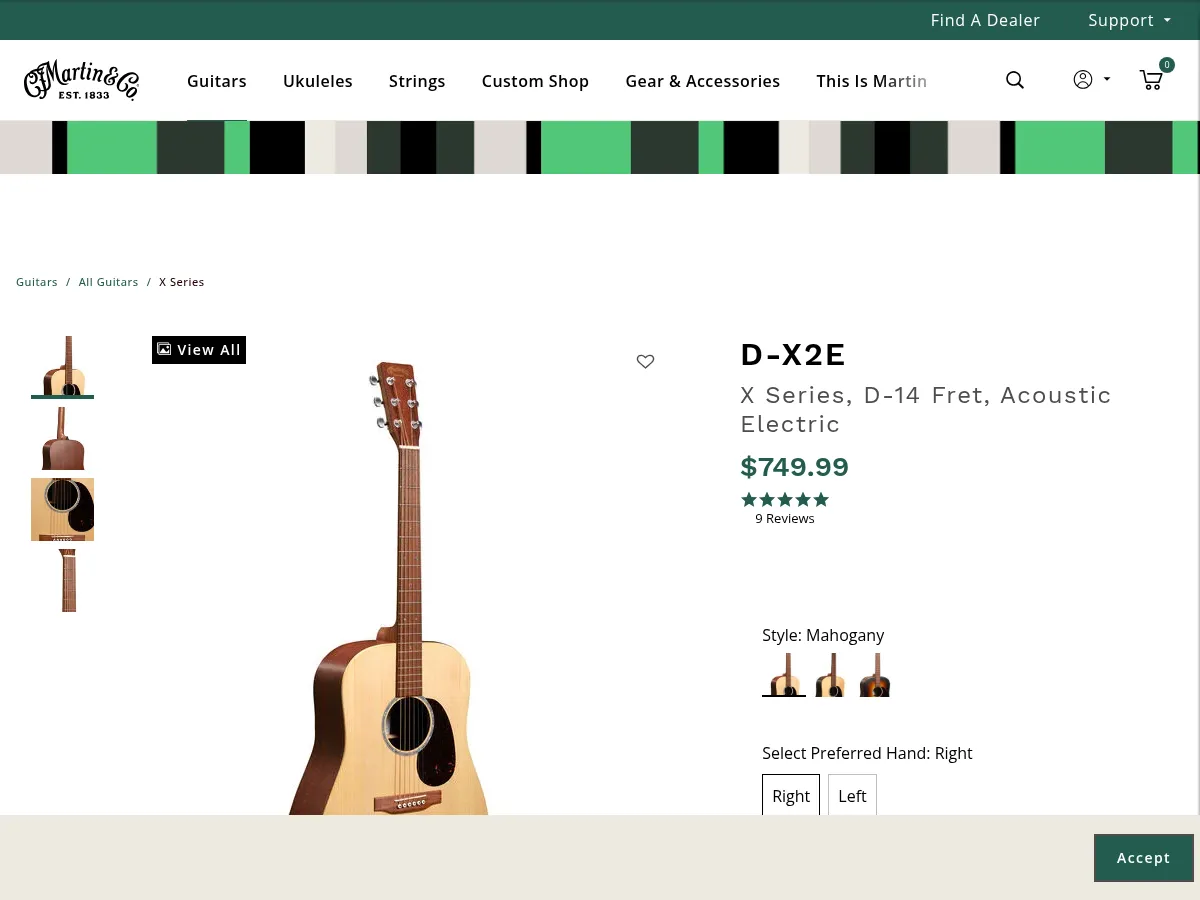
 Martin D-X2E
Martin
$649
Beginner
Mexico
A budget-friendly Martin dreadnought with solid spruce top and HPL back, bringing the Martin name and scalloped bracing to an accessible price with climate-resistant construction.
Martin D-X2E
Martin
$649
Beginner
Mexico
A budget-friendly Martin dreadnought with solid spruce top and HPL back, bringing the Martin name and scalloped bracing to an accessible price with climate-resistant construction.
 29
4.2
29
4.2
 Yamaha APX600
Yamaha
$299
Intermediate
China
Thin-body acoustic-electric built for stage performance, featuring a piezo pickup system, slim profile for comfort, and 22 frets for extended range during live gigs.
Yamaha APX600
Yamaha
$299
Intermediate
China
Thin-body acoustic-electric built for stage performance, featuring a piezo pickup system, slim profile for comfort, and 22 frets for extended range during live gigs.
 30
4.2
30
4.2
 Breedlove Pursuit Exotic S Concert
Breedlove
$649
Intermediate
China
The Breedlove Pursuit Exotic S Concert combines a solid cedar top with exotic myrtlewood for warm, responsive tone with pronounced midrange, paired with Breedlove's asymmetric bridge and a Fishman pickup for natural amplified sound.
Breedlove Pursuit Exotic S Concert
Breedlove
$649
Intermediate
China
The Breedlove Pursuit Exotic S Concert combines a solid cedar top with exotic myrtlewood for warm, responsive tone with pronounced midrange, paired with Breedlove's asymmetric bridge and a Fishman pickup for natural amplified sound.